What Does -고 싶다 Mean? Saying 'I Want To' in Korean
Written and reviewed by Jun and Jin, native Korean speakers
Published · Updated · How we write & review
After this page, you can say what you want to do with -고 싶다 (-go sipda), and what someone else wants with -고 싶어하다.
10-second answer
What Does -고 싶다 Mean?
-고 싶다 (-go sipda) attaches to a verb stem to mean "want to [verb]." 가다 (gada, go) → 가고 싶어요 (gago sipeoyo, "I want to go"). It's one of the easiest patterns in Korean — no irregular vowel rule, just stem + 고 싶어요 (go sipeoyo).
Quick check — did that land?
1. How do you say "I want to eat" (먹다)?
저는 가고 싶어요. 친구는 가고 싶어해요. 다른 사람의 바람은 다르게 표현해요. 다이브인 코리안에서 더 배워보세요.
The Pattern
| Verb | Stem + 고 싶어요 |
|---|---|
| 가다 (go) | 가고 싶어요 — want to go |
| 먹다 (eat) | 먹고 싶어요 — want to eat |
| 보다 (see/watch) | 보고 싶어요 — want to see/watch |
| 자다 (sleep) | 자고 싶어요 — want to sleep |
No vowel-harmony headaches here — 고 attaches to any stem the same way, regardless of its last vowel.
A note on spelling. The official romanization of -고 싶다 is -go sipda, but you'll also see it written -go shipda, gosipda or goshipda. They're all the same ending.
See also: Korean Present Tense: -아요/-어요
Quick Examples
한국에 가고 싶어요.
hanguk-e gago sipeoyo.
I want to go to Korea.
이거 먹고 싶어요.
igeo meokgo sipeoyo.
I want to eat this.
너무 보고 싶어요.
neomu bogo sipeoyo.
I miss you so much.
Literally: I want to see [you] so much.
보고 싶다 doubles as "to miss (someone)" — a K-drama/K-pop staple line.
The most-heard example of this pattern is 보고 싶다, 'I miss you' — it has its own page: 보고 싶다 (bogo sipda).
Street-Food Cravings: 군밤 먹고 싶어요
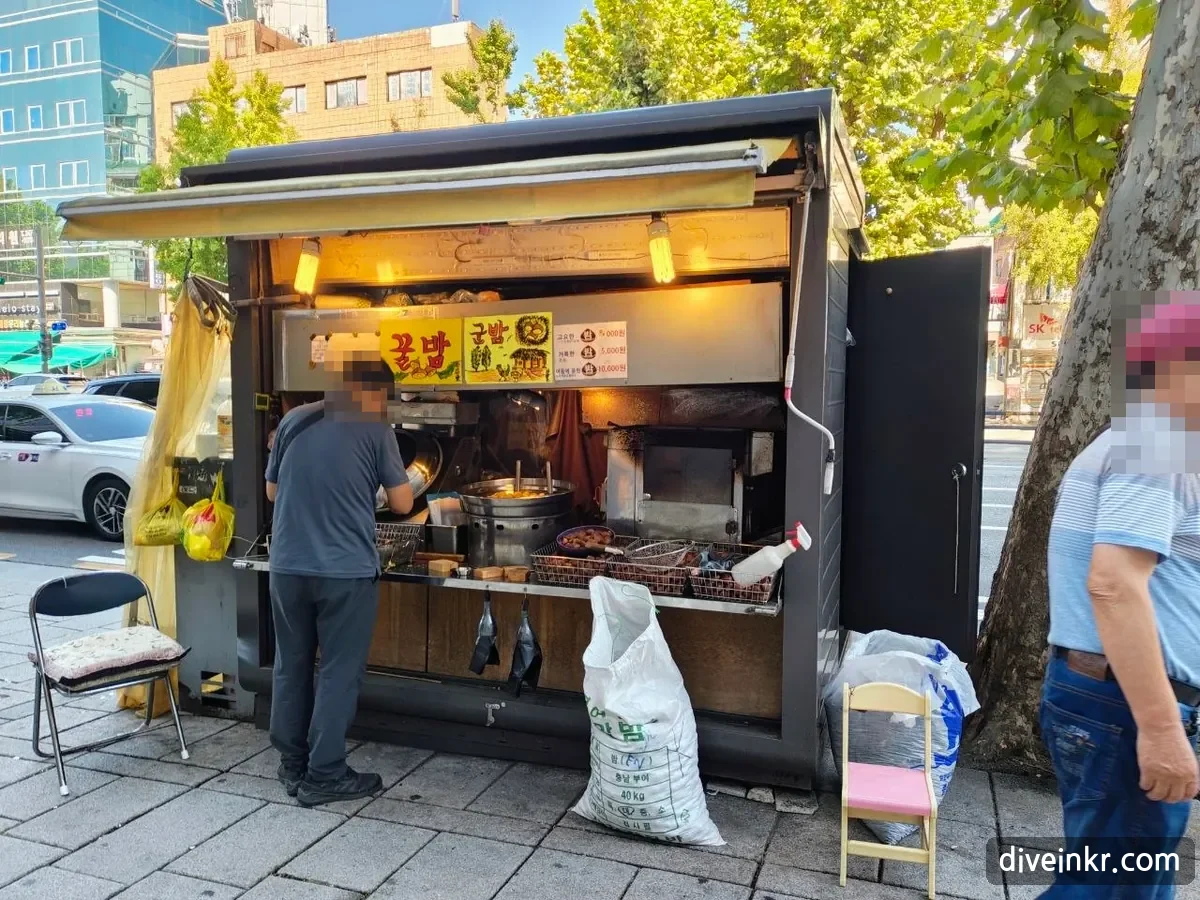
-고 싶다 is the pattern you'll reach for in front of a stall like this. Seeing roasted chestnuts and wanting some is 군밤 먹고 싶어요 (gunbam meokgo sipeoyo) — or, to a friend, 군밤 먹고 싶어. Talking to yourself, you'd use the plain form: 먹고 싶다.
Remember the -고 싶어하다 rule above when it's someone else who wants it. If your friend is the one staring at the chestnuts, say 친구가 군밤 먹고 싶어해요 — not 먹고 싶어요, which would claim to feel their craving from the inside.
The other sign, 꿀밤 (kkulbam), is a fun one: the dictionary gives it two meanings — a chestnut as sweet as honey, and a light knock on someone's head with your knuckles. At a stall, it's the first one.
군밤 먹고 싶어요.
gunbam meokgo sipeoyo.
I want to eat roasted chestnuts.
친구가 군밤 먹고 싶어해요.
chinguga gunbam meokgo sipeohaeyo.
My friend wants some roasted chestnuts.
따뜻한 거 먹고 싶다.
ttatteutan geo meokgo sipda.
I want something warm to eat. (to yourself)
About Other People: -고 싶어하다
Korean grammar is sensitive about claiming to know someone else's internal feelings directly. For a THIRD person's wants, add 하다:
| Subject | Form | Example |
|---|---|---|
| I / you (asking) | -고 싶어요 | 저는 가고 싶어요 (I want to go) |
| He/she/they | -고 싶어해요 | 그는 가고 싶어해요 (He wants to go) |
The logic: you can state your own desires directly, but someone else's desires are technically an outside observation — 싶어하다 ("appears to want") softens that claim grammatically.
Negative and Past
가고 싶지 않아요.
I don't want to go.
Negate the 싶다 part, not the main verb.
가고 싶었어요.
I wanted to go.
Past tense on 싶다.
Common Mistakes
Mistake #1 — Using -고 싶어요 for other people
그는 가고 싶어요 sounds like you're claiming to BE him. Use 가고 싶어해요 for third parties.
Mistake #2 — Missing the 보고 싶다 = 'miss you' idiom
보고 싶어요 in a text almost always means "I miss you," not a literal "I want to see [something]."
Mini Quiz
2 short questions — about 1 minute
2. Your friend texts 보고 싶어요. What do they likely mean?
3. How do you say "She wants to go" (talking about a third person)?
Part of Korean Grammar Basics — Particles, Tense, and Negation
Related Knowledge
Learn Next
What Does -지 않다 Mean? Korean Negation
You've learned wants — negation is the long-form partner to 안/못 you'll see constantly in writing and formal speech.
Will you remember this tomorrow?
Save it — your daily review brings it back right before you'd forget. No account needed.