What Does 하고/와/과 Mean? "And" in Korean
Written and reviewed by Jun and Jin, native Korean speakers
Published · Updated · How we write & review
After this page, you can join nouns with 하고 (hago) or 와/과 (wa/gwa), and join whole sentences with 그리고 (geurigo).
10-second answer
What Does 하고/와/과 Mean?
Korean has multiple words for "and," and they aren't interchangeable. 하고 (hago) and 와/과 (wa/gwa) connect NOUNS ("coffee and tea") and attach directly to a word. 그리고 (geurigo) connects full SENTENCES ("I ate. And then I slept.") and stands alone between clauses.
Quick check — did that land?
1. How do you say "coffee and tea" casually?
Korean has three ways to say and.
Connecting Nouns: 하고 vs 와/과
| Word | Register | Rule |
|---|---|---|
| 하고 | Casual, very common in speech | Attaches to any noun, no batchim rule to worry about |
| 와 | Slightly more formal/written | After a vowel-ending noun |
| 과 | Slightly more formal/written | After a consonant-ending (batchim) noun |
커피하고 차 주세요.
keopihago cha juseyo.
Coffee and tea, please.
하고 — easiest default, works everywhere casually.
친구와 갔어요.
chinguwa gasseoyo.
I went with a friend.
친구 ends in a vowel → 와.
선생님과 이야기했어요.
seonsaengnimgwa iyagihaesseoyo.
I talked with the teacher.
선생님 ends in ㅁ (batchim) → 과.
See also: Korean particles: the complete guide
Ordering Two Things: 짜장면하고 짬뽕
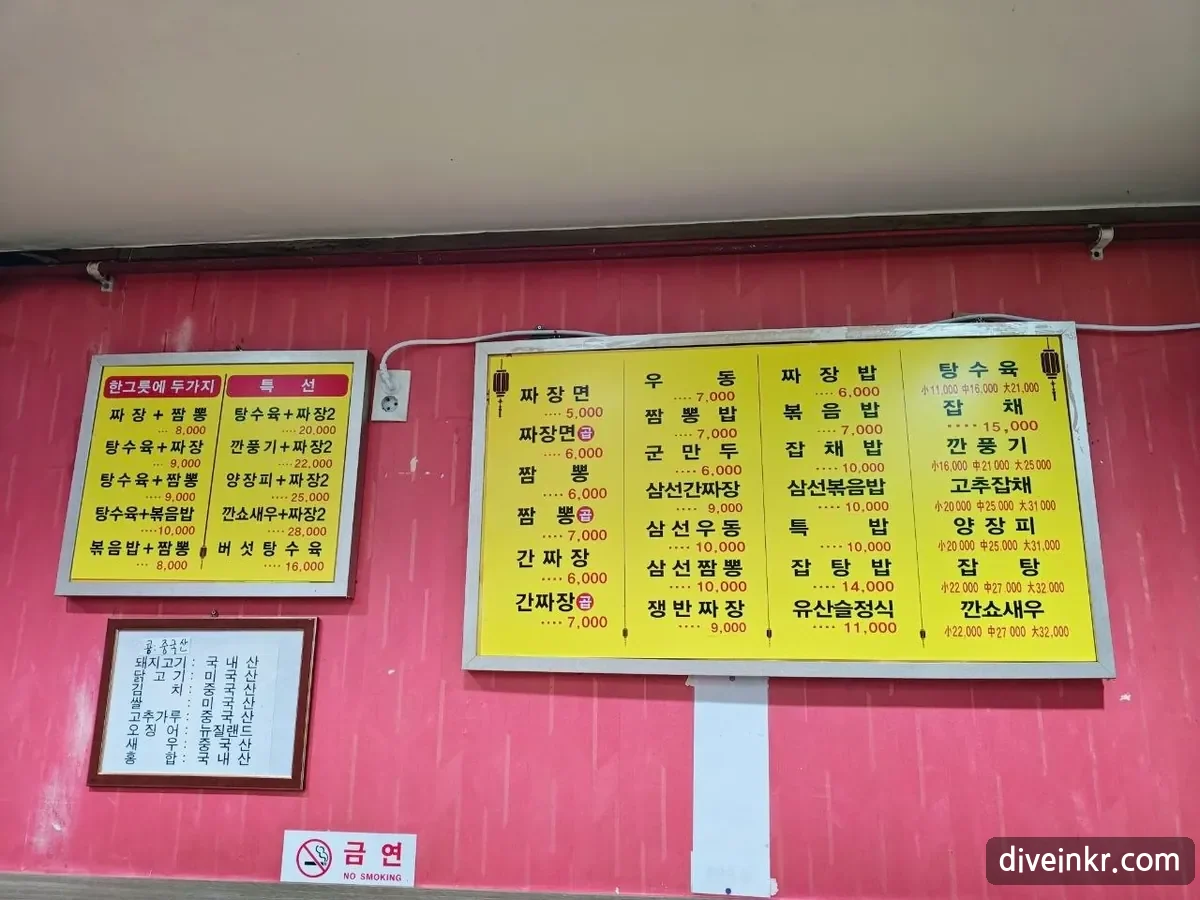
A menu is where 하고 gets its daily workout. At a 중국집 like the one in the photo, 짜장면 and 짬뽕 sit side by side on the board, and ordering both takes a single 하고: 짜장면하고 짬뽕 주세요. As the table above shows, that's the spoken choice; 와/과 is what you'd more likely see in writing.
The 탕수육 (sweet and sour pork) line shows sizes in Chinese characters: 小, 中, 大, read 소, 중, 대. When ordering, the small size is called 소자 (soja): 탕수육 소자로 주세요 — "a small tangsuyuk, please." Then 하고 can link it to the noodles in one breath.
짜장면하고 짬뽕 주세요.
jjajangmyeonhago jjamppong juseyo.
Jajangmyeon and jjamppong, please.
탕수육 소자로 주세요.
tangsuyuk sojaro juseyo.
A small tangsuyuk, please.
군만두하고 볶음밥도 시킬까요?
gunmanduhago bokkeumbapdo sikilkkayo?
Shall we order fried dumplings and fried rice too?
와/과 Can Also Mean "With"
Context decides whether 와/과 (and 하고) means "and" or "with" — 친구와 갔어요 could mean "I went with a friend" just as naturally as a list. This dual function is normal and usually clear from context, similar to how English "with" can pull double duty in casual speech ("coffee with cream" vs "I went with him").
Connecting Full Sentences: 그리고
그리고 works differently — it links two complete sentences or clauses, standing on its own rather than attaching to a word.
밥을 먹었어요. 그리고 잤어요.
bab-eul meogeosseoyo. geurigo jasseoyo.
I ate. And [then] I slept.
하고/와/과 join WORDS inside one sentence; 그리고 joins whole SENTENCES together. Mixing them up is one of the most common beginner grammar errors with "and."
Common Mistakes
Mistake #1 — Using 그리고 to join two nouns
그리고 커피 차 doesn't work the way 커피하고 차 does — 그리고 needs full clauses, not bare nouns.
Mistake #2 — Overthinking 와 vs 과
하고 sidesteps the batchim rule entirely and is extremely common in speech — a safe default when you're unsure whether a noun ends in a vowel or consonant.
Mini Quiz
2 short questions — about 1 minute
2. 선생님 (teacher, ends in ㅁ) + "and/with" — which particle?
3. How do you connect two full sentences, "I ate. And I slept"?
Related Knowledge
Learn Next
How to Introduce Yourself in Korean
Put the grammar to work — self-introductions naturally string together several of the patterns you've learned.
Will you remember this tomorrow?
Save it — your daily review brings it back right before you'd forget. No account needed.