Korean Numbers: Native vs Sino-Korean, Explained
Written and reviewed by Jun and Jin, native Korean speakers
Published · Updated · How we write & review
After this page, you can choose the right number system — native Korean or Sino-Korean — for the situation you are in.
10-second answer
The short answer
Korean has two complete number systems used for different things. Native Korean numbers (하나 hana, 둘 dul, 셋 set…) count objects, people, and age. Sino-Korean numbers (일 il, 이 i, 삼 sam…), borrowed from Chinese, are used for dates, money, phone numbers, and minutes. Which system applies depends entirely on WHAT you're counting, not personal choice.
Quick check — did that land?
1. Which number system do you use for someone's age?
한 시에 만나요. 한 시간 기다렸어요. 시는 시각, 시간은 얼마나 오래인지 말해요.
The Two Systems, Side by Side
| Number | Native Korean | Sino-Korean |
|---|---|---|
| 1 | 하나 (hana) | 일 (il) |
| 2 | 둘 (dul) | 이 (i) |
| 3 | 셋 (set) | 삼 (sam) |
| 4 | 넷 (net) | 사 (sa) |
| 5 | 다섯 (daseot) | 오 (o) |
| 10 | 열 (yeol) | 십 (sip) |
| 20 | 스물 (seumul) | 이십 (isip) |
Native Korean numbers only go smoothly up to 99 in everyday use — for anything larger (hundreds, thousands), Korean switches to Sino-Korean numbers regardless of context.
To keep both systems in front of you, print our free Korean numbers chart, with native handwriting for 1 to 10.
See also: Korean particles: the complete guide
Which System for What
| Use | System | Example |
|---|---|---|
| Counting objects/people (with counters) | Native | 사과 세 개 (three apples) — 세 (native "three") |
| Age | Native | 저는 스물다섯 살이에요 (I'm 25) — 스물다섯 (native "25") |
| Time — the HOUR | Native | 세 시 (3 o'clock) — 세 (native) |
| Time — the MINUTE | Sino-Korean | 삼십 분 (30 minutes) — 삼십 (Sino "30") |
| Dates (month/day/year) | Sino-Korean | 삼월 십오일 (March 15th) |
| Money | Sino-Korean | 오천 원 (5,000 won) |
| Phone numbers | Sino-Korean | read digit by digit in Sino-Korean |
Telling time is the classic trap: the HOUR uses native numbers, the MINUTE uses Sino-Korean, in the same sentence — 세 시 삼십 분 (3:30) mixes both systems on purpose.
Reading a Street-Stall Price Board
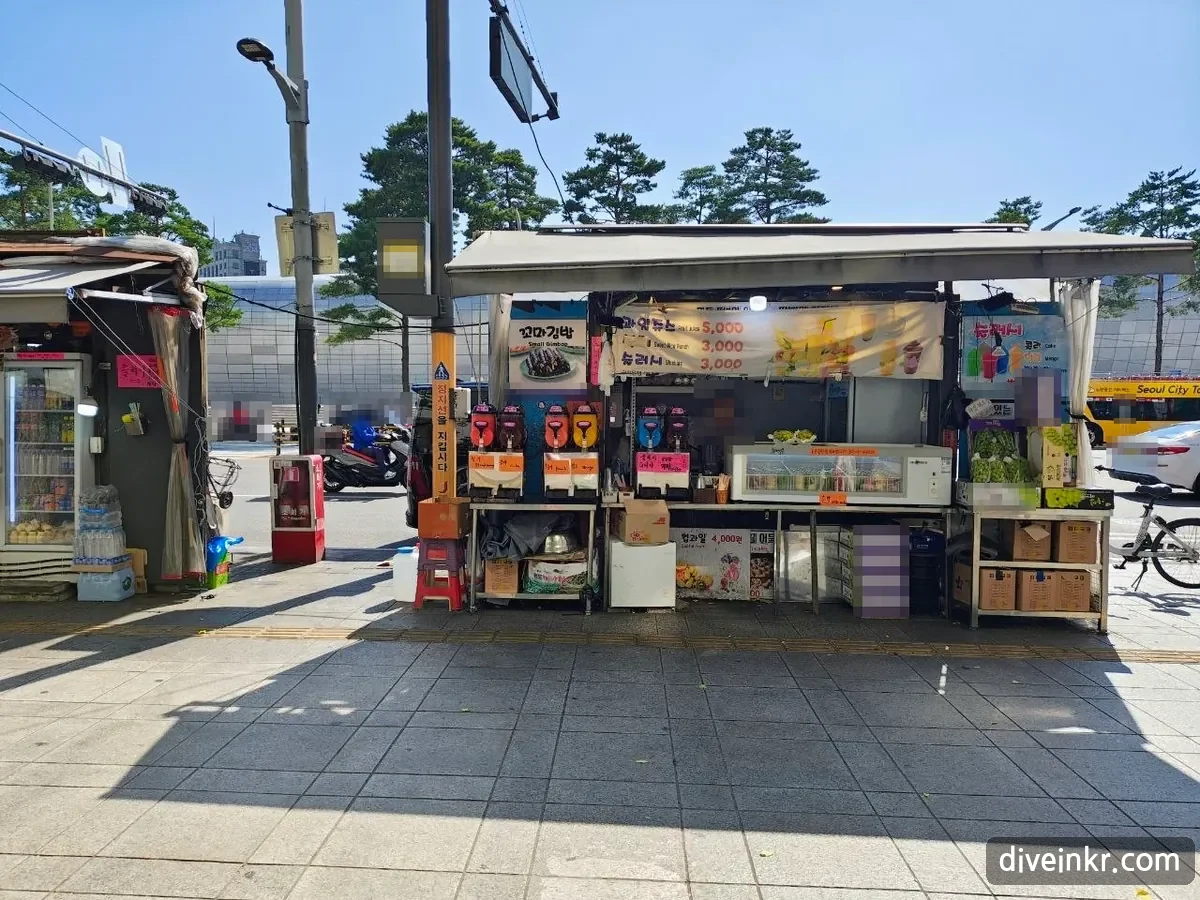
A price board shows both number systems working side by side. This stall lists 과일쥬스 (fruit juice) at 5,000, 슬러시 (slush) at 3,000 and 컵과일 (fruit in a cup) at 4,000원. Prices are always Sino-Korean: 오천 원 (ocheon won), 삼천 원 (samcheon won), 사천 원 (sacheon won). If you need the question for this, it's 얼마예요? (eolmayeyo?).
Two things to notice. Written prices often leave out 원 (won) — the banner just says 5,000 — but when people say a price out loud, they almost always add 원. And the moment you count the items, you switch systems: two slushies are 슬러시 두 개 (du gae, native Korean), and they cost 육천 원 (yukcheon won, Sino-Korean). One sentence, two number systems.
Spelling bonus: the board writes 쥬스, a spelling you'll see on a lot of signs, but the standard spelling in the dictionary is 주스 (juseu).
슬러시 두 개 주세요.
seulleosi du gae juseyo.
Two slushies, please.
두 개에 육천 원이에요.
du gae-e yukcheon wonieyo.
That's 6,000 won for two.
과일주스 하나, 컵과일 하나 주세요.
gwailjuseu hana, keopgwail hana juseyo.
One fruit juice and one cup of fruit, please.
Quick Examples
커피 두 잔 주세요.
keopi du jan juseyo.
Two coffees, please.
두 (native "two") + 잔 (counter for cups/glasses).
이거 오천 원이에요.
igeo ocheon won-ieyo.
This is 5,000 won.
오천 (Sino "5,000") for money.
지금 네 시 십 분이에요.
jigeum ne si sip bun-ieyo.
It's 4:10 right now.
네 (native "four") for the hour, 십 (Sino "ten") for the minutes.
Common Mistakes
Mistake #1 — Using Sino-Korean for age or object counts
삼 살 instead of 세 살 (three years old) is a very common beginner slip — age uses native numbers.
Mistake #2 — Forgetting the hour/minute split when telling time
The hour and minute genuinely use different number systems in the same phrase — it feels odd at first but becomes automatic with practice.
Quick Answers
When do I use native Korean numbers and when Sino-Korean?
Use native numbers (하나 hana, 둘 dul…) for counting objects and people with counters, for age, and for the hour. Use Sino-Korean numbers (일 il, 이 i…) for dates, money, phone numbers and minutes. What you are counting decides it, not personal choice.
Why is “three years old” 세 살 (se sal) and not 삼 살 (sam sal)?
Age uses native numbers, so it is 세 살 (se sal). 삼 살 is a very common beginner slip.
How do I say 3:10 in Korean?
The hour is native and the minute is Sino-Korean in the same phrase: 세 시 십 분 (se si sip bun). It feels odd at first but becomes automatic with practice.
Mini Quiz
2 short questions — about 1 minute
2. 지금 세 시 삼십 분이에요 (It's 3:30). Why does this mix two systems?
3. Which system is used for prices/money?
Part of Korean Phrases for Travelers
Part of Essential Korean Vocabulary: Numbers, Days, Months & Colors
Related Knowledge
Learn Next
Now that you know the two number systems, put them to use with the single most useful shopping phrase in Korean.
Will you remember this tomorrow?
Save it — your daily review brings it back right before you'd forget. No account needed.