단풍 (Danpung): Autumn Leaves in Korea and Going to See Them
Written and reviewed by Jun and Jin, native Korean speakers
Published · Updated · How we write & review
After this page, you can talk about autumn leaves in Korean, tell 단풍구경 from the older-sounding 단풍놀이, and read a Korean foliage forecast without misjudging the dates.
10-second answer
The short answer
단풍 (danpung) means autumn foliage — leaves turning red, orange or yellow — and the word can also mean the maple tree itself. Going out to see it is 단풍구경 (danpunggugyeong, "foliage viewing"); the classic word 단풍놀이 (danpungnori) is still understood but now sounds a little old-fashioned. The colors start in the northern mountains, with Seoraksan usually first around late September, and move south: Naejangsan, the most famous foliage mountain, typically peaks in early November.
Quick check — did that land?
1. Which word sounds most natural today for "going to see the autumn leaves"?
산에 단풍이 들었어요! 단풍구경 가요! Danpung means autumn foliage.
What 단풍 Means
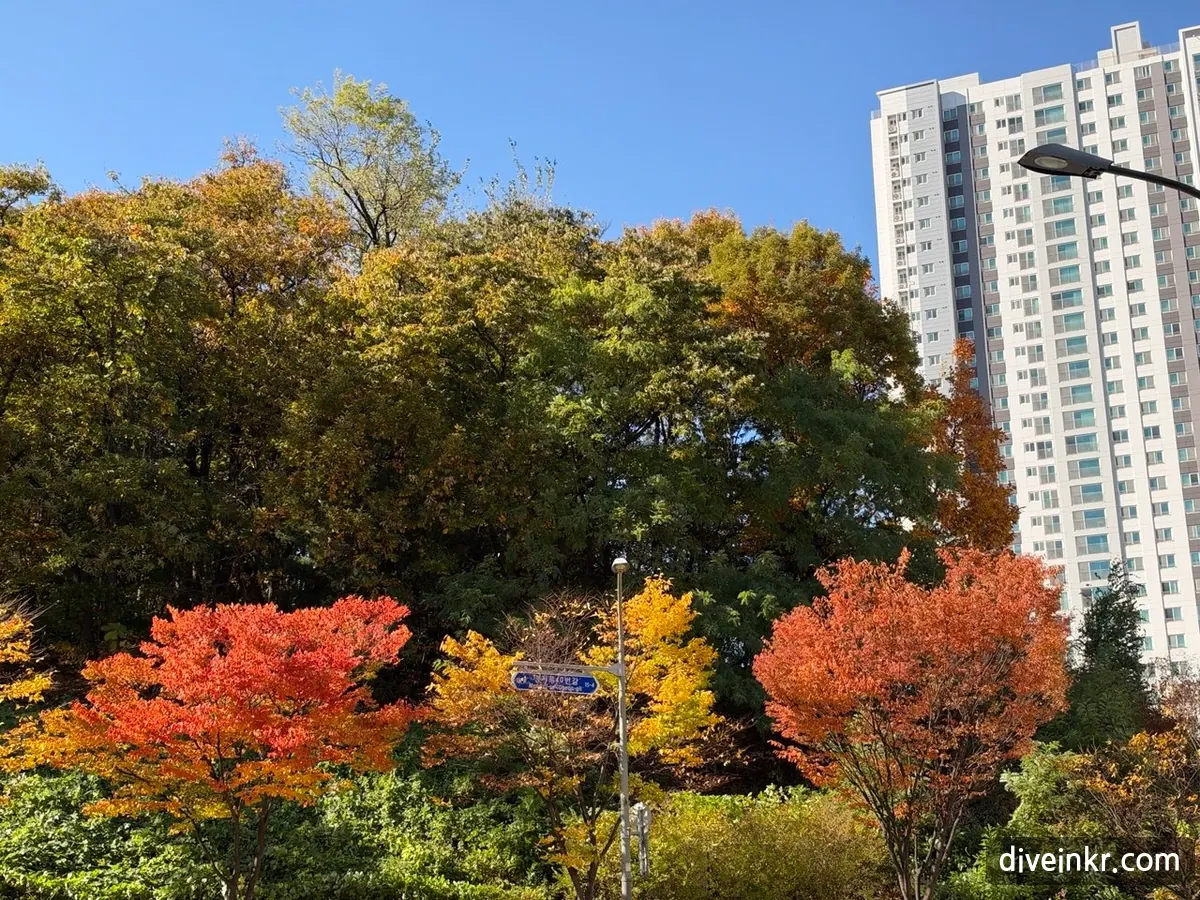
단풍 covers both the change and the result: the process of leaves turning color in autumn, and the colored leaves themselves. It isn't limited to red. Yellow ginkgo and brown oak leaves are 단풍 too, even though the image most people picture is a red maple. In everyday speech you'll mostly hear it with the verb 들다 ("to set in"): 단풍이 들다 means the leaves are turning, and 단풍이 들었다 means they have.
The same word also names the tree. The full name is 단풍나무 (danpungnamu, "maple tree"), but when someone points at a red-leafed tree and says 저거 단풍이야, they mean the maple. Context tells you which sense is meant — and in autumn, it rarely matters.
| Word | Romanization | Meaning |
|---|---|---|
| 단풍 | danpung | autumn foliage; also short for maple |
| 단풍구경 · 단풍 구경 | danpunggugyeong | going to see the autumn leaves (구경 = sightseeing, watching) — you'll see it written both with and without the space |
| 단풍놀이 | danpungnori | an outing to enjoy the leaves (놀이 = play, outing) — sounds dated now |
| 단풍나무 | danpungnamu | maple tree |
| 은행나무 | eunhaengnamu | ginkgo tree — the most common street tree in Seoul, bright yellow in autumn |
| 낙엽 | nagyeop | fallen leaves |
| 절정 | jeoljeong | peak, climax — the forecast word for full color |
| 등산 | deungsan | hiking, climbing a mountain |
For the color words themselves — 빨갛다, 노랗다 and how they become 빨갛게, 노랗게 ("turned red / yellow") — see Korean colors.
See also: Korean Colors: 빨간색, 노란색 and the ㅎ trick
How People Go See the Leaves Now
Koreans still go out every autumn to see the colors. What has changed is the word. 단풍놀이 — the term older guides and textbooks use — now feels like something from a previous generation. People are more likely to say 단풍구경 (also written 단풍 구경): 단풍 구경 가자, or simply 단풍 보러 가자 ("let's go see the leaves").
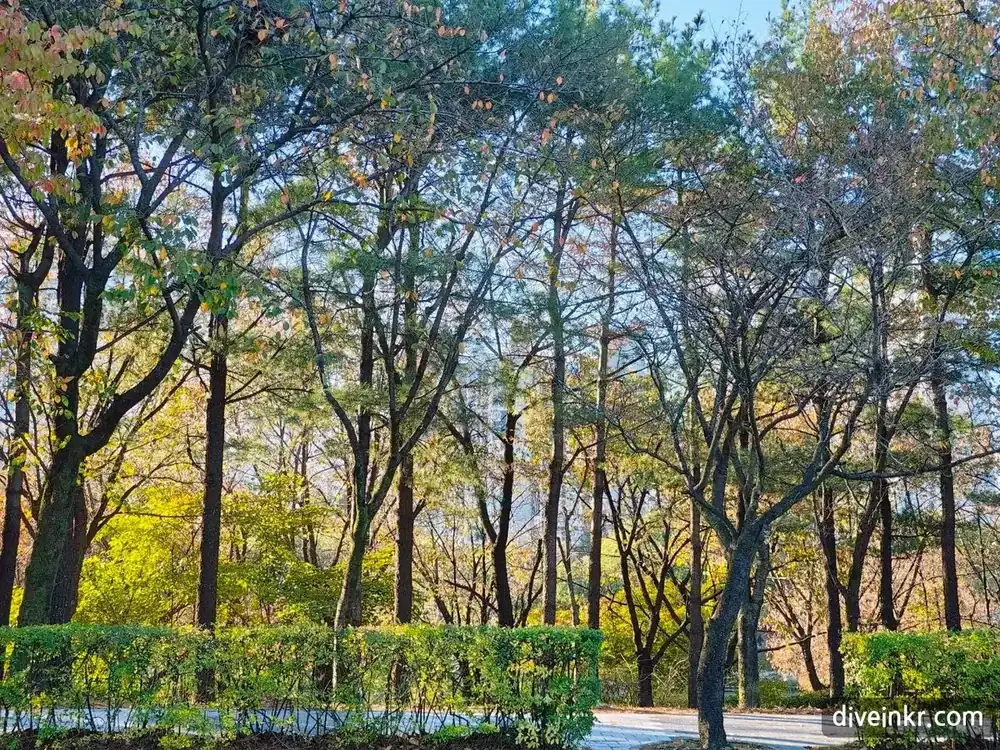
The trip doesn't have to be a big one. Many people just walk to a park nearby. Others head for a mountain, and because Korea is mountainous, that usually isn't far either — a mountain trip can be a day out rather than a vacation. That's why 단풍 and 등산 (hiking) so often come up in the same breath in autumn.
Where the leaves are famous
The news usually frames it as "the foliage has started at 설악산 (Seoraksan)" — the high mountain in the northeast is the first to turn. 내장산 (Naejangsan) in North Jeolla is the most famous for foliage of all: the maple tunnel along the road up to the temple 내장사 (Naejangsa) is spectacular in peak season. 오대산 (Odaesan) in Gangwon and 주왕산 (Juwangsan) in North Gyeongsang are also well known for their autumn colors.
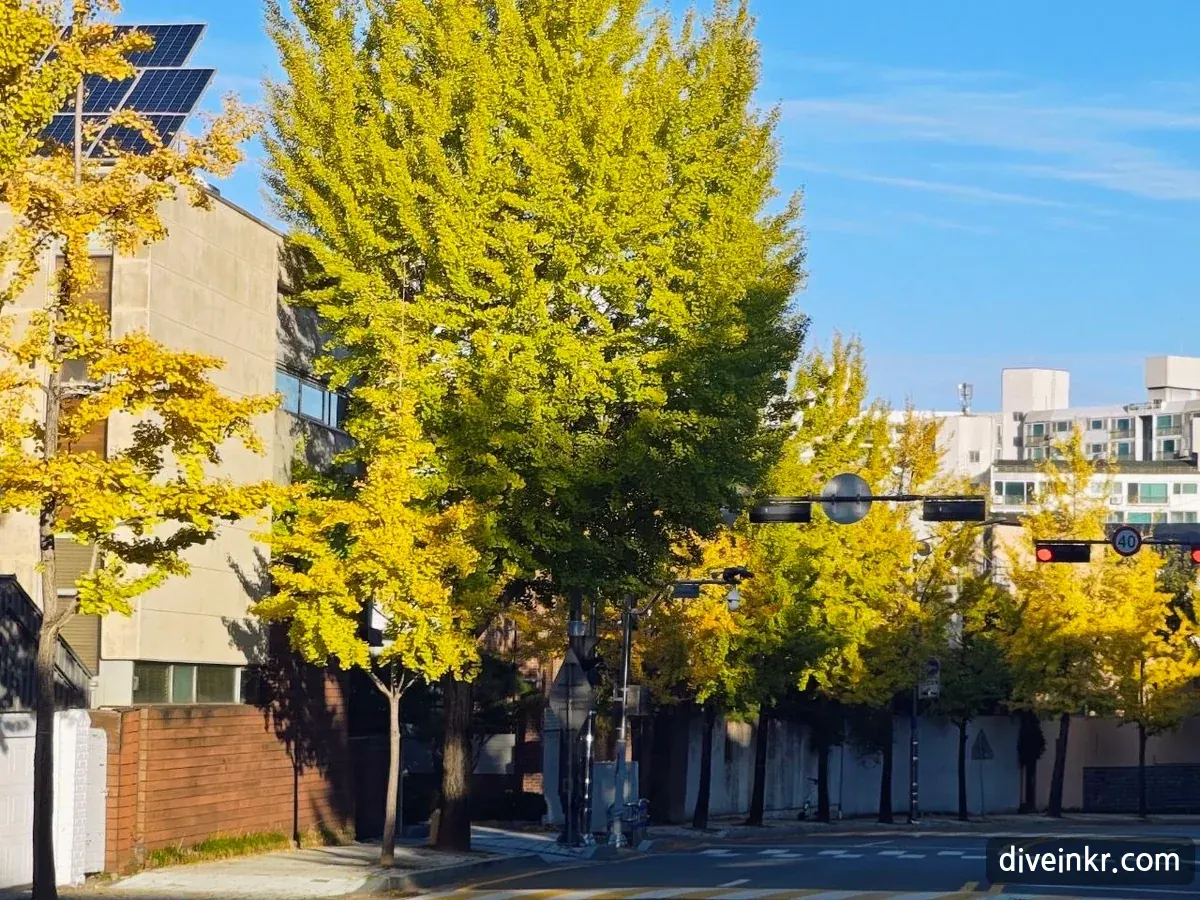
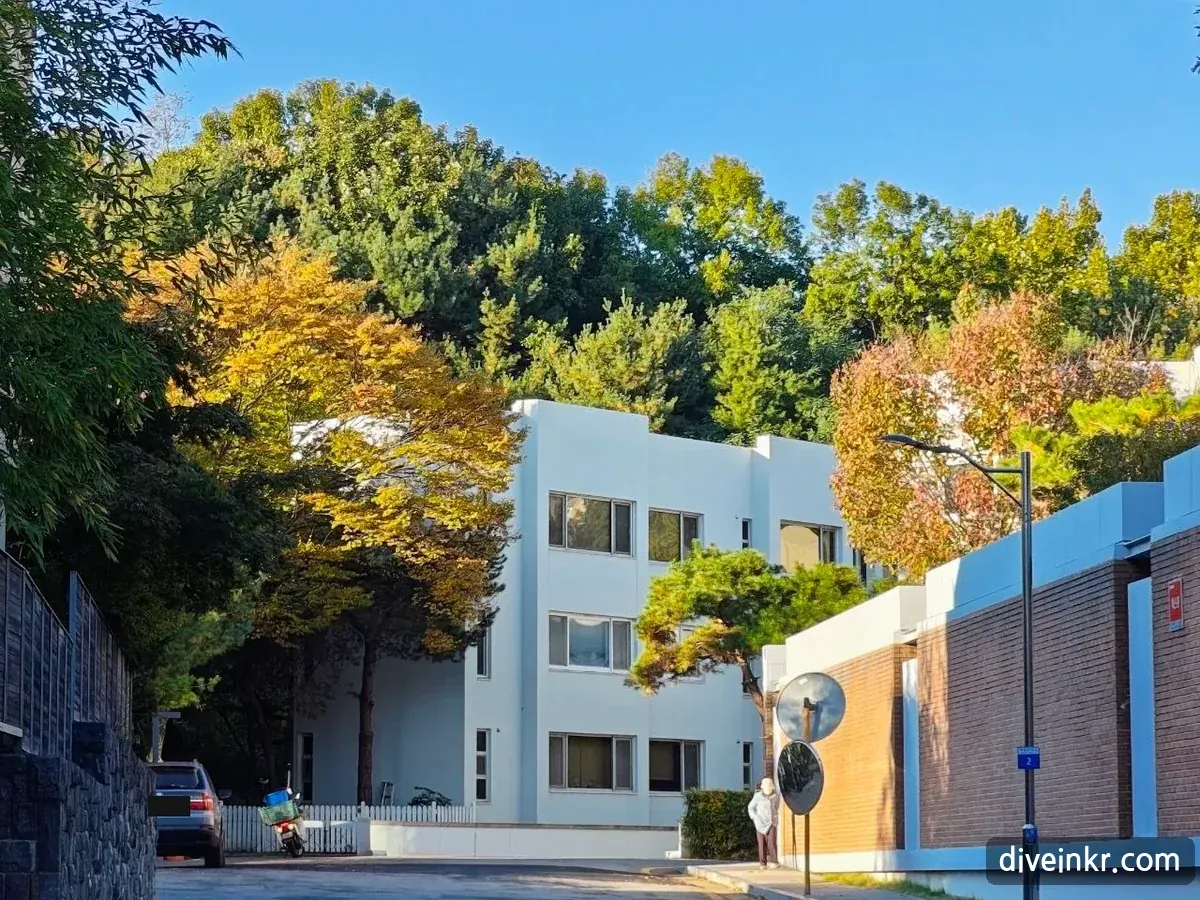
In cities you don't have to climb anything. Seoul's streets are lined with trees that turn in autumn — ginkgo is the most common street tree (of about 296,000 counted in 2022, roughly a third were ginkgos), followed by plane trees and zelkovas — so a walk down a tree-lined road or through a neighborhood park already counts as 단풍 구경. Yellow ginkgo leaves are part of the picture, but not the whole of it. One catch: female ginkgos drop fruit with a strong, unpleasant smell, so Seoul sends out teams to collect it before it lands on the sidewalk. If you're asking a Korean friend about weekend plans, making plans in Korean has the phrases for suggesting — or dodging — an outing.
Reading a Korean Foliage Forecast
Every autumn, Korean news tracks the foliage like weather. Two terms do most of the work, and the Korea Meteorological Administration (기상청) defines both by how much of the mountain has turned, counting down from the summit.
| Term | Official meaning (KMA) | Typical timing |
|---|---|---|
| 첫 단풍 / 단풍 시작 (cheot danpung, "first foliage") | About 20% of the mountain has turned, starting from the top | Seoraksan's long-term average is September 28 (in 2025 it came on October 2) |
| 단풍 절정 (danpung jeoljeong, "peak foliage") | About 80% of the mountain has turned | Usually about 20 days after the start |
Not every forecast uses the same yardstick. The Korea Forest Service (산림청) publishes its own peak-foliage map, and it counts the peak at 50% color rather than 80%. Its 2026 forecast, released September 22, puts the peak at Seoraksan on October 20, Songnisan on October 28, Naejangsan on November 4 and Hallasan on Jeju on November 6, with ginkgo peaking around October 30 and maples around October 31 nationwide. So the colors take about two weeks to travel from Seoraksan down to Naejangsan.
Practical takeaway: a date in a headline is a forecast for one mountain under one definition. Lower slopes and city parks usually turn later than summits, so if you miss the peak date, you may still catch good color further down. The live status for each mountain is on the KMA weather site, and small talk about it fits right into Korean weather small talk.
Sentences You Can Use
설악산에 첫 단풍이 들었대요.
Seoraksane cheot danpungi deureotdaeyo.
They say the first autumn colors have reached Seoraksan.
-대요 passes on something you heard — typically from the news, which is exactly how most people learn the season has started.
주말에 단풍구경 갈래?
Jumare danpunggugyeong gallae?
Want to go see the fall leaves this weekend?
Casual invitation to a friend. With someone older, 가실래요? is safer.
요즘 내장산 단풍이 절정이래요.
Yojeum Naejangsan danpungi jeoljeongiraeyo.
I hear the leaves at Naejangsan are at their peak right now.
가까운 공원에만 가도 단풍이 예뻐요.
Gakkaun gongwoneman gado danpungi yeppeoyo.
Even if you just go to a park nearby, the leaves are pretty.
-만 가도 = "even if you only go to" — handy for talking someone out of a long trip.
은행나무 길이 노랗게 물들었어요.
Eunhaengnamu giri norake muldeureosseoyo.
The ginkgo-lined street has turned yellow.
물들다 = to be dyed, to take on color. It pairs with any color adverb: 빨갛게 물들다, 노랗게 물들다.
낙엽 밟는 소리가 좋아요.
Nagyeop bamneun soriga joayo.
I like the sound of stepping on fallen leaves.
밟는 is pronounced [밤는] — the ㄼ simplifies before ㄴ.
Common Mistakes
- Using 단풍놀이 as your everyday word. Everyone understands it, but it sounds a bit old-fashioned; 단풍구경 or 단풍 보러 가다 is what you'll hear more today.
- Thinking 단풍 means only red. Yellow ginkgo leaves are 단풍 too. If you mean the maple specifically, say 단풍나무.
- Mixing up the two 은행. 은행 (eunhaeng) is also the everyday word for a bank. The tree is 은행나무, and its nuts are 은행 as well — context, or adding 나무, keeps them apart.
- Treating a forecast date as the same everywhere. The official "start" and "peak" are measured from the summit of one mountain, and agencies use different thresholds (80% at KMA, 50% at the Forest Service). Parks and lower trails turn later.
- Saying 낙엽 letter by letter. The ㄱ links into the next syllable, so it sounds like [나겹] (na-gyeop), not "nak-yeop."
Mini Quiz
3 short questions — about 2 minute
2. In KMA terms, when has a mountain reached 단풍 절정 (peak)?
3. Where does the Korean news usually say the foliage starts?
4. What does 은행나무 길이 노랗게 물들었어요 describe?
Part of Korean Culture Explained — Etiquette, Concepts & Holidays
Related Knowledge
- Korean Weather Small Talk — 날씨 phrases for every season
- Korean Colors: 빨간색, 노란색 and the ㅎ trick
- Making Plans in Korean: 약속 and How to Move It
- What Is Chuseok? Korea's autumn harvest holiday
1 more related
Learn Next
Korean Weather Small Talk: 날씨 Phrases That Break the Ice
Autumn leaves are a favorite small-talk topic — pick up the seasonal weather phrases that go with them.
Will you remember this tomorrow?
Save it — your daily review brings it back right before you'd forget. No account needed.