Insadong, Jogyesa and Tapgol Park: A Photo Walk Through Old Seoul's Signs
Written and reviewed by Jun and Jin, native Korean speakers
Published · How we write & review
After this page, you can walk from Insadong to Jogyesa temple and Tapgol Park, read the shop signs, temple signboards and signposts on the way, and ask for directions in simple Korean.
10-second answer
The short answer
인사동 (Insadong) is a street of galleries, craft shops and tea houses in central Seoul, where signs like 필방 (pilbang, "brush shop") are everywhere. A short walk away is 조계사 (Jogyesa), the head temple of Korea's Jogye Order, lined with 불교용품 (bulgyo yongpum, "Buddhist supplies") shops. Nearby, 탑골공원 (Tapgol Gongwon, Tapgol Park) is where the Declaration of Independence was read on March 1, 1919.
Quick check — did that land?
1. What does a shop with 필방 on its sign sell?
인사동 (Insadong): The Street of Brushes and Tea
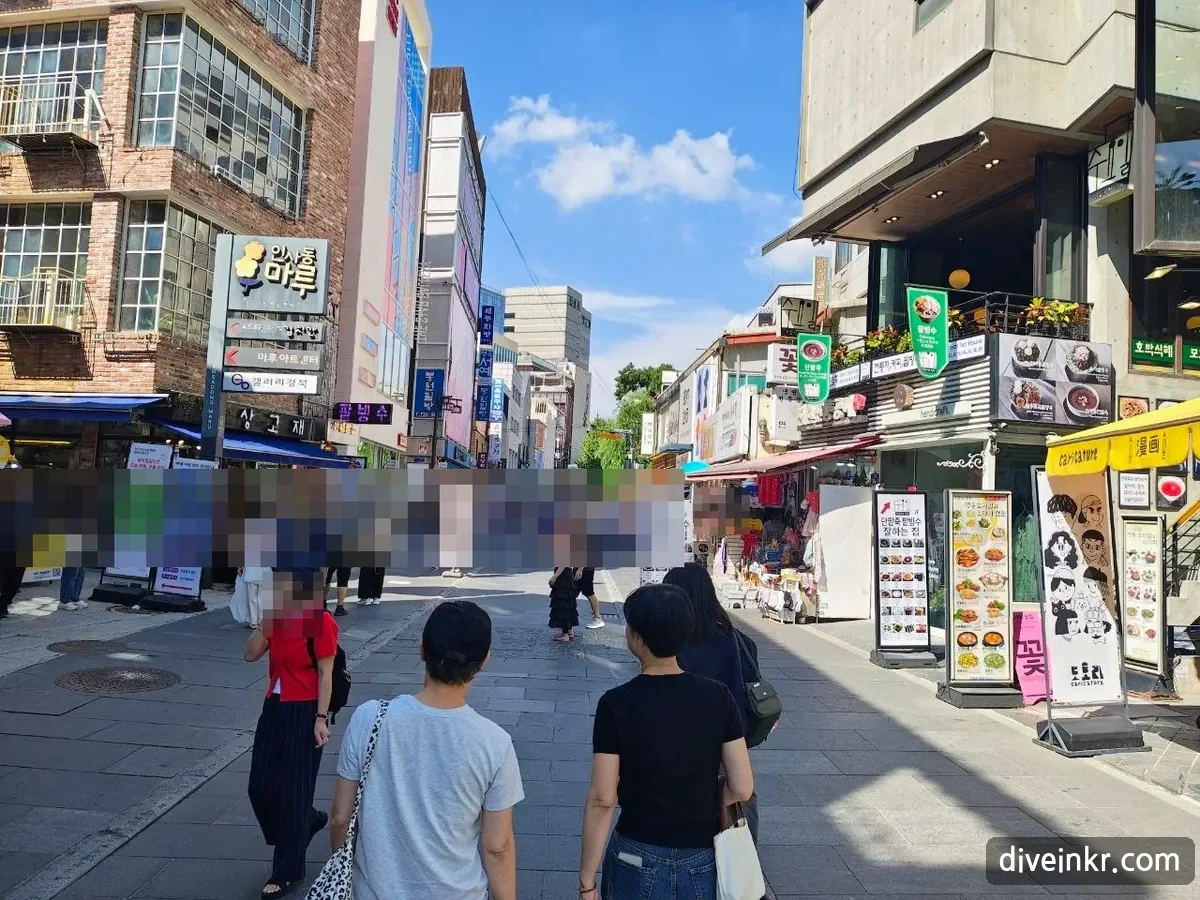
Insadong is one long, walkable street in Seoul's old downtown, a short walk north of Jongno, with narrow alleys branching off it. The main street, 인사동길 (Insadong-gil), runs about 700 meters, lined with galleries, antique shops, framers, traditional craft shops and 필방 (pilbang), brush shops. The name itself dates from 1914, when it was put together from two older neighborhood names, 관인방 (Gwaninbang) and 대사동 (Daesadong). In 2002 Seoul made Insadong the city's first Cultural District (문화지구, munhwa jigu). The signs are a good mix for a learner: some are in plain 한글 (Hangeul), some borrow Chinese characters, and many are the kind of thing you'll see all over Korea — we decode more of those in reading Korean street signs.
The boards in the photo use a phrase you'll see outside restaurants everywhere: ○○ 잘하는 집 (jalhaneun jip), "the place that does ○○ well." Here the ○○ is 단팥죽 (danpatjuk), sweet red-bean porridge, and 팥빙수 (patbingsu), shaved ice with sweet red beans.
See also: Asking for directions in Korean
Reading the Shop Signs: 필방 and 보이차
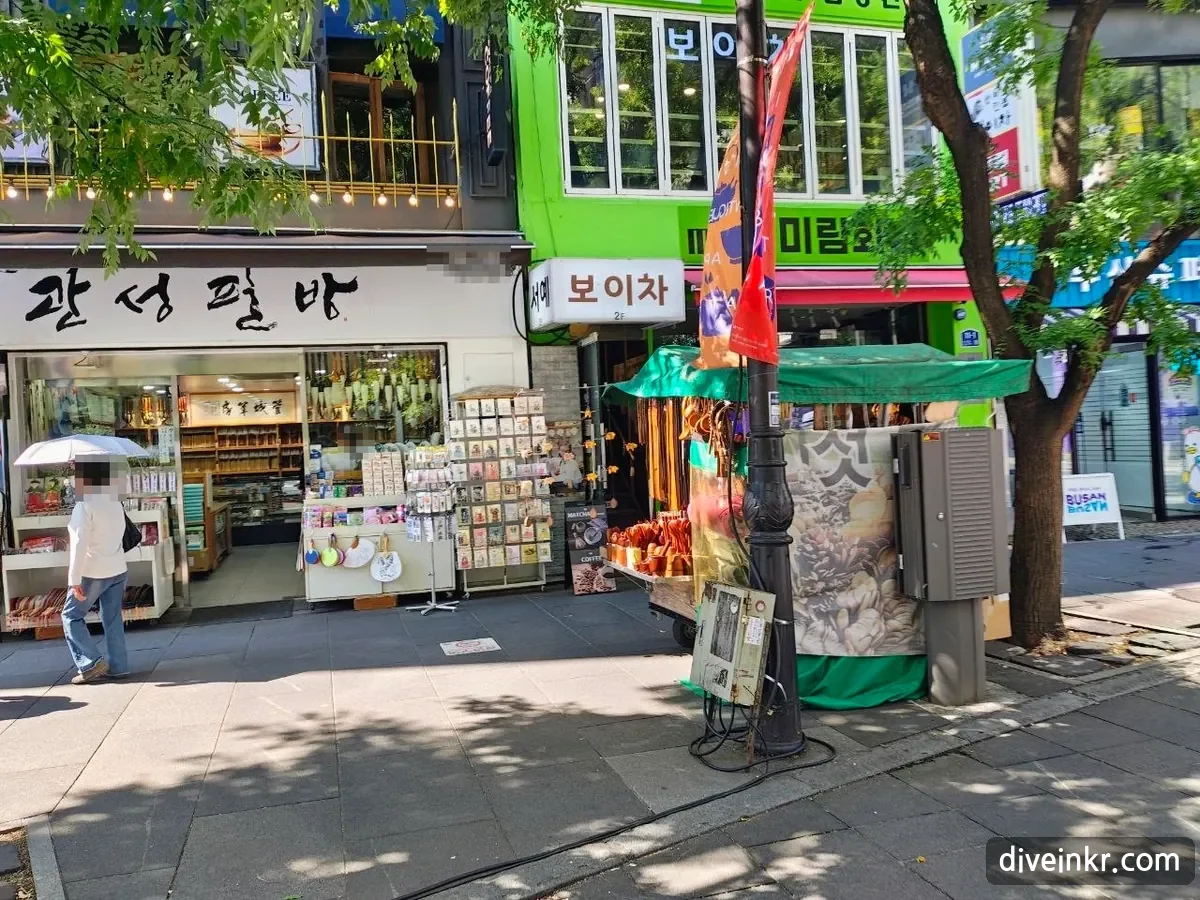
The big word on this shop is 필방 (pilbang). It comes from two Chinese characters: 筆 (pil), "brush," and 房 (bang), "room" or "shop" — and the dictionary defines a 필방 as a shop that makes and sells brushes. Look through the window and you can see rows of them hanging up, and cards and paper goods on the racks outside. The name in front, 관성, is simply the shop's name.
Next door, the small sign says 서예 (seoye), "calligraphy," and 보이차 (boicha), pu'er tea, with 2F under it: the tea shop is on the second floor. In Korea, 2F or 2층 (i cheung) on a sign means you need to go upstairs — a lot of shops are not on the ground floor.
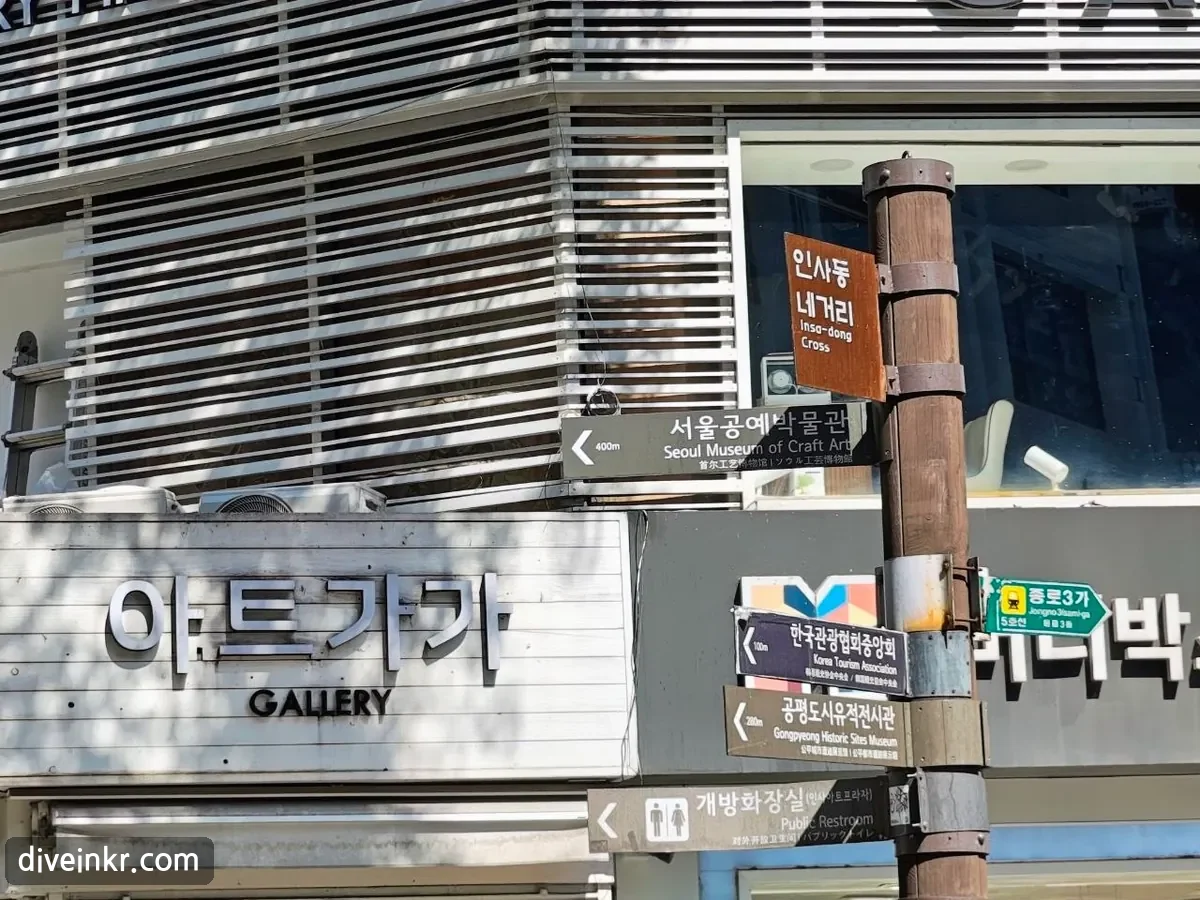
Signposts like this one are the easiest reading practice on the street, because the English is right underneath. 네거리 (negeori) is a crossroads — another word for the 사거리 (sageori) you'll see on road signs. 박물관 (bangmulgwan) is a museum, and 개방화장실 (gaebang hwajangsil) is literally an "open restroom" — the English on the sign says Public Restroom. The green sign points to 종로3가 (Jongno 3-ga) subway station.
| On the sign | Romanization | Meaning |
|---|---|---|
| 필방 | pilbang | Brush shop (筆 brush + 房 shop) |
| 서예 | seoye | Calligraphy |
| 보이차 | boicha | Pu'er tea |
| 2층 · 2F | i cheung | Second floor |
| 네거리 | negeori | Crossroads, four-way intersection |
| 박물관 | bangmulgwan | Museum |
| 개방화장실 | gaebang hwajangsil | Public restroom (literally "open restroom") |
Stuck? The Insadong Information Booth
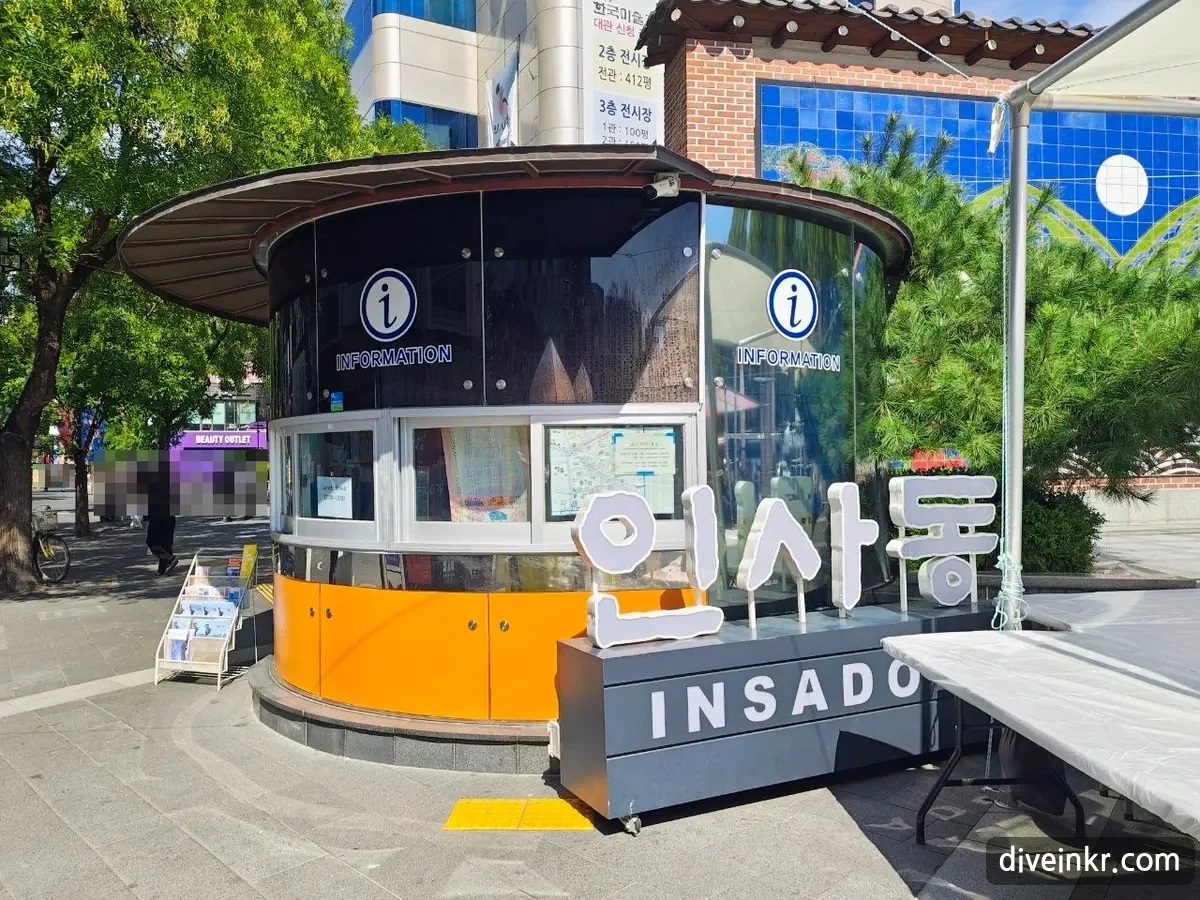
If you need a map or directions, look for the round information booth with the i. A few words of Korean are a friendly way to start, and they work with anyone on the street — more in asking for directions in Korean.
지도 있어요?
jido isseoyo?
Do you have a map?
조계사 어떻게 가요?
jogyesa eotteoke gayo?
How do I get to Jogyesa?
화장실 어디예요?
hwajangsil eodiyeyo?
Where's the restroom?
붓 어디에서 팔아요?
but eodieseo parayo?
Where can I buy a brush?
필방 (pilbang, "brush shop") is still on the signs, but it's mostly older people who say it — most people today just ask where brushes are sold.
조계사 (Jogyesa): A Temple in the Middle of Downtown
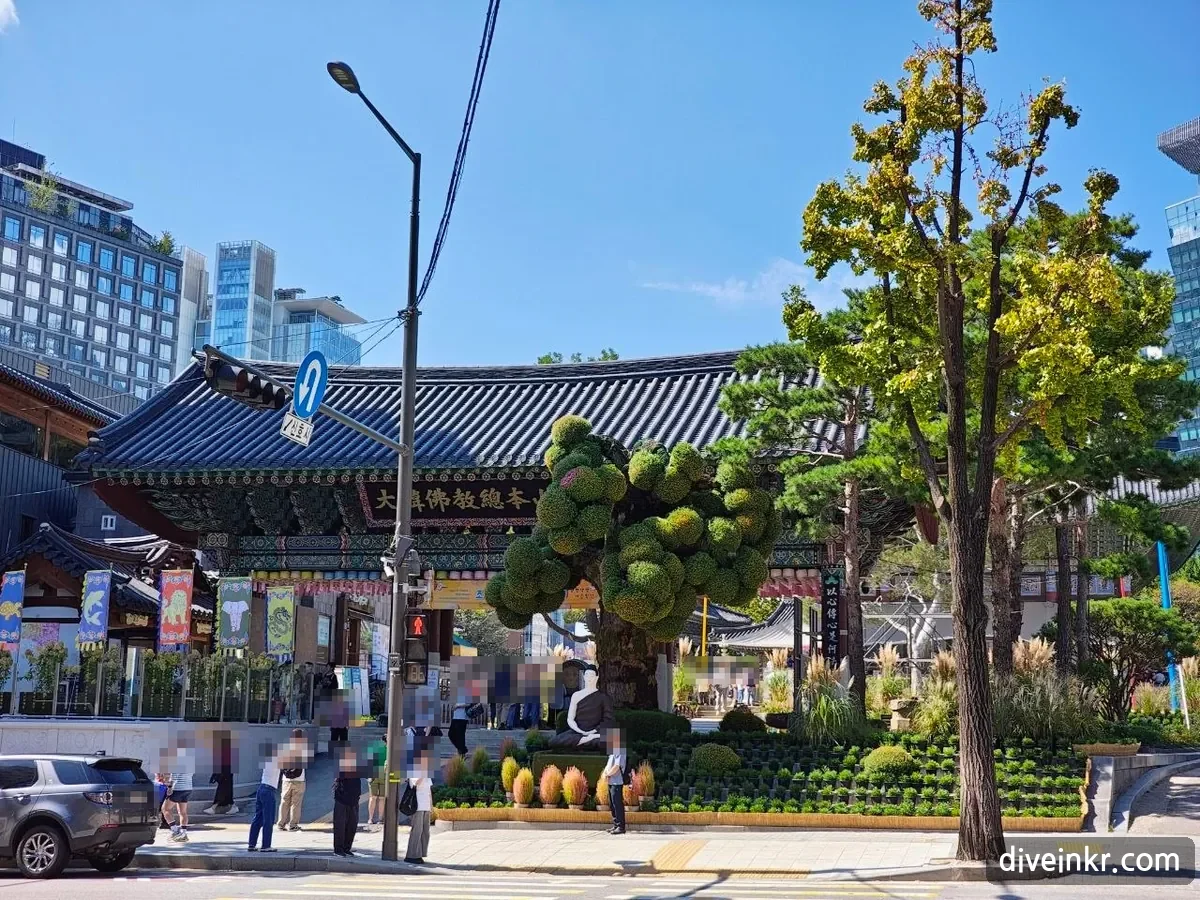
Jogyesa is a working Buddhist temple in the middle of downtown Seoul, with office towers all around it. It's the head temple of the 대한불교조계종 (Daehan Bulgyo Jogyejong), the Jogye Order of Korean Buddhism — Korea's largest Buddhist order — and the order's headquarters is on the same grounds. The temple was founded in 1910 as 각황사 (Gakhwangsa), rebuilt here and renamed 태고사 (Taegosa) in 1938, and later took the name Jogyesa. The grounds are open around the clock, and there's no admission fee.
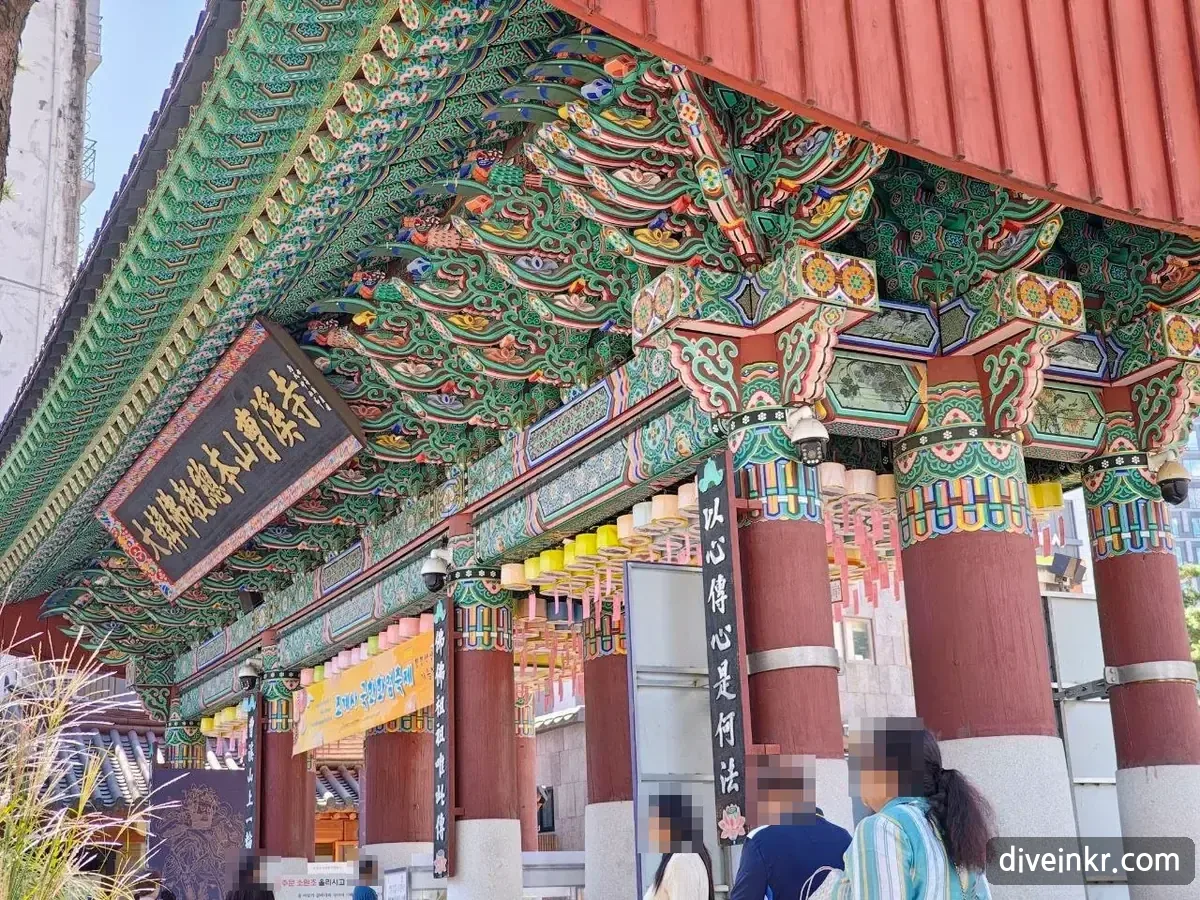
The signboard over the gate is written in Chinese characters, as temple signboards (현판, hyeonpan) usually are. Read in Korean it's 대한불교 총본산 조계사 (Daehan Bulgyo Chongbonsan Jogyesa): 대한 (Daehan) is Korea, 불교 (bulgyo) is Buddhism, 총본산 (chongbonsan) is "head temple," and 조계사 is the temple's name. The last character, 寺 (사, sa), means temple — that's why so many temple names end in 사.
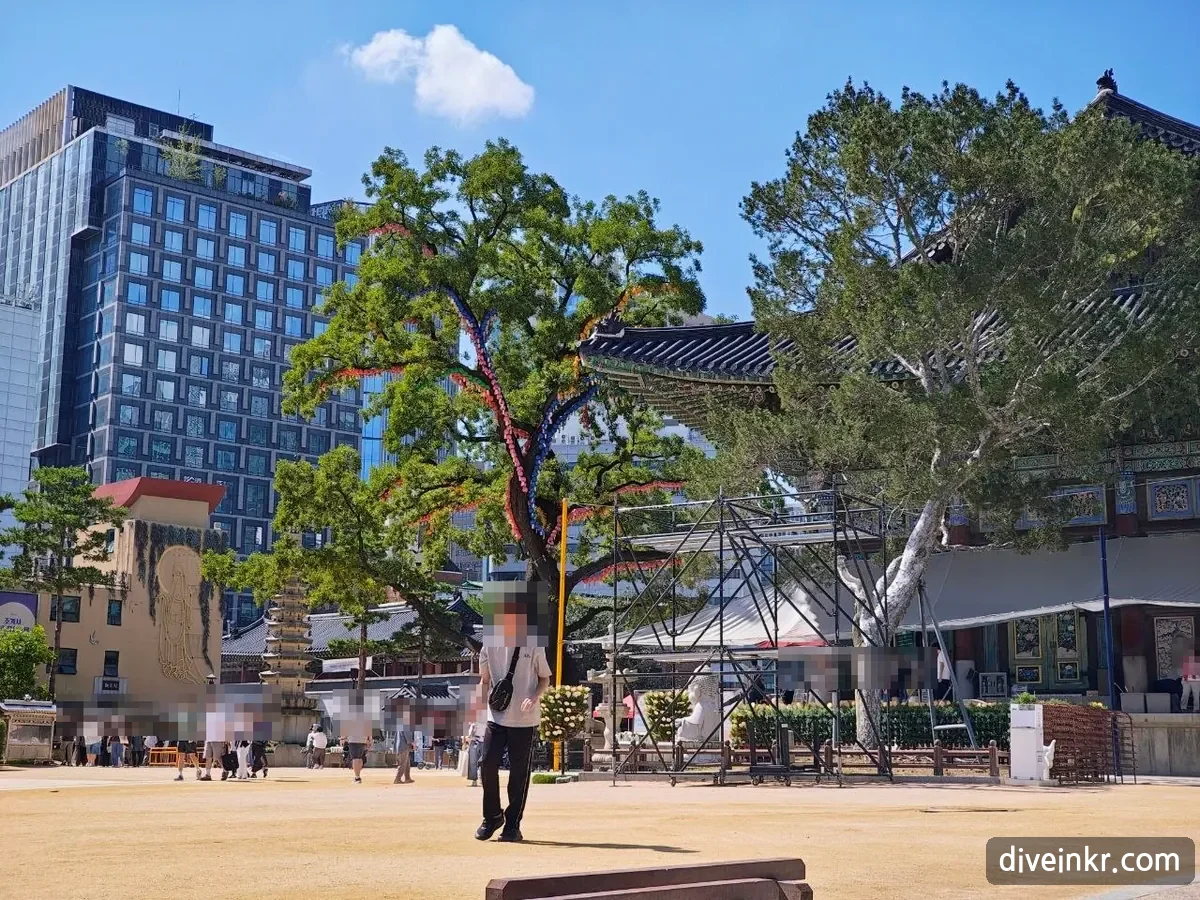
Inside the gate is a wide courtyard with the main hall, 대웅전 (Daeungjeon), on one side. The hall is a Seoul-designated cultural heritage building: it was first built in 1922 in Jeongeup, in the south of the country, and moved here in 1938. In the courtyard stand two old trees: a 회화나무 (hoehwa namu, Chinese scholar tree) and a white pine, 백송 (baeksong), both more than 450 years old. The white pine is a designated Natural Monument — look for its pale, whitish trunk. It's an active temple, so keep your voice down near the halls and don't take photos of people praying.
불교용품 (Bulgyo Yongpum): The Buddhist Supplies Shops
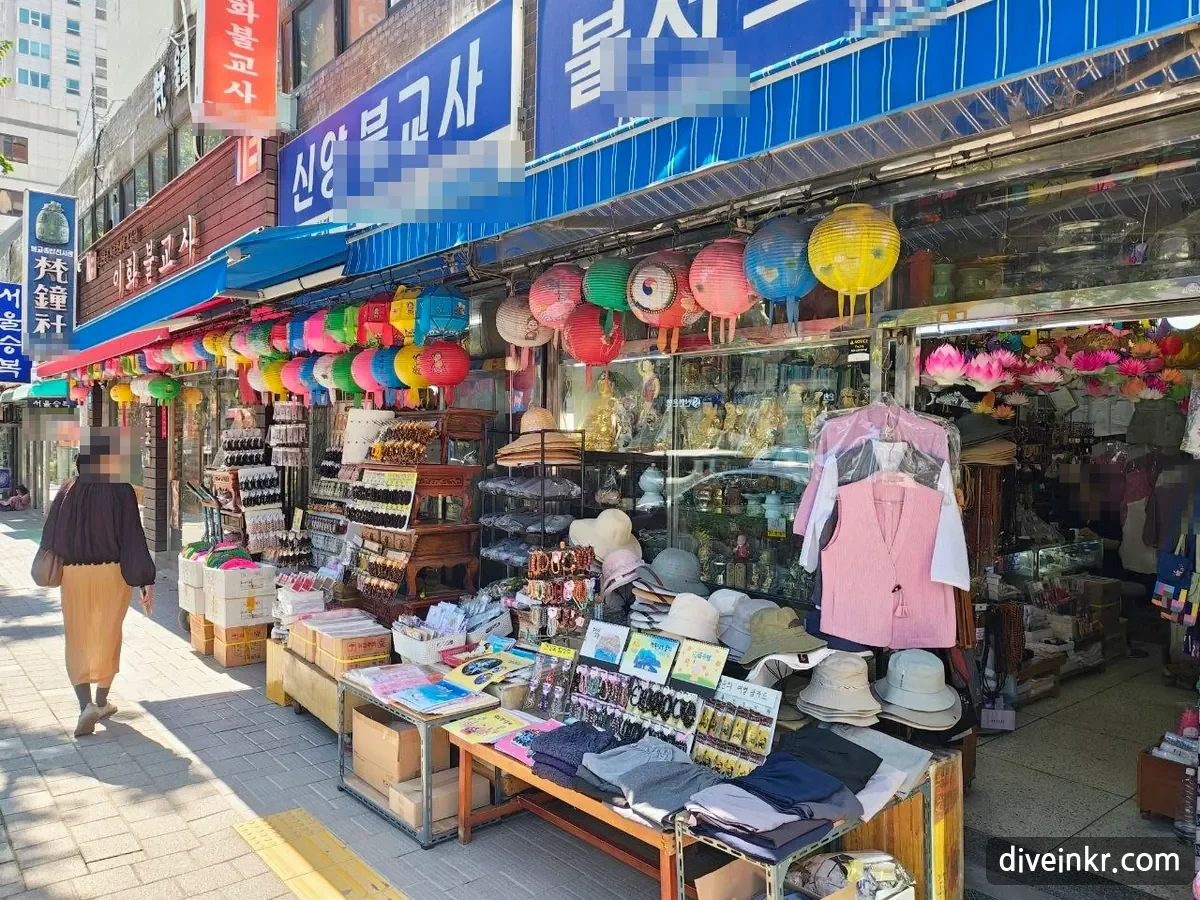
Right beside the temple is a row of shops selling 불교용품 (bulgyo yongpum), "Buddhist supplies": 불교 (bulgyo) is Buddhism and 용품 (yongpum) means goods or supplies — the same word you'll see in 생활용품 (saenghwal yongpum), "household goods." In the photo you can see paper lanterns, hats, clothes and small figures behind glass.
The shop names are worth a closer look. Many end in 불교사 (bulgyosa), where 사 (社) means "company" — not the 사 (寺) of temple names. The small sign on the far left, 서울승복 (Seoul Seungbok), uses 승복 (seungbok), the clothing monks wear.
탑골공원 (Tapgol Park) and the 삼일문 Gate
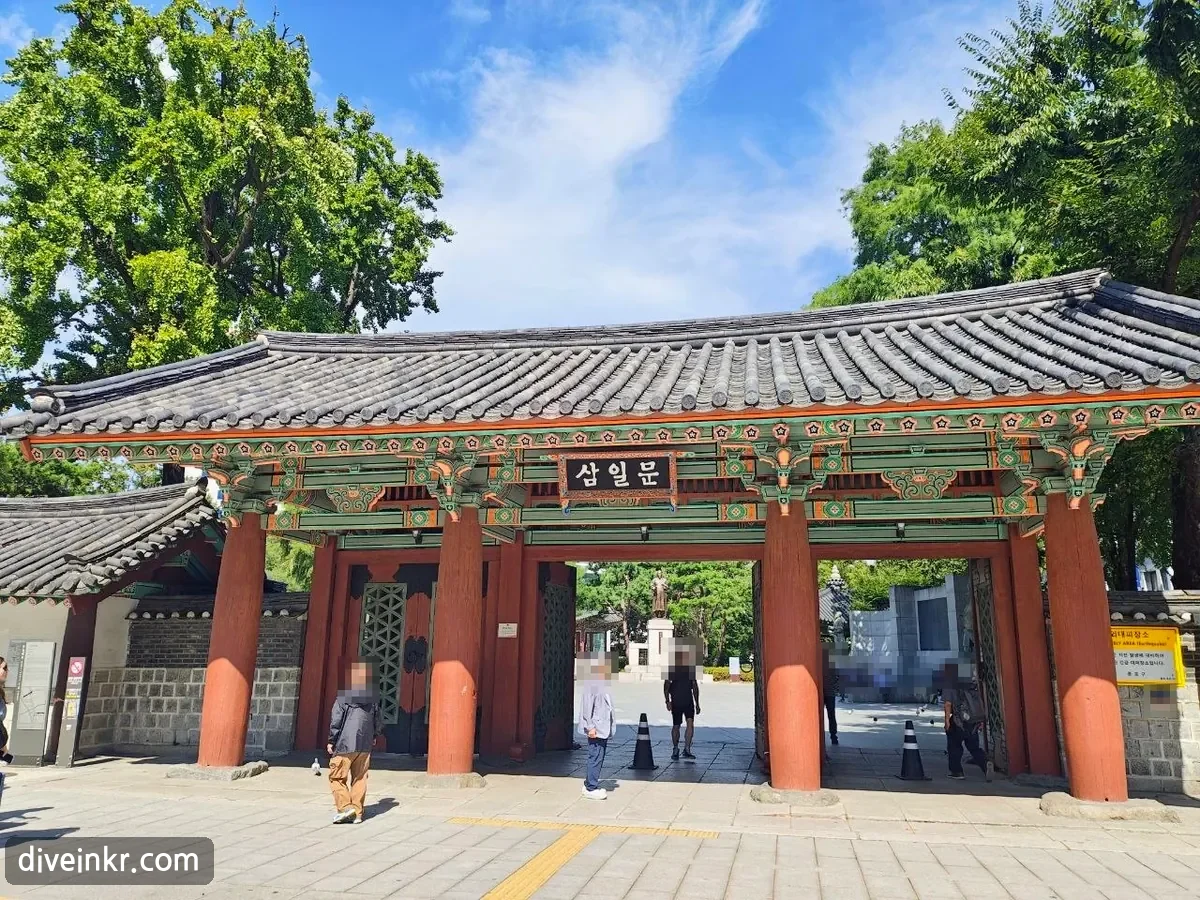
탑골공원 (Tapgol Gongwon) is a small walled park on Jongno, and Seoul's first modern park, laid out around the turn of the 20th century. 탑 (tap) means pagoda or tower and 공원 (gongwon) means park. The pagoda in the name is real: inside stands the Ten-story Stone Pagoda of Wongaksa Temple Site (원각사지 십층석탑), a marble pagoda about 12 meters tall, built in 1467 and designated a National Treasure. Admission to the park is free.
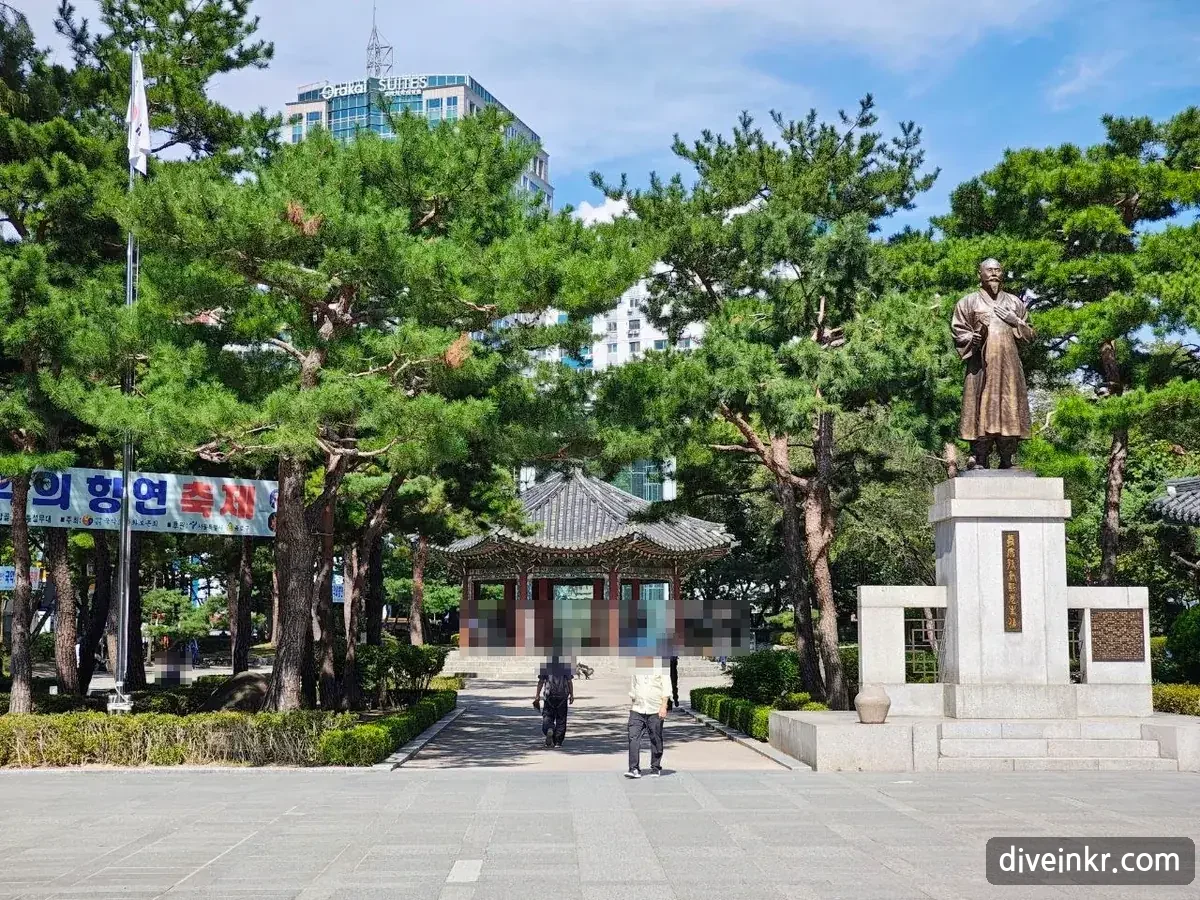
On March 1, 1919, the Declaration of Independence was read aloud at this pavilion, 팔각정 (Palgakjeong, "eight-sided pavilion") — a key moment of the March 1st Movement for independence from Japanese colonial rule. The anniversary, 삼일절 (Samiljeol), is a national holiday. Now look back at the gate's name, 삼일문 (Samilmun): 삼일 (samil) is the same "three-one" as 3·1, March 1st, and 문 (mun) means gate.
A Short Route
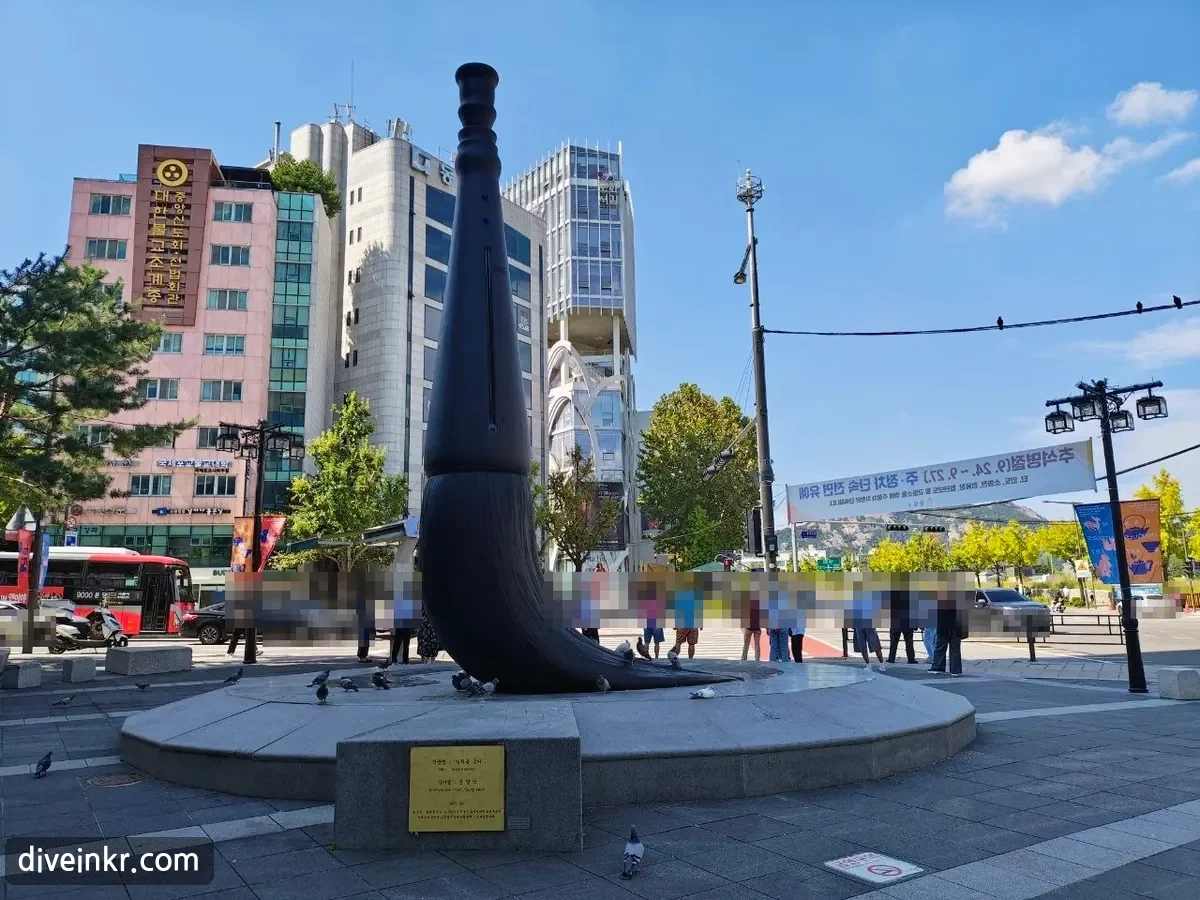
- Start at the brush sculpture at Insadong's north entrance and walk along the main street, reading the shop signs.
- Stop at the information booth if you need a map.
- Head west to Jogyesa, and look at the Buddhist supplies shops beside it. The temple sits level with Insadong rather than below it, so this leg is a short walk across, not down.
- Walk south to Jongno and east along it to Tapgol Park — the 삼일문 gate faces the main road.
- From there, Jongno 3-ga Station (종로3가역) is close by for the subway.
Taking a taxi instead? Just say the place name plus 가 주세요 (ga juseyo), "please go to" — more in taxi Korean phrases, and for buses see how to ride a bus in Seoul.
인사동 가 주세요.
insadong ga juseyo.
To Insadong, please.
탑골공원 어디예요?
tapgol gongwon eodiyeyo?
Where is Tapgol Park?
종로3가역 어떻게 가요?
jongno samgayeok eotteoke gayo?
How do I get to Jongno 3-ga Station?
Words From This Walk
| Korean | Romanization | Meaning |
|---|---|---|
| 필방 | pilbang | Brush shop |
| 서예 | seoye | Calligraphy |
| 절 · 사찰 | jeol · sachal | Buddhist temple |
| 현판 | hyeonpan | Signboard over a gate or door |
| 불교 | bulgyo | Buddhism |
| 용품 | yongpum | Goods, supplies |
| 승복 | seungbok | Monk's clothing |
| 탑 | tap | Pagoda, tower |
| 공원 | gongwon | Park |
| 문 | mun | Gate, door |
| 네거리 | negeori | Crossroads |
Mini Quiz
4 short questions — about 2 minute
2. A sign says 보이차 2F. Where is the tea shop?
3. What does 불교용품 mean?
4. Why is Tapgol Park's gate called 삼일문?
5. What is 네거리?
Part of Korean Phrases for Travelers
Related Knowledge
- Reading Korean street signs
- Asking for directions in Korean
- How to ride a bus in Seoul
- Taxi Korean phrases
1 more related
Learn Next
Insadong's shop signs and signposts are a great start — this guide decodes the signs you'll see all over Seoul.
Will you remember this tomorrow?
Save it — your daily review brings it back right before you'd forget. No account needed.