Korean Past Tense: -았/-었 Explained
Written and reviewed by Jun and Jin, native Korean speakers
Published · Updated · How we write & review
After this page, you can put verbs into the past tense with -았/었어요 (-asseoyo/-eosseoyo) in polite, formal and casual speech.
10-second answer
How do you say -았/-었 in Korean?
-았/-었 (-at/-eot) marks past tense, inserted right before the polite ending -어요 (-eoyo) becomes -었어요 (-eosseoyo). It follows the exact same bright/dark vowel rule as present tense: ㅏ/ㅗ stems take -았, everything else takes -었.
Quick check — did that land?
1. 받다 (to receive) is 받아요 in the present. What's the past tense?
가요, 갔어요. 해요, 했어요. -았/었어요는 과거를 나타내요.
The Pattern: Present → Past
| Verb | Present (-아/어요) | Past (-았/었어요) |
|---|---|---|
| 가다 (go) | 가요 | 갔어요 |
| 먹다 (eat) | 먹어요 | 먹었어요 |
| 하다 (do) | 해요 | 했어요 |
| 오다 (come) | 와요 | 왔어요 |
If you already know a verb's present tense, past tense is nearly automatic: swap 요 for 어요, using the same vowel that's already there.
See also: Korean Present Tense: -아요/-어요
Quick Examples
어제 학교에 갔어요.
eoje hakgyo-e gasseoyo.
I went to school yesterday.
밥 먹었어요?
bap meogeosseoyo?
Did you eat?
The greeting from earlier — now you see its grammar.
재미있었어요.
jaemiisseosseoyo.
It was fun.
To say "just now" with a past verb, compare 방금 vs 금방 (banggeum vs geumbang).
Telling Someone Where You Went
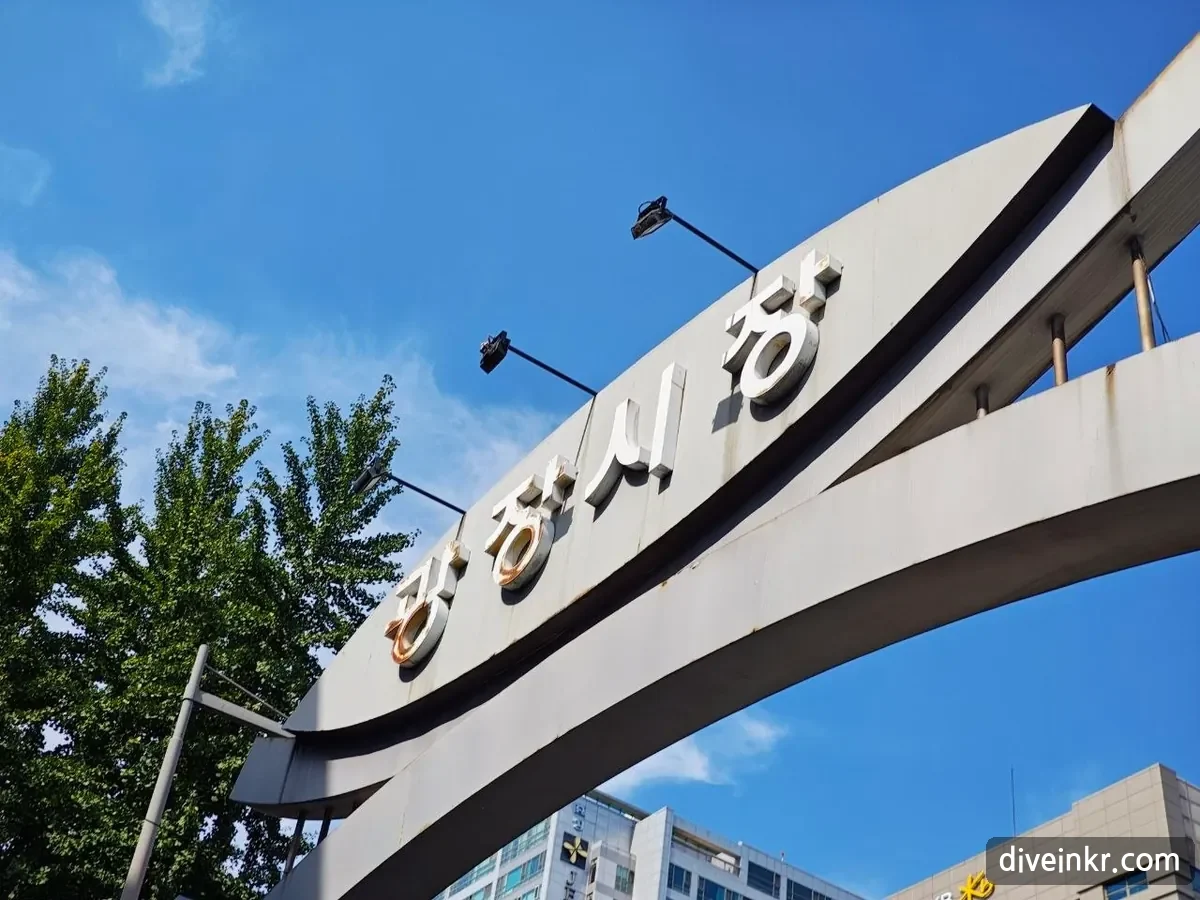
The past tense is what you'll use most when someone asks about your day or your trip. A visit to a market like this one turns into a string of -았/-었 forms: 갔어요 (gasseoyo, went), 봤어요 (bwasseoyo, saw), 먹었어요 (meogeosseoyo, ate), 샀어요 (sasseoyo, bought).
Each one follows the vowel rule. 가다 and 사다 have ㅏ, so they take 았, and the two ㅏ sounds merge: 가 + 았어요 → 갔어요. 보다 has ㅗ, so it takes 았 too and contracts to 봤어요. 먹다 has ㅓ, so it takes 었: 먹었어요. Adjectives work the same way — 많다 (many) → 많았어요. For choosing between 에 and 에서 in these sentences, see 에 vs 에서.
어제 어디 갔어요?
eoje eodi gasseoyo?
Where did you go yesterday?
광장시장에 갔어요. 사람이 정말 많았어요.
gwangjang sijang-e gasseoyo. sarami jeongmal manasseoyo.
I went to Gwangjang Market. There were so many people.
거기서 뭐 샀어요?
geogiseo mwo sasseoyo?
What did you buy there?
Formal and Casual Past Tense
| Level | Form | Example |
|---|---|---|
| Formal | -았/었습니다 | 갔습니다 (went) |
| Polite | -았/었어요 | 갔어요 (went) |
| Casual | -았/었어 | 갔어 (went) |
One Irregular Worth Memorizing: 이다 (to be)
이에요/예요 ("to be," polite) becomes 이었어요/였어요 in the past — not a simple -았/었 swap, so it's worth memorizing directly:
학생이었어요.
I was a student.
학생(consonant-ending) + 이었어요.
친구였어요.
It was a friend.
친구(vowel-ending) + 였어요.
Common Mistakes
Mistake #1 — Applying -았/었 directly to 이다
이다's past tense isn't 이아써요 — it's 이었어요/였어요, following its own vowel-contraction pattern.
Mistake #2 — Forgetting 하다 stays irregular in the past too
했어요, not 하았어요 — consistent with 해요 in the present.
Mini Quiz
2 short questions — about 1 minute
2. How do you say "I was a student"?
3. What's the past tense of 하다 (해요 in present)?
Part of Korean Grammar Basics — Particles, Tense, and Negation
Related Knowledge
Learn Next
What Does -고 싶다 Mean? Saying 'I Want To' in Korean
Present and past done — now add the ending that lets you say what you WANT to do.
Will you remember this tomorrow?
Save it — your daily review brings it back right before you'd forget. No account needed.