에 vs 에서: What's the Difference in Korean?
Written and reviewed by Jun and Jin, native Korean speakers
Published · Updated · How we write & review
After this page, you can pick 에 (e) or 에서 (eseo) from the verb: where something is or goes, versus where an action happens.
10-second answer
The short answer
에 (e) marks a destination or where something/someone simply exists ("to," "at," "in" with static verbs). 에서 (eseo) marks the location where an action actually happens ("at," "in" with action verbs). Rule of thumb: 있다/가다/오다 (itda/gada/oda) usually want 에; almost every other action verb wants 에서.
Quick check — did that land?
1. 저는 집___ 있어요. (I'm at home.) Fill in the blank:
학교에 가요. 학교에서 공부해요. 에는 목적지, 에서는 행동하는 장소를 나타내요.
Quick Examples
학교에 가요.
hakgyo-e gayo.
I go to school.
에 = destination, with 가다 (go).
저는 학교에 있어요.
jeoneun hakgyo-e isseoyo.
I'm at school.
에 = simple existence, with 있다 (exist/be).
학교에서 공부해요.
hakgyo-eseo gongbuhaeyo.
I study at school.
에서 = where the action (studying) happens.
With 있다 the particle is almost always 에 (집에 있어요), because 있다 states existence rather than an action — more on 있다 and 없다.
See also: 은/는 — the topic marker
The Core Distinction
| Particle | Marks | Pairs naturally with |
|---|---|---|
| 에 (e) | Destination / simple location | 가다 (go), 오다 (come), 있다 (be/exist), 도착하다 (arrive) |
| 에서 (eseo) | Where an action takes place | 공부하다 (study), 먹다 (eat), 만나다 (meet), 일하다 (work) |
Quick test: can you insert "doing something AT" naturally? If the verb describes an activity happening in a place, it's 에서. If it's just "going to" or "existing in" a place, it's 에.
The Same Word, Different Particle
카페 (cafe) can take either particle — the verb decides:
카페에 가요.
I'm going to the cafe.
가다 → 에
카페에서 친구를 만나요.
I'm meeting a friend at the cafe.
만나다 (an action) → 에서
카페에 사람이 많아요.
There are a lot of people at the cafe.
있다-family (많다 behaves similarly) → 에
광장시장에 or 광장시장에서?
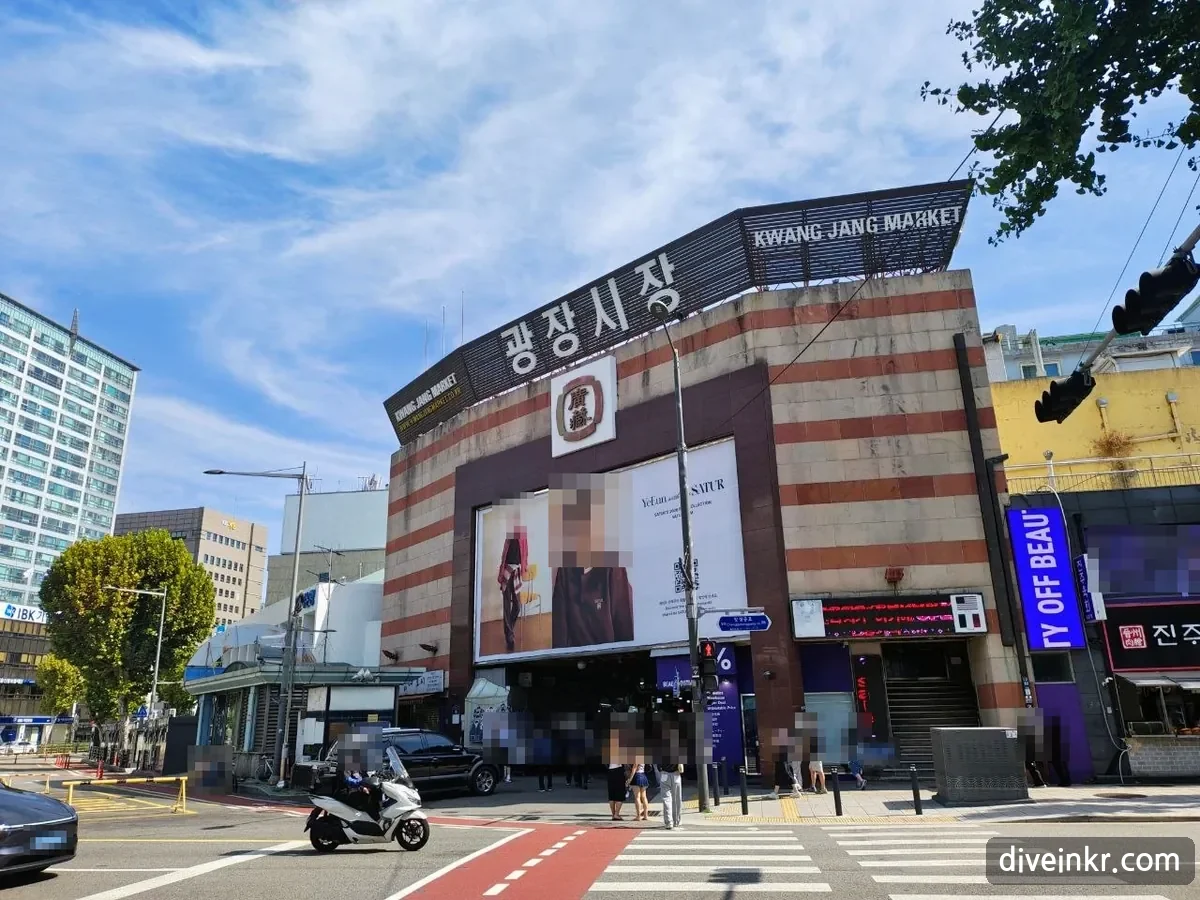
Place names work exactly like 카페 above. Heading to Gwangjang Market? 광장시장에 가요 (gwangjang sijang-e gayo). Taking photos once you're there? 광장시장에서 사진을 찍어요 (gwangjang sijang-eseo sajineul jjigeoyo). The market doesn't change — the verb does.
A quick test: with 가다/오다 (go/come) or 있다/없다 (be/not be), use 에. With a verb for something you do at the place — eat, buy, meet, take photos — use 에서. Meeting points follow the same rule: 광장시장 앞에서 만나요 ("let's meet in front of Gwangjang Market") takes 에서 because meeting is the action. For telling someone afterwards where you went, see the past tense.
내일 광장시장에 가요.
naeil gwangjang sijang-e gayo.
I'm going to Gwangjang Market tomorrow.
광장시장 앞에서 만나요.
gwangjang sijang apeseo mannayo.
Let's meet in front of Gwangjang Market.
광장시장에 사람이 많아요.
gwangjang sijang-e sarami manayo.
There are a lot of people at Gwangjang Market.
Common Mistakes
Mistake #1 — 학교에서 가요
Wrong — 가다 (go) takes 에, not 에서. 에서 needs an action happening IN the place, and "going" is movement TOWARD it.
Mistake #2 — 도서관에 공부해요
Wrong — 공부하다 (study) is an activity, so it wants 에서: 도서관에서 공부해요.
Mini Quiz
2 short questions — about 1 minute
2. 저는 식당___ 밥을 먹어요. (I eat at the restaurant.) Fill in the blank:
3. 내일 부산___ 가요. (I'm going to Busan tomorrow.) Fill in the blank:
Part of Korean Grammar Basics — Particles, Tense, and Negation
Related Knowledge
Learn Next
You've covered topic, subject, object, and location — 도 ("also") rounds out the particles you'll use in nearly every sentence.
Will you remember this tomorrow?
Save it — your daily review brings it back right before you'd forget. No account needed.