됐어요 vs 되었어요 (Dwaesseoyo vs Doeeosseoyo): Same Word, Two Moods
Written and reviewed by Jun and Jin, native Korean speakers
Published · How we write & review
After this page, you can choose between 됐어요 and 되었어요, and tell whether a 됐어 or 됐다 means "it worked out" or "enough, drop it".
10-second answer
The short answer
됐어요 (dwaesseoyo) is the shortened form of 되었어요 (doeeosseoyo): both are correct, because 되었 (doeeot) contracts to 됐 (dwaet). The short form 됐어 (dwaesseo) or 됐다 (dwaetda) can swing two ways: a bright "it worked out!" or a flat "enough, drop it." Tone of voice, face, and the words that follow decide.
Quick check — did that land?
1. Which is true of 됐어요 and 되었어요?
됐어요, 되었어요. 뜻은 같아요. 됐어요는 줄인 말이에요. 됐어!는 톤에 따라 성공도, 거절도 돼요.
Same Verb, Two Spellings
Both words come from the verb 되다 (doeda), "to become" or "to work out." Add the polite past ending and you get 되었어요 (doeeosseoyo). Say it quickly and the vowels 되 + 었 melt into one syllable, 됐: 됐어요 (dwaesseoyo). Nothing about the meaning changes. The short form is not slang and not a mistake.
| Long form | Short form | Tense and level |
|---|---|---|
| 되어요 (doeeoyo) | 돼요 (dwaeyo) | present, polite |
| 되었어요 (doeeosseoyo) | 됐어요 (dwaesseoyo) | past, polite |
| 되었다 (doeeotda) | 됐다 (dwaetda) | past, plain (written or self-talk) |
| 되었어 (doeeosseo) | 됐어 (dwaesseo) | past, casual (반말) |
The contraction is also the easiest way to remember which spelling to use. The National Institute of Korean Language answers that 돼 is the contracted form of 되어, so 되어서 and 되었다 can be shortened to 돼서 and 됐다. Its answer on 돼요 adds that 되어요 is the standard form but 돼요 is not wrong, citing Article 35, Appendix 2 of the Hangul orthography rules. A practical test follows from this: if you could swap in 되어 or 되었, the short form is 돼 or 됐.
See also: 존댓말 endings guide
Which One Do You Say?
For meaning and correctness, you can use either. The question is only how it sounds and looks. The contracted 됐어요 is the form that fits a spoken sentence, because it is shorter and flows quickly. The full 되었어요 reads a little more careful, so you may see it more in formal writing. Either one is fine in a polite conversation; if you are unsure how polite to be, see 반말 vs 존댓말 and the 존댓말 endings guide.
The Twist: 됐어 and 됐다 Swing Two Ways
The basic meaning of 됐다 (dwaetda) is that things happened the way you wanted. In everyday talk, though, people also use it to close a situation or to refuse something. Native speakers say the two meanings can be 180 degrees apart, and what separates them is the flow of the conversation, the tone of voice, and the speaker's expression.
| Positive: it worked out | Negative: enough, drop it | |
|---|---|---|
| Feeling | success, satisfaction, relief | refusal, giving up, irritation |
| Voice | bright and lively | low and stiff, or with a sigh |
| What follows | 드디어 (deudieo, "finally"), 이제 (ije, "now"), 딱 (ttak, "just right") | 더 이상 (deo isang, "any more"), 필요 없어 (piryo eopseo, "don't need it"), 그만해 (geumanhae, "stop it") |
| Rough English | "Yes, that did it!" | "Enough. Forget it." |
Quick test: if 드디어, 이제, or 딱 follows, it is almost always the happy meaning. If 더 이상, 필요 없어, or 그만해 follows, the speaker is shutting the topic down.
When 됐다 Means "It Worked!"
In the positive scenes the speaker has been waiting for something, and it finally comes through. The voice is upbeat, and the phrase is often doubled for emphasis: 됐다, 됐어! (dwaetda, dwaesseo).
합격자 명단에 내 이름이 있는 것을 확인한 순간, 나도 모르게 "됐다, 됐어!" 하고 소리를 질렀다.
hapgyeokja myeongdane nae ireumi inneun geoseul hwaginhan sungan, nado moreuge "dwaetda, dwaesseo!" hago sorireul jilleotda.
The moment I saw my name on the list of people who passed, I shouted "I did it, it worked!" without realizing it.
Success and relief.
고장 난 컴퓨터를 한참 동안 붙잡고 씨름하다가 마침내 전원이 켜지자 남동생은 "됐다 됐어, 이제 잘 돌아간다!"라며 기뻐했다.
gojang nan keompyuteoreul hanchamdongan butjapgo ssireumhadaga machimnae jeonwoni kyeojija namdongsaengeun "dwaetda dwaesseo, ije jal doraganda!"ramyeo gippeohaetda.
After wrestling with a broken computer for a long time, my younger brother was delighted when it finally powered on: "It works, it works, now it runs fine!"
이제 (ije) follows, which signals the happy meaning.
찌개 간을 보던 어머니께서 소금을 살짝 더 넣으시더니 "됐다 됐어, 이제 딱 맛있네."라며 만족해하셨다.
jjigae ganeul bodeon eomeonikkeseo sogeumeul saljjak deo neoeusideoni "dwaetda dwaesseo, ije ttak masinne."ramyeo manjokhaehasyeotda.
My mother, tasting the stew, added a little more salt and said, "That's it, it's just right now," satisfied.
이제 (ije) and 딱 (ttak) both follow.
When 됐다 Means "Enough"
In the negative scenes the speaker is irritated, has given up, or is turning something down. The voice drops, or there is a sigh. The phrase does not ask for more explanation; it ends the exchange, and what follows tends to be a plain statement that the speaker wants no more of it.
약속 시간에 1시간이나 늦어놓고 핑계만 대는 친구에게 나는 "됐다 됐어, 더는 아무 말도 듣고 싶지 않아."라며 뒤돌아섰다.
yaksok sigane han siganina neujeonoko pinggyeman daeneun chinguege naneun "dwaetda dwaesseo, deoneun amu maldo deutgo sipji anha."ramyeo dwidoraseotda.
To a friend who was an hour late and only made excuses, I said, "Enough, I don't want to hear another word," and turned away.
Irritation, with the follow-up making clear the speaker is done listening.
동생이 미안하다며 내 방 청소를 대신 해주겠다고 나섰지만, 화가 풀리지 않은 나는 "됐다 됐어, 내가 알아서 할 테니까 나가."라고 차갑게 말했다.
dongsaengi mianhadamyeo nae bang cheongsoreul daesin haejugetdago naseotjiman, hwaga pulliji aneun naneun "dwaetda dwaesseo, naega alaseo hal tenikka naga."rago chagapge malhaetda.
My younger sibling apologized and offered to clean my room for me, but I was still angry and said coldly, "No, forget it, I'll do it myself, so get out."
This is a refusal of an offer.
사장님이 말도 안 되는 고집을 피우자 김 대리는 동료에게 "됐다 됐어, 저러시는데 우리가 무슨 말을 더 하겠냐."라며 체념하듯 속삭였다.
sajangnimi maldo an doeneun gojibeul piuja Gim daerineun dongnyoege "dwaetda dwaesseo, jeoreosineunde uriga museun mareul deo hagetnya."ramyeo chenyeomhadeut soksagyeotda.
When the boss dug in over something absurd, Assistant Manager Kim whispered to a coworker in resignation, "Forget it, with him like that, what more can we say?"
Giving up, spoken quietly to a colleague.
Irritated speakers also pair it with a stop command. In the memo's phrasing: when something is annoying and not resolved, you can say 됐어, 그만해 (dwaesseo, geumanhae), "enough, stop," or 됐다, 그만 됐다 (dwaetda, geuman dwaetda), "that's enough."
Adding 요: 됐어요
Everything above uses the casual 됐어 or plain 됐다. Adding -요 gives 됐어요, the polite version of the same short form, and it is the form to use when you want to stay polite. The same swing is available to it: the bright 됐어요! after good news, or a closing 됐어요 when someone wants to end a topic. As with 됐어, the surrounding words and the voice carry the difference.
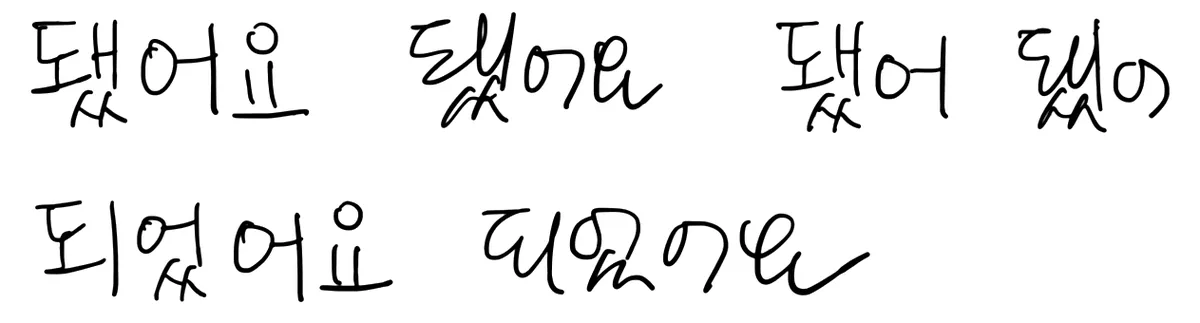
Do not decide from the words alone
The sentence on the page is identical in both moods. Listen for the voice and look at the face, and check what follows. Compare how 괜찮아 (gwaenchana) and 아니요 (aniyo) can also hide a refusal, and how 미친 (michin) swings between insult and compliment in the same way.
Common Mistakes
Mistake #1: treating 됐어요 as less correct than 되었어요
Both are correct. The contracted form is not casual slang; it is simply shorter.
Mistake #2: hearing 됐어 as always positive
Its core meaning is that something worked out, but in real conversation it is also a common way to close a topic or refuse. When the voice is low or there is a sigh, the speaker is not celebrating.
Mistake #3: writing 되 where 돼 belongs
Before an ending like -어요 or -었어요, the short form is 돼 or 됐. If you can say 되어 or 되었 in its place, write 돼 or 됐.
Mini Quiz
3 short questions — about 2 minute
2. Someone says "됐다, 됐어! 이제 잘 돌아간다!" in a bright voice. What do they mean?
3. Which words after 됐어 point to the negative meaning?
4. How can you tell which spelling to use, 되 or 돼?
Part of Korean Grammar Basics — Particles, Tense, and Negation
Related Knowledge
1 more related
Learn Next
반말 vs 존댓말: Casual vs Polite Korean Speech
Choosing 됐어 or 됐어요 is a choice between casual and polite speech.
Will you remember this tomorrow?
Save it — your daily review brings it back right before you'd forget. No account needed.