What Does 도 Mean in Korean?
Written and reviewed by Jun and Jin, native Korean speakers
Published · Updated · How we write & review
After this page, you can say "me too" and "this too" with 도 (do), letting it replace 은/는, 이/가 or 을/를 instead of stacking.
10-second answer
What does Do mean?
도 (do) means "also" or "too." It attaches directly to a noun and — importantly — it usually REPLACES 은/는 (eun/neun), 이/가 (i/ga), or 을/를 (eul/reul) rather than stacking with them.
Quick check — did that land?
1. How do you say "I like coffee too" (커피 = coffee)?
도, this tiny Korean particle can mean “too.”
Quick Examples
저도 학생이에요.
jeodo haksaeng-ieyo.
I'm a student too.
저 + 도 (replacing 는).
커피도 좋아해요.
keopido joahaeyo.
I like coffee too.
커피 + 도 (replacing 를).
저 사람도 왔어요.
jeo saramdo wasseoyo.
That person also came.
사람 + 도 (replacing 이/가).
See also: 은/는 — the topic marker
도 Replaces, Doesn't Stack
| Without 도 | With 도 |
|---|---|
| 저는 학생이에요. | 저도 학생이에요. (NOT 저는도) |
| 커피를 좋아해요. | 커피도 좋아해요. (NOT 커피를도) |
| 민수가 왔어요. | 민수도 왔어요. (NOT 민수가도) |
This is different from 에/에서, which 도 CAN attach after: 학교에도 가요 ("I go to school too") keeps 에 and adds 도 on top.
Conversation Use
저는 커피를 좋아해요. — 저도요!
jeodoyo!
I like coffee. — Me too!
저도요 is the classic short "me too" reply.
나도 몰라.
nado molla.
I don't know either.
도 also works with negatives — "neither/either."
Hats Too, Bags Too: 도 at a Flea-Market Stall
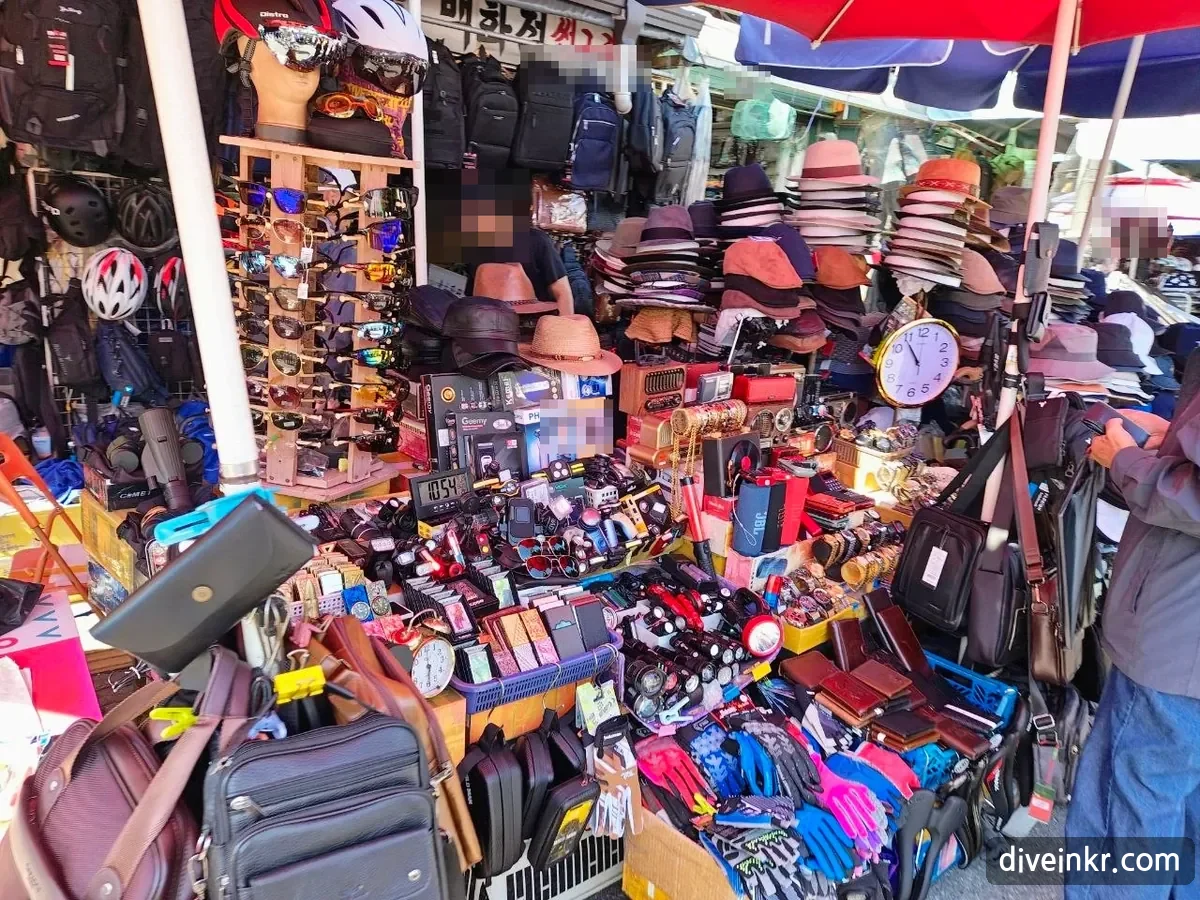
At Dongmyo market, stalls spill out onto the street, and one like this is 도 in picture form. There are hats — and sunglasses too, and bags too: 모자도 있고 선글라스도 있고 가방도 있어요. Each 도 takes the place of the 이/가 that would normally follow the noun, so 모자가 있어요 becomes 모자도 있어요, never 모자가도.
도 also turns a question into a friendly "do you have this too?" After looking at the hats, pointing at the bags and asking 가방도 있어요? works with no extra words. And if you end up buying more than one thing, 도 carries the story: 모자도 사고 가방도 샀어요. Its opposite, "only," is 만 (man), which follows the same replace-don't-stack rule.
모자도 있고 가방도 있어요.
mojado itgo gabangdo isseoyo.
There are hats, and bags too.
선글라스도 있어요?
seongeullaseudo isseoyo?
Do you have sunglasses too?
모자도 사고 가방도 샀어요.
mojado sago gabangdo sasseoyo.
I bought a hat and a bag too.
Common Mistakes
Mistake #1 — Stacking 도 with 는/가/를
저는도 or 커피를도 are wrong. 도 replaces those particles rather than joining them.
Mistake #2 — Forgetting 도 keeps 에/에서/에게
Unlike 은/는/이/가/을/를, particles like 에, 에서, and 에게 (to a person) stay and just get 도 tacked on: 친구에게도 (to my friend too).
도 stacks onto 에 and 에서 alike — if you're unsure which of those two to use, see 에 vs 에서.
Mini Quiz
2 short questions — about 1 minute
2. Your friend says "저는 학생이에요" and you're also a student. Short reply?
3. 학교에도 가요 keeps which particle before 도?
Part of Korean Grammar Basics — Particles, Tense, and Negation
Related Knowledge
Learn Next
도 ("also") and 만 ("only") are natural opposites — learn the second half of the pair.
Will you remember this tomorrow?
Save it — your daily review brings it back right before you'd forget. No account needed.