Gwanghwamun Square: King Sejong, Admiral Yi and the Gate of Gyeongbokgung
Written and reviewed by Jun and Jin, native Korean speakers
Published · How we write & review
After this page, you can find your way around Gwanghwamun Square and read the Korean on its gate, statues and monuments — King Sejong, Admiral Yi Sun-sin, the royal guard ceremony.
10-Second Answer
Gwanghwamun Square (광화문광장, Gwanghwamun Gwangjang) is the wide plaza in front of 광화문 (Gwanghwamun), the main gate of Gyeongbokgung Palace. Walking north you pass Admiral Yi Sun-sin (이순신, I Sun-sin) with a turtle ship at his feet, then King Sejong (세종대왕, Sejong Daewang), who created Hangul, with copies of his rain gauge and sundial in front. At the gate, the royal guard changing ceremony runs at 10:00 and 14:00 (not on Tuesdays).
Quick check — did that land?
1. What does 세종대왕 hold in his left hand?
Korea's Main Street
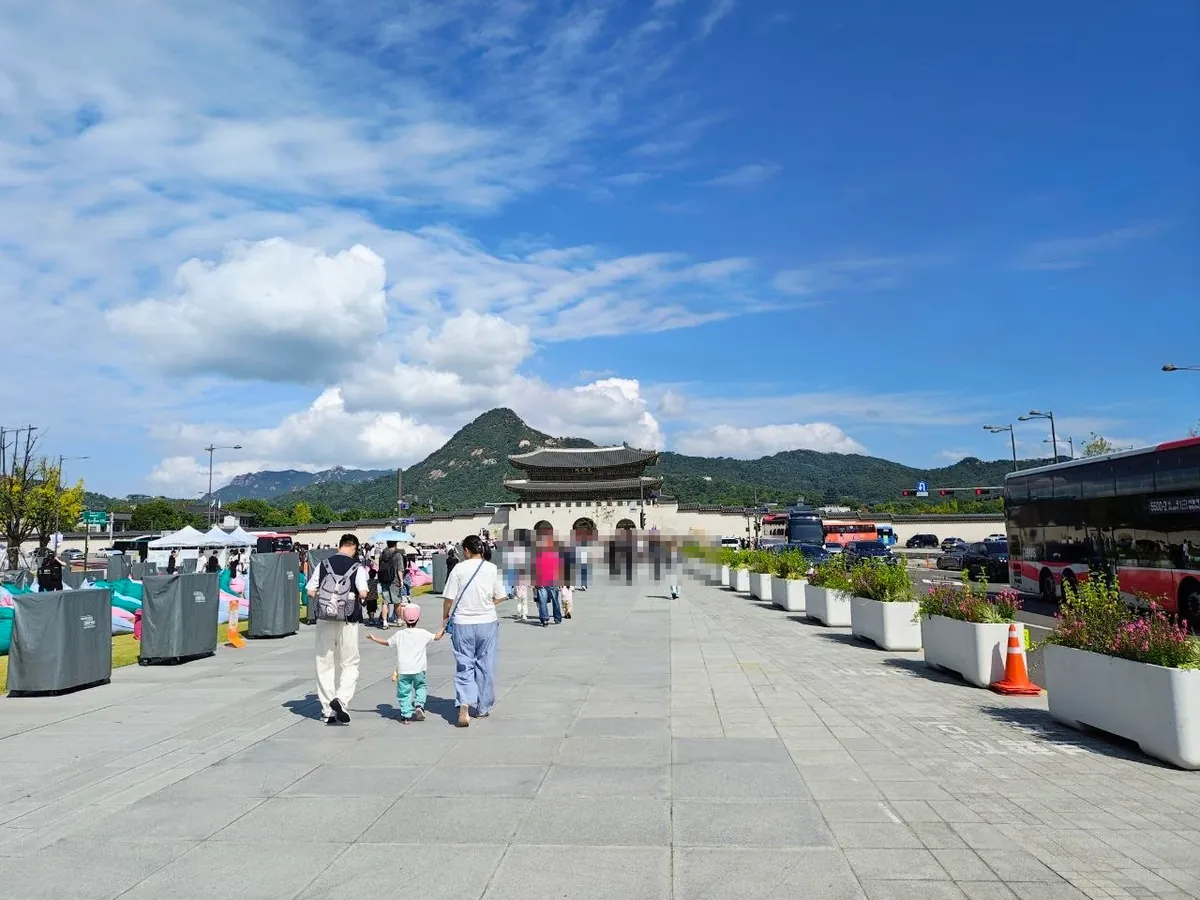
If Seoul has a main street, this is it. The road running south from the palace gate was the heart of the Joseon capital. It was lined with the offices of the six ministries of government, so it was called 육조거리 (Yukjo-geori, "Street of the Six Ministries"), and today it's where Koreans gather for national celebrations, concerts and protests alike. The square in the middle was redesigned and reopened on August 6, 2022: the road on the Sejong Center side was removed so the square now runs along the west side, and it doubled in size, to about 40,300 m², with 5,000 trees and long shallow water channels you can walk beside.
It's also one of the best places in Seoul to practice reading, because nearly everything is labeled — sometimes in Hangul, sometimes in Chinese characters (한자), which is part of the fun. Start at the south end near Gwanghwamun Station and walk north. (For the shop signs on the streets around it, see reading Korean street signs.)
이순신 장군: Admiral Yi Sun-sin and the Turtle Ship
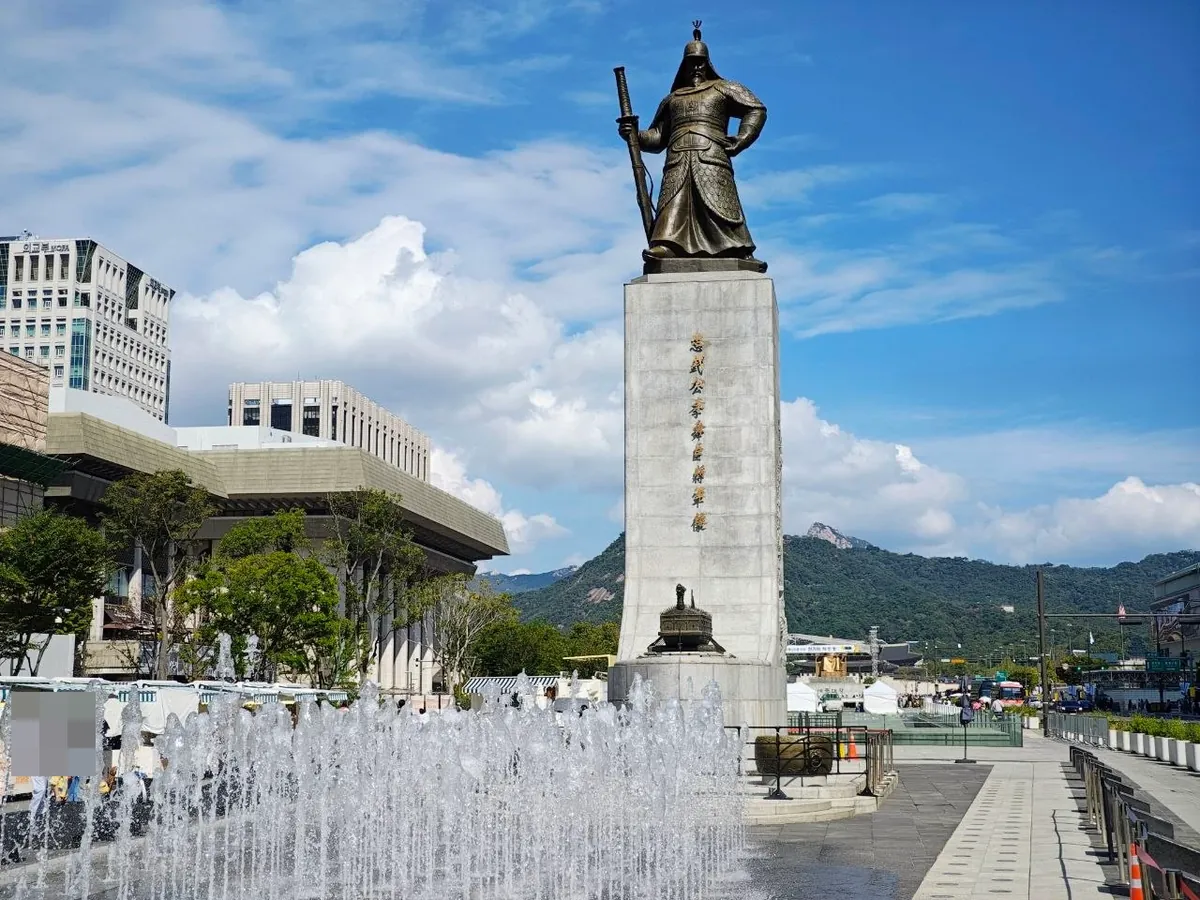
The first statue you reach is 충무공 이순신 장군 — Admiral Yi Sun-sin (1545–1598), the naval commander who defeated Japanese fleets during the invasions of the 1590s and is probably Korea's most admired war hero. The bronze statue was unveiled on April 27, 1968; the figure is 6.5 m tall and the whole monument about 17 m. 충무공 (Chungmu-gong) is the posthumous title he was given, which is why Koreans often simply call him 충무공.
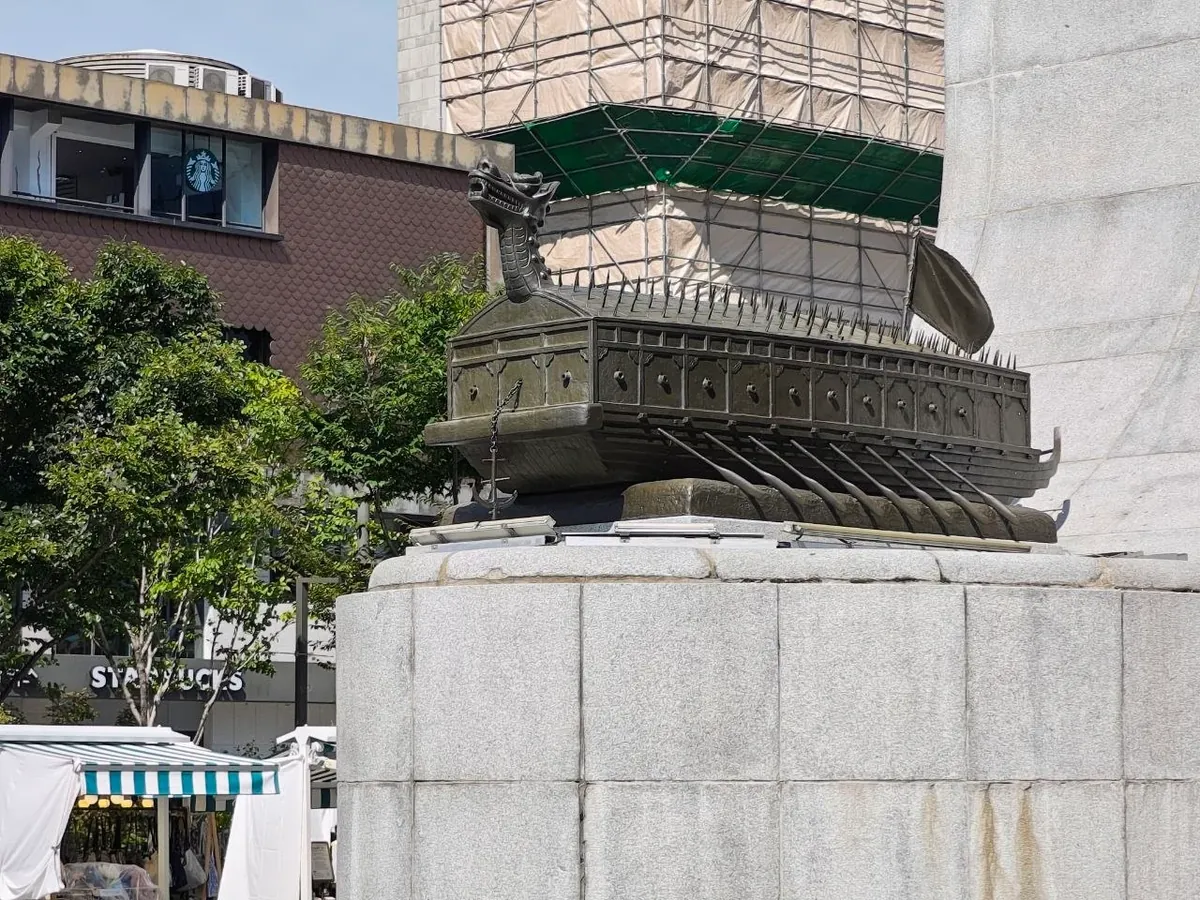
At his feet is a bronze 거북선 (geobukseon), the "turtle ship" — a roofed warship covered with spikes, strongly associated with Admiral Yi. The model is about 3 m long. The fountain in front of the statue, rebuilt in 2022, is called 명량분수 (the Myeongnyang Fountain): its 133 jets stand for the 133 Japanese ships that Yi's 13 ships fought off at the Battle of Myeongnyang in 1597, one of the most famous victories in Korean history.
| Korean | Romanization | Meaning |
|---|---|---|
| 장군 | janggun | General |
| 거북선 | geobukseon | Turtle ship (거북 = turtle, 선 = ship) |
| 동상 | dongsang | Bronze statue |
| 분수 | bunsu | Fountain |
세종대왕: The King Who Created Hangul
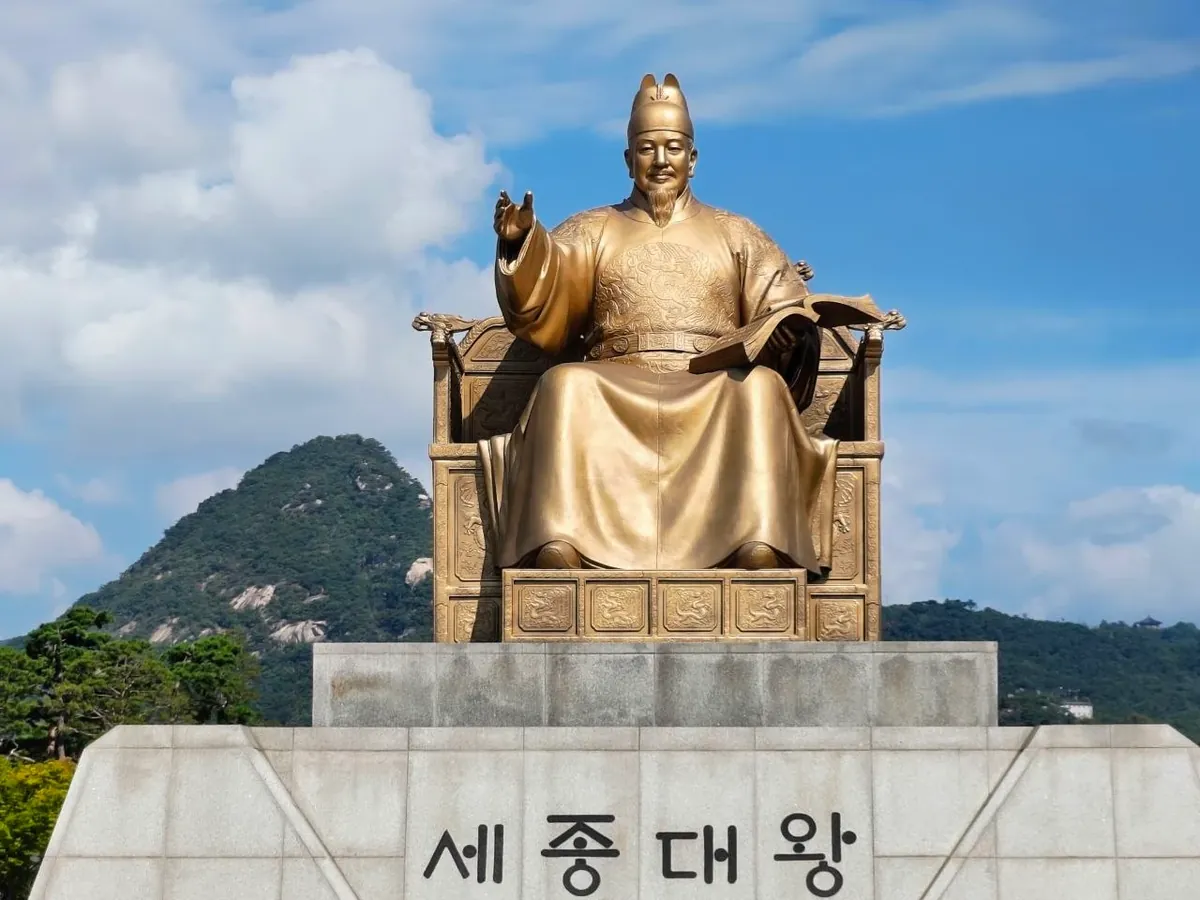
Further north sits 세종대왕 — King Sejong the Great (reigned 1418–1450), under whose rule Hangul was created in 1443 and proclaimed in 1446. The statue was unveiled on October 9, 2009, Hangul Day itself. It's 6.2 m tall on a 4.2 m base, and in his left hand he holds a book: 훈민정음, the document that introduced the new letters. 대왕 means "great king."
Notice the contrast with the admiral's statue a few hundred meters south: his name is carved in Chinese characters, Sejong's in the alphabet he created. For the letters themselves, start with our guide to Hangul — Hangul Day, October 9, is a public holiday in Korea.
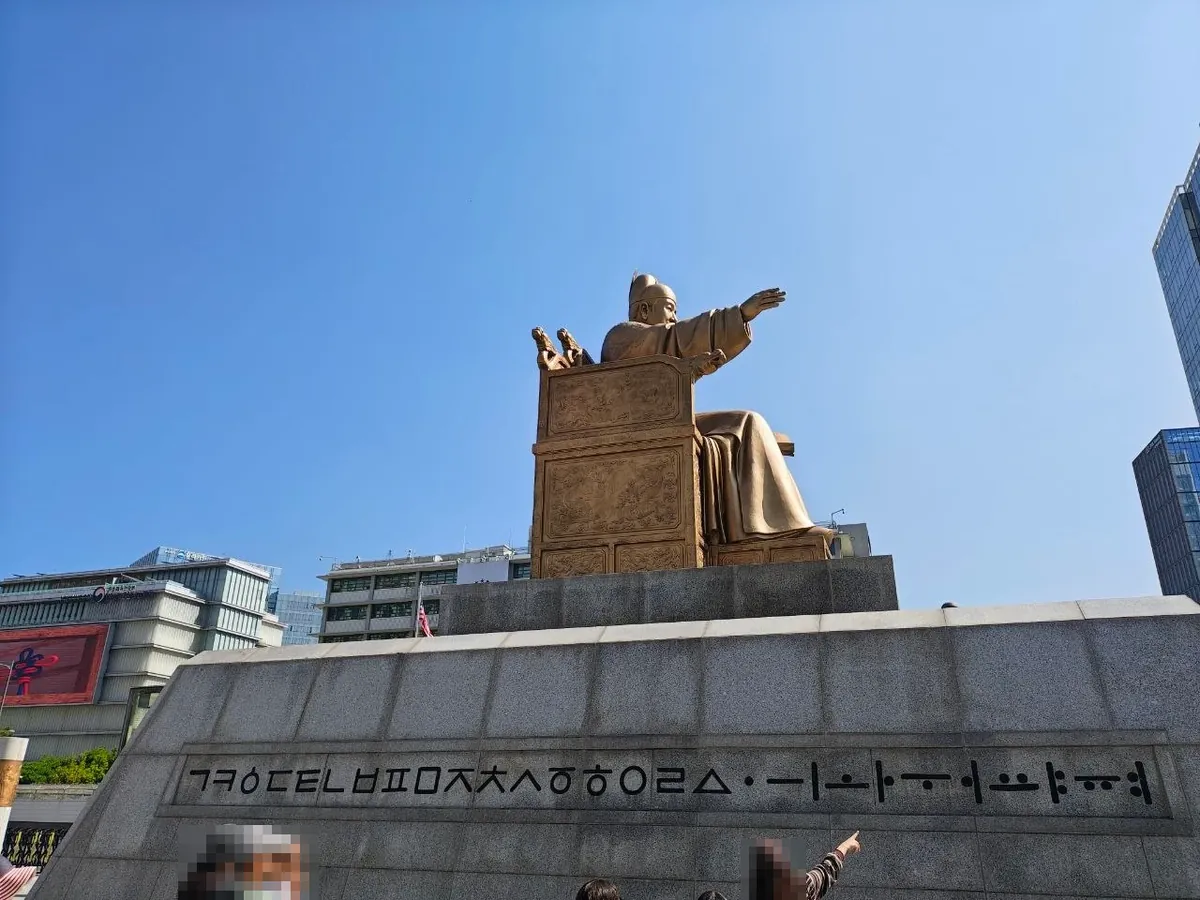
Walk around to the side of the pedestal and you'll find the alphabet itself: the 28 letters of the original 훈민정음, carved in the order Sejong's scholars listed them — 17 consonants starting with ㄱㅋㆁ, then 11 vowels starting with ·ㅡㅣ. Look closely and four of them aren't in any textbook today: ㆁ (an old ng sound), ㆆ (a glottal stop), ㅿ (a z-like sound) and · (아래아, a vowel that disappeared from standard Korean). Modern Korean uses the other 24. The order is different, too: the carving follows the original arrangement by where the sound is made in the mouth, not today's dictionary order of ㄱㄴㄷㄹ.
Under the statue there's a free underground exhibition, 세종이야기 (The Story of King Sejong), with a companion exhibit on Admiral Yi, 충무공이야기. The entrance is behind the statue (or through the basement of the Sejong Center), and it's closed on Mondays.
Sejong's Inventions: Rain Gauge, Armillary Sphere, Sundial
In front of the statue stand copies of three scientific instruments from Sejong's reign. They're a reminder that Hangul wasn't his only project — his court also worked on astronomy, timekeeping and weather records, because a farming country needed accurate calendars and rainfall data.
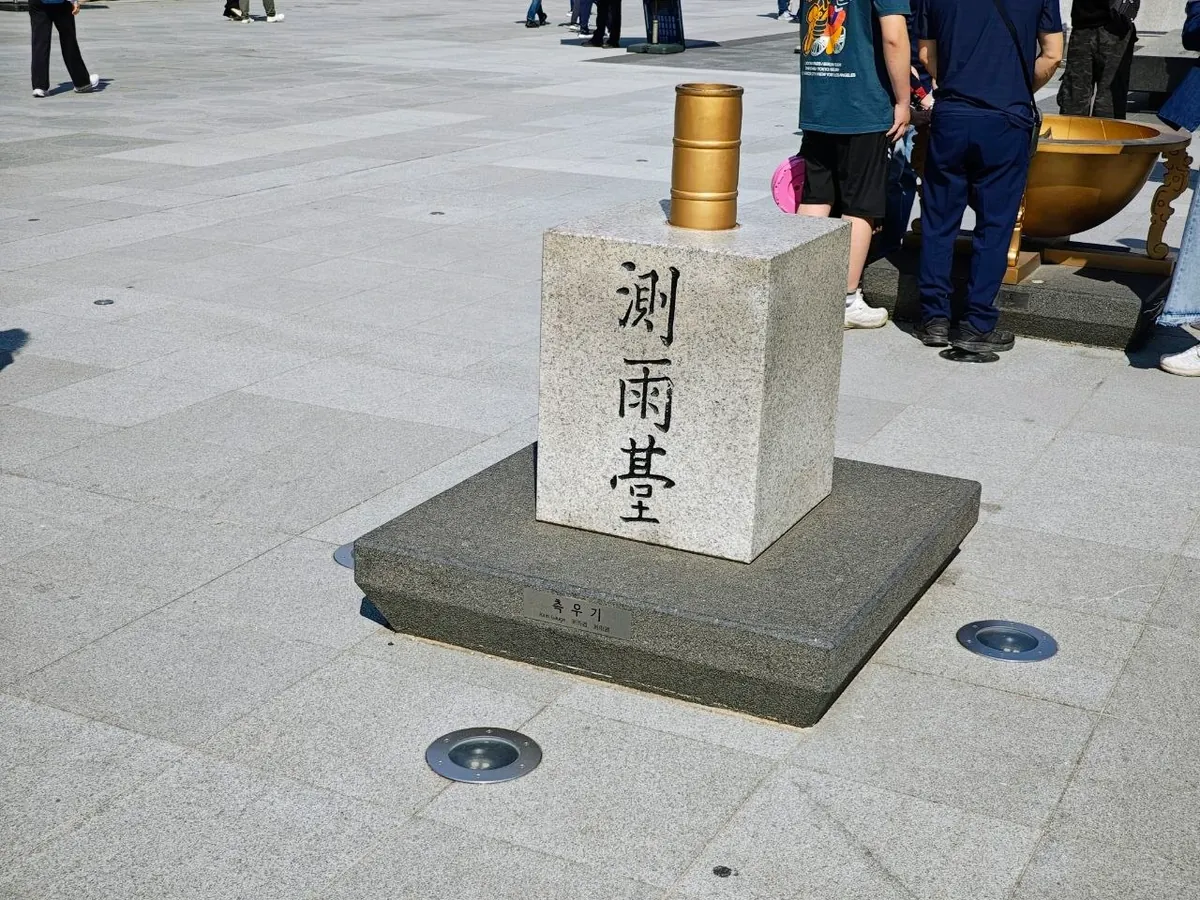
측우기 (cheugugi), the rain gauge, dates from 1441: a metal cylinder that collects rain so the depth can be measured and reported in a standard way across the country. It's often credited to the famous engineer 장영실 (Jang Yeong-sil), but the royal annals say the idea came from the crown prince — the future King Munjong — who had been measuring how deep rain soaked into the soil and found it inaccurate.
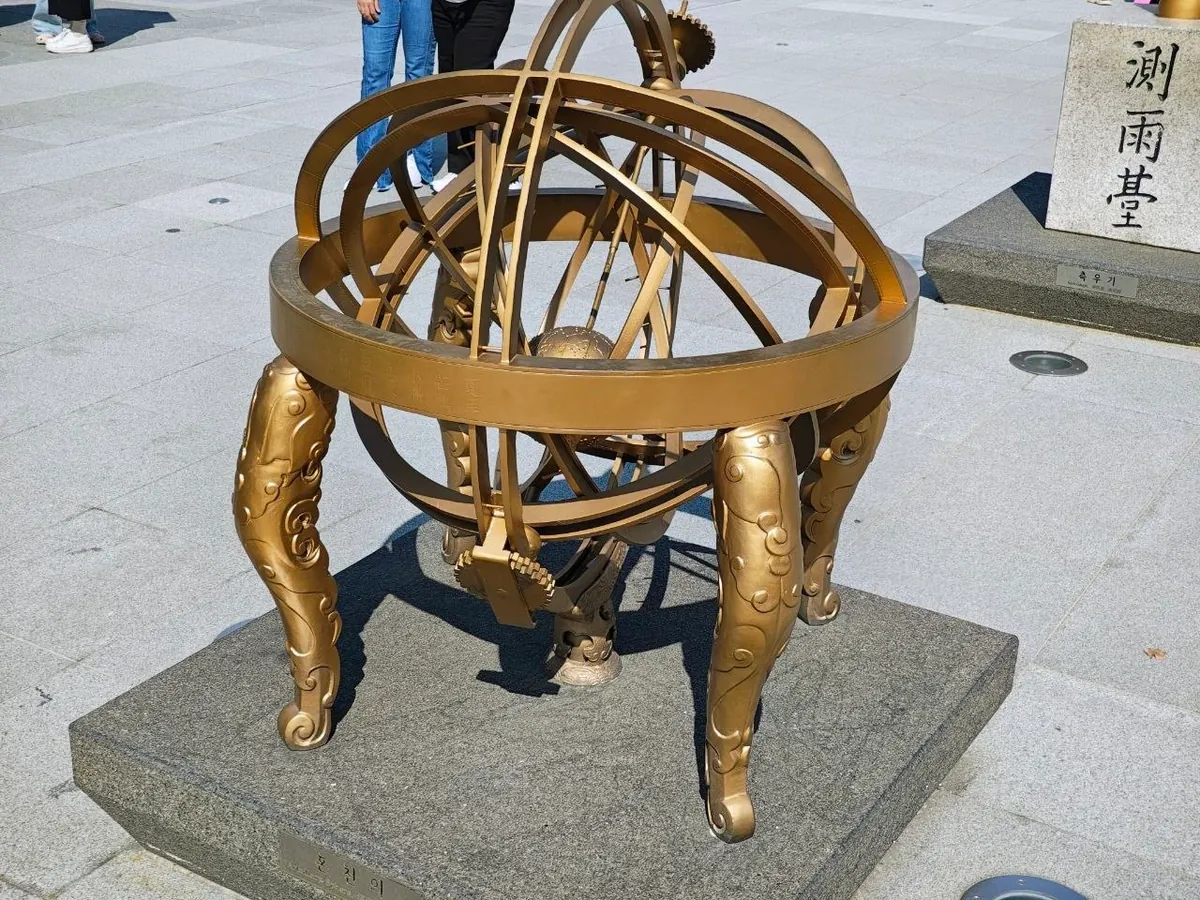
혼천의 (honcheonui), the armillary sphere, was made in 1433. Its rings model the movements of the heavens, and astronomers used it to track the positions of the sun, moon and stars — the basis for an accurate calendar.
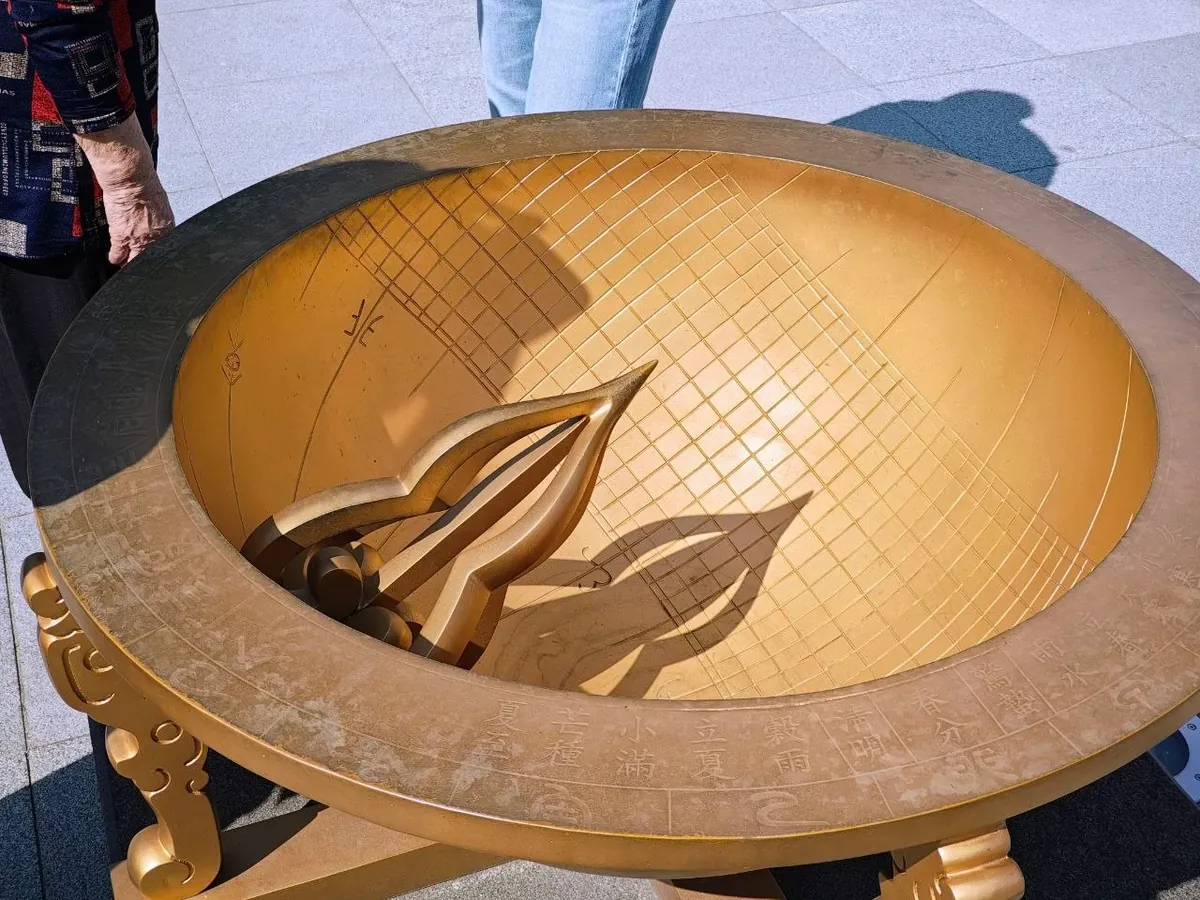
앙부일구 (angbuilgu), the sundial, is the most clever of the three. The name means a sundial shaped like a cauldron facing up, and it was first made in 1434 — and set up by busy roads so ordinary people could read the time. Inside the bowl are two sets of lines: 13 lines running around the bowl mark the 24 solar terms (절기), and the lines crossing them mark the time of day, so the tip of the pointer's shadow tells you both the season and the hour. In Sejong's time the hours were drawn as animals of the zodiac, for people who couldn't read.
| On the plaque | Romanization | Meaning |
|---|---|---|
| 측우기 | cheugugi | Rain gauge (측 = measure, 우 = rain, 기 = instrument) |
| 혼천의 | honcheonui | Armillary sphere |
| 앙부일구 | angbuilgu | Hemispherical sundial |
| 절기 | jeolgi | Solar term — one of 24 seasonal markers in the traditional calendar |
광화문: The Gate and Its Guards
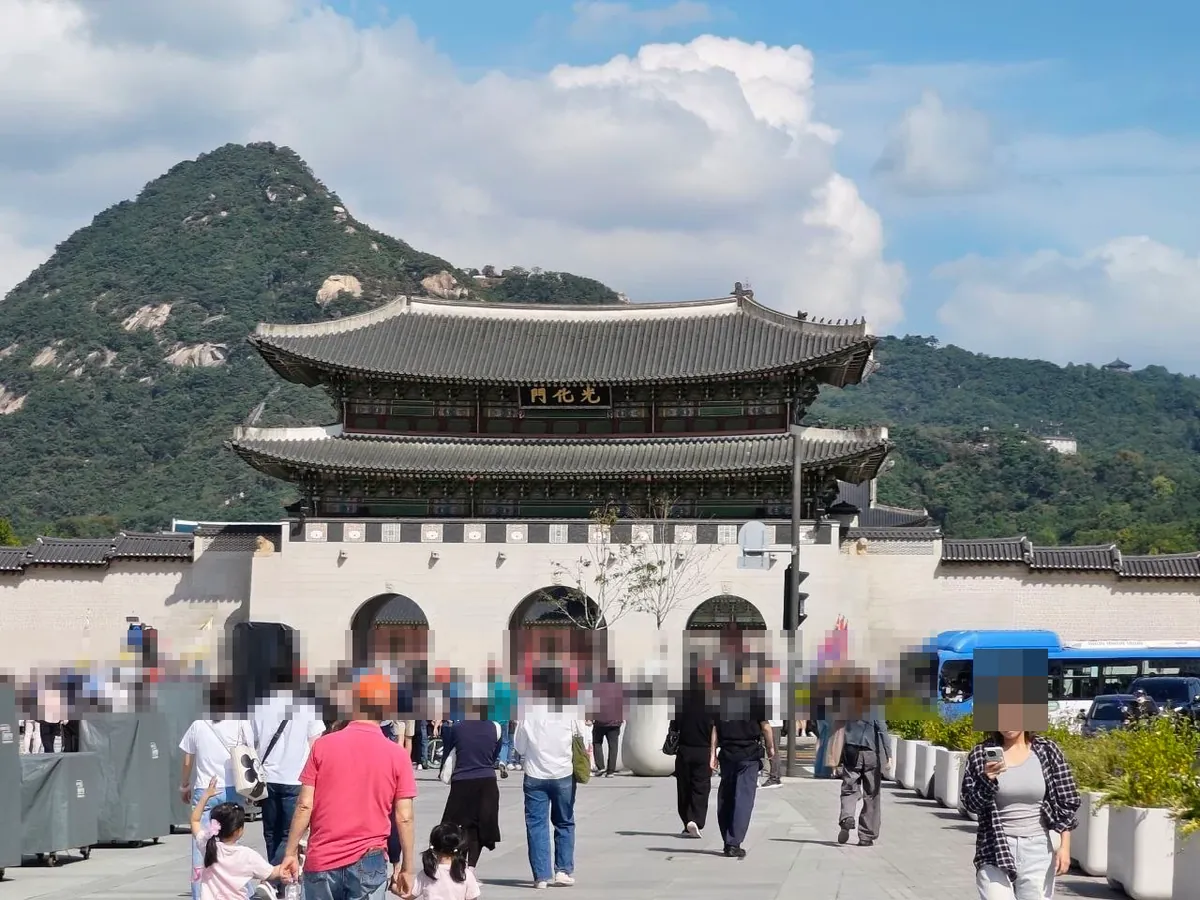
At the top of the square is 광화문 itself, the south gate of 경복궁 (Gyeongbokgung), the main royal palace of the Joseon dynasty. The name is usually explained as the king's great virtue shining across the whole country. The gate has had a hard history: built in 1395, burned during the Japanese invasions in 1592, rebuilt in the 1860s, moved aside by the colonial government in 1927, destroyed in the Korean War and rebuilt in concrete in 1968. It returned to its original position, in wood, on August 15, 2010.
Two more changes came in October 2023. The stone platform in front of the gate, 월대 (woldae), was restored, and a new name board replaced the old one: black background, gold letters, based on a 19th-century record of the original and an old photograph. Of the three arched openings, the one in the middle was for the king; officials used the two on the sides.
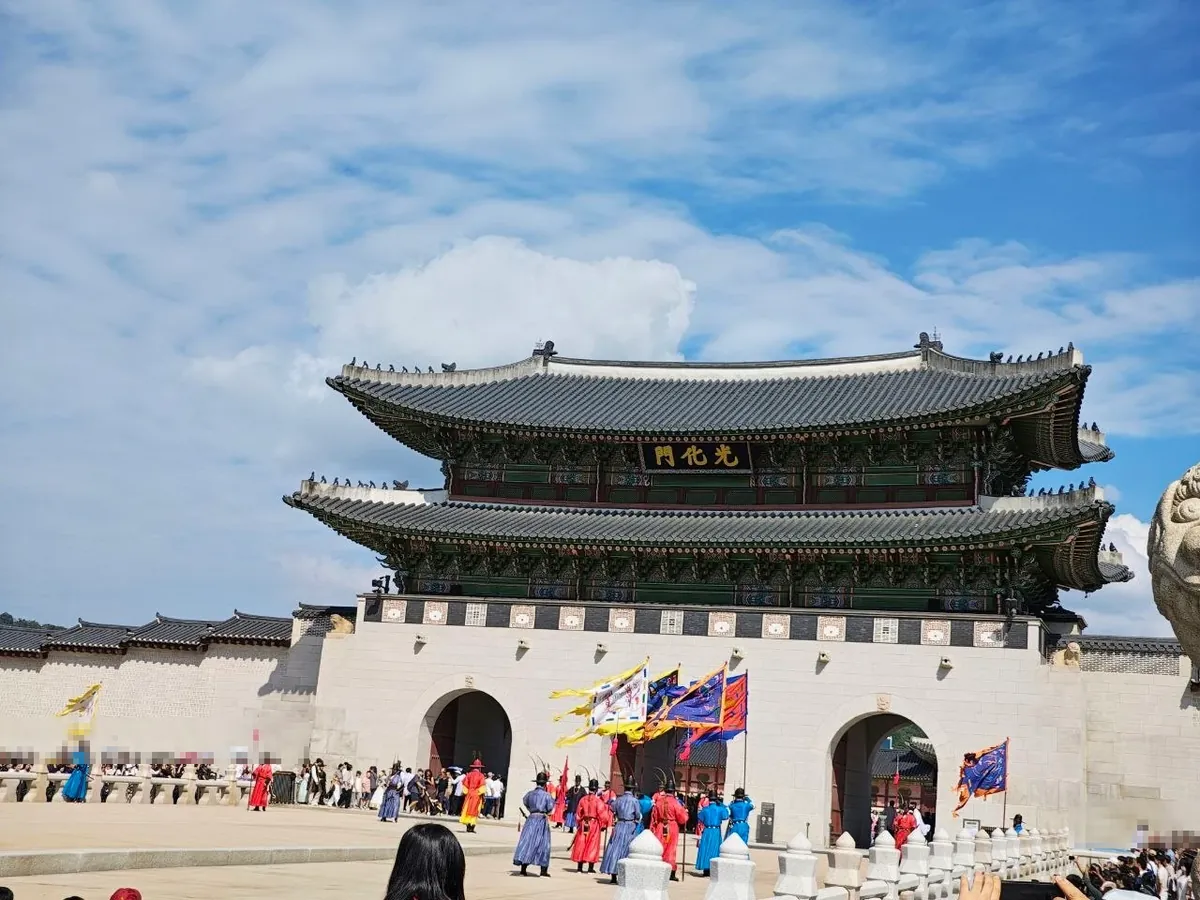
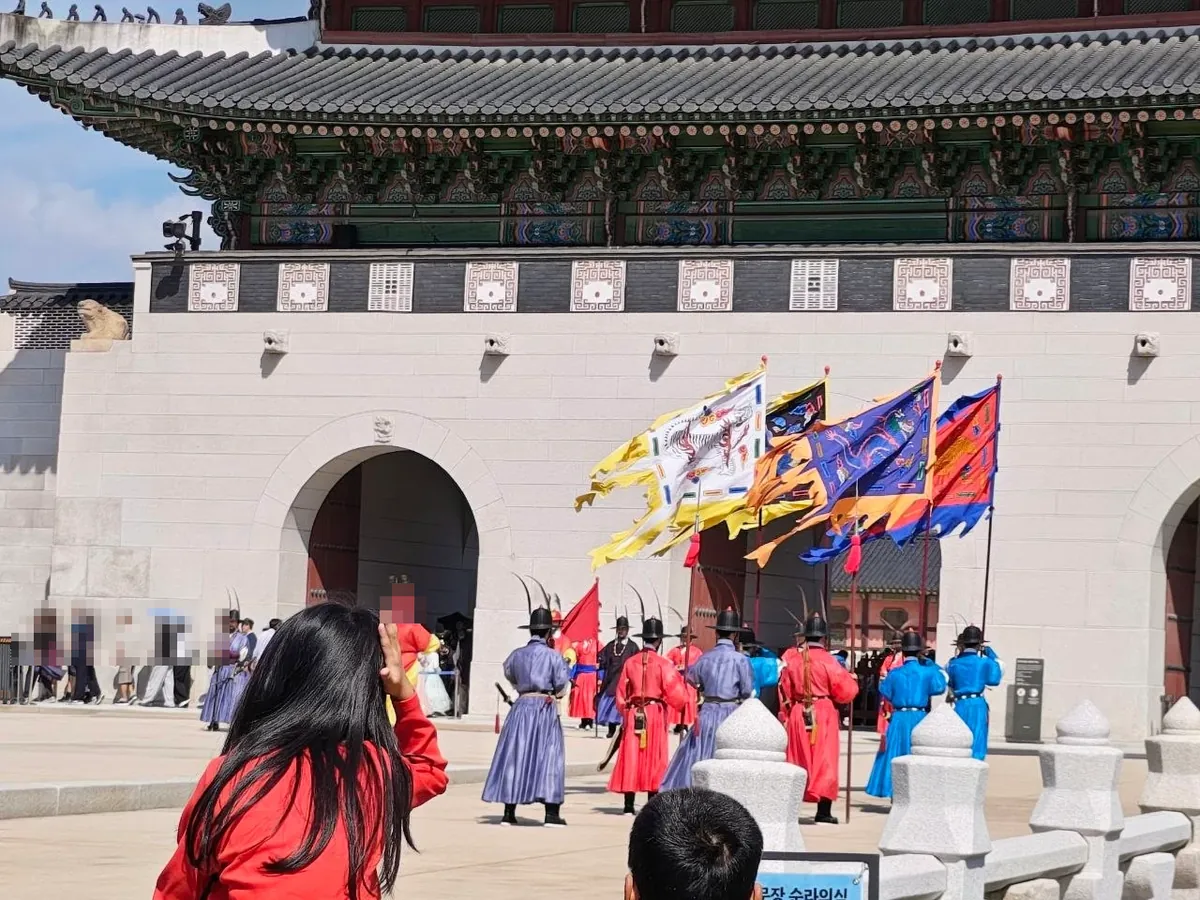
The gate is guarded, too — ceremonially. The royal guard changing ceremony, 수문장 교대의식 (sumunjang gyodae uisik), recreates how the palace gate guards handed over their watch. It runs at 10:00 and 14:00 for about 20 minutes, every day except Tuesday, and it's free; a shorter gate-guard ritual (파수의식) takes place at 11:00 and 13:00. Gyeongbokgung itself is closed on Tuesdays too. In spring (March–May) and autumn (September–November) there's also a weekend patrol, 수문장 순라의식, at 15:00 — on Sundays it marches from the gate to Insadong. 수문장 means "gatekeeper": 수 (guard) + 문 (gate) + 장 (chief).
| Korean | Romanization | Meaning |
|---|---|---|
| 문 | mun | Gate, door (the 門 in 光化門) |
| 궁 | gung | Palace — 경복궁 is Gyeongbok Palace |
| 수문장 | sumunjang | Gatekeeper (수 guard + 문 gate + 장 chief) |
| 교대 | gyodae | Changing shifts, taking turns |
| 해치 / 해태 | haechi / haetae | Mythical guardian beast |
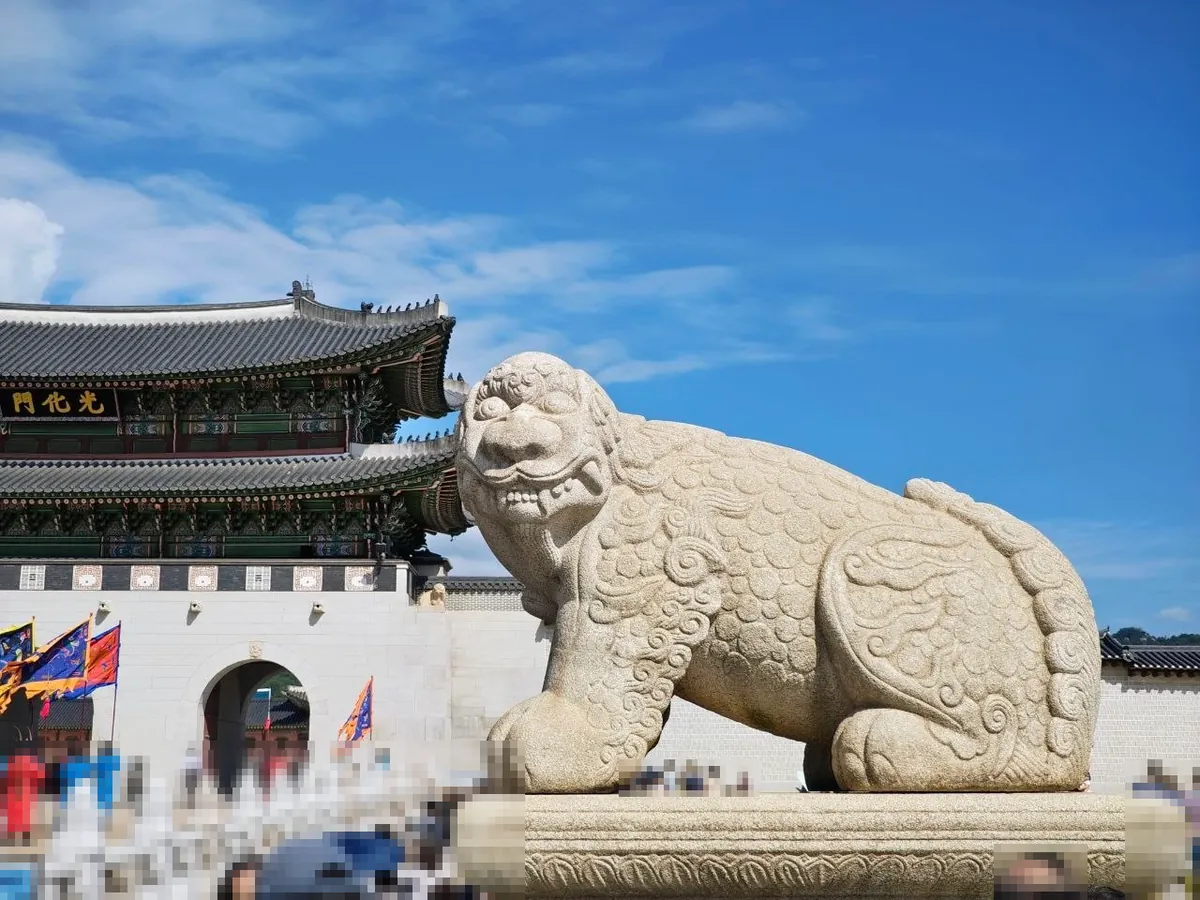
해치 (Haechi): the creatures at the gate
In front of Gwanghwamun sit two stone 해치 (haechi), mythical beasts believed to tell right from wrong; Seoul also describes haechi as a guardian that wards off fire and disaster. When the stone platform was restored in 2023, the pair was moved to its southern end. Haechi is also Seoul's official symbol, adopted in 2008, and you'll see its cartoon version on city signs. You'll hear two names: 해태 is the more familiar everyday word, and 해치 is the original form, which Seoul uses officially.
Around the Square
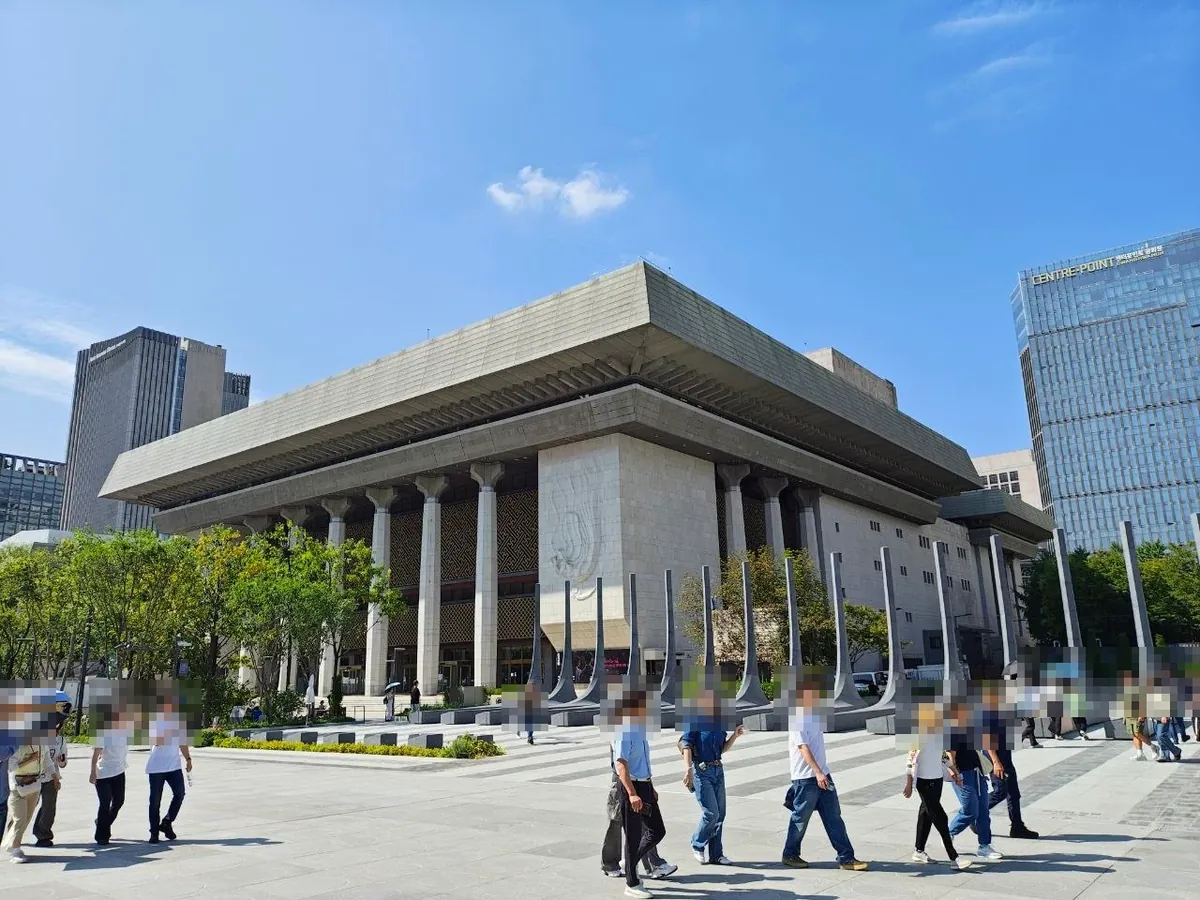
On the west side of the square is 세종문화회관, the Sejong Center for the Performing Arts, opened on April 14, 1978. Its main hall seats about 3,000 people and hosts concerts, musicals and ballet. 문화 means "culture" and 회관 "hall" — you'll see 회관 on community centers and even restaurant signs.
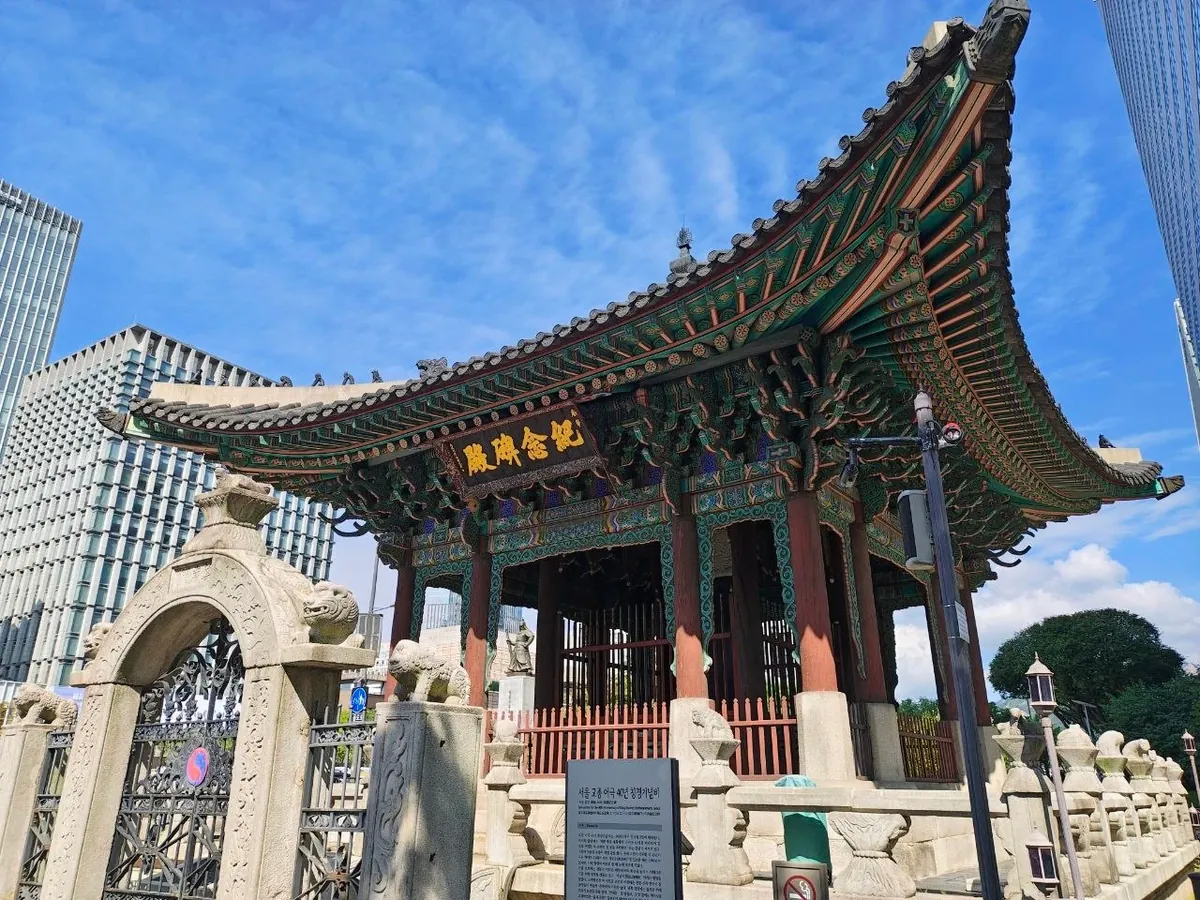
On the east side of the crossroads, beside the Kyobo Building, squeezed between office towers, is a small painted pavilion that most people walk past. It protects a stone monument set up in 1902 for King Gojong: it celebrated his 40th year on the throne, his reaching the age of 51 (망육순, "looking toward sixty"), and his entry into 기로소, an honor society for elderly senior officials. Its official name is a mouthful — 서울 고종 어극 40년 칭경기념비 — and it's a designated Historic Site. The board on the pavilion reads 紀念碑殿 (기념비전): 기념비 is "monument," and 전 marks a building of high rank. The stone gate in front is called 만세문; it's said to have been taken away during the colonial period and later brought back.
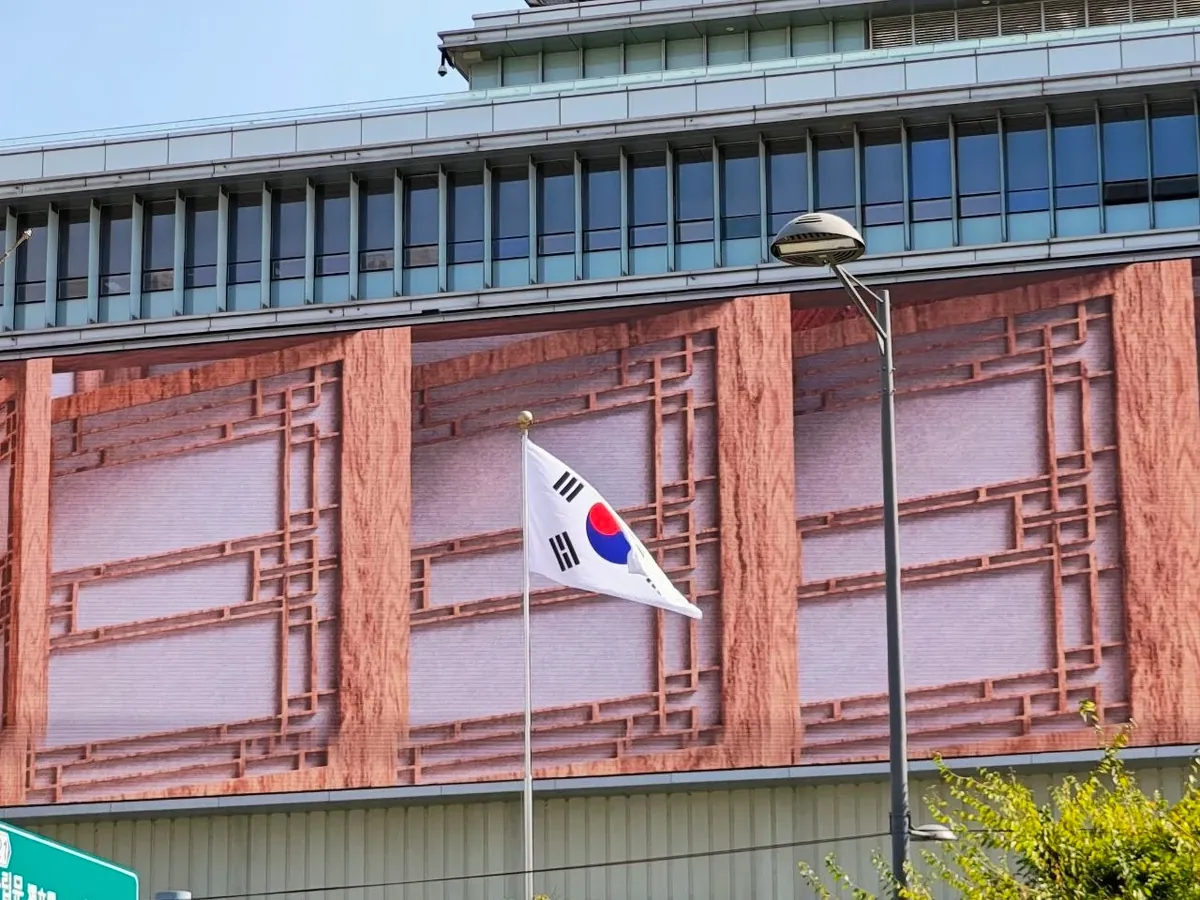
You'll see 태극기 (Taegeukgi), the national flag, all around Gwanghwamun. Its white background stands for brightness, purity and peace; the red-and-blue circle in the middle is 태극, the harmony of yin (blue) and yang (red); and the four black trigrams in the corners — 건, 곤, 감, 리 — stand for heaven, earth, water and fire. A short walk west, the Seoul Museum of History (서울역사박물관) tells the city's story; admission is free, and it's closed on Mondays.
Tours and Experiences
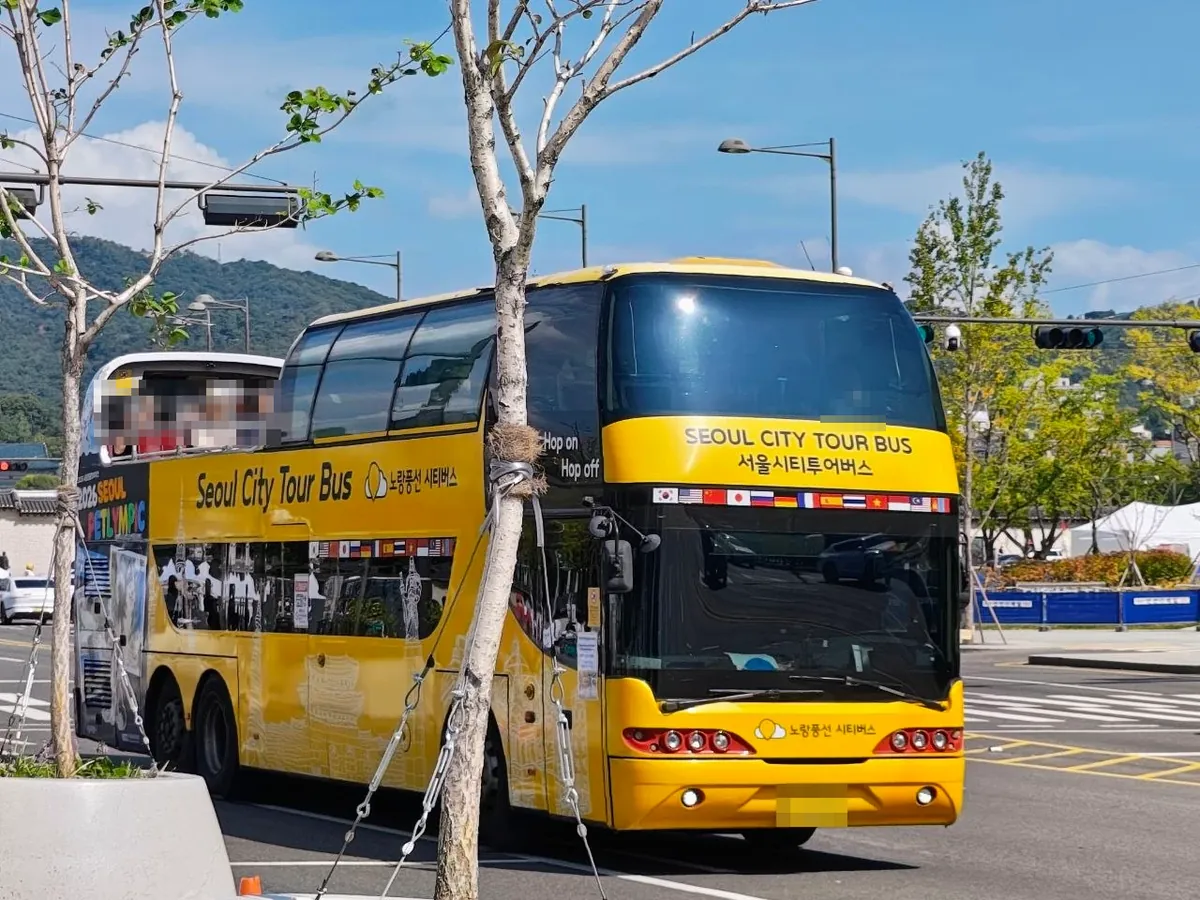
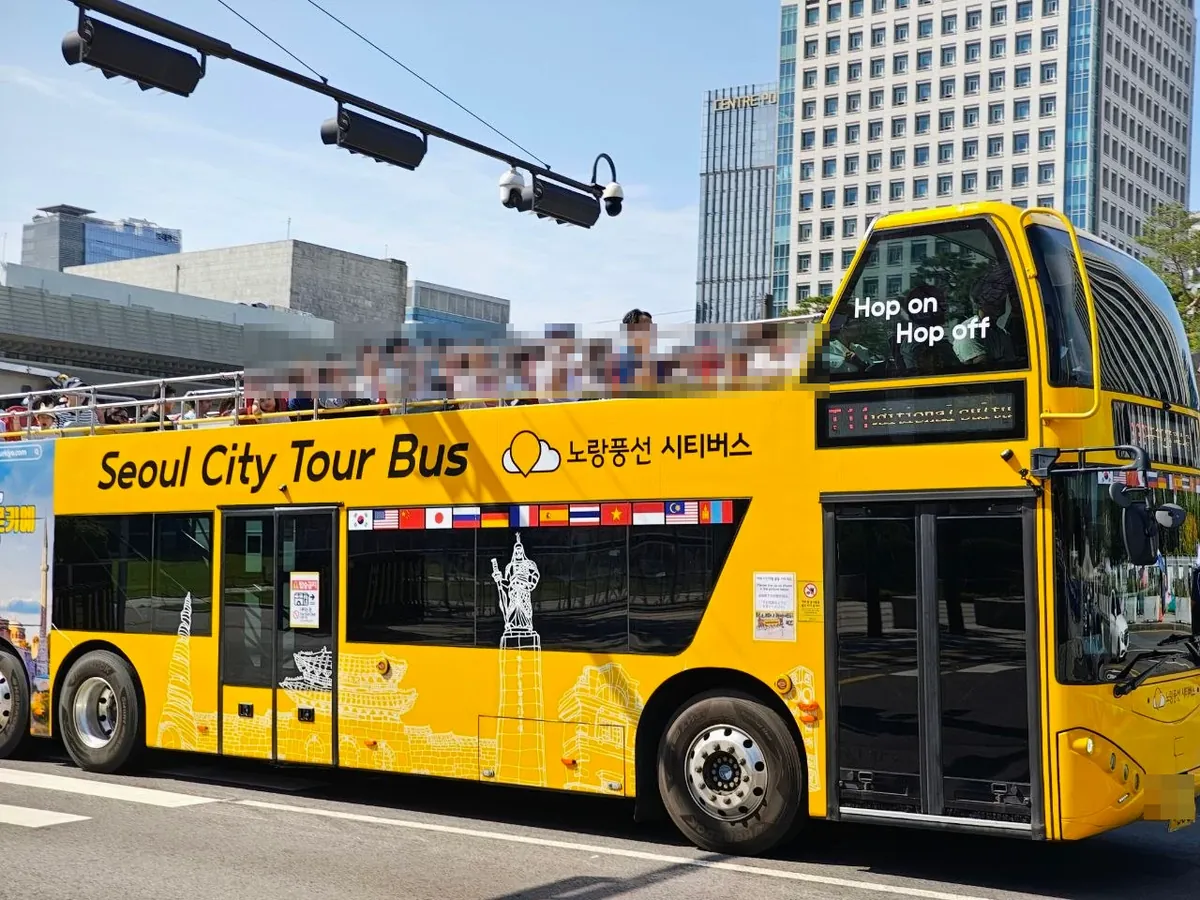
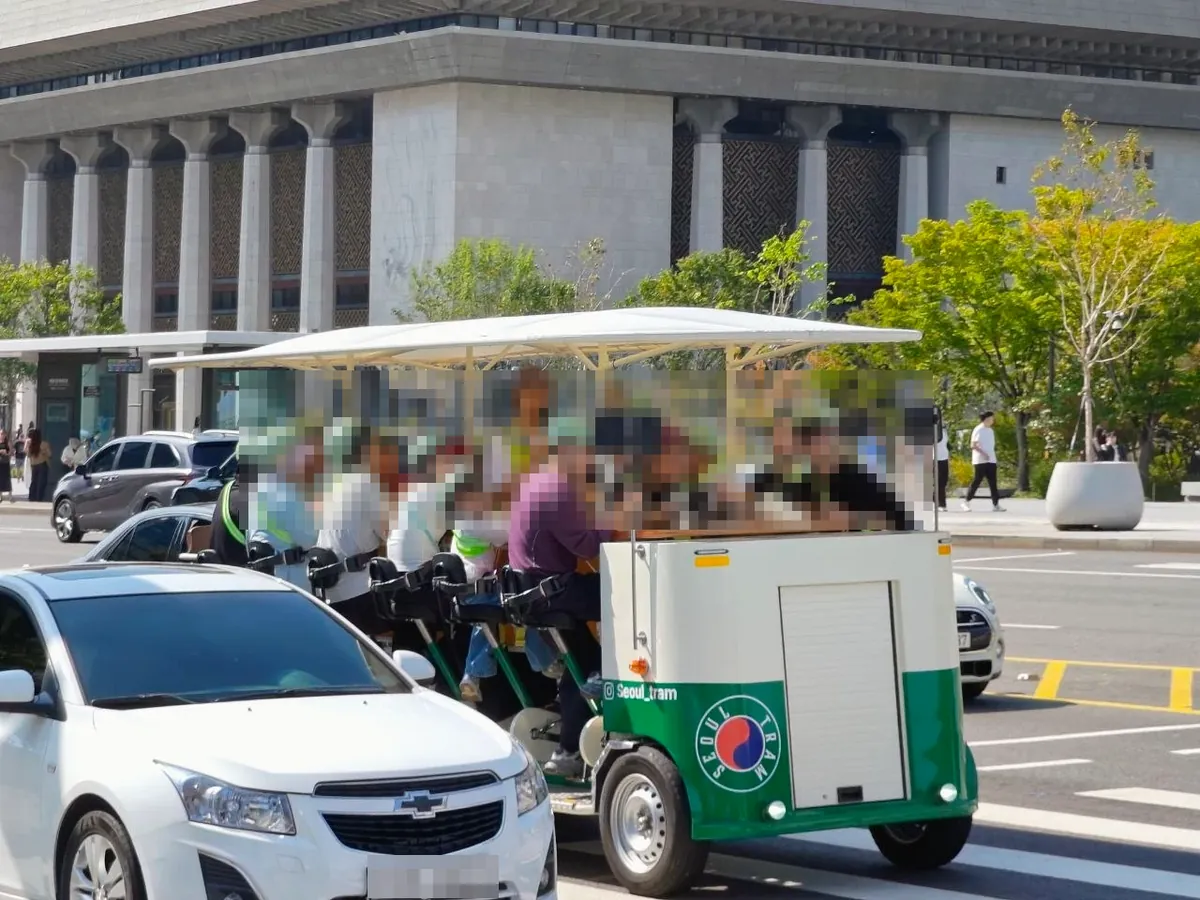
Gwanghwamun is the starting point for a lot of sightseeing. Double-decker hop-on hop-off tour buses pass through here; they're run by private companies rather than the city, and a daytime downtown ticket was listed at 36,000 won for adults and sold at a discounted 27,000 won at the time of writing. The one in the photo says 노랑풍선 시티버스 — 노랑 is "yellow," 풍선 is "balloon" (the company's name) and 시티버스 is simply "city bus" written in Hangul. You may also see a strange vehicle full of people in helmets pedaling together: that's Seoul Tram, a private group tour where the riders pedal their way around the area. Despite the name, it doesn't run on rails.
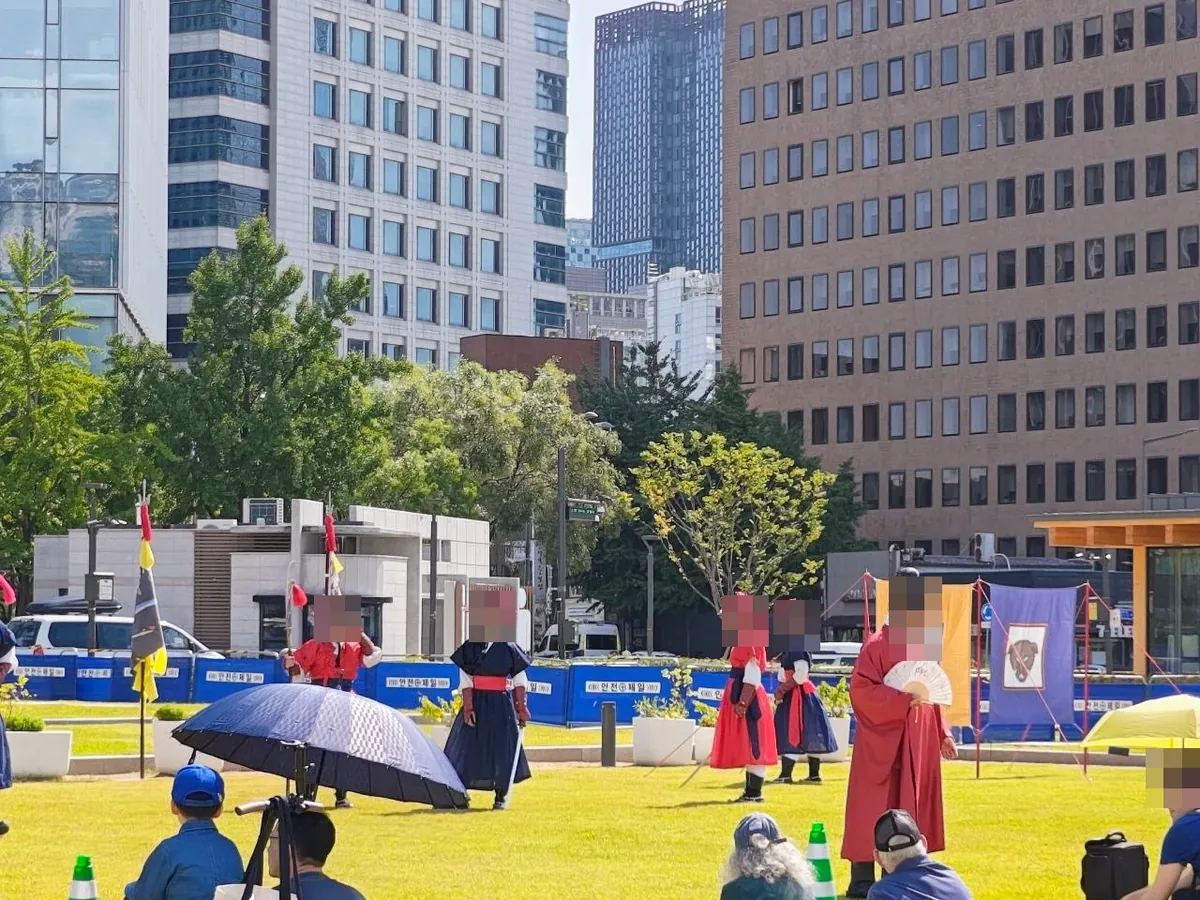
The lawns beside the square are also used for events — on the day these photos were taken, a traditional performance was on — so it's worth walking around even after you've seen the statues.
Getting There
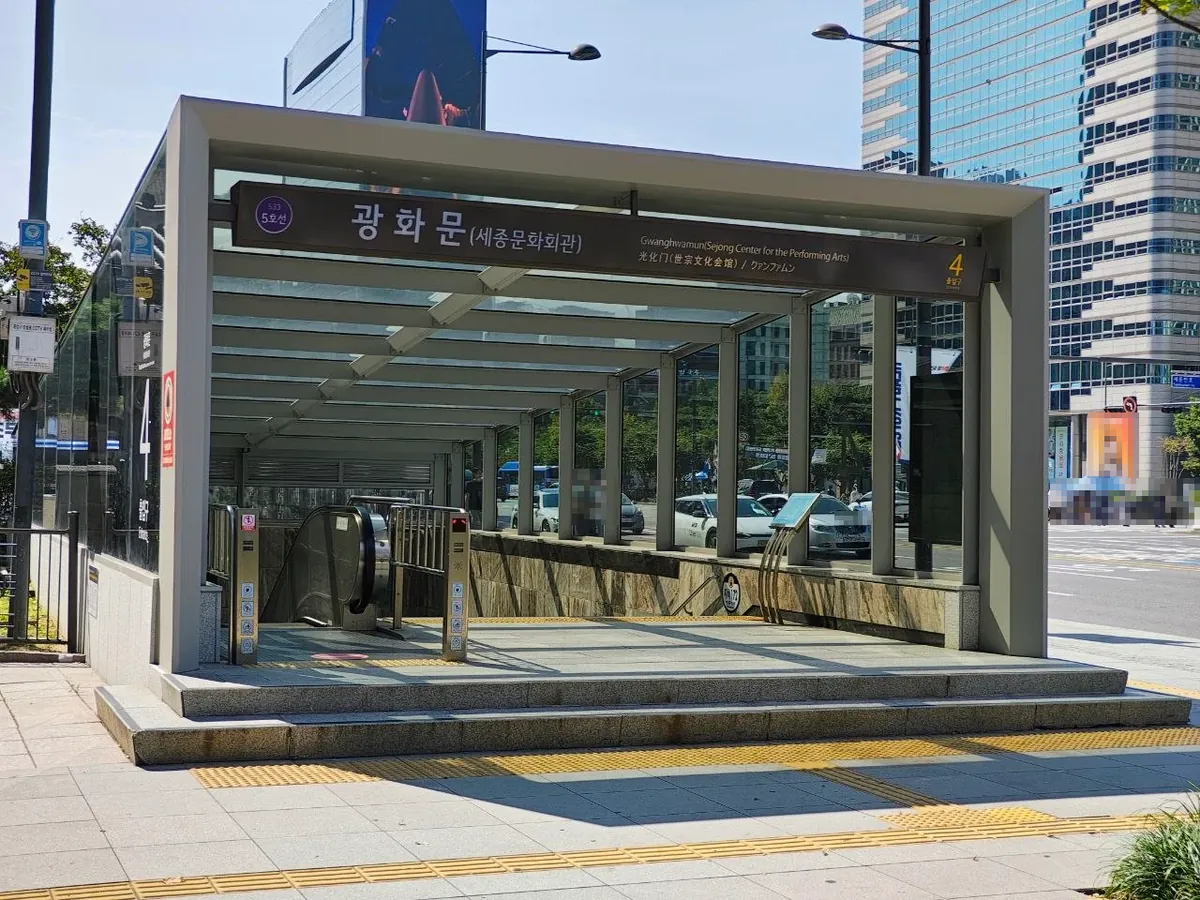
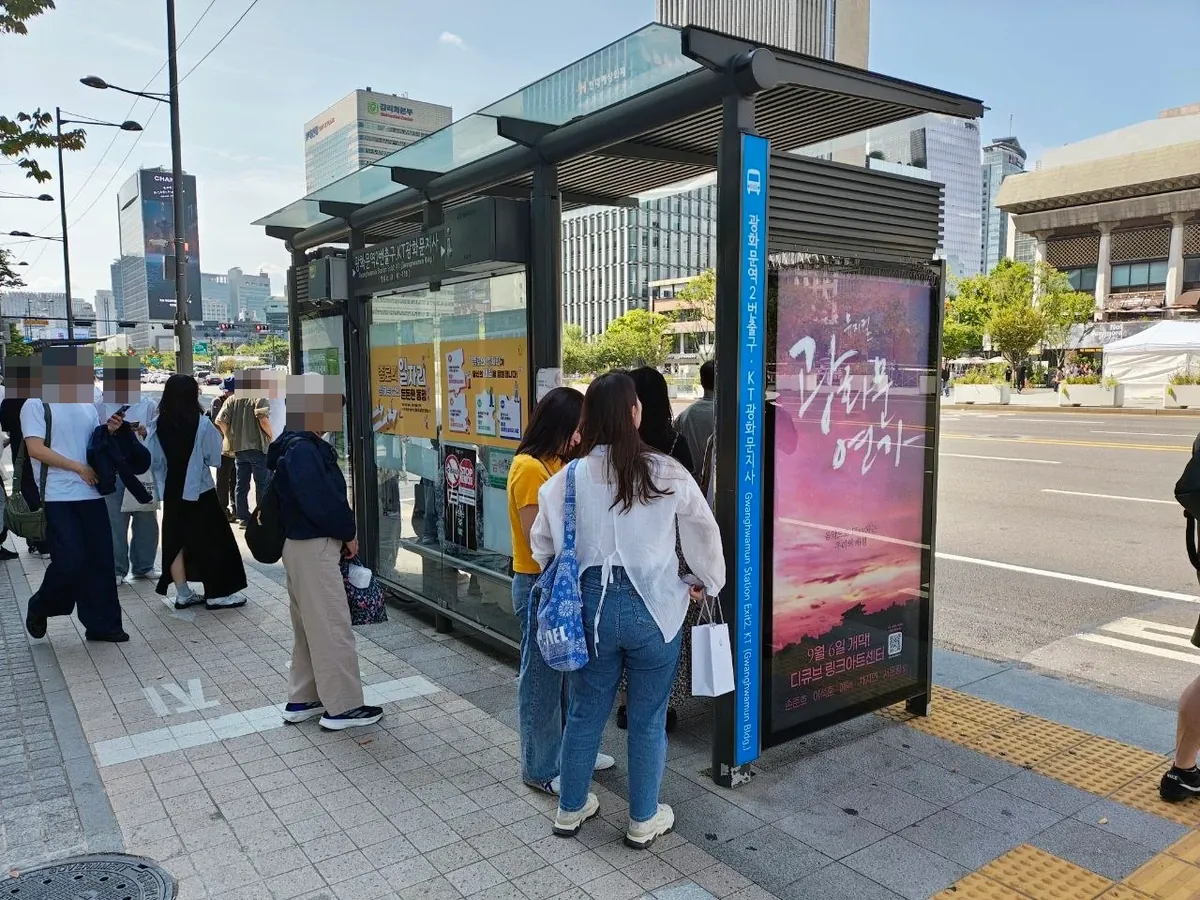
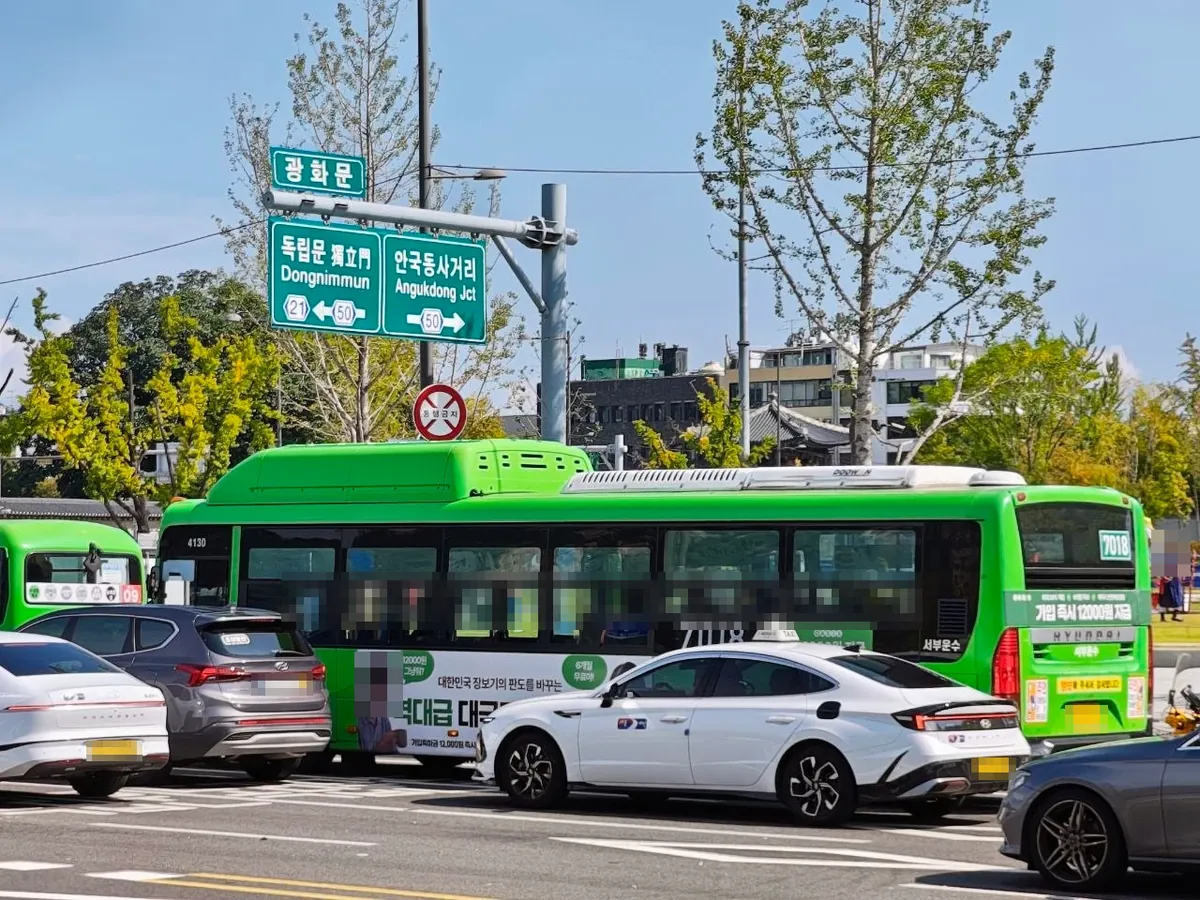
Take subway Line 5 to 광화문역 (Gwanghwamun Station); the exits come up right beside the square. For the palace end, 경복궁역 (Gyeongbokgung Station) on Line 3 is closer. Many buses stop here too — see our Seoul bus guide for reading the stops. Road signs around the square point to nearby places in both Korean and English:
광화문 어떻게 가요?
gwanghwamun eotteoke gayo?
How do I get to Gwanghwamun?
경복궁 입구가 어디예요?
gyeongbokgung ipguga eodiyeyo?
Where's the entrance to Gyeongbokgung?
수문장 교대식 몇 시에 해요?
sumunjang gyodaesik myeot sie haeyo?
What time is the guard changing ceremony?
In everyday speech the ceremony is usually shortened to 교대식.
오늘 교대식 해요?
oneul gyodaesik haeyo?
Is there a guard ceremony today?
Not on 화요일 (Tuesday) — see the days of the week in Korean.
세종대왕 동상 앞에서 만나요.
sejongdaewang dongsang apeseo mannayo.
Let's meet in front of the King Sejong statue.
A classic meeting spot — for more ways to say where things are, see directions in Korean.
사진 좀 찍어 주시겠어요?
sajin jom jjigeo jusigesseoyo?
Could you take a picture for me?
-아/어 주시겠어요? is a polite way to ask a stranger for a favor.
여기서 걸어서 얼마나 걸려요?
yeogiseo georeoseo eolmana geollyeoyo?
How long does it take to walk from here?
Mini Quiz
1. What does 세종대왕 hold in his left hand?
2. What is 거북선?
3. What does 앙부일구 tell you?
4. When can you NOT see the guard changing ceremony?
Related Knowledge
Learn Next
Korean Alphabet (Hangul) for Beginners
You've seen the king who created it — now learn the letters themselves.
Will you remember this tomorrow?
Add it to your review queue — the daily session brings it back before you forget.
Start today's study →