North of Gwanghwamun: Cheong Wa Dae, Sinmumun and the Signs on the Way
Written and reviewed by Jun and Jin, native Korean speakers
Published · How we write & review
After this page, you can read a plaque that mixes Hangul and hanja, name the gates around Cheong Wa Dae and Gyeongbokgung, and recognize the National Folk Museum sign.
10-second answer
The short answer
This walk goes north from Gwanghwamun: the Mugunghwa Garden fountain at the Hyoja-dong junction (효자동 삼거리, hyojadong samgeori), the road to 청와대 (cheongwadae, the former presidential office), the gates 신무문 (sinmumun) and 춘추문 (chunchumun), and the 국립민속박물관 (gungnip minsok bangmulgwan, National Folk Museum). The signs teach useful Korean: a 안내문 (annaemun, notice) written in hanja and Hangul, and the gate word 문 (mun).
Quick check — did that land?
1. What does 삼거리 mean?
Starting Point: Gwanghwamun Crossing
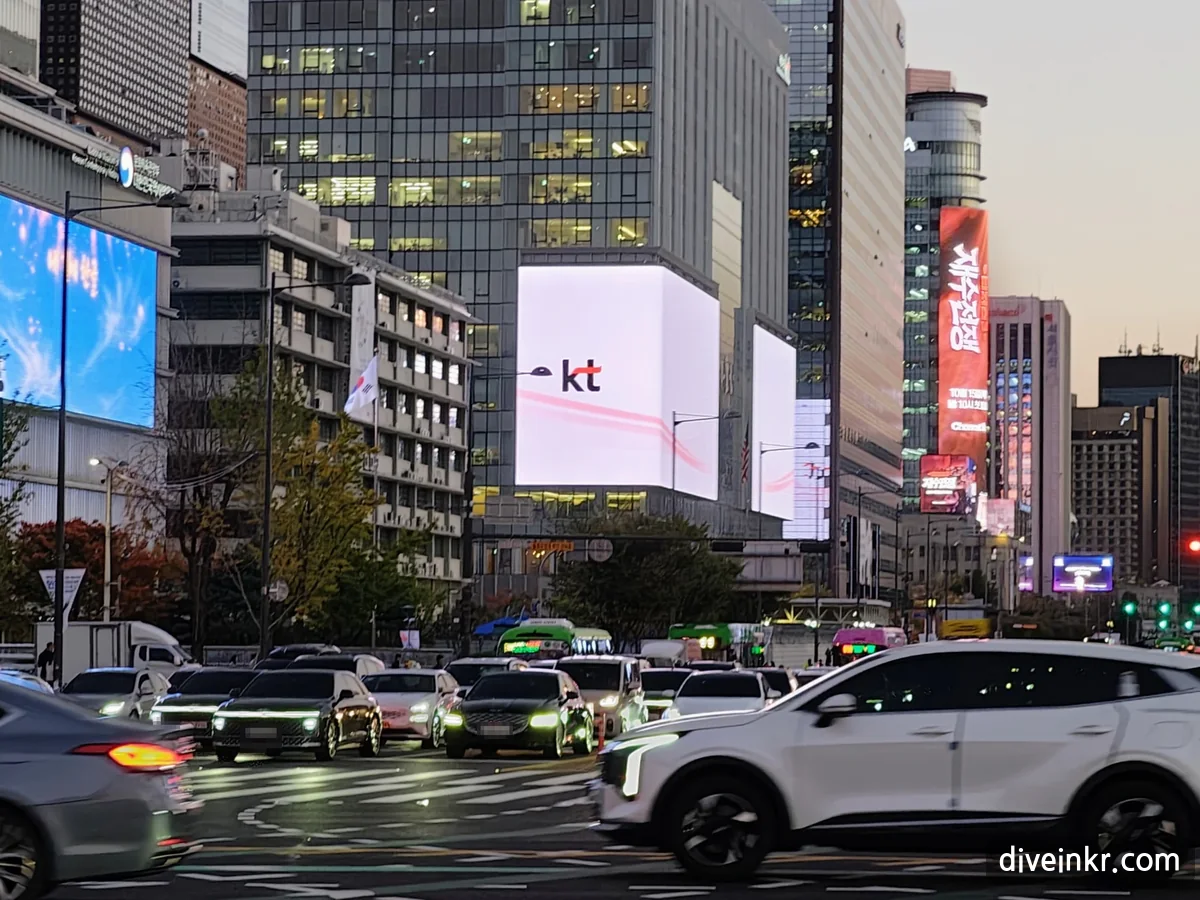
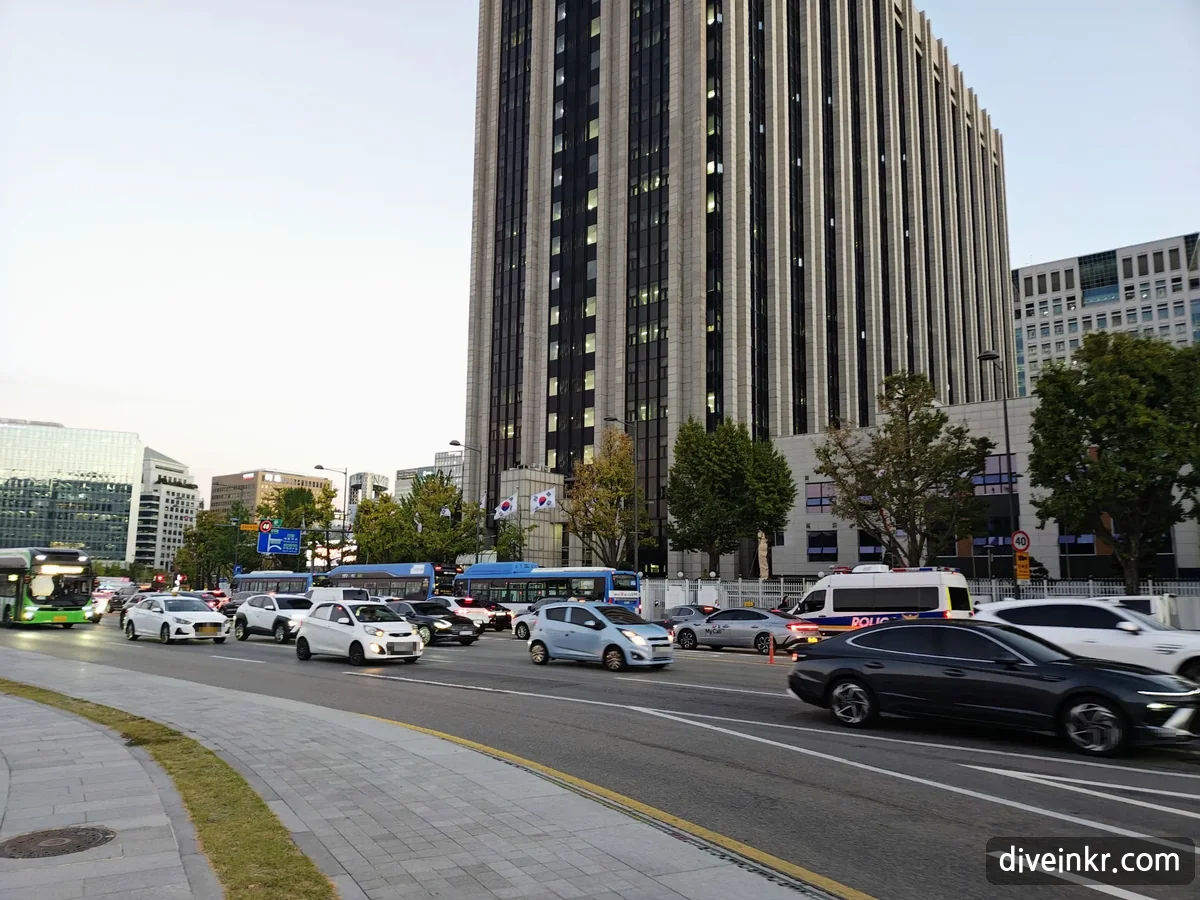
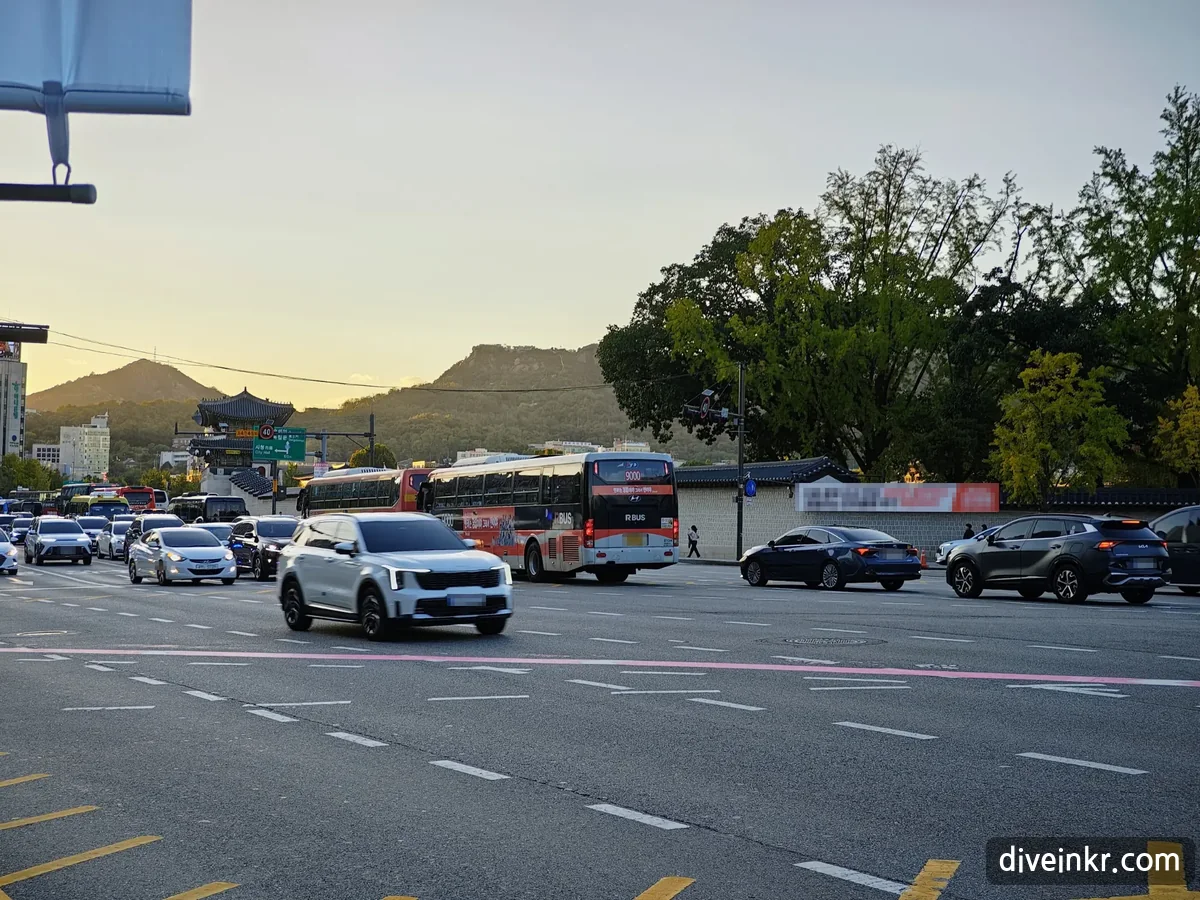
Walk north from Gwanghwamun Square and the city gets quieter. Behind you, the crossing in front of the gate fills with traffic at dusk and the buildings carry giant LED screens.
See also: Gwanghwamun Square guide
효자동 삼거리: The Mugunghwa Garden Fountain
At the 효자동 삼거리 (hyojadong samgeori), the "Hyoja-dong three-way junction," a round fountain stands in a garden of roses and tall grass with 북악산 (Bugaksan) behind it. 삼거리 (samgeori) means a three-way junction: 삼 (sam) is "three" and 거리 (geori) is "street." The stone sign beside it is a good reading exercise, because it mixes Hangul with hanja.
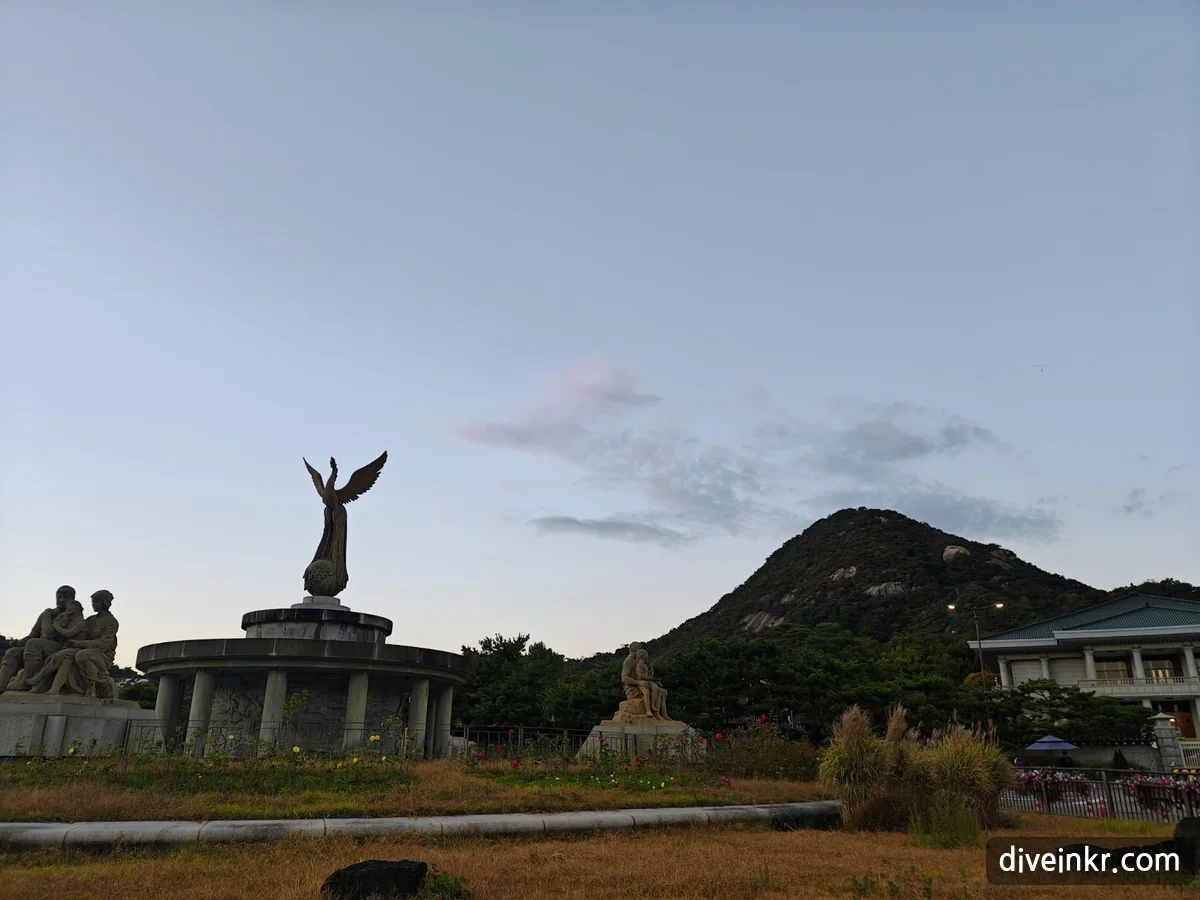
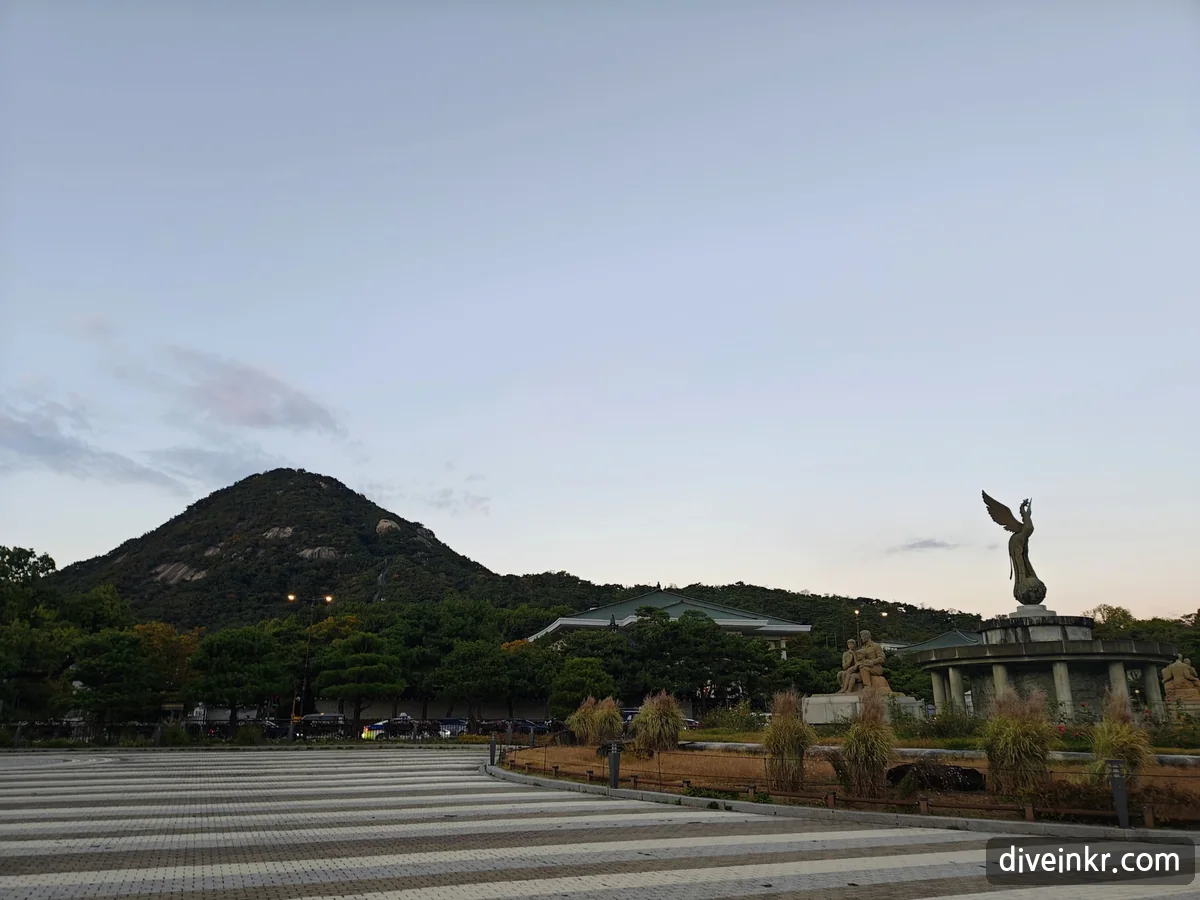
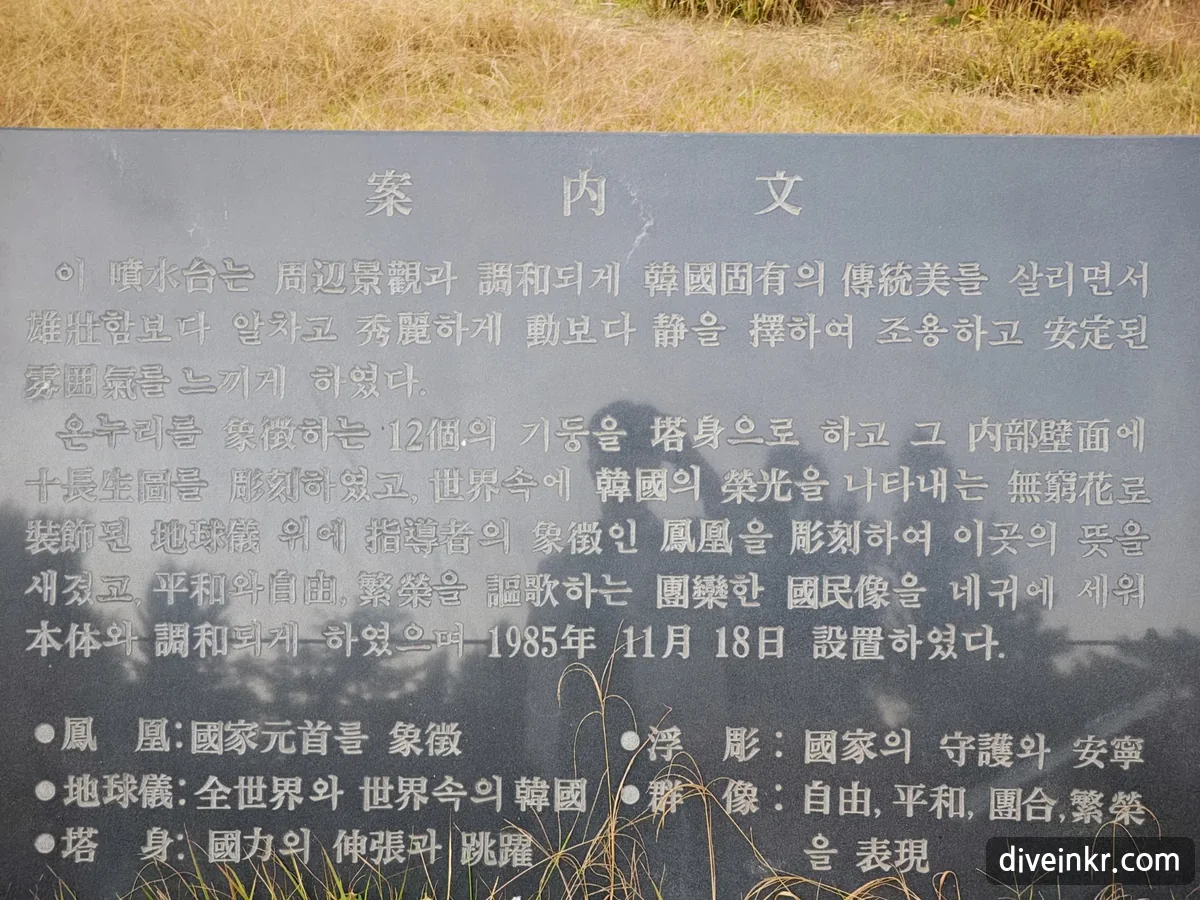
Here is what the plaque says, in plain English. The fountain was designed to fit the surrounding scenery and the traditional beauty of Korea, and to feel quiet and stable rather than grand. Twelve pillars symbolize the whole world (온누리, onnuri) and form the tower; on the inner wall are carved the 십장생도 (sipjangsaengdo), the "ten symbols of longevity." A phoenix stands on a globe decorated with 무궁화 (mugunghwa, the rose of Sharon, Korea's national flower), and group statues stand at the four corners. The plaque ends with the date it was set up: November 18, 1985 (1985年 11月 18日).
| Plaque word | Reading | What it means |
|---|---|---|
| 鳳凰 / 봉황 | bonghwang | Phoenix — symbolizes the head of state |
| 地球儀 / 지구의 | jiguui | Globe — the whole world, and Korea in the world |
| 塔身 / 탑신 | tapsin | Tower body — national strength growing and leaping |
| 浮彫 / 부조 | bujo | Relief carving — protection and peace of the nation |
| 群像 / 군상 | gunsang | Group statues — freedom, peace, unity, prosperity |
| 設置 / 설치 | seolchi | Installation — "set up" |
Why hanja on a sign?
In 1985 public signs often used hanja. Today most signs are written in Hangul only, but many words still come from hanja roots. If you can read 설 (set up) and 치 (place) on this plaque, you can guess 설치 (seolchi, "installation") in other places. See our hanja roots list.
청와대: The Road to the Former Presidential Office
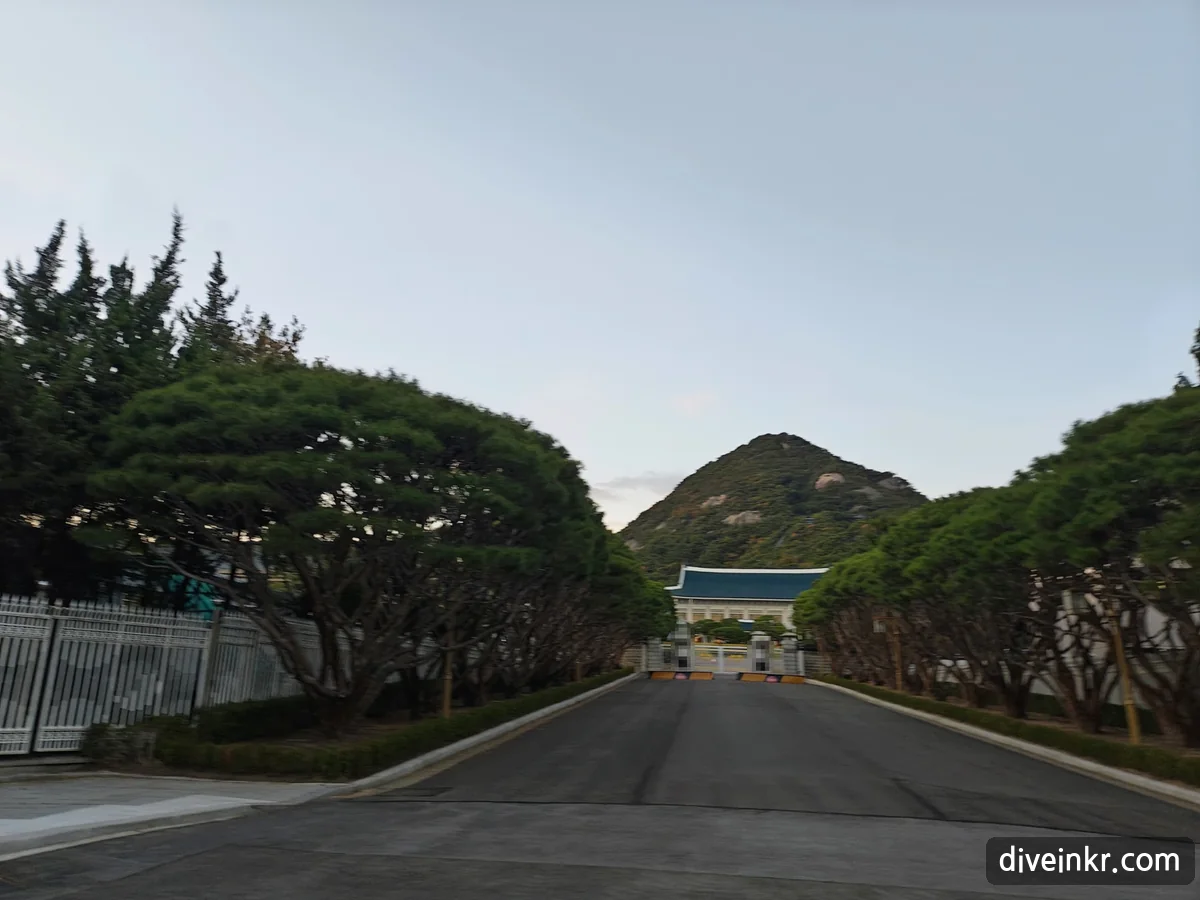
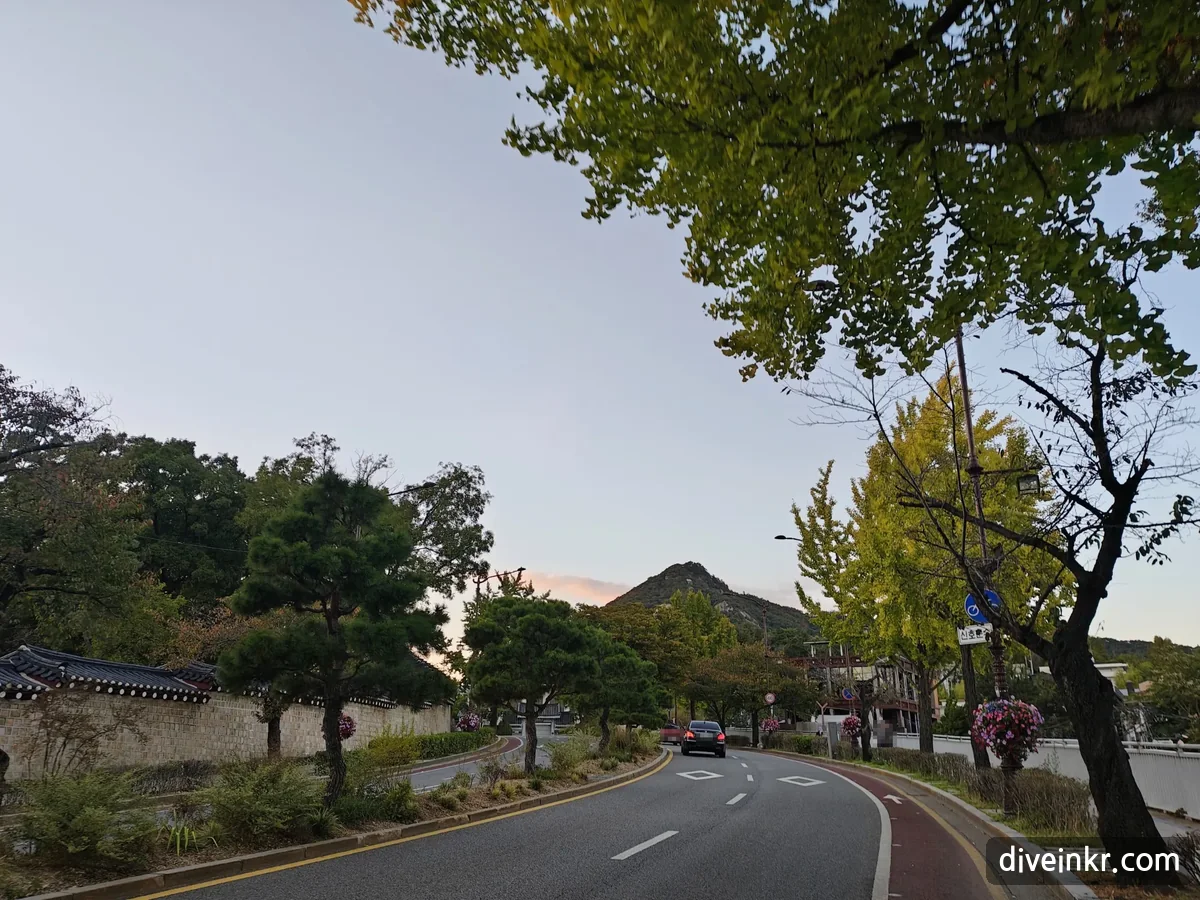
청와대 (Cheongwadae, "blue-tile house") was the president's office and home until 2022 and is now open to visitors. The road leading to it is lined with clipped pine trees, with 북악산 (Bugaksan) rising behind the green-tiled roof.
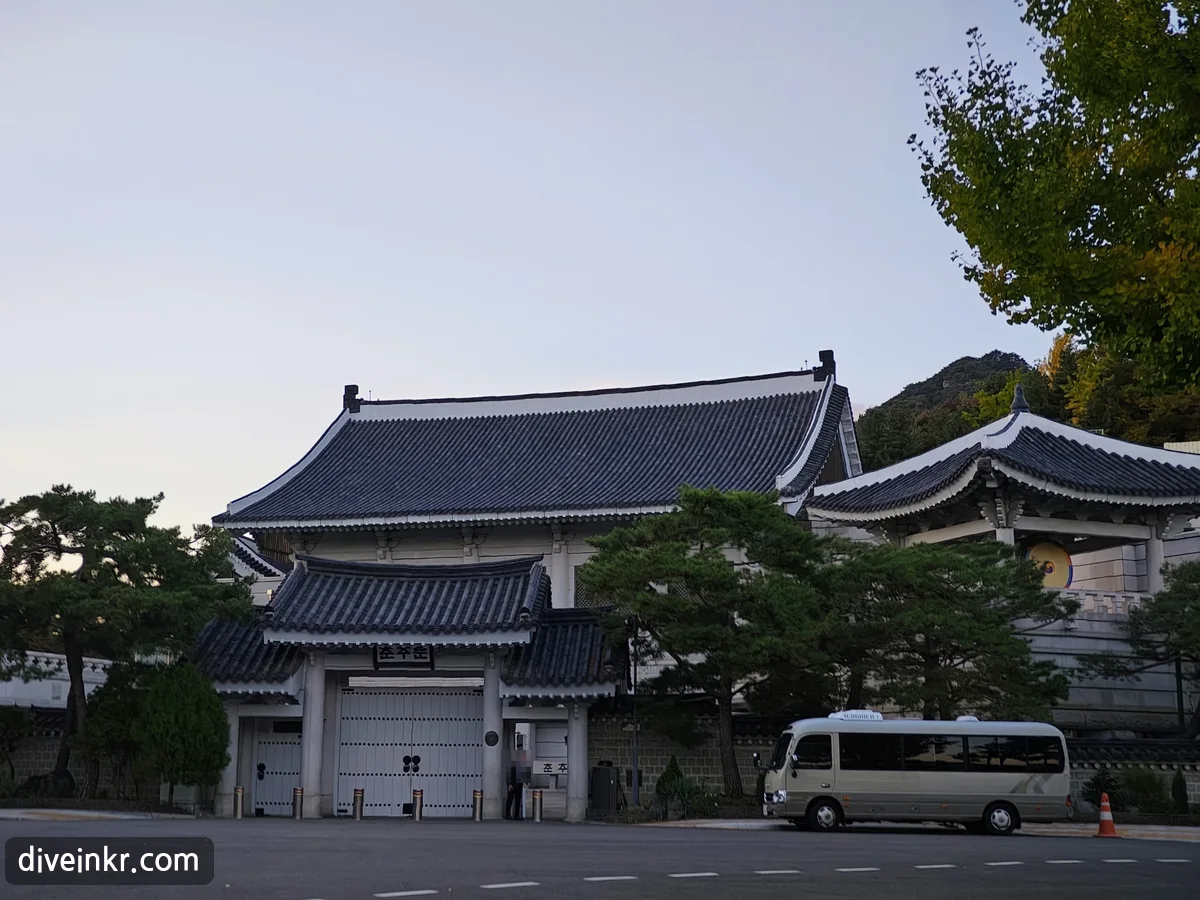
신무문: The North Gate of Gyeongbokgung
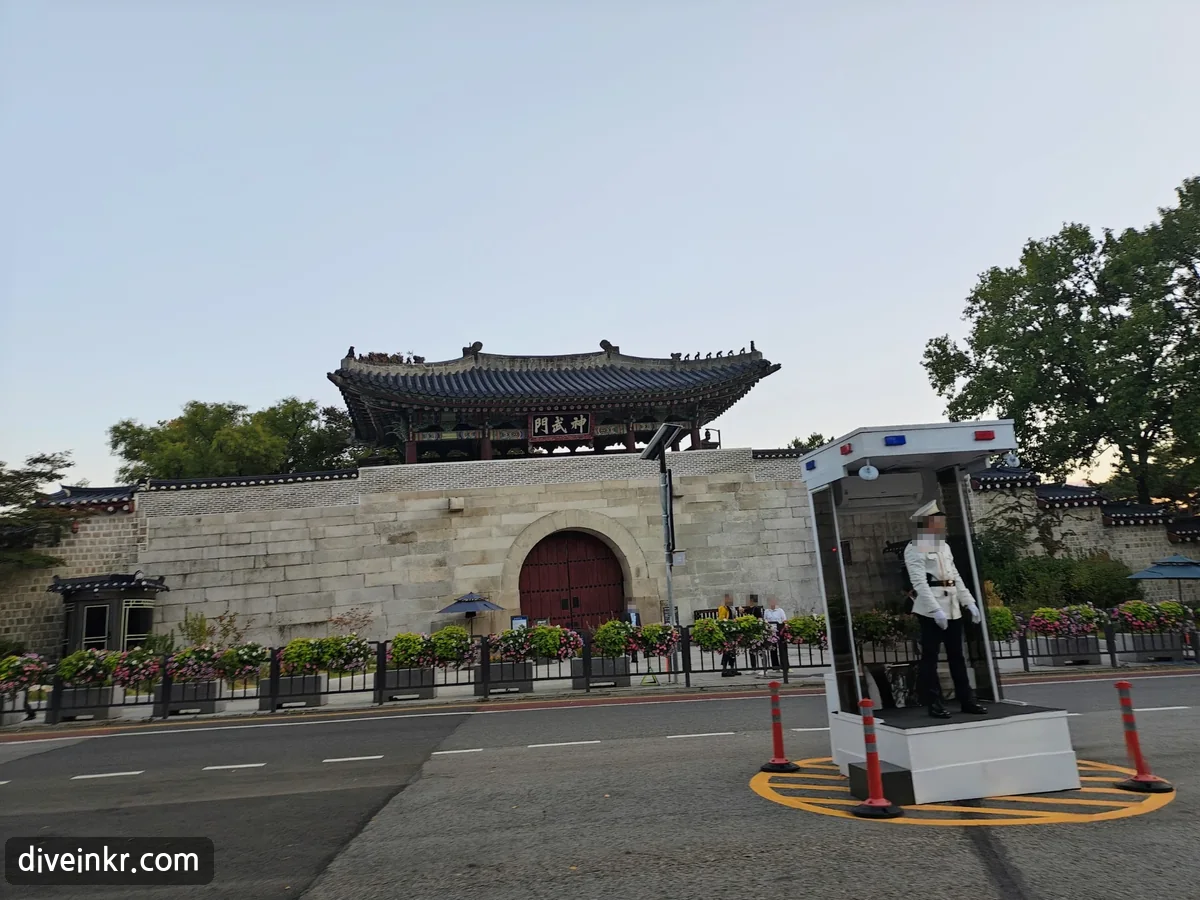
The north gate of the palace is 신무문 (Sinmumun). The name board reads 神武門, the same three characters as 신무문 (sinmumun): 신 (sin) is "divine," 무 (mu) is "martial" and 문 (mun) is "gate," the same 문 you saw on 광화문 and 동대문. The gate was first built in 1433, took the name Sinmumun in 1475, and was rebuilt in 1865. In front of it, a guard in a white uniform stands in a small booth on the road. Around 청와대, police and security units guard the area together, so uniforms differ.
Beside the Palace: 국립민속박물관
Two museums sit close to the walk. The 국립민속박물관 (gungnip minsok bangmulgwan, National Folk Museum of Korea) is right beside Gyeongbokgung. Its gate pillars are written both in hanja (國立民俗博物館) and in Hangul. 국립 (gungnip) means "national," 민속 (minsok) "folk customs" and 박물관 (bangmulgwan) "museum."
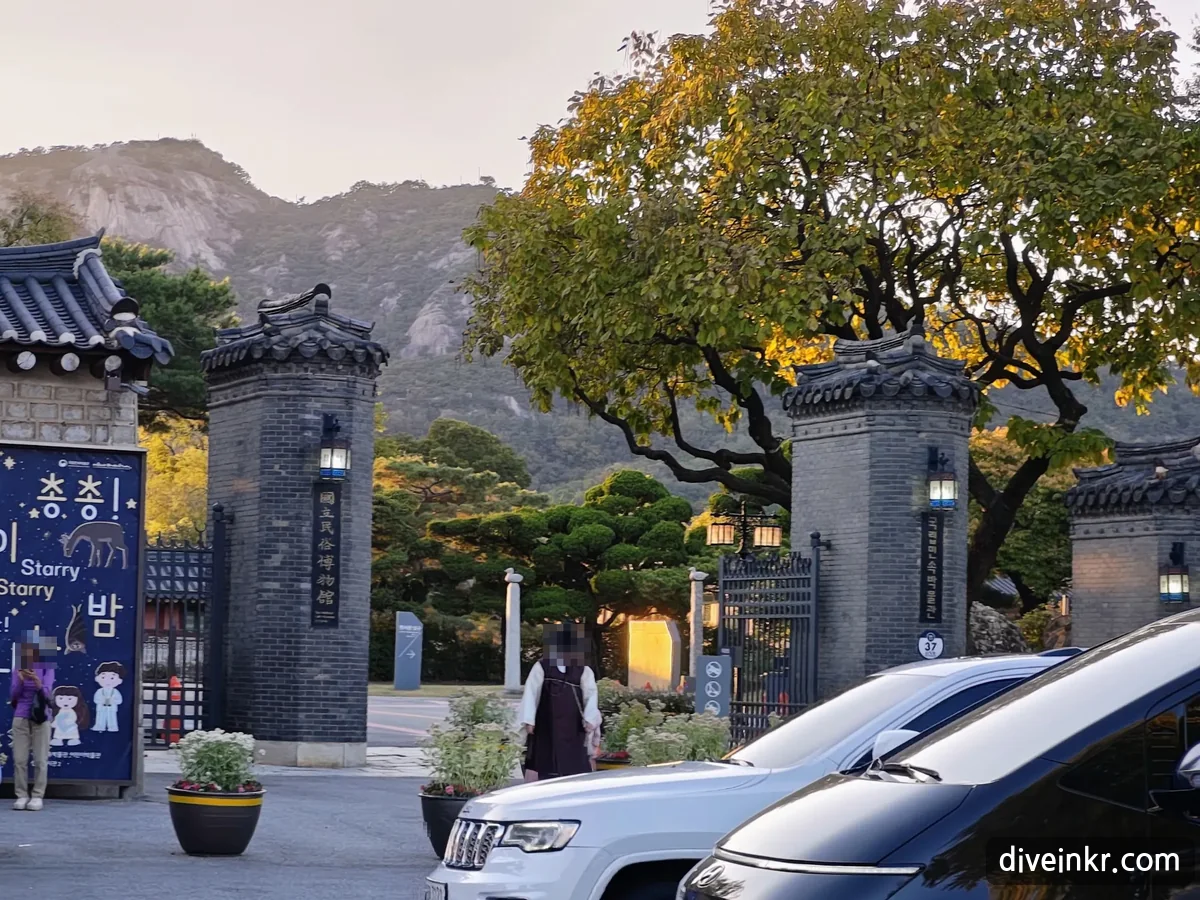
The museum is also close to the Bukchon route in our walk through Bukchon and the art museums.
From here it is a short walk to Bukchon — see our walk through Bukchon and the art museums.
Words From the Walk
Words you can now read on a Seoul street:
| Korean | Romanization | Meaning |
|---|---|---|
| 삼거리 | samgeori | Three-way junction |
| 안내문 | annaemun | Guide text, notice |
| 봉황 | bonghwang | Phoenix |
| 문 | mun | Gate, door |
| 국립 | gungnip | National |
| 민속 | minsok | Folk customs |
| 박물관 | bangmulgwan | Museum |
| 밤 | bam | Night |
For more street words, see reading Korean street signs, and for the square, Gwanghwamun Square.
Common Mistakes
- Reading every sign as Hangul. Older plaques and name boards mix in hanja — look for the same character in other words (문, 설, 치).
- Mixing up 삼거리 and 사거리. 삼거리 is a three-way junction and 사거리 is a four-way crossing — 삼 means three and 사 means four.
Mini Quiz
2 short questions — about 1 minute
2. What does 안내문 mean?
3. Which word on the National Folk Museum gate means "museum"?
Part of Korean Phrases for Travelers
Related Knowledge
Learn Next
Practice the same skill — hanja, directions and shop words — on everyday signs.
Will you remember this tomorrow?
Save it — your daily review brings it back right before you'd forget. No account needed.