Gwangjang Market to Jongmyo: A Jongno Photo Walk and the Korean on Its Signs
Written and reviewed by Jun and Jin, native Korean speakers
Published · How we write & review
After this page, you can walk Jongno 3-ga to 5-ga — Gwangjang Market, Jongmyo Shrine, Sewoon Sangga — and read the Korean on its market, pharmacy, seed-shop and jewelry signs.
10-second answer
The short answer
Between Jongno 3-ga and 5-ga you'll find 광장시장 (Gwangjang Sijang, Gwangjang Market), often called Korea's first permanent market, plus rows of 약국 (yakguk, pharmacies), seed shops called 종묘상 (jongmyosang) and jewelry shops selling 귀금속 (gwigeumsok, precious metals). Just north is 종묘 (Jongmyo), the royal ancestral shrine, which is closed on Tuesdays. On Mondays, Wednesdays, Thursdays and Fridays you can only enter on a guided tour.
Quick check — did that land?
1. What does the single character 약 on a sign tell you?
Jongno 3-ga to 5-ga: The Market End of Jongno
Walk east along Jongno from the Bosingak bell pavilion and the office towers soon give way to markets. The stretch between Jongno 3-ga (종로3가) and Jongno 5-ga (종로5가) is where Seoul shops for fabric, medicine, seeds and gold, and eats cheap market food. It's also full of useful Korean, because nearly every shop tells you what it sells in big letters.
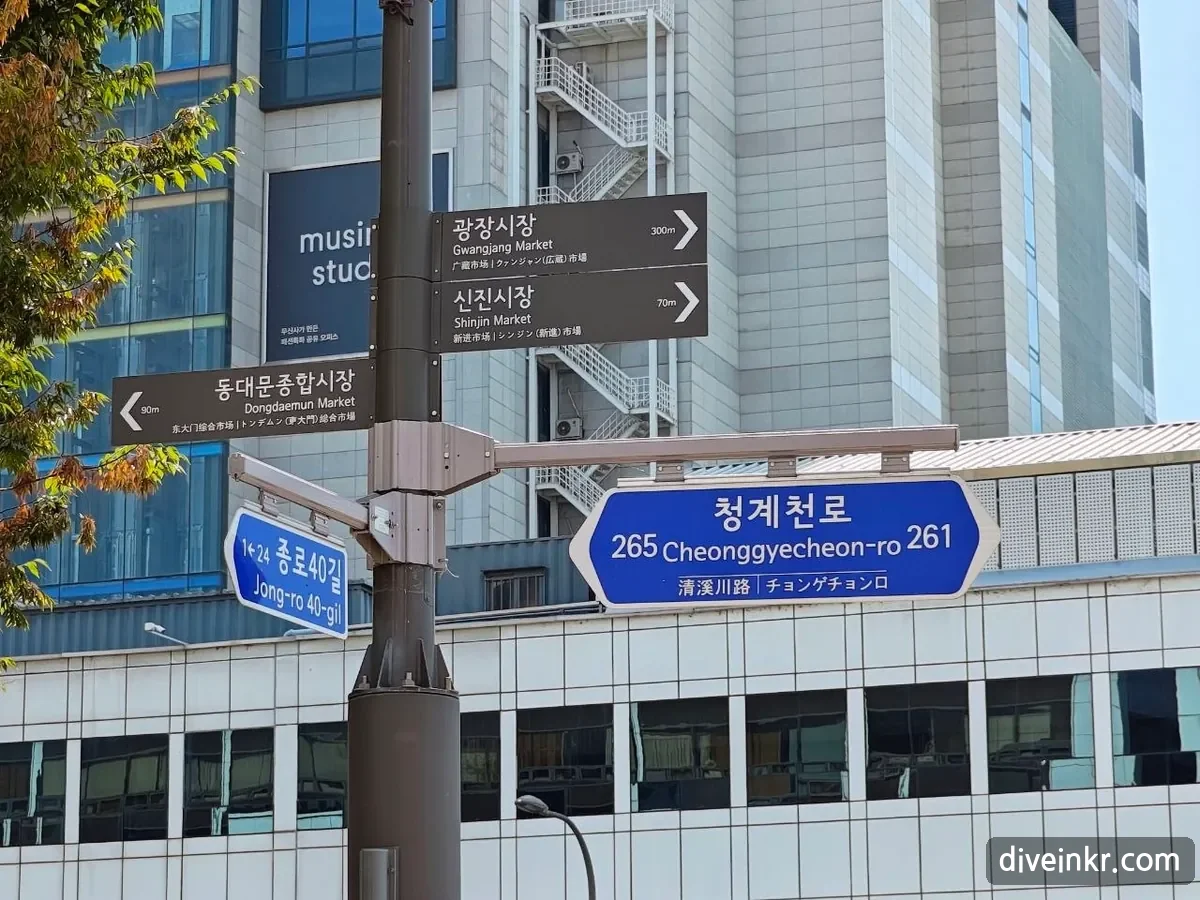
The street signposts here are well labeled, and they're a good way to find your way. This one shows three markets, each with its distance in meters:
| Sign | Romanization | Meaning |
|---|---|---|
| 광장시장 | Gwangjang Sijang | Gwangjang Market — 300 m ahead |
| 신진시장 | Sinjin Sijang | Shinjin Market — 70 m ahead |
| 동대문종합시장 | Dongdaemun Jonghap Sijang | Dongdaemun "general" market (종합 = all-in-one) |
| 청계천로 | Cheonggyecheon-ro | Cheonggyecheon Road (로 = road); 265 and 261 are building numbers |
| 종로40길 | Jongno 40-gil | Jongno street no. 40 (길 = a smaller street off the main road) |
For more on how these road names and numbers work, see reading Korean street signs, and for asking the way, directions phrases in Korean.
See also: Reading Korean street signs
광장시장 (Gwangjang Market)
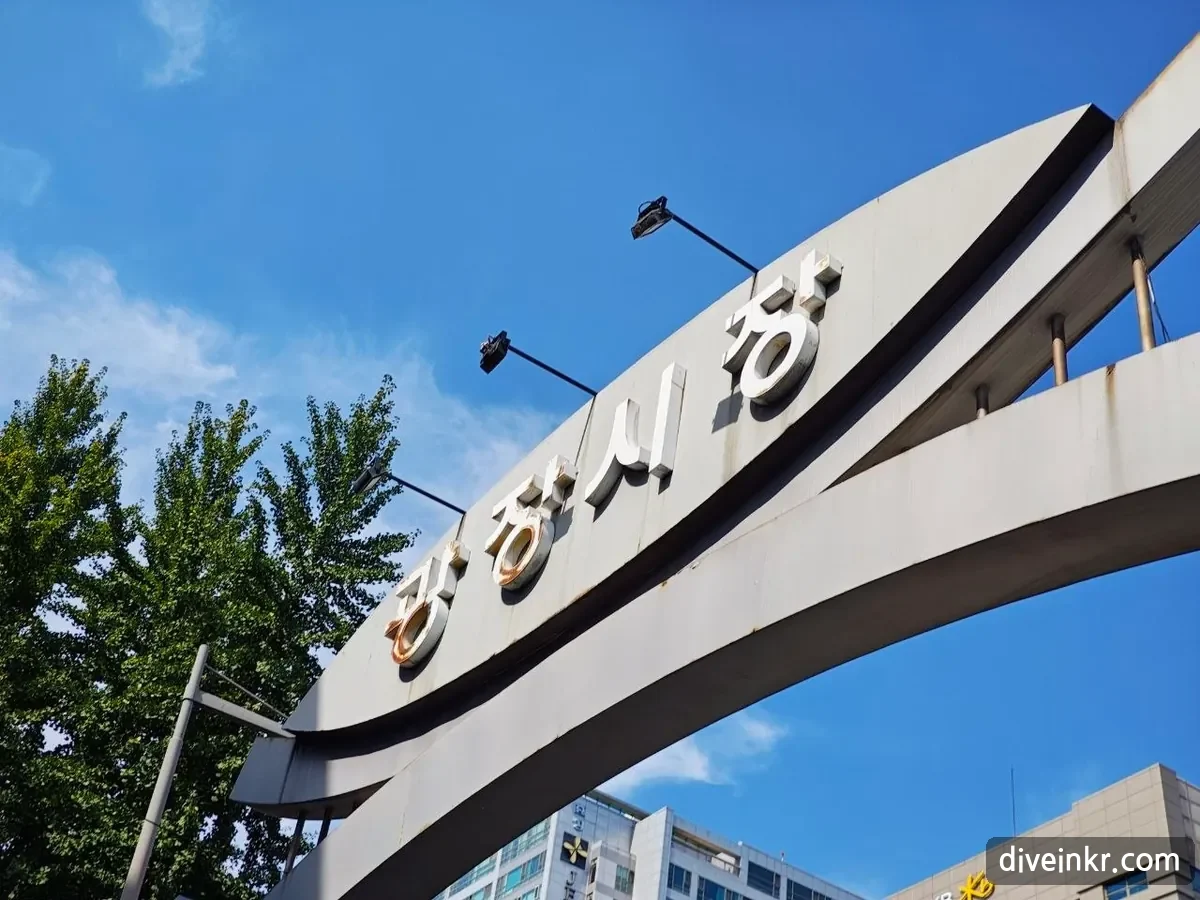
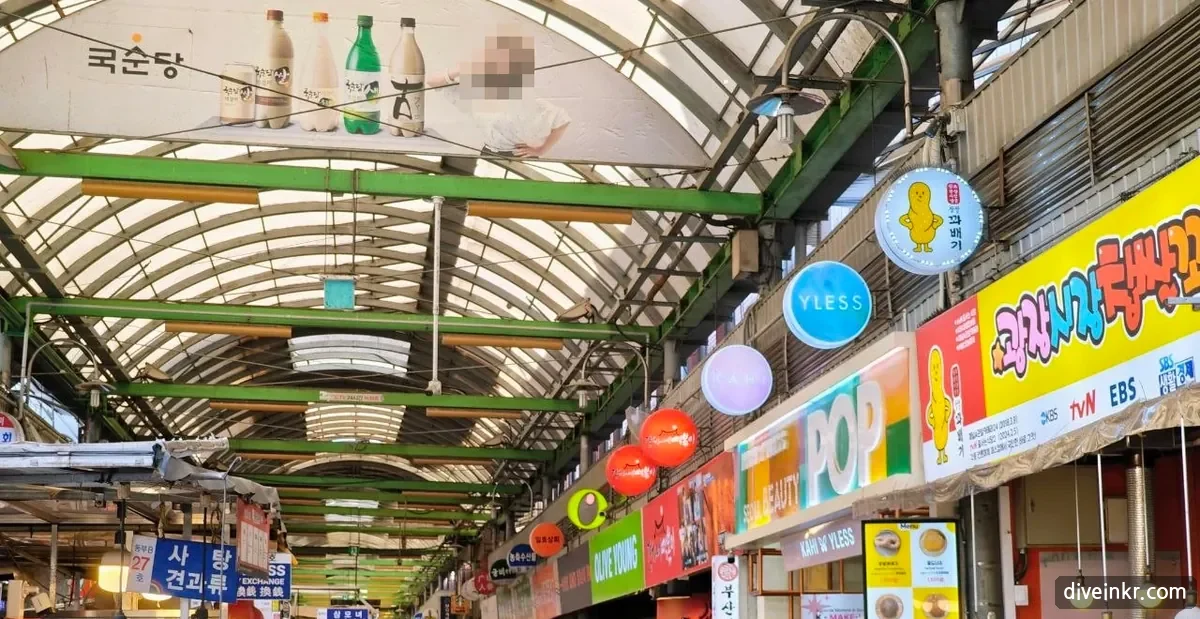
Gwangjang Market dates from the early 1900s — Jongno-gu gives 1904 — and the district calls it Korea's first permanent market (상설 시장, sangseol sijang), meaning it was open every day rather than on market days only. It's known for fabric, hanbok and bedding shops, and for food: Seoul's tourism site highlights 빈대떡 (bindaetteok, mung bean pancakes) and 마약김밥 (mayak gimbap, small bite-size gimbap).
종로신진시장 and Jongno's Pharmacies
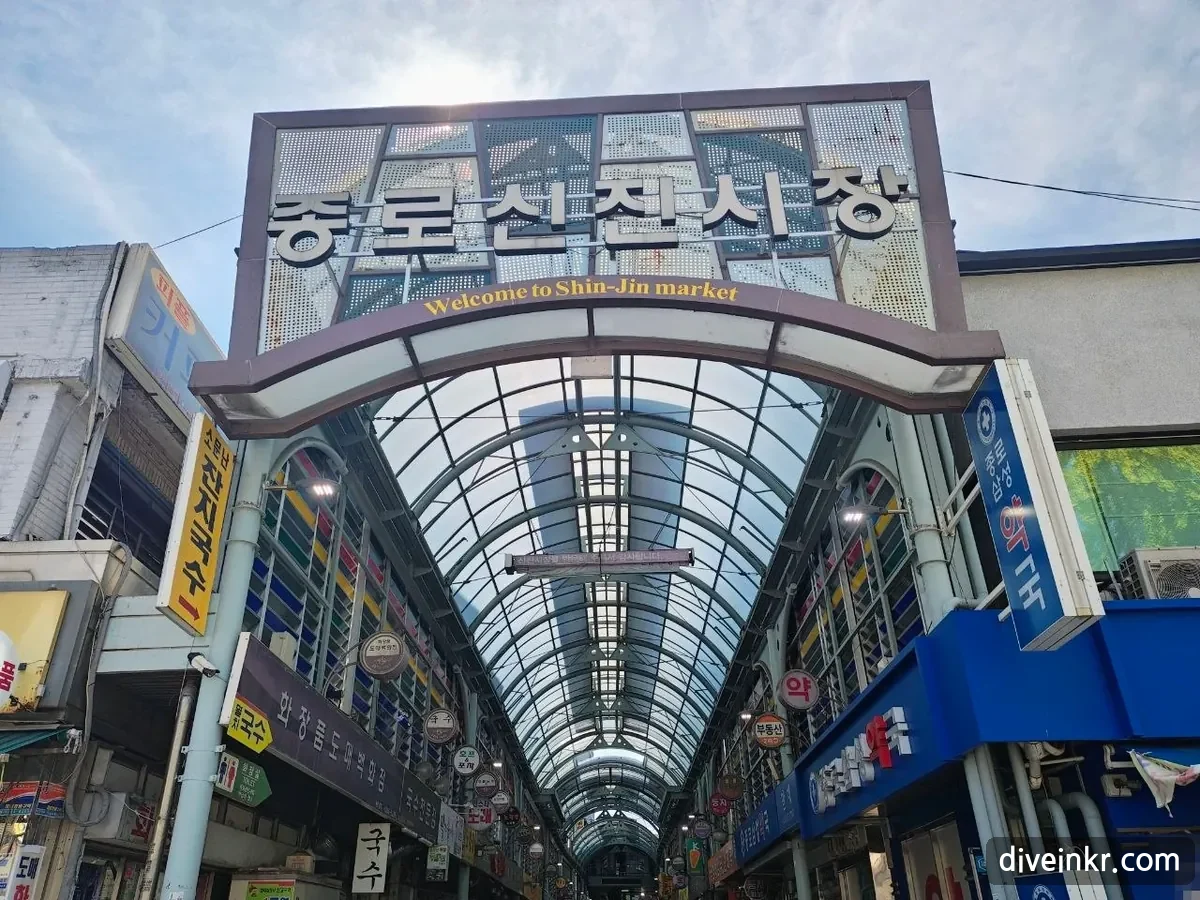
A few steps from the signpost is Jongno Shinjin Market, which Seoul's city news site says was founded in 1952 and is known for its 닭한마리 (dakhanmari, whole chicken soup) alley. Around it, one thing stands out: pharmacies. Jongno has a lot of them, often several in a row, with the same character repeated on every sign.
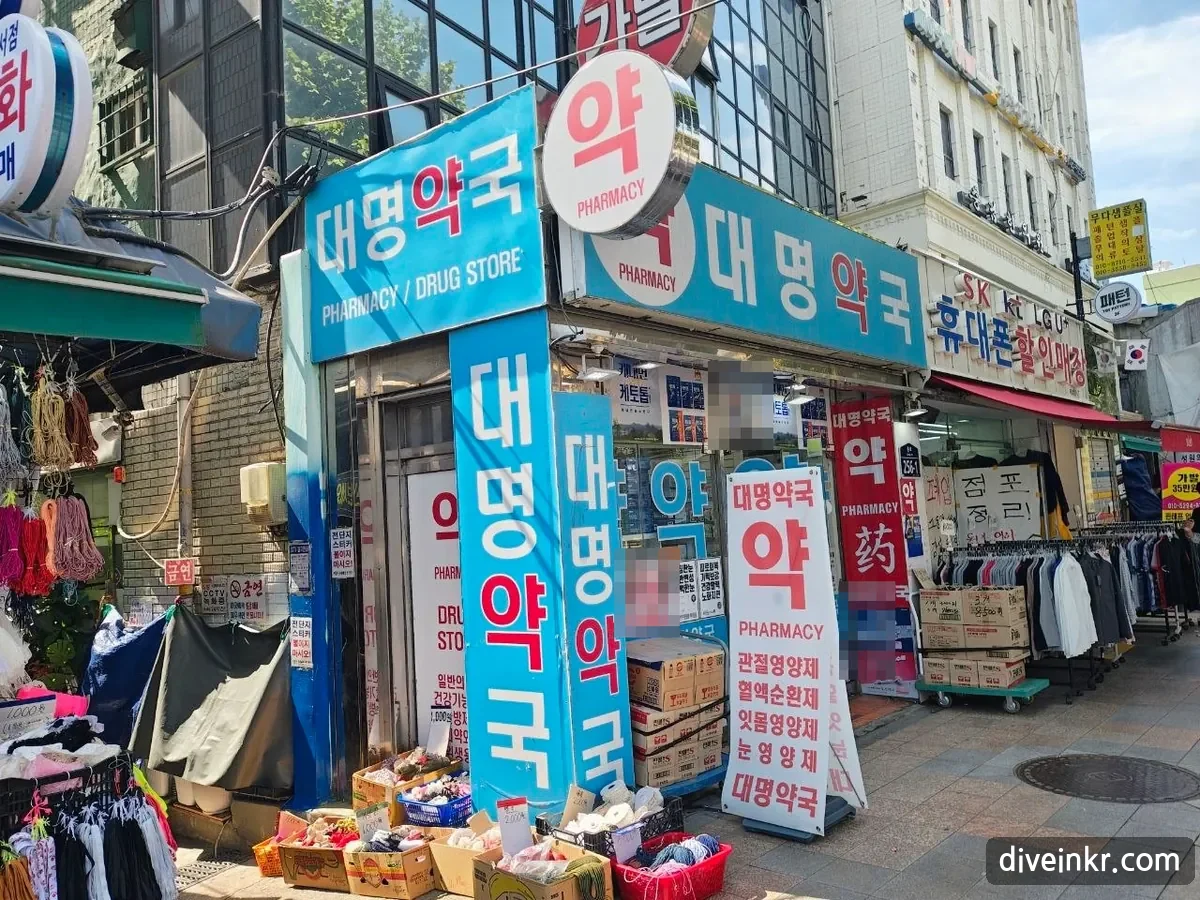
| Korean | Romanization | Meaning |
|---|---|---|
| 약 | yak | Medicine (the one-letter pharmacy sign) |
| 약국 | yakguk | Pharmacy |
| 약사 | yaksa | Pharmacist |
| 처방전 | cheobangjeon | Prescription |
두통약 있어요?
dutongyak isseoyo?
Do you have headache medicine?
근처에 약국 있어요?
geuncheoe yakguk isseoyo?
Is there a pharmacy nearby?
More phrases for describing symptoms are in hospital and pharmacy Korean.
종묘상: Seed Shops Near the Shrine
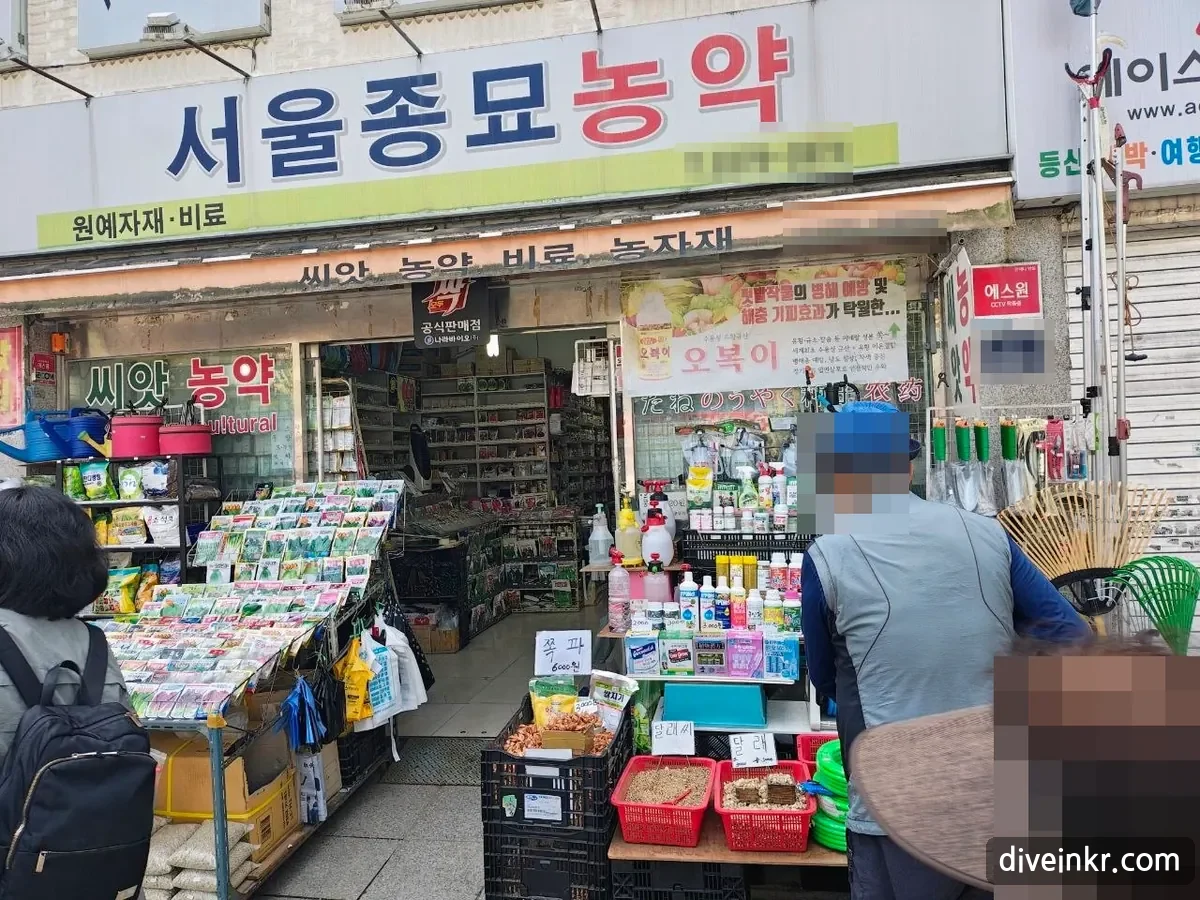
Near Jongmyo you'll find something unexpected in the middle of Seoul: seed shops (종묘상, jongmyosang) and pesticide shops. This area has been a main market for a long time. Here's a small trap for readers: the 종묘 in 종묘상 is not the shrine. The dictionary lists two separate words — 종묘 (宗廟), the royal ancestral shrine, and 종묘 (種苗), "seeds and seedlings." Add 상 (商, "merchant") and you get a seed dealer.
| Korean | Romanization | Meaning |
|---|---|---|
| 씨앗 | ssiat | Seed |
| 농약 | nongyak | Pesticide (literally "farm medicine") |
| 비료 | biryo | Fertilizer |
| 원예자재 | wonye jajae | Gardening supplies |
종묘 (Jongmyo Shrine): Check the Day Before You Go
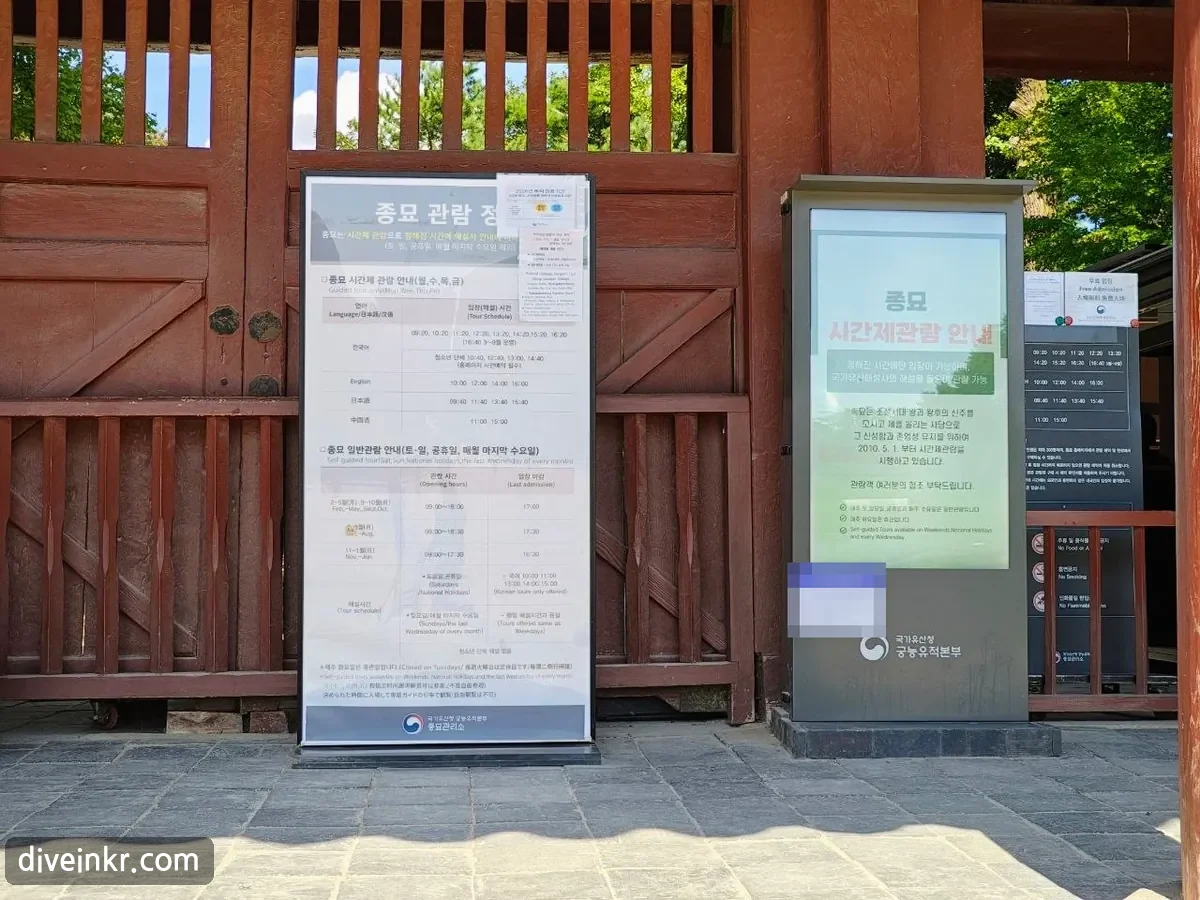
Jongmyo is the shrine where the spirit tablets of Joseon's kings and queens are kept. It became a UNESCO World Heritage Site in 1995, and its royal ancestral rite and music (종묘제례, Jongmyo Jerye) were recognized by UNESCO in 2001. To keep the site quiet, most days you can't just wander in:
| Day | How you visit |
|---|---|
| Mon, Wed, Thu, Fri | 시간제 관람 (siganje gwallam) — time-slot guided tour only. English tours at 10:00, 12:00, 14:00 and 16:00 |
| Sat, Sun, public holidays, last Wednesday of the month | 일반관람 (ilban gwallam) — walk around on your own |
| Tuesday | 휴관일 (hyugwanil) — closed |
Opening hours change with the season: 9:00–18:00 from February to May and in September and October, until 18:30 from June to August, and until 17:30 from November to January. Ticket sales stop an hour before closing. Admission is 1,000 won; foreign visitors aged 18 and under or 65 and over enter free, and so does anyone wearing hanbok — traditional or modern everyday hanbok both count, as long as it's a full outfit: a hanbok top (저고리, jeogori) with a hanbok skirt or trousers. A hanbok jacket over jeans, or hanbok trousers with a T-shirt, doesn't count. The same rule applies at the four palaces and the royal tombs.
화요일 휴관: closed Tuesdays
휴관 (hyugwan) means "closed (for the day)" and you'll see it at museums and palaces all over Seoul. 매주 화요일 휴관 (maeju hwayoil hyugwan) = "closed every Tuesday." If a Tuesday is a public holiday, Jongmyo opens and closes the next day instead.
세운상가 (Sewoon Sangga)
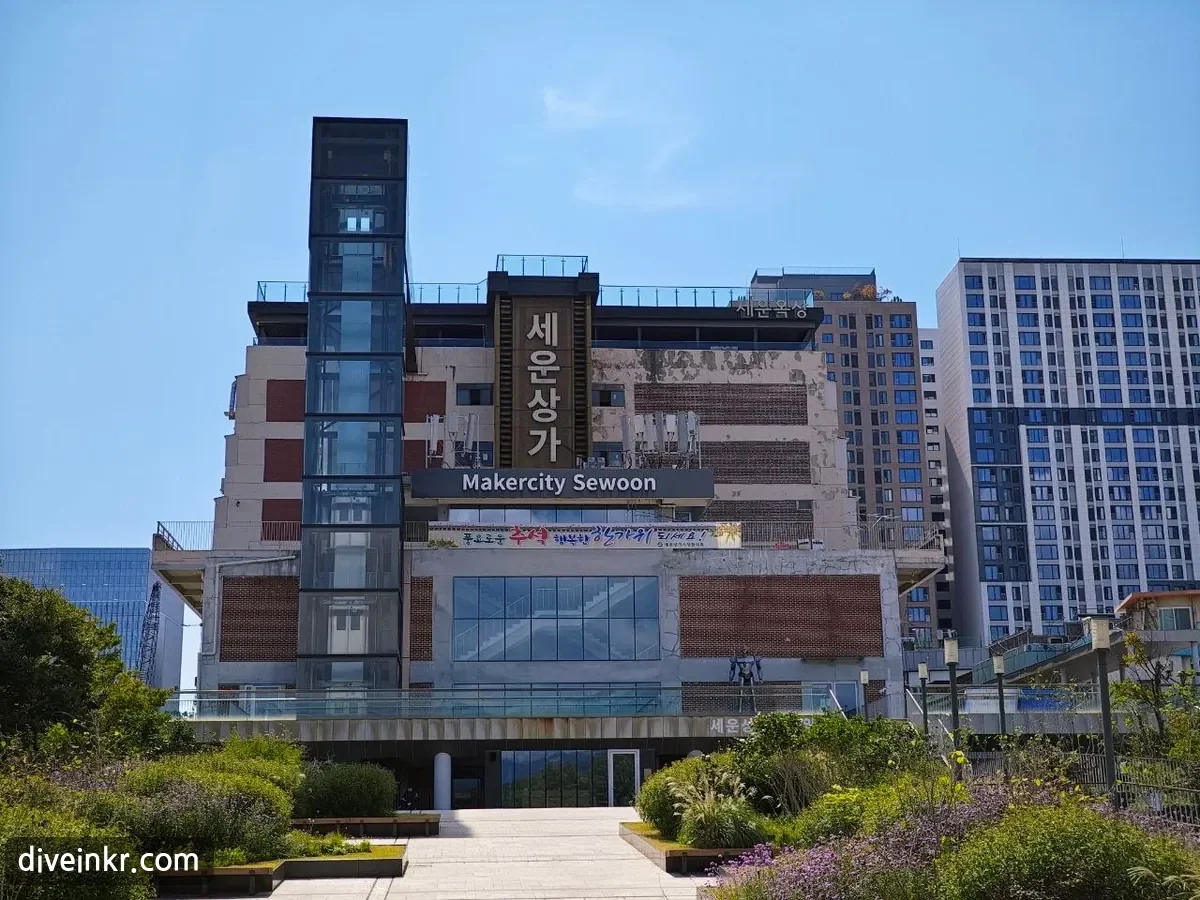
Across Jongno from Jongmyo stands Sewoon Sangga. Seoul's city news site describes it as Korea's first mixed-use residential and commercial building, built in 1967 and designed by architect Kim Swoo-geun, and for decades it was the place to buy and fix electronics. The city started a regeneration project called 다시·세운 (dasi seun) in 2014, and today it uses the name Makercity Sewoon.
귀금속: Jongno's Jewelry Street
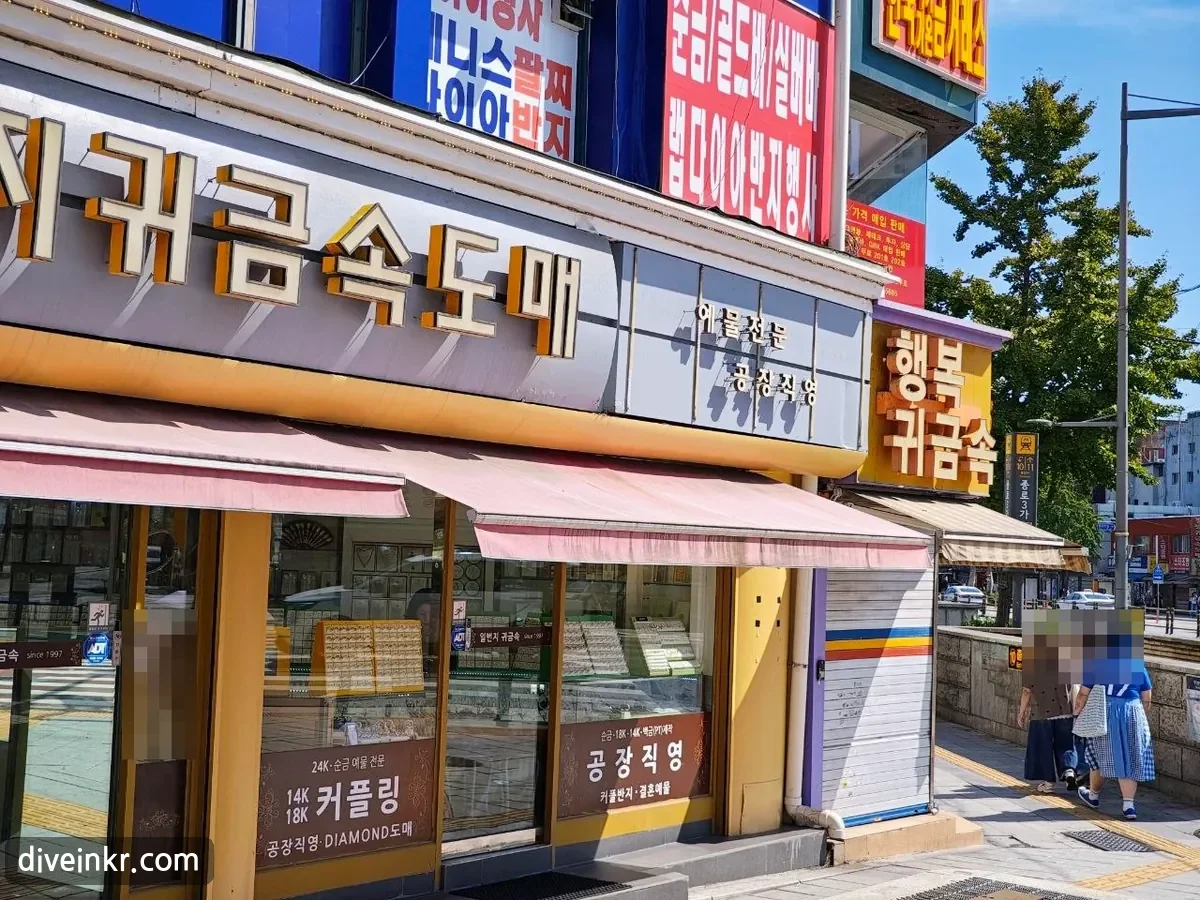
Jongno is famous for its jewelry shops. Jongno-gu calls the area a complete jewelry complex where pieces are designed, made and sold, and says it grew from the 1930s. The signs are a short course in shop Korean:
| Sign | Romanization | Meaning |
|---|---|---|
| 귀금속 | gwigeumsok | Precious metals, jewelry |
| 도매 | domae | Wholesale |
| 공장직영 | gongjang jigyeong | Run directly by the factory |
| 순금 | sungeum | Pure gold (24K) |
| 예물 | yemul | Wedding gifts (rings exchanged at a wedding) |
| 커플링 | keopeulling | Couple ring — Konglish for matching rings |
환전: Do You Need to Change Money?
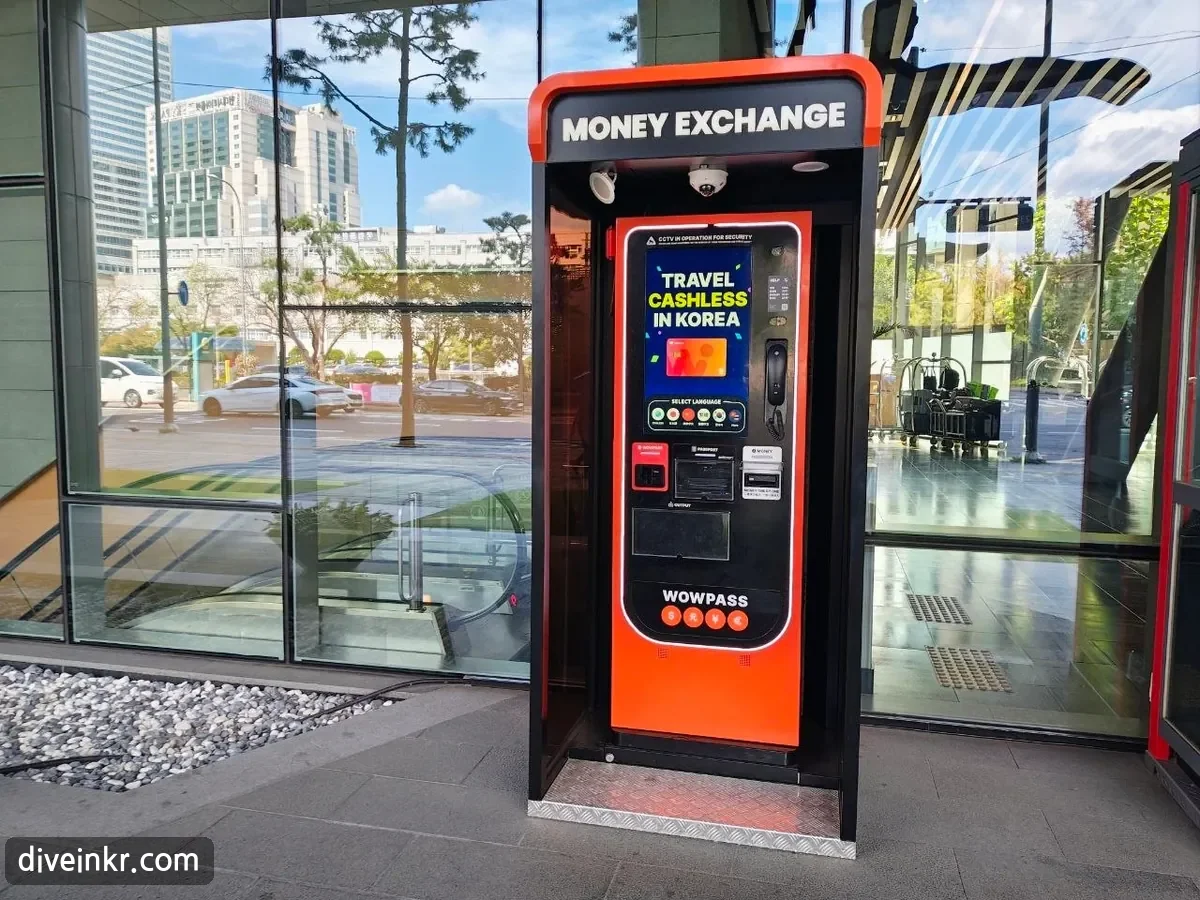
You'll see exchange booths (환전소, hwanjeonso) near Gwangjang Market and exchange machines like this one. Honestly, you don't strictly need them: in Korea you can do almost everything with a credit card and no cash. Market stalls and street vendors may prefer cash, but very few of them don't take cards. If you want mobile data too, the U+ shops you'll pass belong to one of Korea's three major carriers — see getting a Korean SIM card.
Back-Alley Transport: Cargo Bikes and 리어카
Step off the main road into Jongno's back alleys and you'll see how goods actually move around the markets.
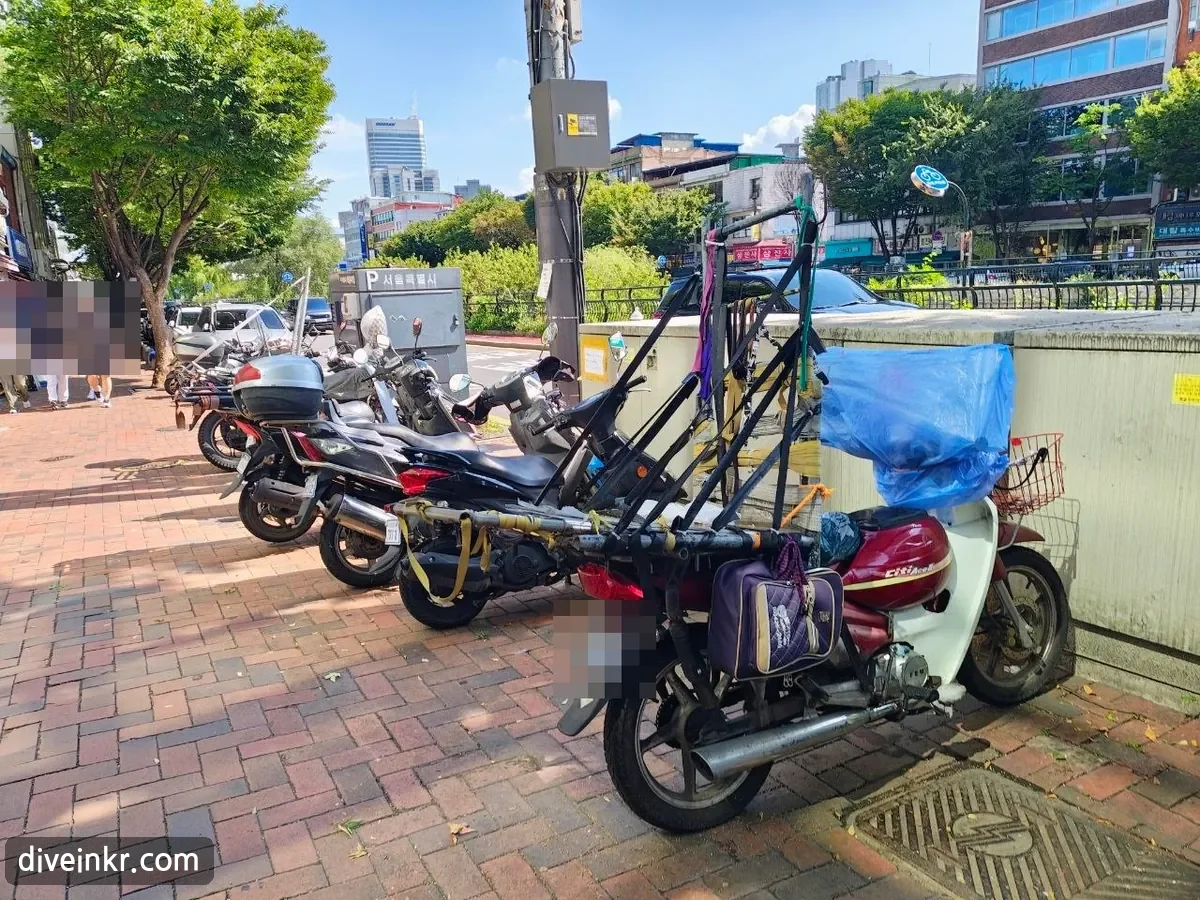
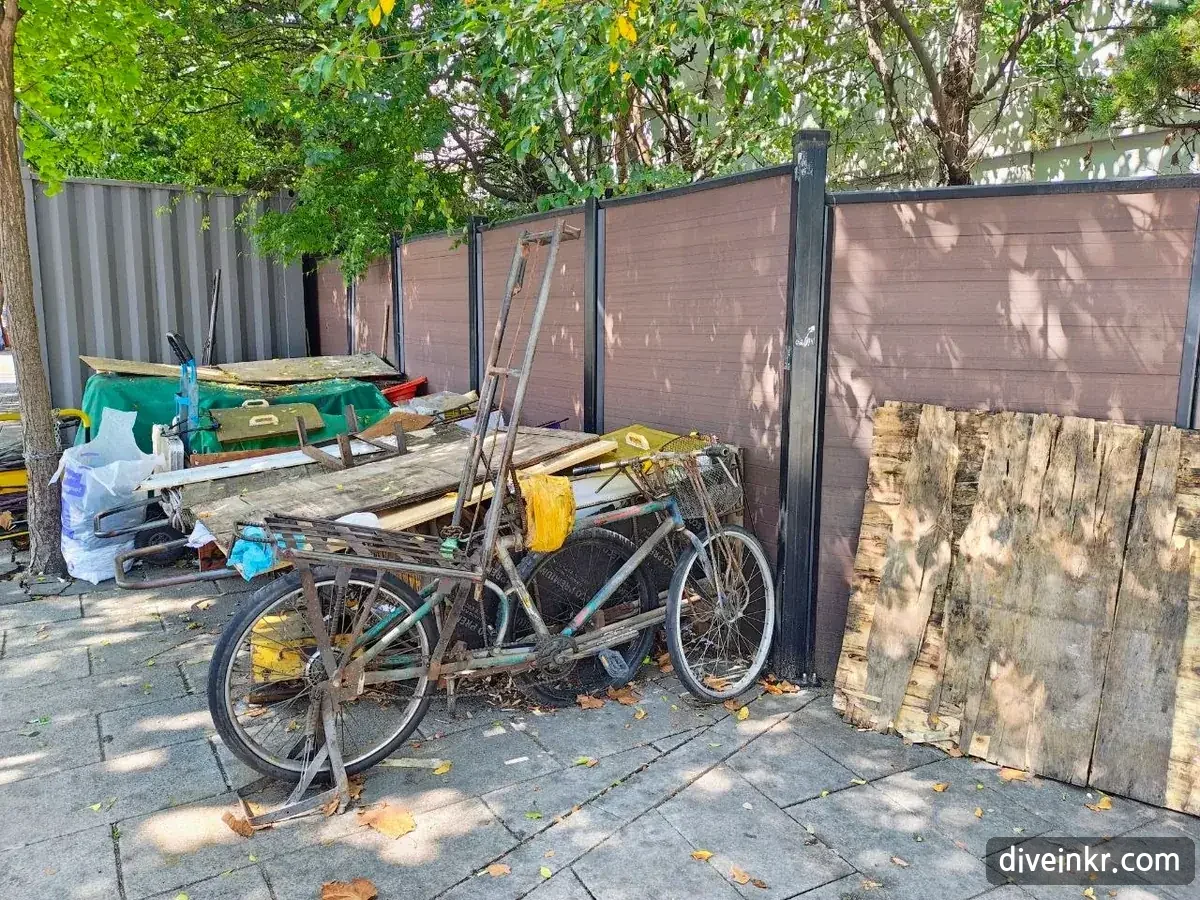
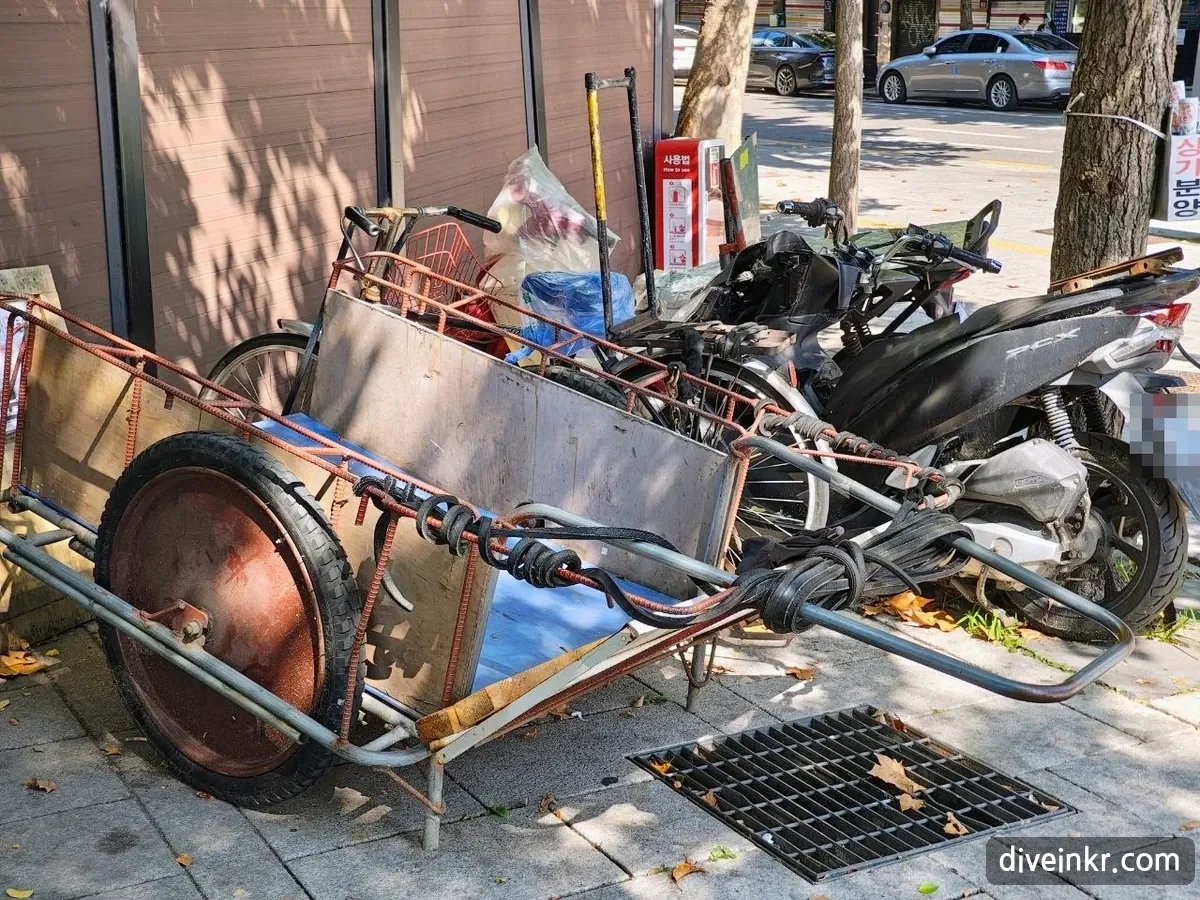
The hand cart is usually called 리어카 (rieoka). The Standard Korean Language Dictionary lists it as coming from English "rear car" and defines it as a small two-wheeled cart pulled by a person or hitched behind a bicycle.
| Korean | Romanization | Meaning |
|---|---|---|
| 짐 | jim | Load, luggage |
| 짐받이 | jimbaji | Cargo rack |
| 짐자전거 | jimjajeongeo | Cargo bicycle |
| 리어카 | rieoka | Hand cart |
공항버스: The Airport Bus Stop
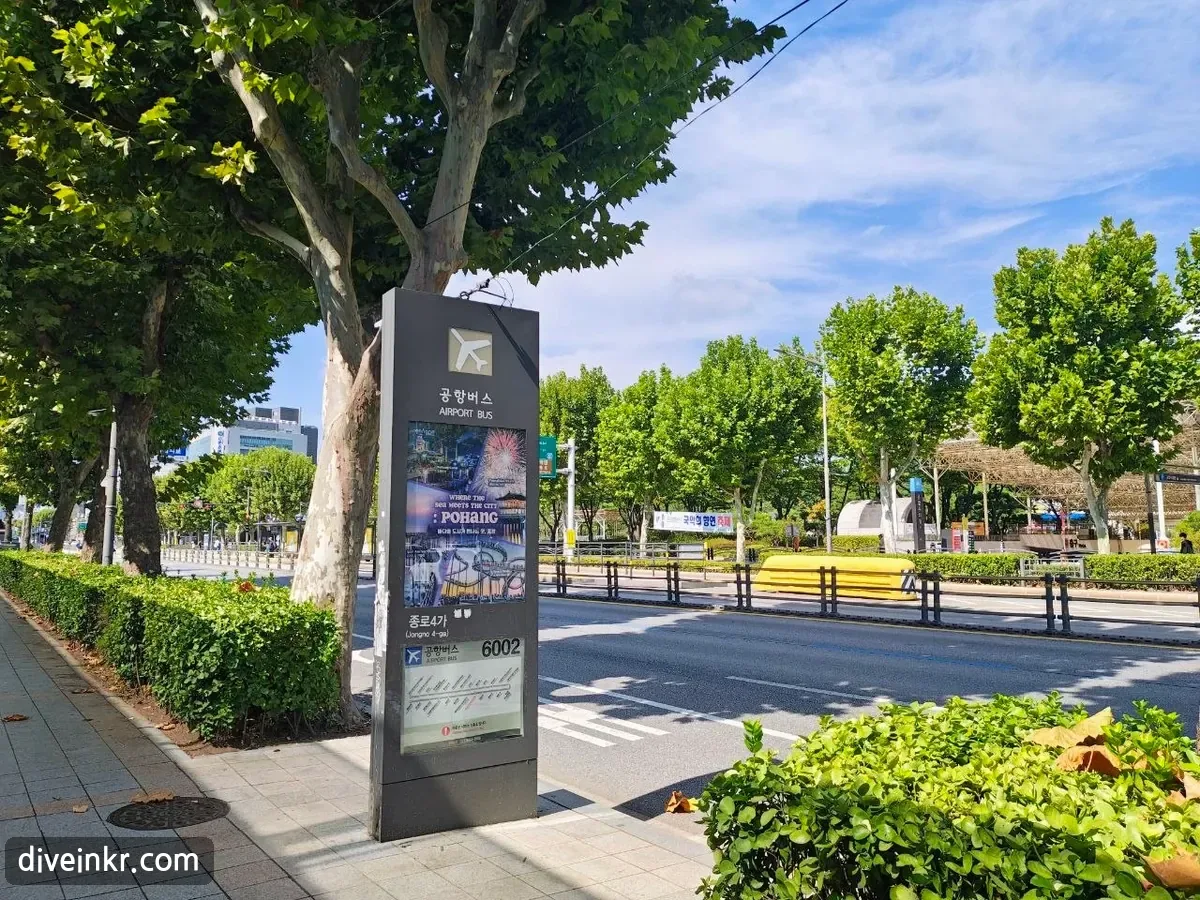
Airport buses sometimes share a stop with city buses, but they often have separate stops like this one, so look for the 공항버스 sign. Route 6002 runs between Cheongnyangni, Jongno, Hapjeong and Incheon Airport. Its operator lists the airport-bound Jongno stops as 종로6가, 종로3가, 종로2가 and 종로1가, and we remember this stop being on the way in from the airport; check the route page for which direction stops here. The adult fare is 17,000 won. For city buses, see how to ride a bus in Seoul.
A Short Route
- Start at Jongno 5-ga Station (종로5가역) and find the signpost pointing to 광장시장 and 신진시장.
- Walk through Shinjin Market and count the 약 signs on Jongno.
- Cross to Gwangjang Market for lunch.
- Walk west past the seed shops to Jongmyo — not on a Tuesday.
- Finish at Sewoon Sangga and the jewelry shops toward Jongno 3-ga.
광장시장 어떻게 가요?
gwangjang sijang eotteoke gayo?
How do I get to Gwangjang Market?
영어 해설은 몇 시예요?
yeongeo haeseoreun myeot siyeyo?
What time is the English tour?
카드 돼요?
kadeu dwaeyo?
Can I pay by card?
공항버스 어디서 타요?
gonghang beoseu eodiseo tayo?
Where do I catch the airport bus?
Dongdaemun, the old East Gate, is the next stop east along Jongno — see our Dongdaemun walk.
Mini Quiz
3 short questions — about 2 minute
2. What does a 종묘상 sell?
3. On which day is Jongmyo Shrine closed?
4. What is a 리어카?
Part of Korean Phrases for Travelers
Related Knowledge
- Reading Korean street signs
- Hospital and pharmacy Korean phrases
- How to ride a bus in Seoul
- Asking for directions in Korean
2 more related
Learn Next
Hospital and Pharmacy Korean Phrases
Jongno is lined with pharmacies — these phrases get you the right medicine.
Will you remember this tomorrow?
Save it — your daily review brings it back right before you'd forget. No account needed.