A Walk Around Dongdaemun: The East Gate, the Markets and the Korean You'll See
Written and reviewed by Jun and Jin, native Korean speakers
Published · How we write & review
After this page, you can find your way around Dongdaemun — Heunginjimun gate, Pyeonghwa Market, the toy street, Dongmyo and DDP — and read the Korean on the signs and price tags along the way.
10-second answer
The short answer
Dongdaemun (동대문, dongdaemun, "East Gate") is the everyday name of 흥인지문 (Heunginjimun), the east gate of Seoul's old city wall. Around it you'll find Pyeonghwa Market (평화시장, pyeonghwa sijang), where labor activist Jeon Tae-il (전태일, jeon taeil) worked, the toy and stationery street (완구 거리, wangu geori), the Dongmyo (동묘, dongmyo) flea market and Dongdaemun Design Plaza. Get off at Dongdaemun Station on Line 1 or 4.
Quick check — did that land?
1. What does 동대문 literally mean?
Dongdaemun: More Than a Gate
Ask a Korean where Dongdaemun is and they might point you to a subway station, a shopping district, or a 600-year-old gate — the name covers all three. 동대문 is simply 동 (east) + 대 (great) + 문 (gate): the Great East Gate of the old walled city of Seoul. Today the area around it is a maze of wholesale markets, street stalls and busy crosswalks, with a few quiet historic sites tucked in between.
This walk covers the gate and the wall beside it, Pyeonghwa Market and the Jeon Tae-il memorial on Cheonggyecheon, the street stalls, the shoe and toy wholesale streets, the Dongmyo flea market, and Dongdaemun Design Plaza (DDP). All of it is walkable in an afternoon.
See also: A walk through Jongno
흥인지문 (Heunginjimun): The East Gate
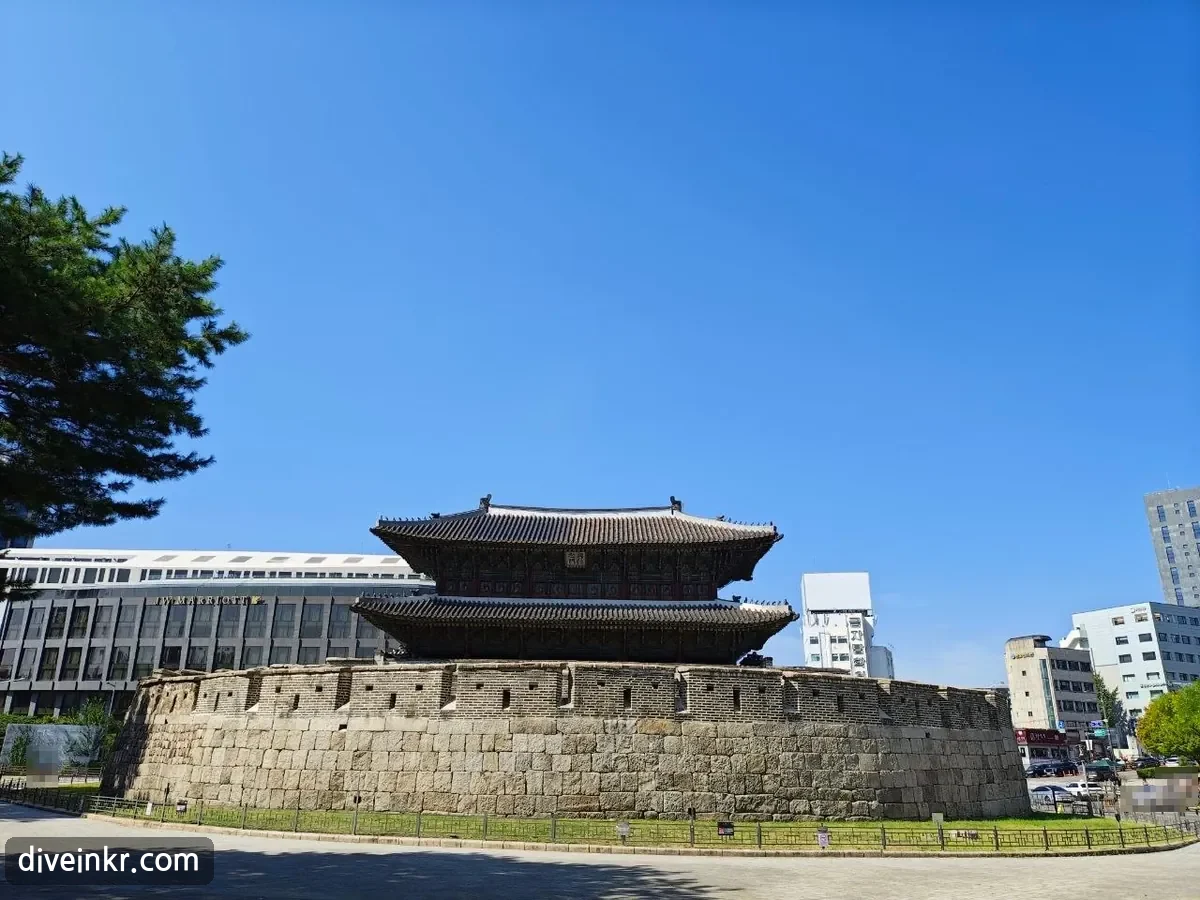
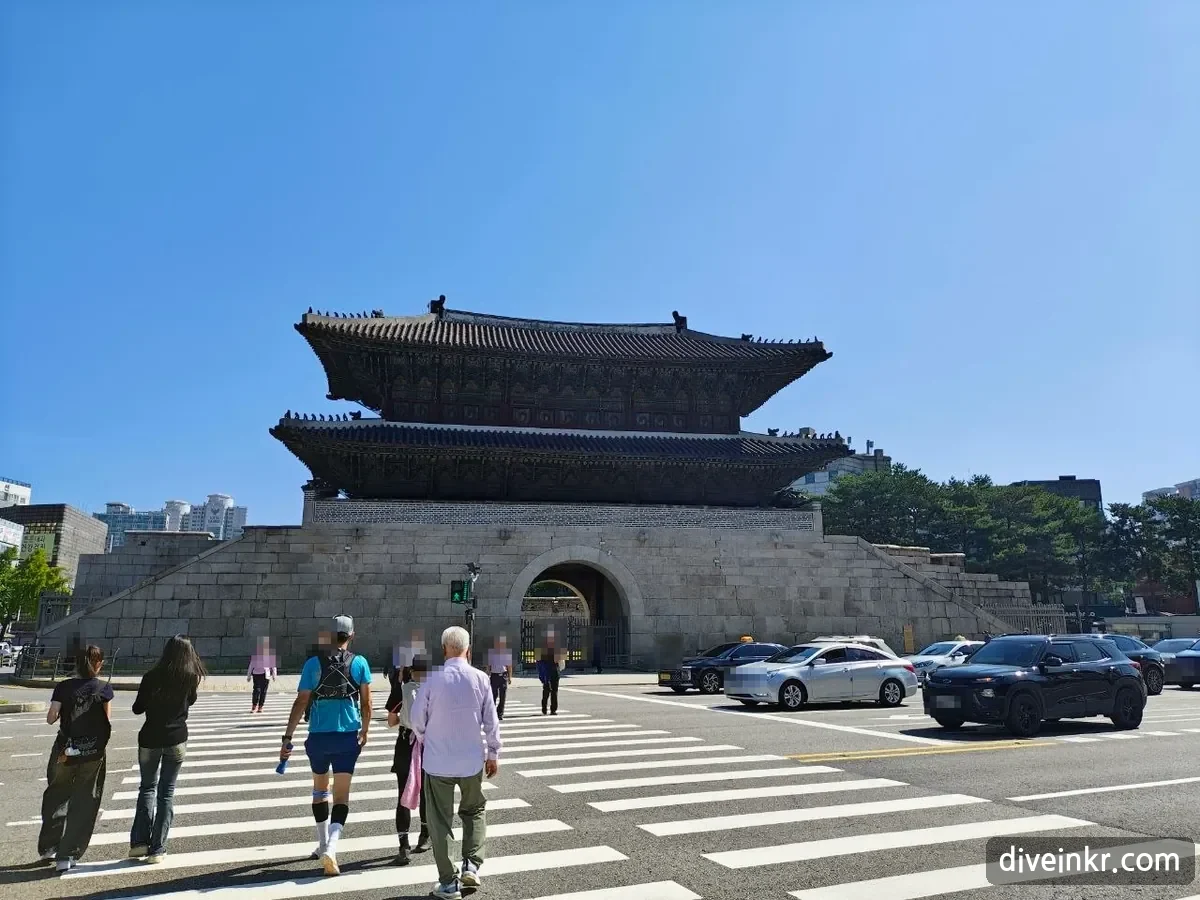
The gate's official name is 흥인지문 (興仁之門, Heunginjimun), roughly "Gate of Rising Benevolence." It's the only one of Seoul's eight city gates with a four-character name, and one of only two (with Sungnyemun, or Namdaemun) that has a two-story pavilion on top. The gate was first built when the city wall went up at the end of the 1390s, and the building you see now was rebuilt in 1869. It is a national Treasure (보물, bomul), designated in 1963 — for decades it was known as Treasure No. 1.
Look for the curved stone wall that wraps around the outside of the gate. That's an 옹성 (甕城, ongseong), a half-moon wall built so attackers couldn't reach the gate door directly. Seoul's land is lower in the east, which made this side the weakest, so Heunginjimun is the only city gate that got one.
한양도성: The City Wall Beside the Gate
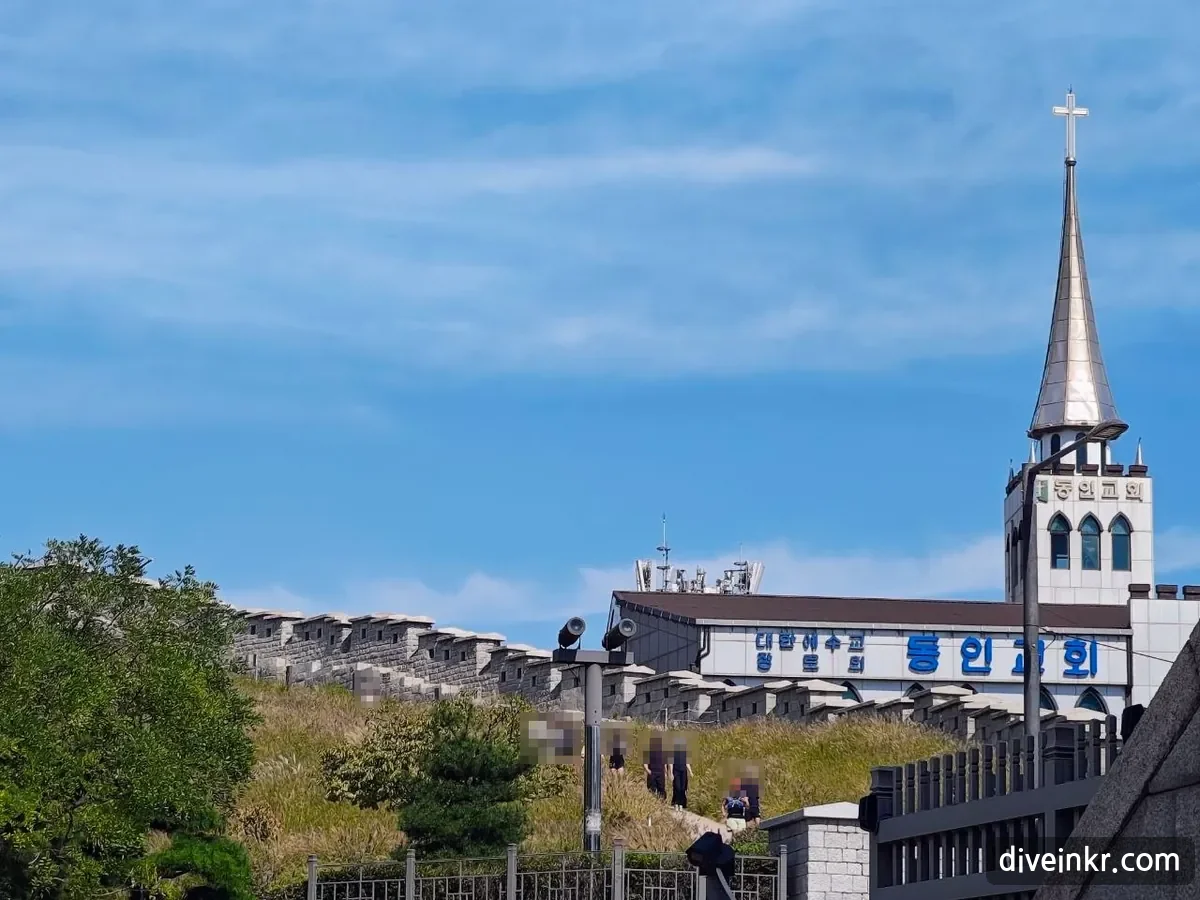
Heunginjimun was one of the doors in 한양도성 (Hanyangdoseong), the Seoul City Wall. It was built in 1396 and ran about 18.6 km around the old capital, over four mountains, with four great gates (4대문) and four small ones (4소문). About 70% of it still stands or has been rebuilt. From the gate, a stretch of the wall climbs north up Naksan hill — the Naksan section of the city wall trail, which runs 3.2 km between Heunginjimun and Hyehwamun (about 1.5 hours on foot).
Reading tip
문 (mun) means "gate" or "door" — you'll see it in 동대문, 남대문, 광화문 and on every 출입문 (entrance door) sign. 성 (seong) means "fortress" or "castle wall," as in 성곽 (seonggwak, fortress wall) and 옹성.
평화시장 and 전태일: A Market and a Memorial
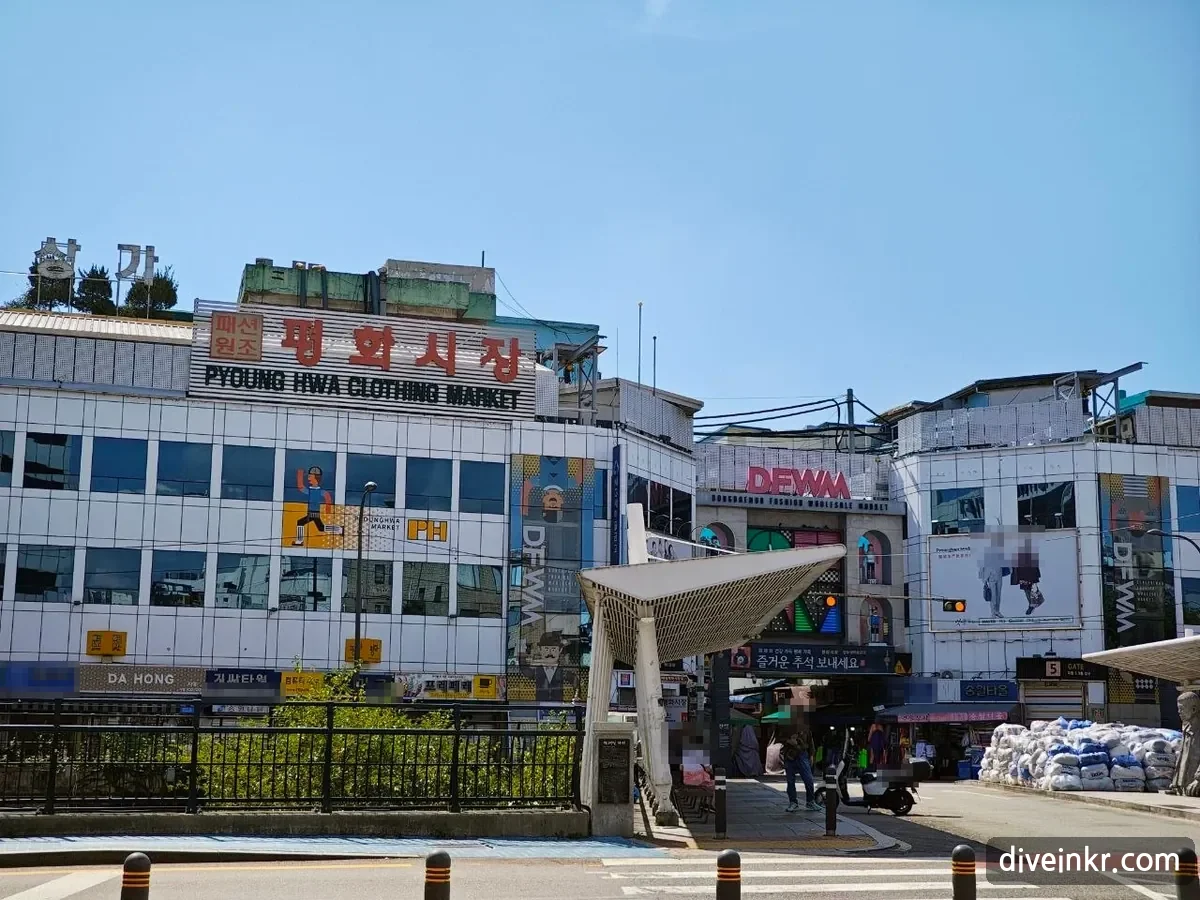
West of the gate, a long building runs along Cheonggyecheon stream: 평화시장 (Pyeonghwa Market, "Peace Market"), one of Dongdaemun's clothing markets. In the 1960s the market held many small sewing workshops, where young workers put in long hours in poor conditions.
One of those workers was 전태일 (Jeon Tae-il). He started working at the market in 1965, learned that Korea's Labor Standards Act (근로기준법) was supposed to protect workers like him, and in 1969 organized fellow tailors to survey conditions and petition the labor office — without result. On November 13, 1970, in front of Pyeonghwa Market, he set himself on fire demanding that the law be obeyed, and died that night. His death made workers' conditions a national issue and became a turning point in the history of the Korean labor movement.
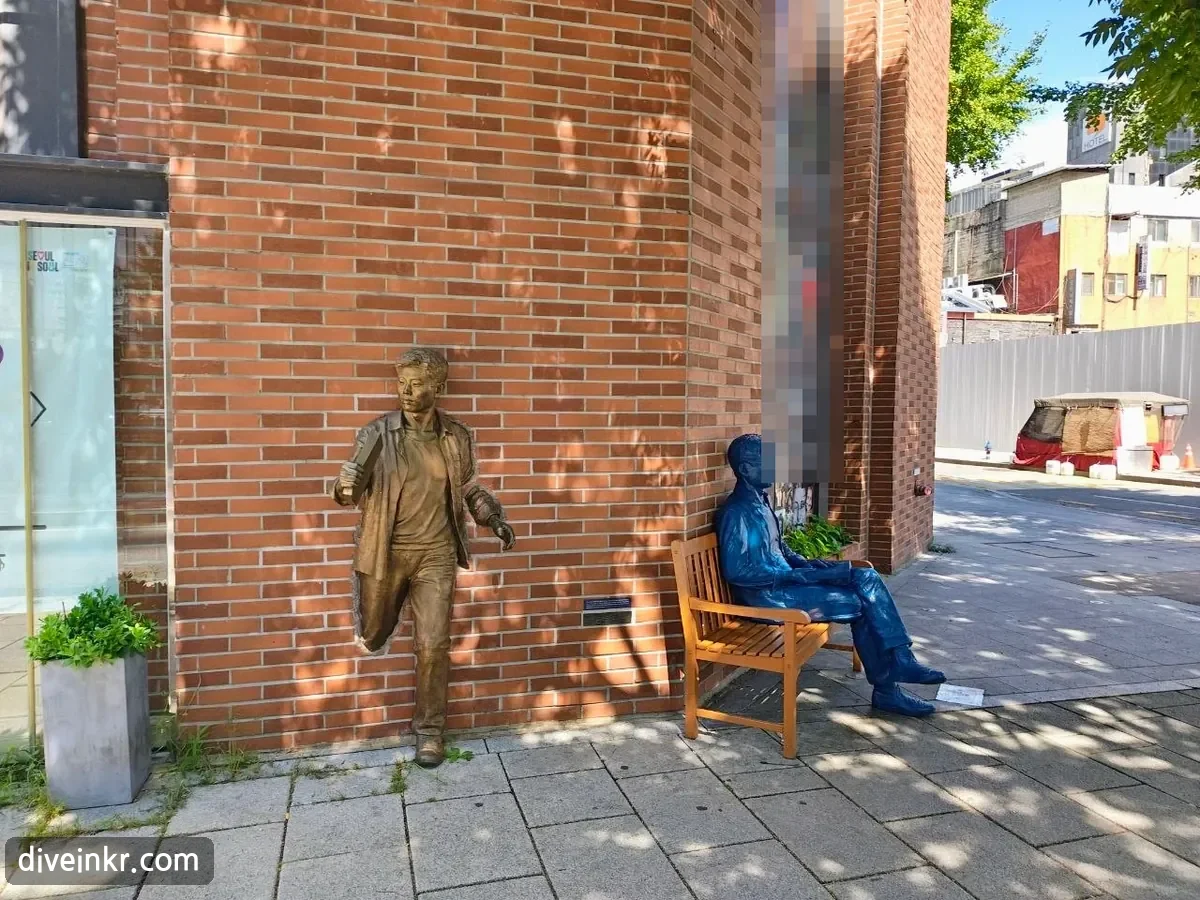
He is often called 전태일 열사 (jeon taeil yeolsa). 열사 is a title of respect for someone who died for a cause. A few minutes' walk west along the stream, the 전태일기념관 (Jeon Tae-il Memorial Hall) opened in 2019 with exhibitions on his life and on the labor movement, including a re-creation of a 1960s Pyeonghwa Market sewing loft.
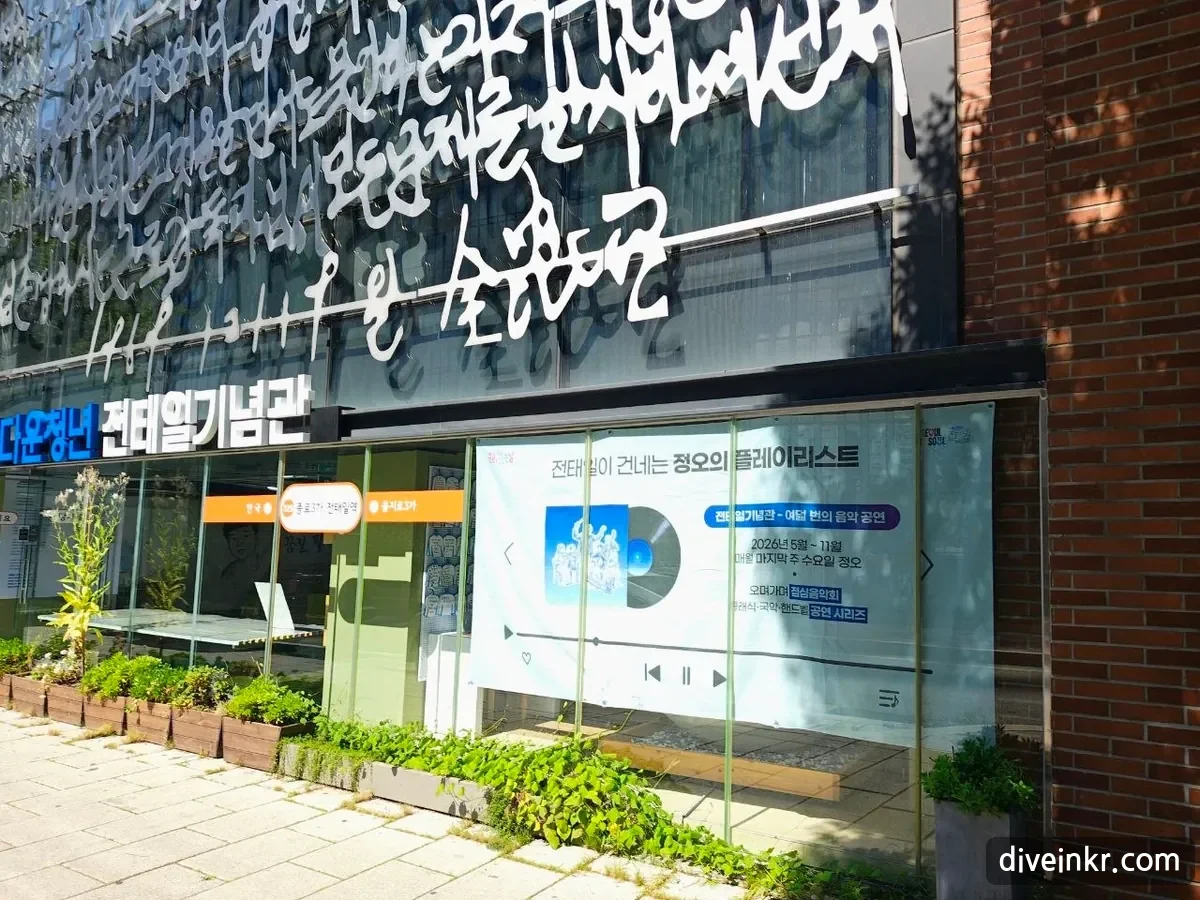
Street Stalls: Chestnuts, Corn Dogs and Handwritten Prices
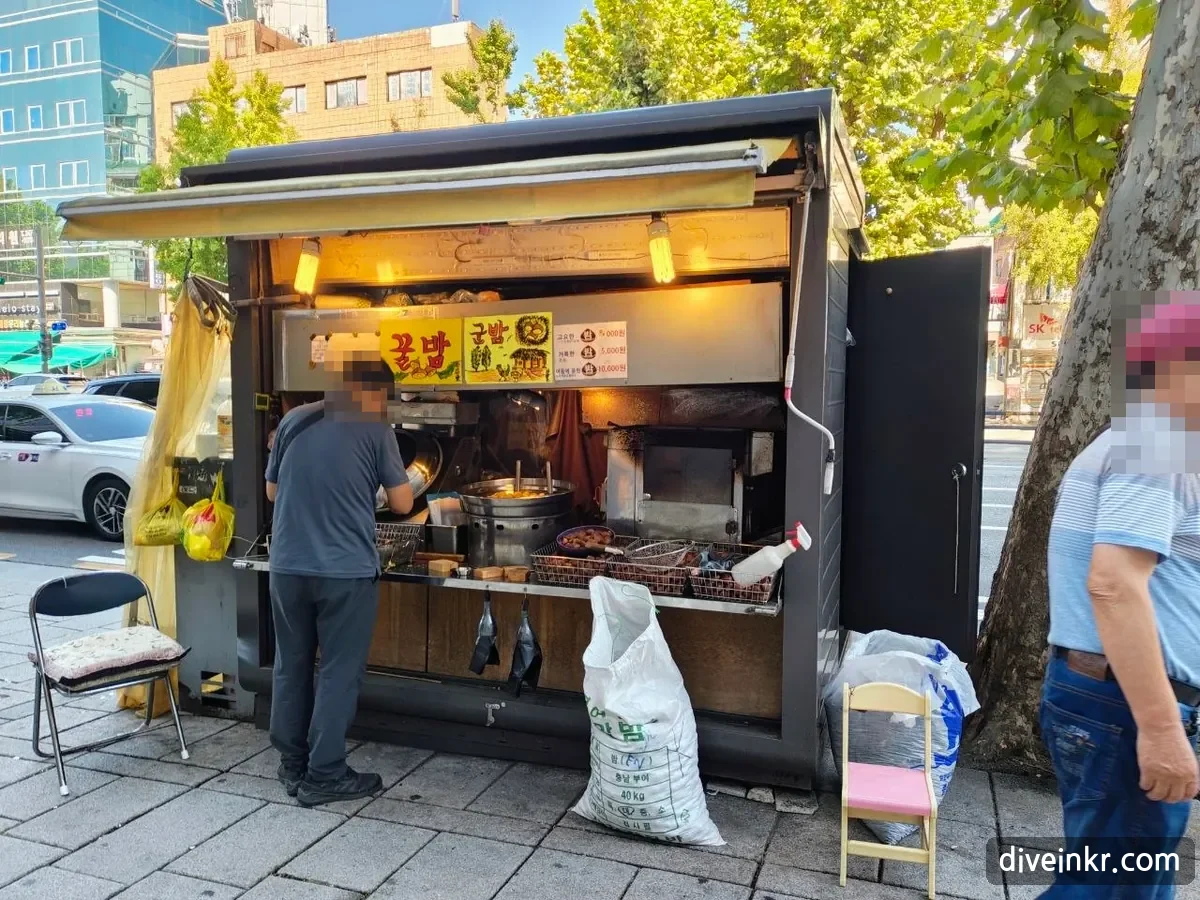
Dongdaemun's sidewalks are lined with 노점 (nojeom, street stalls). One of the classics is roasted chestnuts: 군밤 (gunbam) is 굽다 (to roast) + 밤 (chestnut). 꿀밤 (kkulbam) literally means "honey chestnut," a sweet one — though the same word also means a playful knuckle tap on someone's head. Nearby you'll find stalls selling 핫도그 (hatdogeu) — in Korea that's what English speakers call a corn dog, a sausage on a stick in batter — and juice stalls with 생과일주스 (saenggwail juseu, fresh fruit juice), 슬러시 (seulleosi, slushie) and even 꼬마김밥 (kkoma gimbap, mini gimbap). Stall owners like cash, but almost all of them take credit cards too.
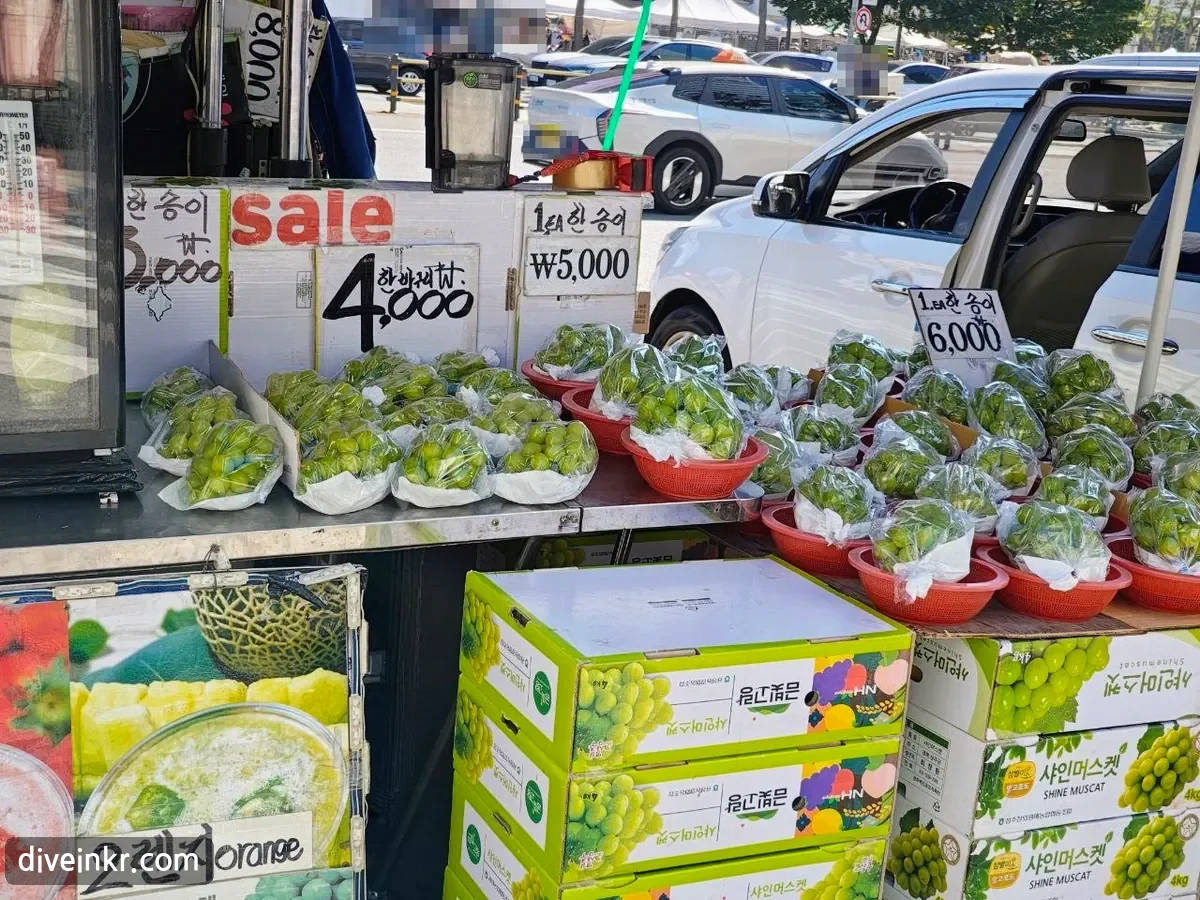
Handwritten price tags are great reading practice. 한 송이 (han song-i) is one bunch — 송이 is the counter for grapes and flowers — and 한 바구니 (han baguni) is one basket. Prices are in won; 5,000 is 오천 원 (ocheon won). More counters in Korean counters.
이거 얼마예요?
igeo eolmayeyo?
How much is this?
한 송이 주세요.
han song-i juseyo.
One bunch, please.
군밤 한 봉지 주세요.
gunbam han bongji juseyo.
One bag of roasted chestnuts, please.
봉지 = a (paper or plastic) bag.
카드 돼요?
kadeu dwaeyo?
Can I pay by card?
돼요 (dwaeyo) = "does it work / is it OK?" — useful for any payment question.
Wholesale Streets: Shoes, Toys and Stationery
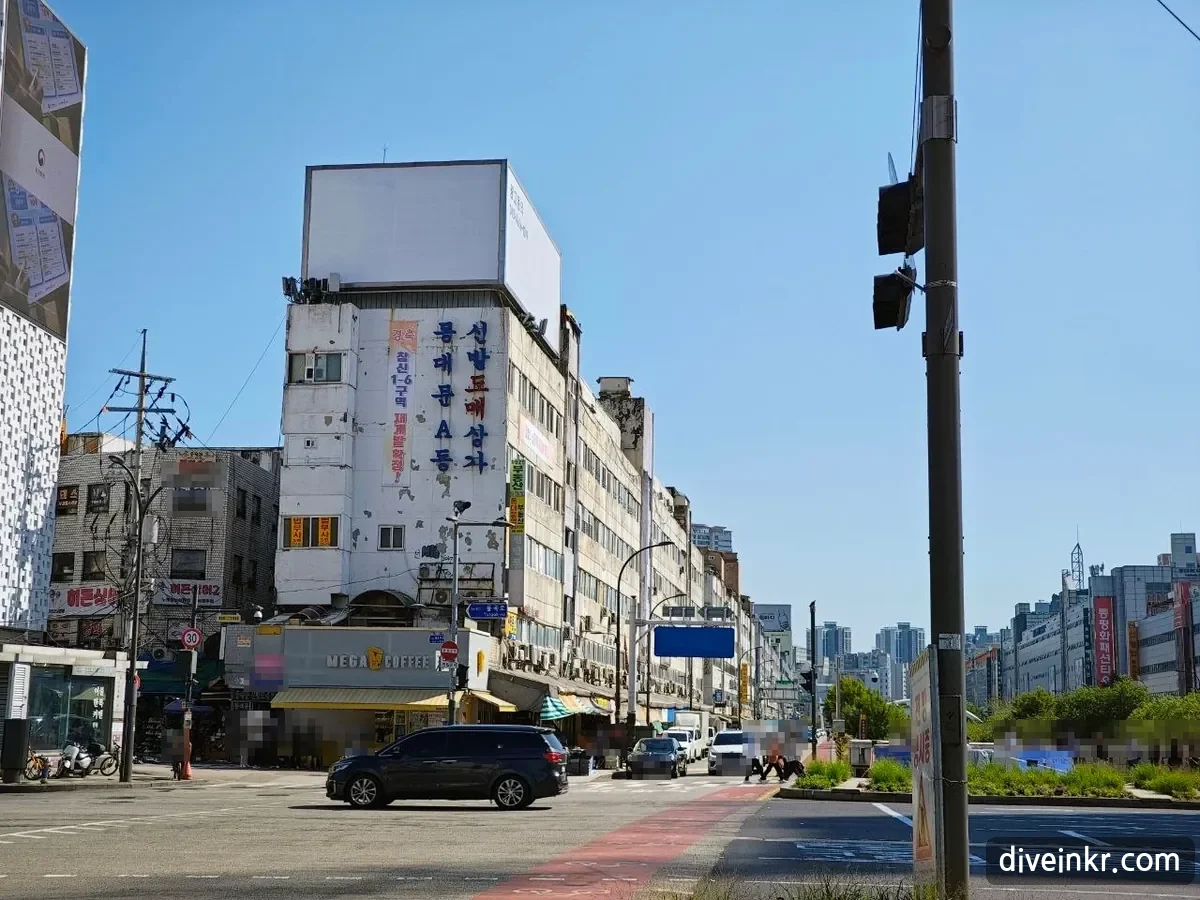
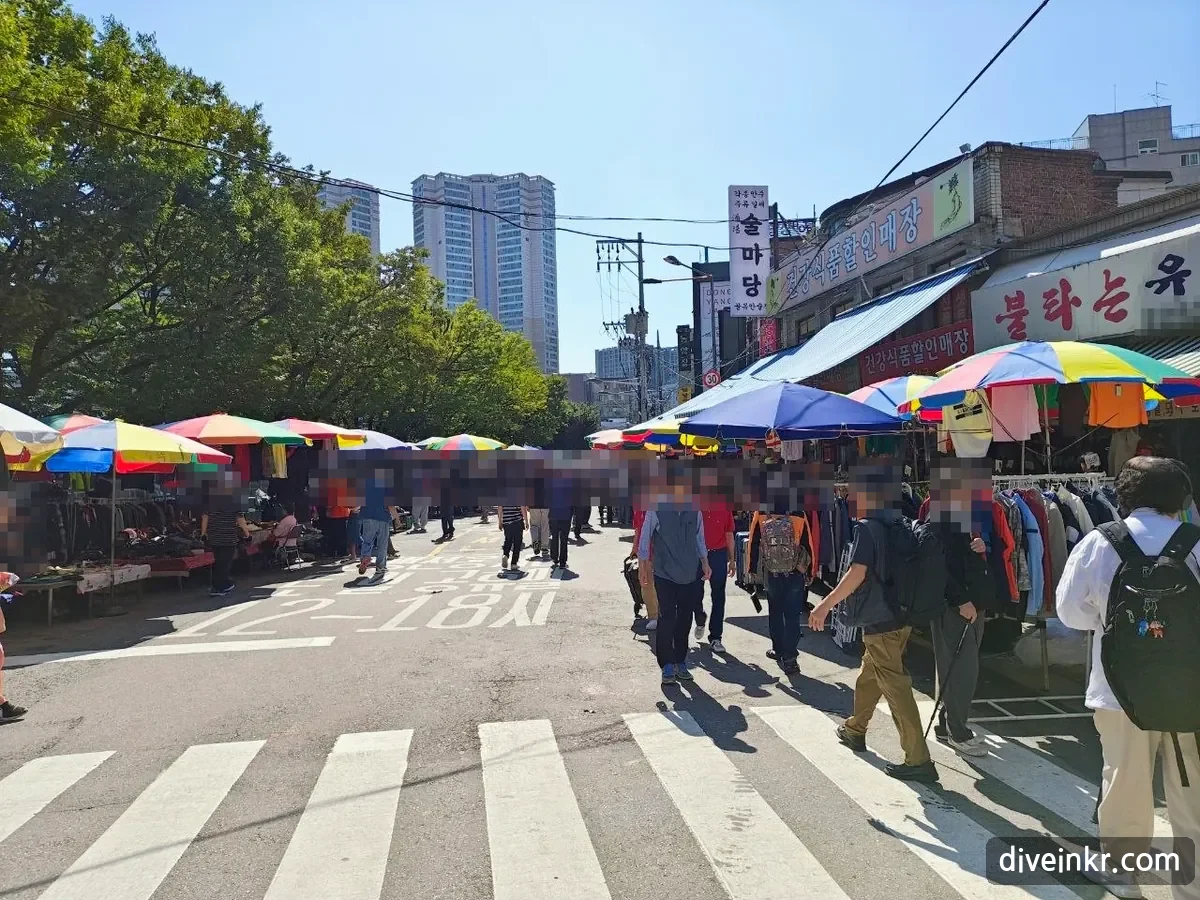
Dongdaemun is Seoul's wholesale district, and signs tell you so. On the shoe arcade: 신발 (sinbal, shoes) + 도매 (domae, wholesale) + 상가 (sangga, shopping arcade). The opposite of 도매 is 소매 (somae, retail). "A동" is Building A — 동 (dong) is used for buildings in a complex, the same way apartment blocks are numbered.
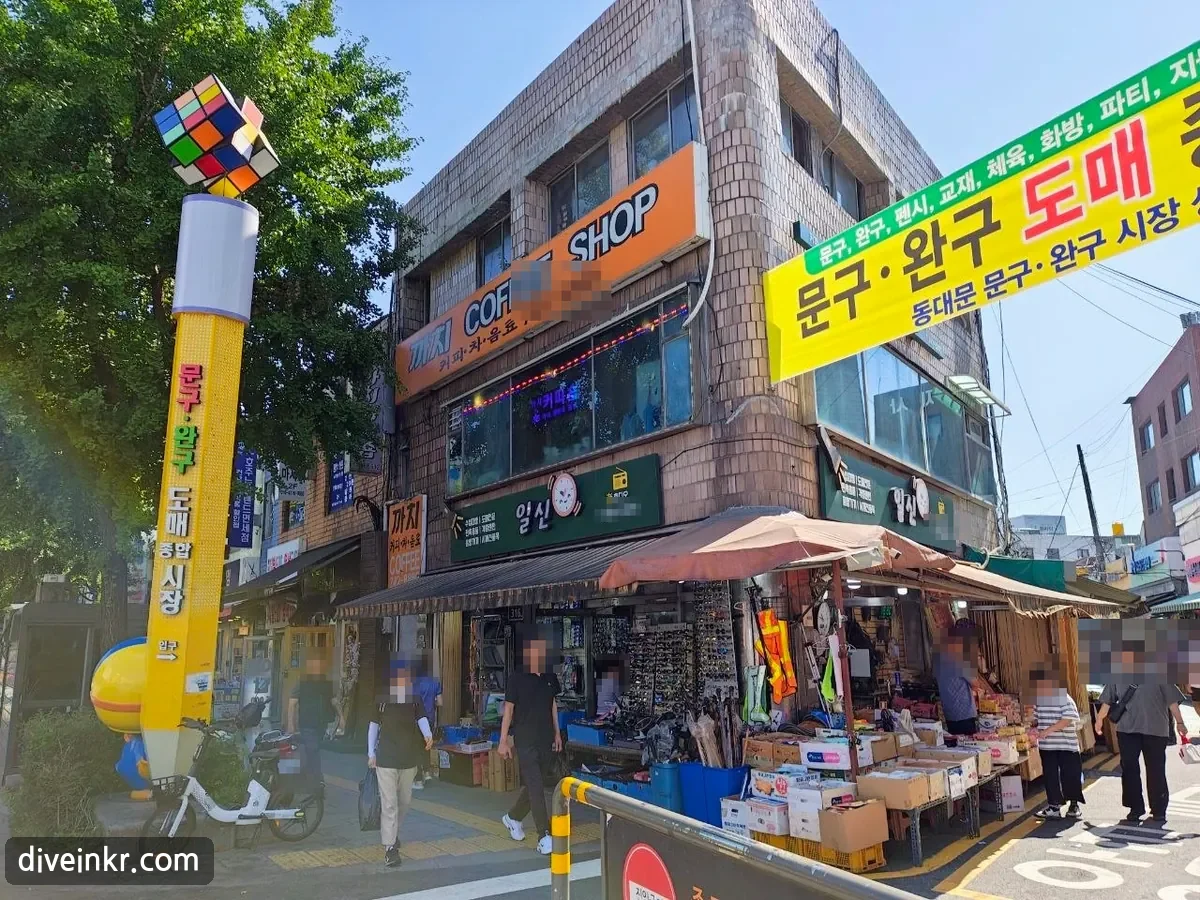
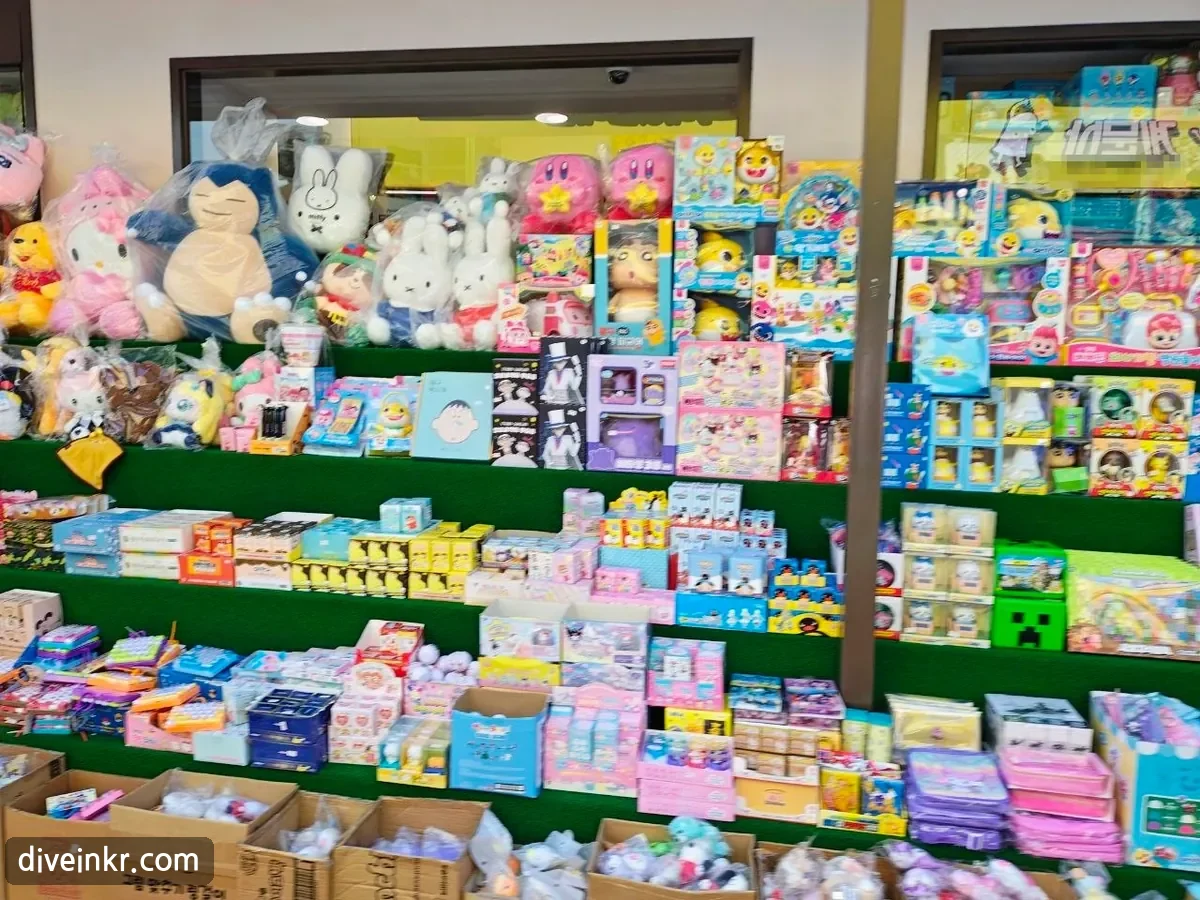
A short walk north of the gate, in Changsin-dong, is the 동대문 문구·완구 거리 — the Dongdaemun stationery and toy street. 문구 (mungu) is stationery and 완구 (wangu) is toys, a more formal word than 장난감 (jangnangam). The market started in the 1960s and grew from the mid-1970s into Korea's biggest stationery and toy market, with about 120 shops selling school supplies, art materials, character goods and party items, often for 30–50% less than regular stores. They sell retail as well as wholesale, and the street is full of children and parents.
동묘 (Dongmyo): A Shrine and a Flea Market
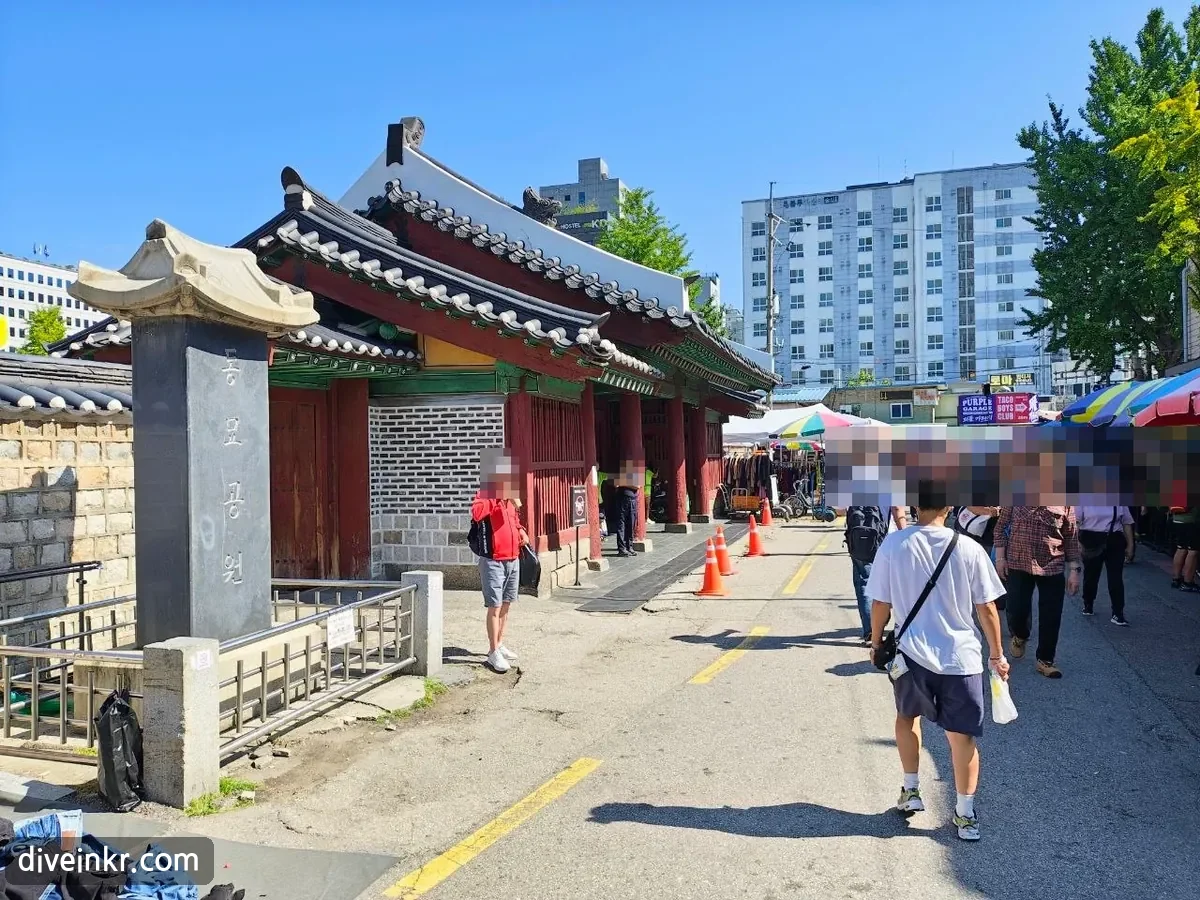
One subway stop east is Dongmyo, named after 동관왕묘 (Donggwanwangmyo), a shrine to Guan Yu (관우, Gwan-u), the general from the Chinese classic Romance of the Three Kingdoms. It was built in 1601, after the Imjin War, at the request of Ming China, and it is a national Treasure (보물).
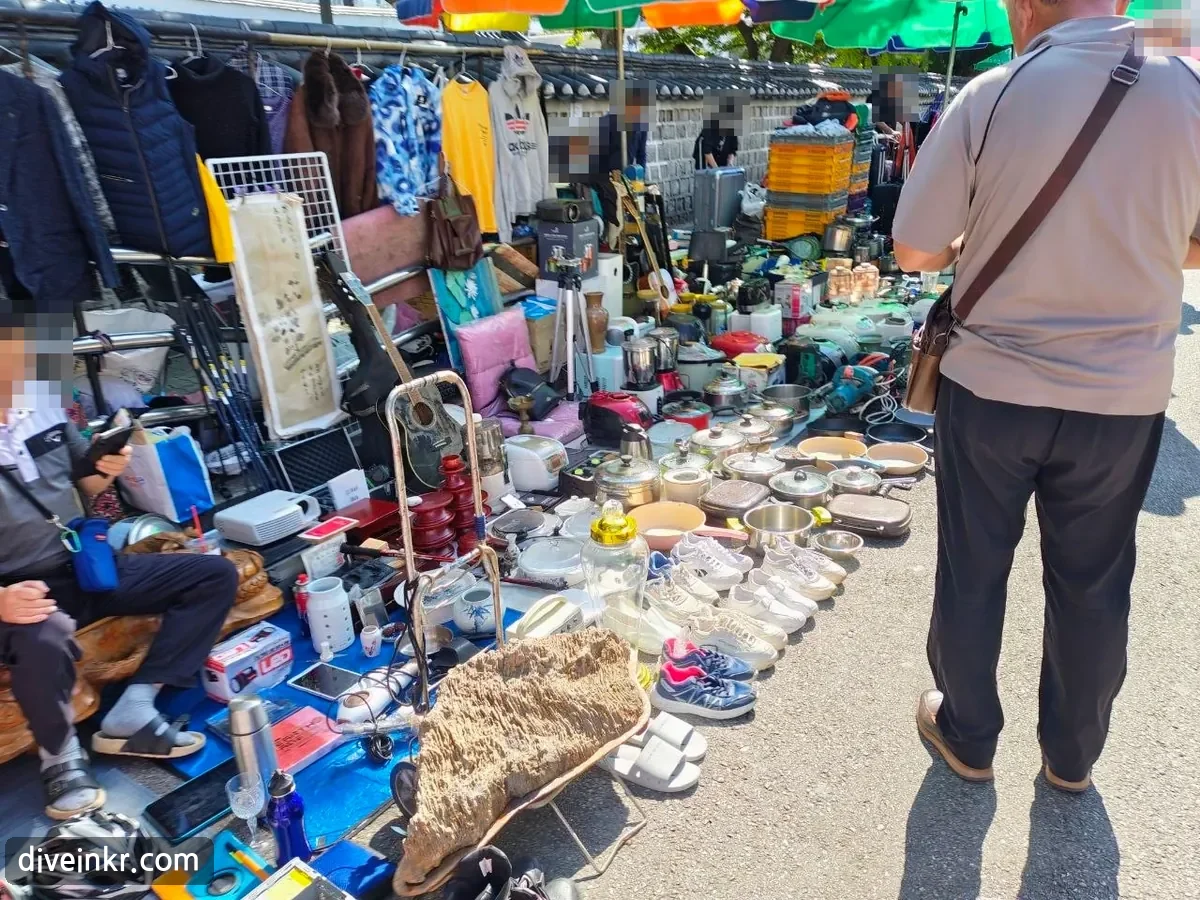
The streets outside are the opposite of quiet. The Dongmyo flea market is a 난전 (nanjeon) — open-air stalls laid out on the sidewalk and even on mats on the ground, selling secondhand clothes, hats, electronics, tools, umbrellas and odds and ends.
DDP: Dongdaemun Design Plaza
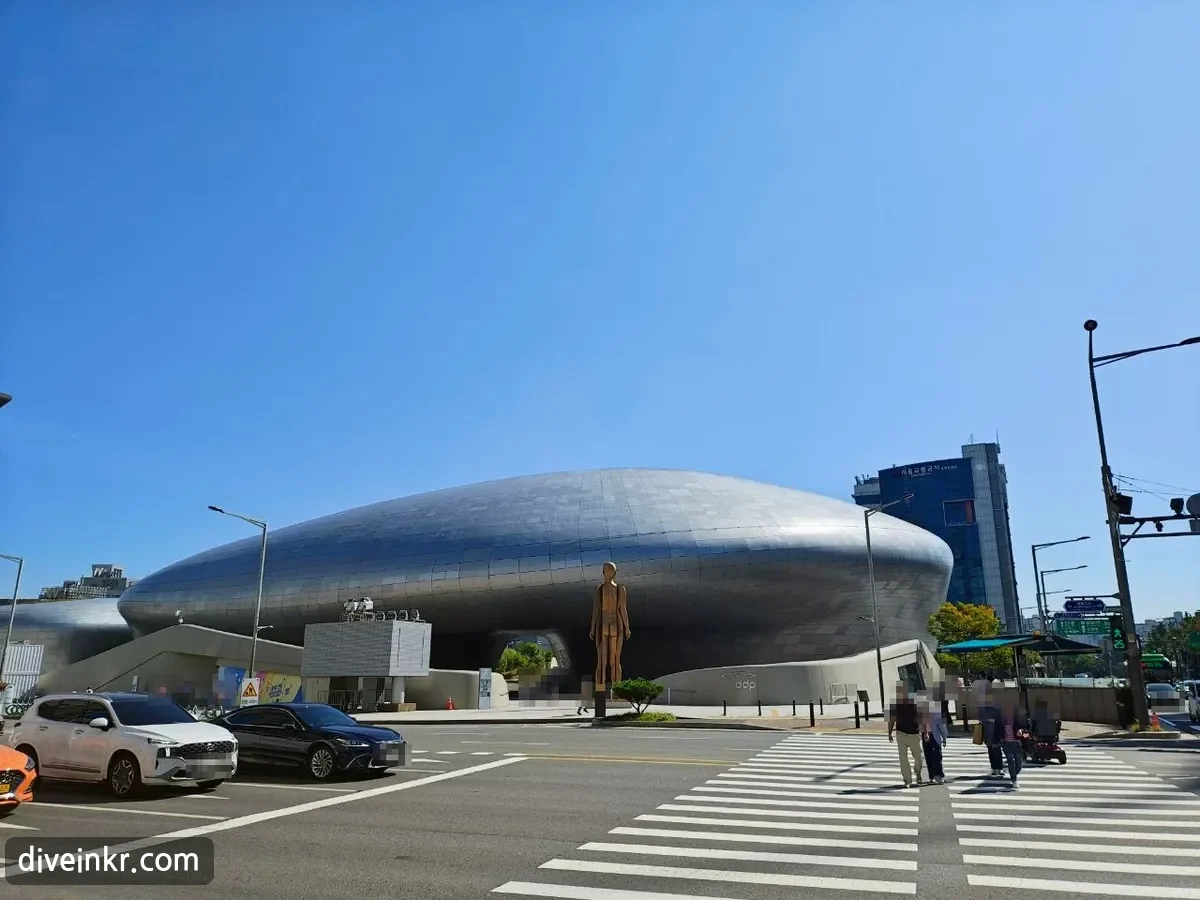
South of the gate, the curving silver building is 동대문디자인플라자 (Dongdaemun Design Plaza), usually just called DDP. It was designed by the architect Zaha Hadid and opened in March 2014 on the site of the old Dongdaemun Stadium. The park next to it, 동대문역사문화공원 (Dongdaemun History & Culture Park), keeps excavated remains of the city wall, including the Igansumun water gate.
Getting There and Getting Around
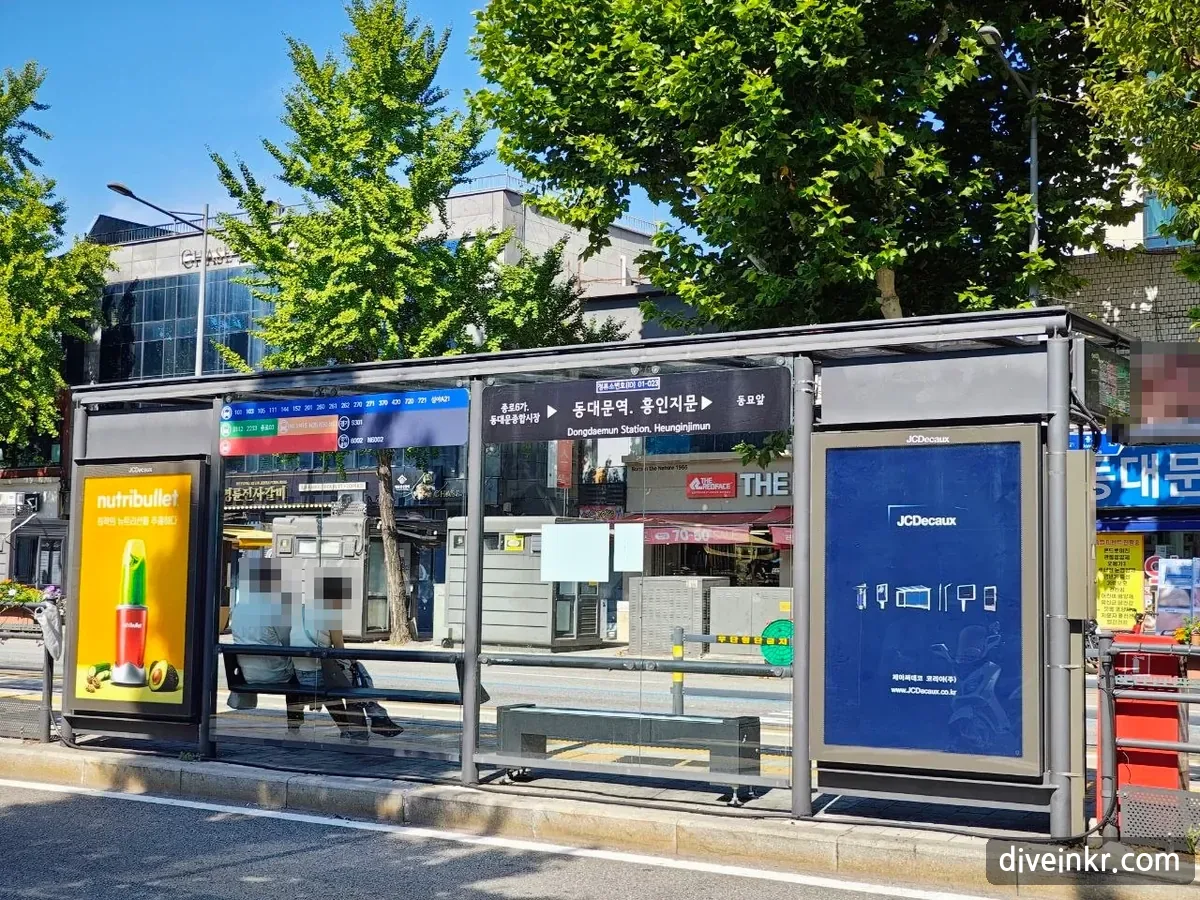
By subway, Dongdaemun Station (동대문역, Lines 1 and 4) is next to the gate; Dongmyo Station (동묘앞역, Lines 1 and 6) is one stop east; and DDP has its own station, Dongdaemun History & Culture Park (동대문역사문화공원역). The toy street is about three minutes from exit 4 of Dongdaemun Station. Many buses stop here too — see how to ride a bus in Seoul, or use our taxi phrases if your feet give out.
Dongdaemun Vocabulary
| Korean | Romanization | Meaning |
|---|---|---|
| 문 | mun | gate, door |
| 성곽 | seonggwak | fortress wall |
| 옹성 | ongseong | half-moon wall outside a gate |
| 시장 | sijang | market |
| 도매 / 소매 | domae / somae | wholesale / retail |
| 상가 | sangga | shopping arcade |
| 노점 | nojeom | street stall |
| 난전 | nanjeon | open-air market stalls |
| 군밤 | gunbam | roasted chestnuts |
| 송이 | song-i | bunch (counter for grapes) |
| 바구니 | baguni | basket |
| 문구 / 완구 | mungu / wangu | stationery / toys |
| 신발 | sinbal | shoes |
| 기념관 | ginyeomgwan | memorial hall |
| 열사 | yeolsa | martyr (title of respect) |
A Short Route
- Start at Dongdaemun Station (동대문역) and look at Heunginjimun from both sides — the half-moon 옹성 is on the outside.
- Walk up the city wall beside the gate for a view back over the area.
- Cross to the toy and stationery street in Changsin-dong, then the shoe arcade.
- Head down to Cheonggyecheon: Pyeonghwa Market runs along the stream, and the Jeon Tae-il Memorial Hall is further west along it.
- Go one stop east (or walk) to Dongmyo for the flea market.
- Finish at DDP, south of the gate.
If you need to ask the way — more in asking for directions in Korean:
동대문 어디예요?
dongdaemun eodiyeyo?
Where is Dongdaemun (the East Gate)?
Most people just say 동대문. The formal name 흥인지문 (heunginjimun) is understood, but you'll hear 동대문 far more often.
문구 완구 거리 어떻게 가요?
mungu wangu geori eotteoke gayo?
How do I get to the stationery and toy street?
The street goes by several names: 창신동 문구완구거리, 동대문 문구완구거리, 동대문 문구완구시장, or just 창신동 문구거리 — any of them will get you there.
동묘앞역 몇 번 출구예요?
dongmyoap-yeok myeot beon chulguyeyo?
Which exit of Dongmyo Station is it?
DDP 걸어서 갈 수 있어요?
didipi georeoseo gal su isseoyo?
Can I walk to DDP?
Signs around here are a good workout — our street signs guide decodes more of them word by word.
Mini Quiz
4 short questions — about 2 minute
2. What is special about Heunginjimun's 옹성?
3. On a sign, 도매 means…
4. A price tag says 한 송이 5,000. What are you buying?
5. Where did Jeon Tae-il work?
Part of Korean Phrases for Travelers
Related Knowledge
- A walk through Jongno
- Reading Korean street signs
- How to ride a bus in Seoul
- Asking for directions in Korean
2 more related
Learn Next
Dongdaemun is all markets and stalls — these phrases cover prices, sizes and paying.
Will you remember this tomorrow?
Save it — your daily review brings it back right before you'd forget. No account needed.