Korean Drinking Etiquette, Explained
Written and reviewed by Jun and Jin, native Korean speakers
Published · Updated · How we write & review
After this page, you can pour, receive and drink with Koreans the polite way, using the phrases heard around the table.
10-second answer
The short answer
Korean drinking culture runs on age hierarchy: you pour for others (never your own glass), receive and pour with two hands toward anyone older, and turn your head away from an elder when you actually drink. None of this is legally enforced — it's just what makes a night out feel respectful instead of awkward.
Quick check — did that land?
1. Your glass just ran out at dinner with older Korean colleagues. What's the polite move?
The Core Rules
| Situation | What to do |
|---|---|
| Your glass is empty | Wait for someone to pour it — don't pour your own |
| Pouring for an elder/senior | Use two hands (or support your pouring arm with the other hand) |
| Receiving a pour from an elder | Hold your glass with both hands |
| Drinking in front of an elder | Turn your head/body slightly away as you drink |
The two-hands rule and the turning-away rule are really the same idea twice: physically show deference with your posture, the way 존댓말 shows deference with your words.
See also: How Korean Honorifics Work
Why You Never Pour Your Own Glass
Pouring is a small act of care — noticing someone's glass is empty and taking care of them. Filling your own glass skips that entirely, which is why it can come across as a little standoffish. In practice, everyone keeps an eye on everyone else's glass, and it becomes a natural rhythm rather than an anxious chore.
One Hand vs Two Hands: Not Always Required
Between close friends of similar age, one-handed pouring is completely normal — the two-hand rule intensifies with the age/status gap. A 20-year-old pouring for another 20-year-old friend doesn't need the full formal posture; that same 20-year-old pouring for a 50-year-old boss absolutely does.
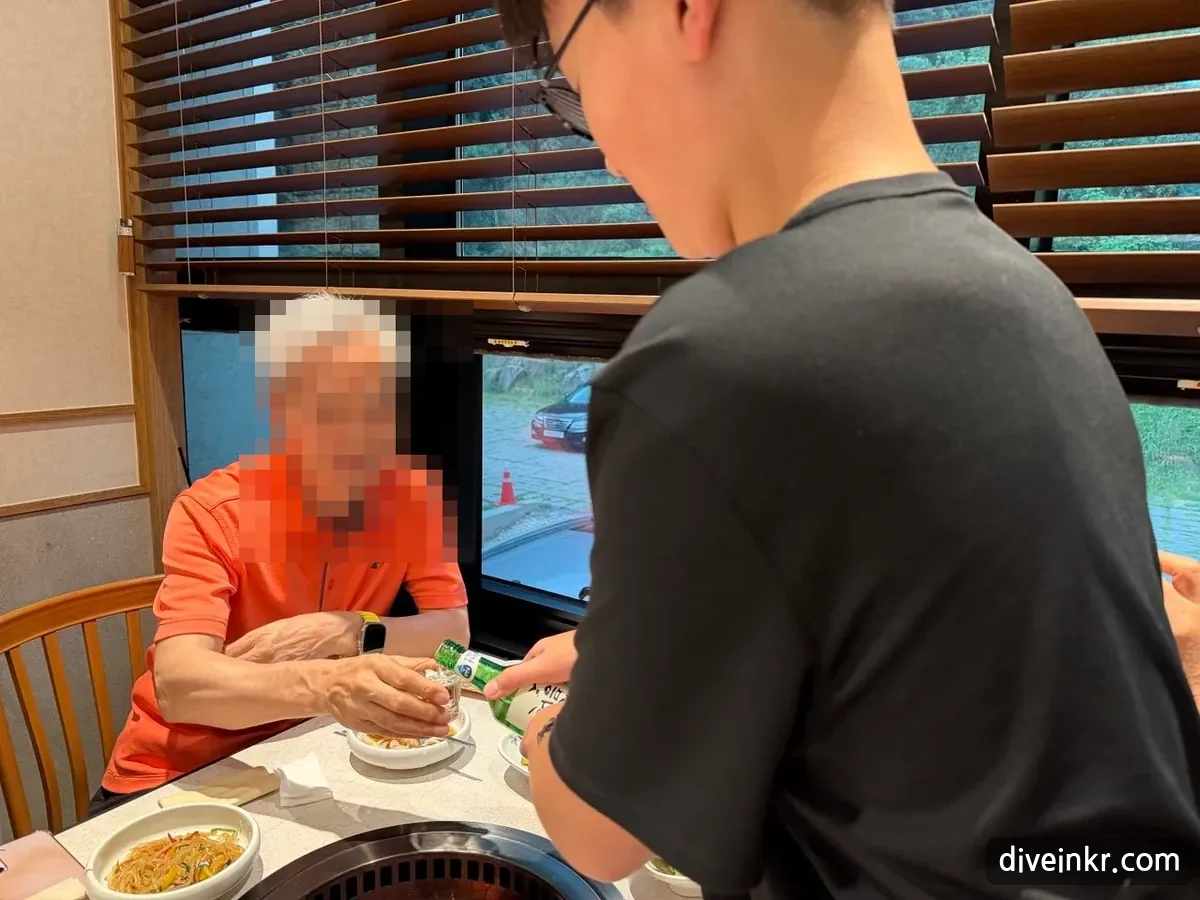
The general pattern: an elder or someone senior can stay seated and receive with one hand, while someone younger or lower-ranked stands up and pours with both hands — sometimes receiving with both hands too, depending on how formal the moment feels. Between close friends, or people comfortable enough to not stand on ceremony even with an age gap, it often relaxes to one hand pouring and one hand receiving on both sides.
Common Phrases at the Table
한잔하실래요?
hanjanhasillaeyo?
Would you like a drink?
한잔하다 ("have a drink") is one word; spaced 한 잔 is for counting exactly one glass.
건배!
geonbae!
Cheers!
제가 한 잔 드릴게요.
jega han jan deurilgeyo.
Let me pour you one.
Low- and No-Alcohol Drinks Are Normal Now
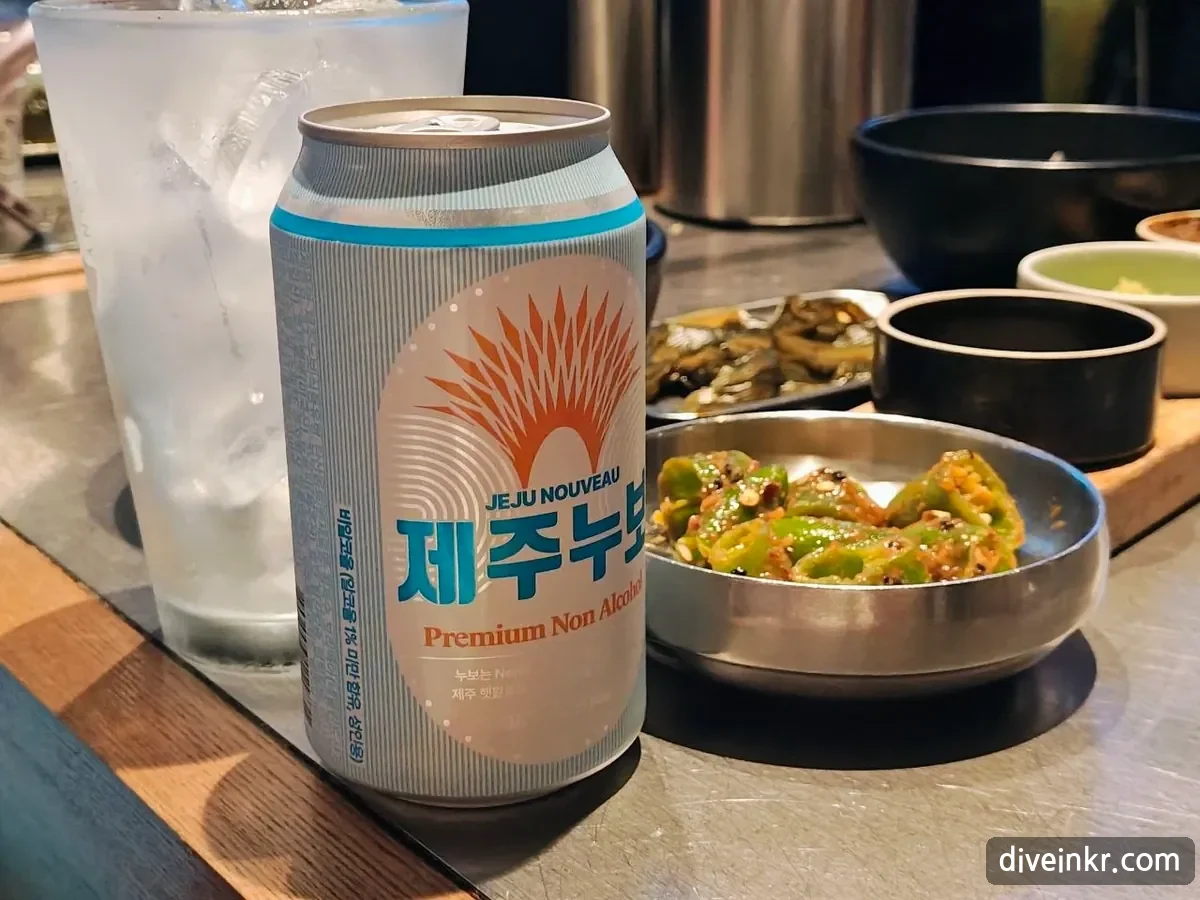
These days many people in Korea choose drinks with very little or no alcohol, and you'll find them on restaurant menus and in convenience-store fridges. Ordering one at a work dinner or with friends is perfectly normal, so if you don't drink, you can still raise a glass for 건배 (geonbae, cheers).
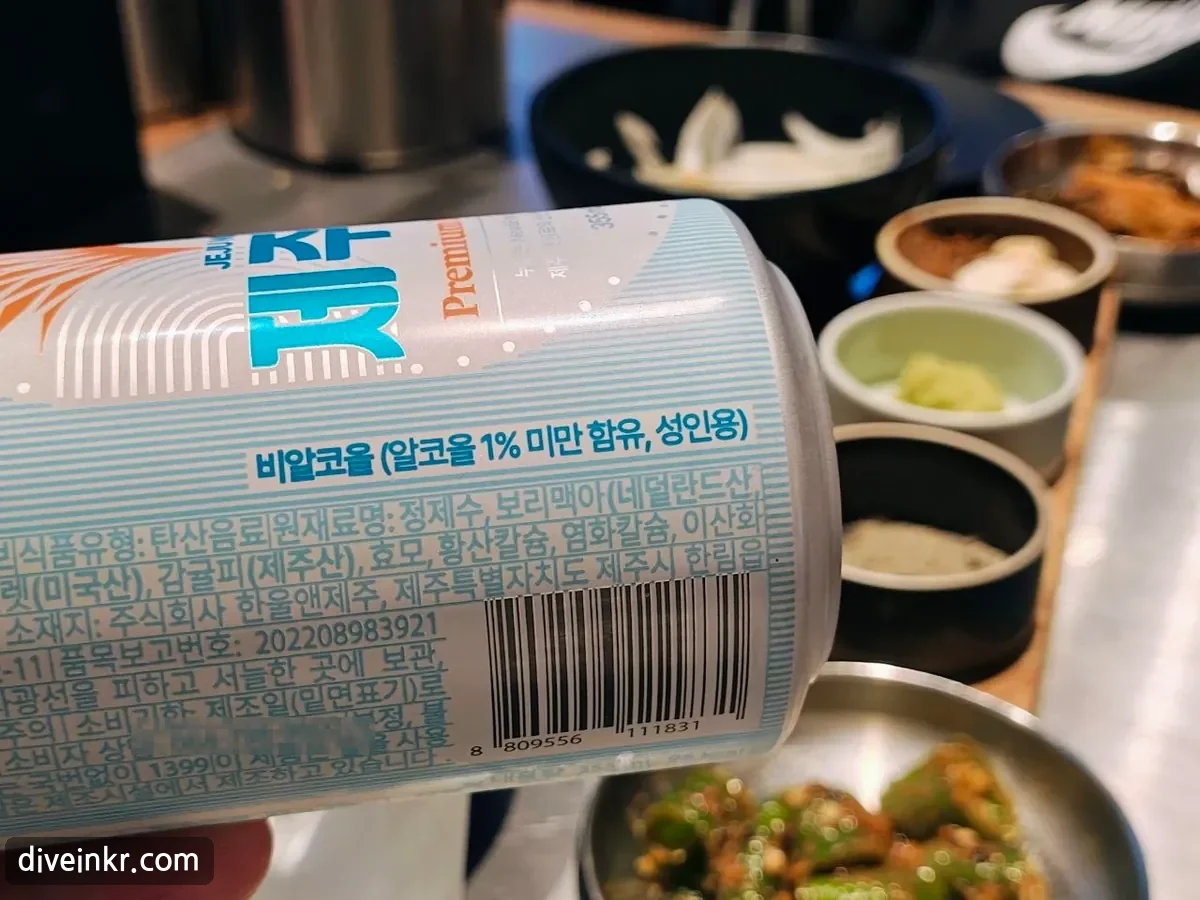
Read the label closely. 비알코올 (bialkool, "non-alcoholic") drinks may still contain a trace of alcohol — under 1%, which is why this can says 1% 미만 and "for adults" — while 무알코올 (mualkool, "alcohol-free") means practically none. Both are labeled for adults. In everyday speech, though, people just call all of these 무알콜 맥주 (mualkol maekju, "alcohol-free beer"), using the common spoken spelling 알콜 rather than the standard 알코올.
Common Mistakes
Mistake #1 — Pouring your own drink at a formal dinner
It's not a crime, but it can feel like refusing everyone else's care. Let someone notice and pour for you.
Mistake #2 — Drinking face-to-face with an elder without turning away
A small head turn goes a long way — it's a quick, low-effort gesture of respect that Koreans genuinely notice from foreigners.
Mini Quiz
2 short questions — about 1 minute
2. You're receiving a pour from your Korean boss. What do you do with your glass?
3. Why do people turn their head away when drinking in front of an elder?
Part of Korean Culture Explained — Etiquette, Concepts & Holidays
Related Knowledge
Learn Next
Drinking rules are really table manners in disguise — the full meal-table etiquette follows the same logic.
Will you remember this tomorrow?
Save it — your daily review brings it back right before you'd forget. No account needed.