치킨집, 중국집, 호프집, 횟집: What 집 (Jip) Means on Korean Restaurant Names
Written and reviewed by Jun and Jin, native Korean speakers
Published · How we write & review
After this page, you can use 집 (jip) to name kinds of Korean restaurants — 치킨집, 중국집, 호프집, 횟집 — suggest going to one, and read the basic words on their signs and menus.
10-second answer
The short answer
집 (jip) means "house," but after a food word it means "a place that sells it" — much like English "burger place." 치킨집 (chikinjip) is a Korean fried chicken and beer place, 중국집 (junggukjip) a Korean-style Chinese restaurant, 호프집 (hopeujip) a beer bar with 안주 (anju, food to go with drinks), and 횟집 (hoetjip) a raw-fish restaurant. To suggest one, say 치킨집 갈래 (chikinjip gallae) — "Want to go to a chicken place?"
Quick check — did that land?
1. What does 집 mean in 치킨집?
치킨집, 중국집, 호프집, 횟집! 여기서 집은 가게를 뜻해요.
집 Isn't Only "House"
Most learners meet 집 (jip) as "house" or "home" — 집에 가요 (jibe gayo, "I'm going home"). But walk down any street in Seoul and you'll see it on shop names too. Put a food in front of 집 and it becomes "a place that sells that food." That's why a fried chicken restaurant is a 치킨집 (chikinjip), literally "chicken house."
The closest English feel is "___ place," as in "a burger place" or "a pizza place." It names the kind of shop, not a specific one. In everyday Korean you don't need a fancier word — it's just 치킨집. The same pattern gives you 중국집 (junggukjip) for a Korean-style Chinese restaurant — 중국 (jungguk) is China.
One handy side effect: Koreans often call the restaurant they're sitting in 이 집 (i jip, "this place"). 이 집 뭐가 맛있어요? (i jip mwoga masisseoyo?) means "What's good here?" — not "What's good in this house?"
| Word | Romanization | What it is |
|---|---|---|
| 치킨집 | chikinjip | Korean fried chicken place (usually with beer) |
| 중국집 | junggukjip | Korean-style Chinese restaurant |
| 호프집 | hopeujip | Beer bar serving 안주 (anju) |
| 횟집 | hoetjip | Raw-fish (회, hoe) restaurant |
| 분식집 | bunsikjip | Cheap snack-food place (tteokbokki, gimbap and the like) |
| 고깃집 | gogitjip | Meat restaurant, usually grill-at-the-table |
| 술집 | suljip | Bar, any place for drinking |
| 빵집 | ppangjip | Bakery |
| 꽃집 | kkotjip | Flower shop |
Notice the last one: 집 isn't only for food. Any small shop named after what it sells can take it. A few words add a ㅅ before 집 in spelling (고기 → 고깃집, 회 → 횟집) — that's a spelling rule for compounds, so just learn those two as whole words.
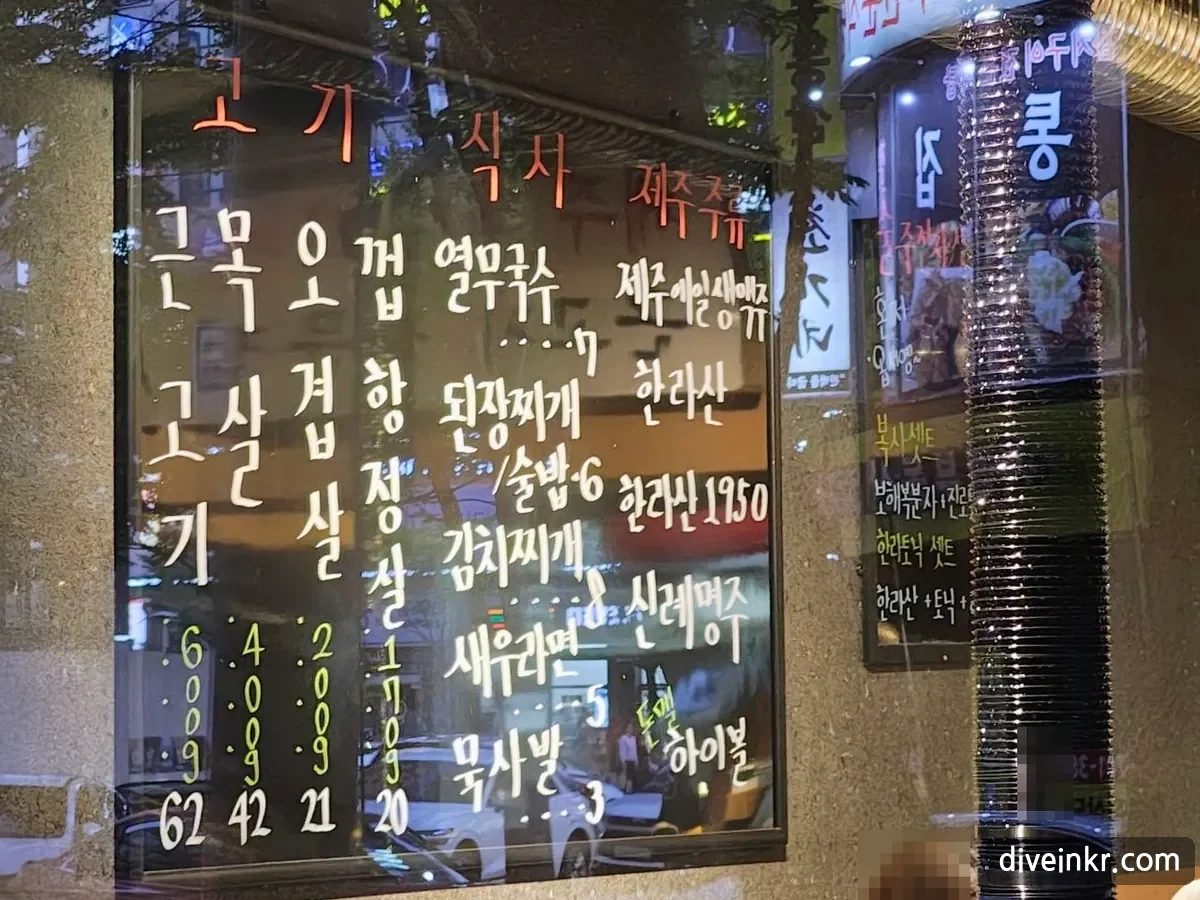
고깃집 (gogijip) works the same way as the others: 고기 (gogi, meat) + 집, a place that sells meat — usually pork or beef that you grill at your table. The menu starts with the cuts of meat and ends with 식사 (siksa), the rice, noodle and stew dishes people order to finish the meal.
See also: What does 치맥 (chimaek) mean?
치킨집 (Chikinjip): The Chicken Place
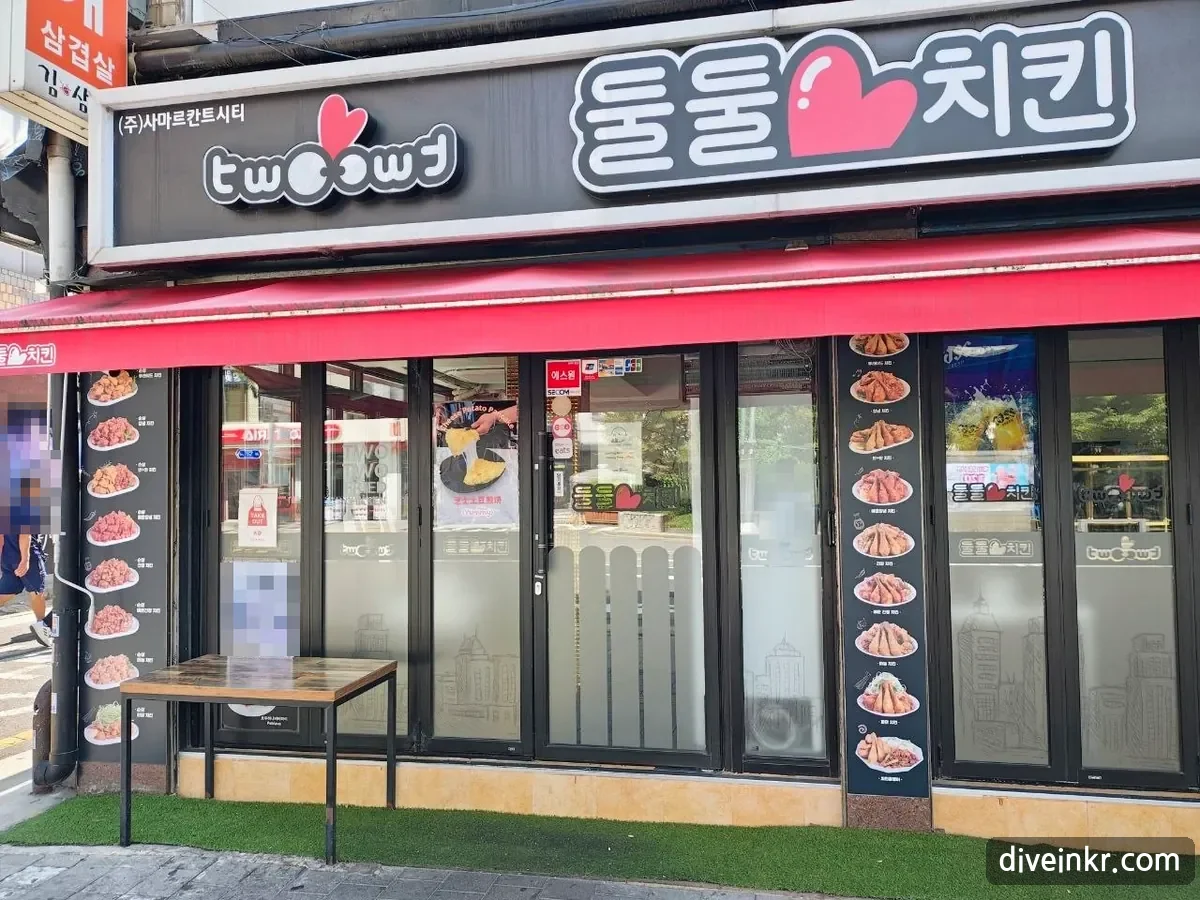
A 치킨집 sells Korean-style fried chicken and beer. The chicken-and-beer combination is so common it has its own word — 치맥 (chimaek), from 치킨 + 맥주 (maekju, beer). The menu columns in the photo show the usual choices: plain fried, sauced (양념, yangnyeom), soy-garlic and so on.
치킨집 갈래?
chikinjip gallae?
Want to go to a chicken place? (casual)
오늘 치킨집 갈까요?
oneul chikinjip galkkayo?
Shall we go to a chicken place today? (polite)
이 근처에 치킨집 있어요?
i geuncheoe chikinjip isseoyo?
Is there a chicken place near here?
중국집 (Junggukjip): Reading the Menu
중국집 (junggukjip) is the everyday name for a Korean-style Chinese restaurant — the dictionary defines it simply as "a restaurant that sells Chinese food." The menu is its own Korean world — here's what's on a typical board.
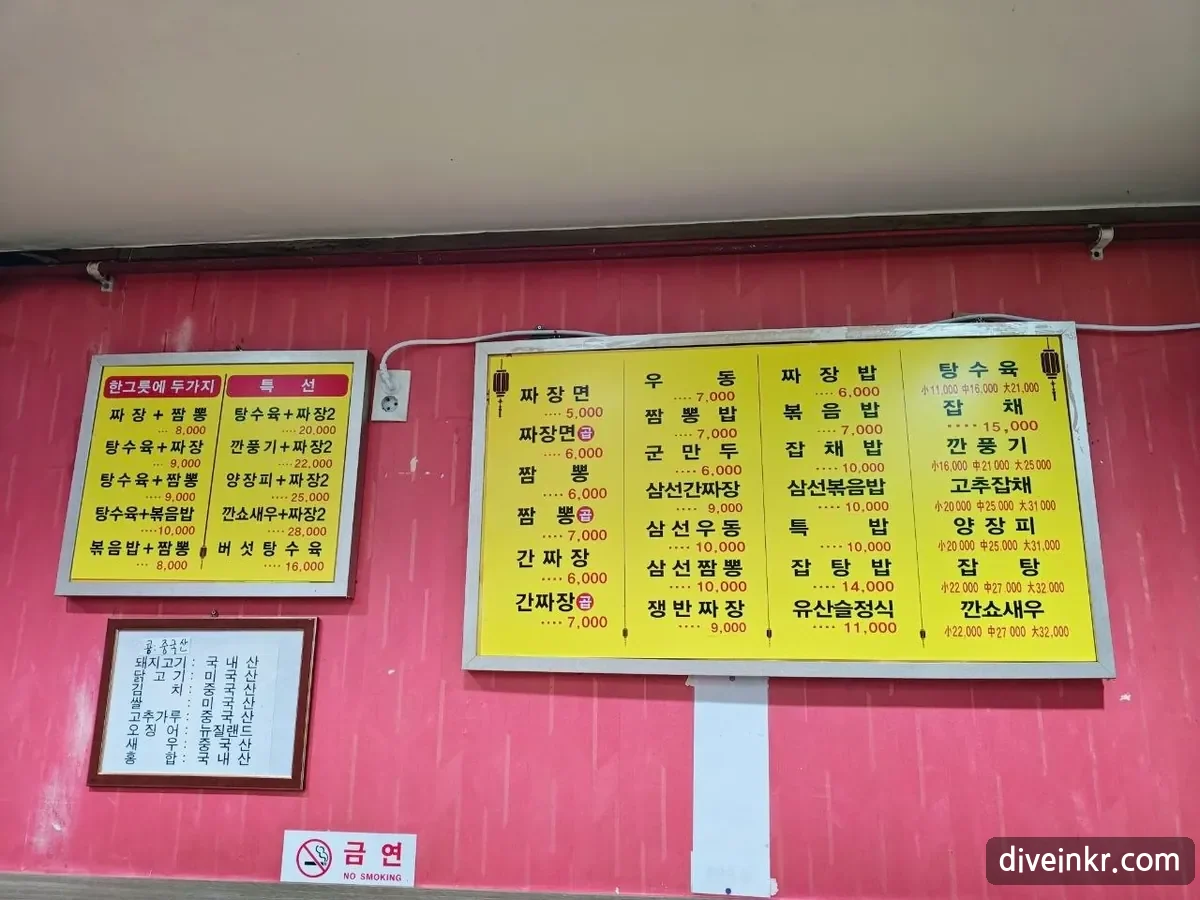
Here's how to read the big board. The small red circle with 곱 (gop) next to a dish is short for 곱빼기 (gopppaegi), a large portion — about two servings in one bowl — for an extra 1,000 won. 탕수육 has three prices marked 小, 中, 大: small, medium, large, read 소, 중, 대 (so, jung, dae).
| Menu word | Romanization | What it is | Price on this board |
|---|---|---|---|
| 짜장면 | jjajangmyeon | Noodles in black bean sauce | 5,000 (곱 6,000) |
| 짬뽕 | jjamppong | Spicy seafood noodle soup | 6,000 (곱 7,000) |
| 간짜장 | ganjjajang | A variation of 짜장면 | 6,000 |
| 볶음밥 | bokkeumbap | Fried rice | 7,000 |
| 짬뽕밥 | jjamppongbap | 짬뽕 soup with rice instead of noodles | 7,000 |
| 군만두 | gunmandu | Pan-fried dumplings | 6,000 |
| 탕수육 | tangsuyuk | Sweet and sour fried pork | 小 11,000 · 中 16,000 · 大 21,000 |
The smaller white board lists where ingredients come from: 국내산 (gungnaesan) means domestic, 미국산 (miguksan) from the U.S., and 중국산 (jungguksan) from China. For numbers on menus, see native vs. Sino-Korean numbers; for the full ordering routine, see ordering food in Korean.
짜장면 곱빼기 하나 주세요.
jjajangmyeon gopppaegi hana juseyo.
One large jjajangmyeon, please.
탕수육 소자로 주세요.
tangsuyuk sojaro juseyo.
A small tangsuyuk, please.
오늘은 중국집에서 시켜 먹자.
oneureun junggukjibeseo sikyeo meokja.
Let's order from the Chinese place tonight. (casual)
호프집 (Hopeujip): Beer and 안주
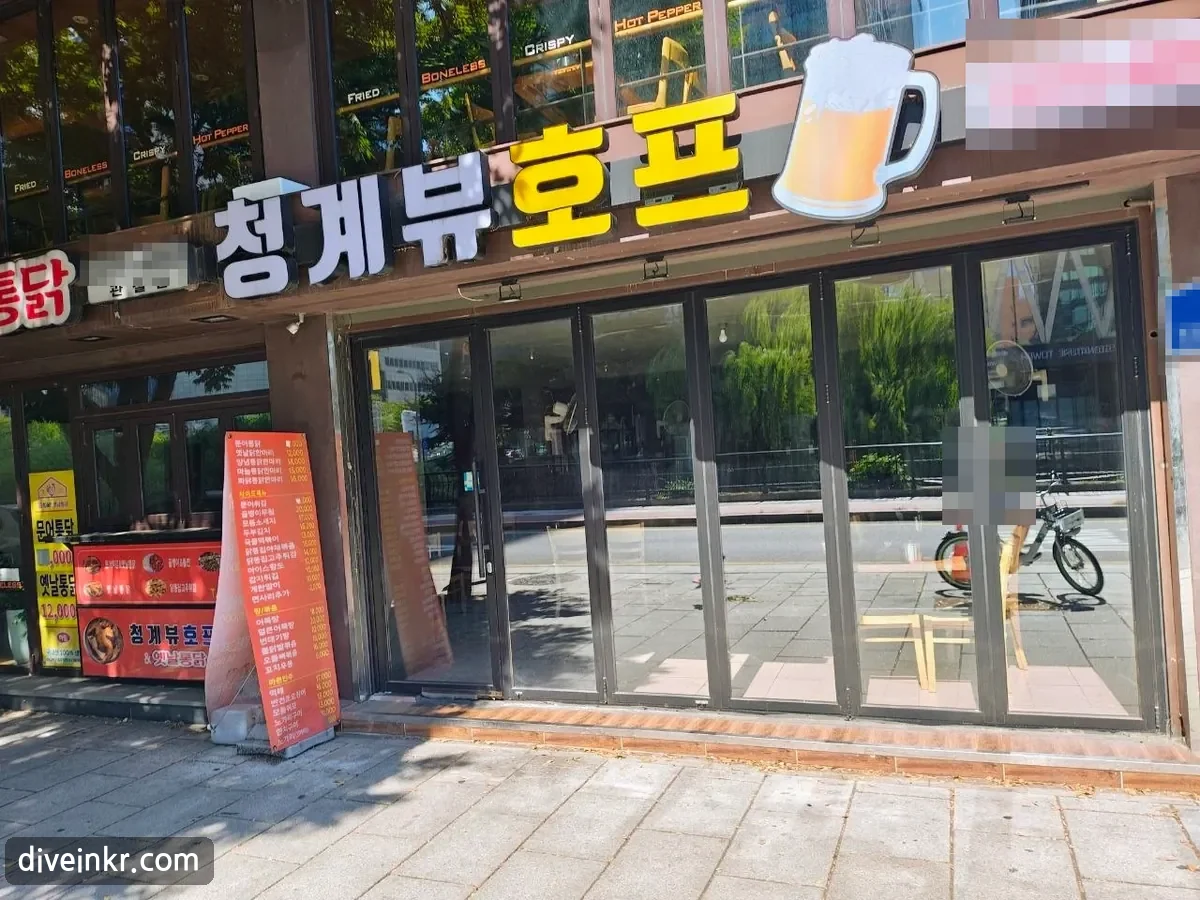
호프집 (hopeujip) works just like 치킨집: it's a place that sells beer and 안주 (anju), the food you eat with drinks. Many Koreans connect the word 호프 with hops, the beer ingredient. The Standard Korean Language Dictionary, however, traces 호프 to the German word Hof and defines it as draft beer sold by the glass, or a bar that sells it. Either way, the meaning on the street is the same: a casual beer bar.
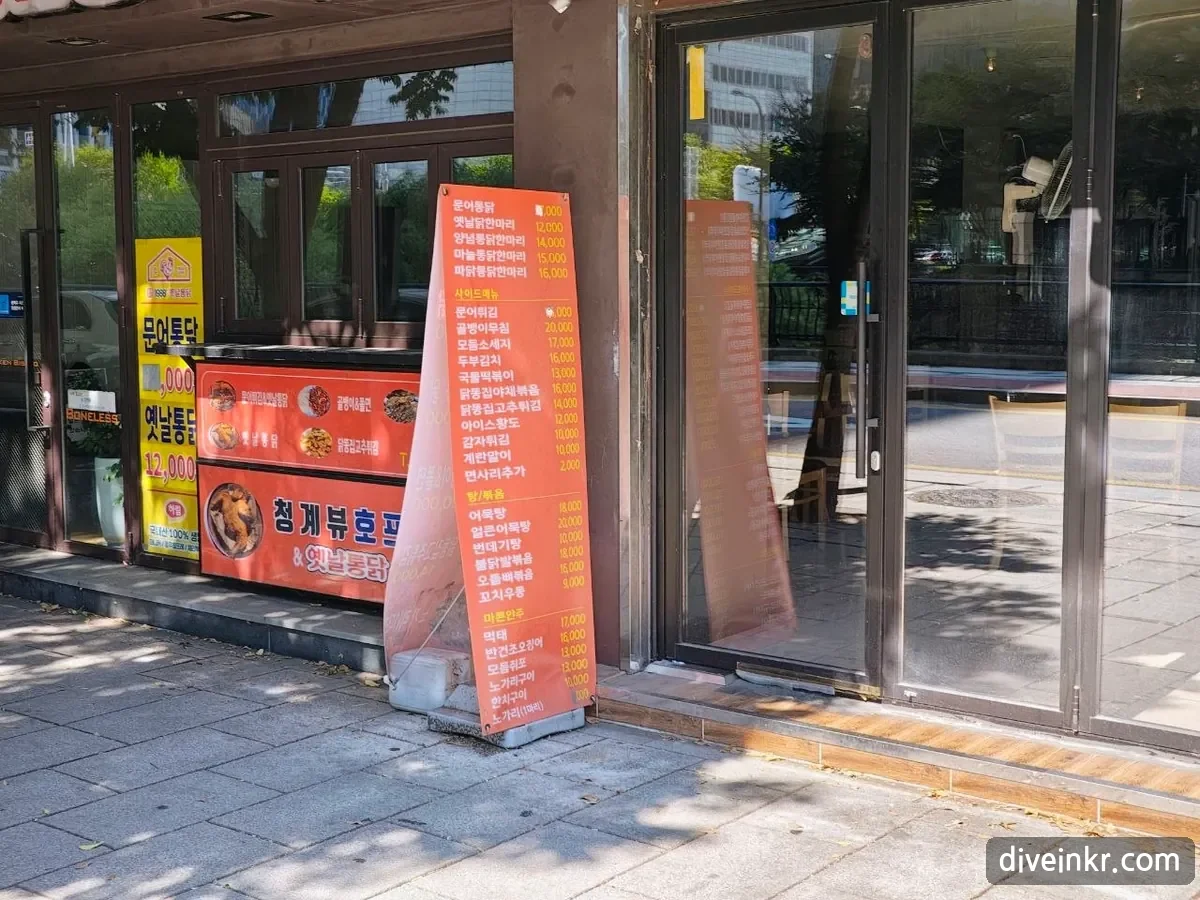
The banner reads almost like a 치킨집 menu at the top — 옛날통닭 한 마리 (yennal tongdak han mari, "one old-style whole chicken") for 12,000 won — and then moves on to classic drinking food: 골뱅이무침 (golbaengi muchim, spicy sea-snail salad) 20,000, 두부김치 (dubu kimchi, tofu with stir-fried kimchi) 16,000, 계란말이 (gyeran mari, rolled omelet) and 감자튀김 (gamja twigim, fries) 10,000 each. The last section, 마른안주 (mareun anju), is dry snacks like 먹태 (meoktae) and 노가리 (nogari), both dried fish.
퇴근하고 호프집에서 한잔할까?
toegeunhago hopeujibeseo hanjanhalkka?
Shall we grab a beer at a hof after work? (casual)
생맥주 두 잔 주세요.
saengmaekju du jan juseyo.
Two draft beers, please.
안주는 뭐 시킬까?
anjuneun mwo sikilkka?
What should we get to eat with it?
횟집 (Hoetjip): Why There Are Fish Tanks Outside
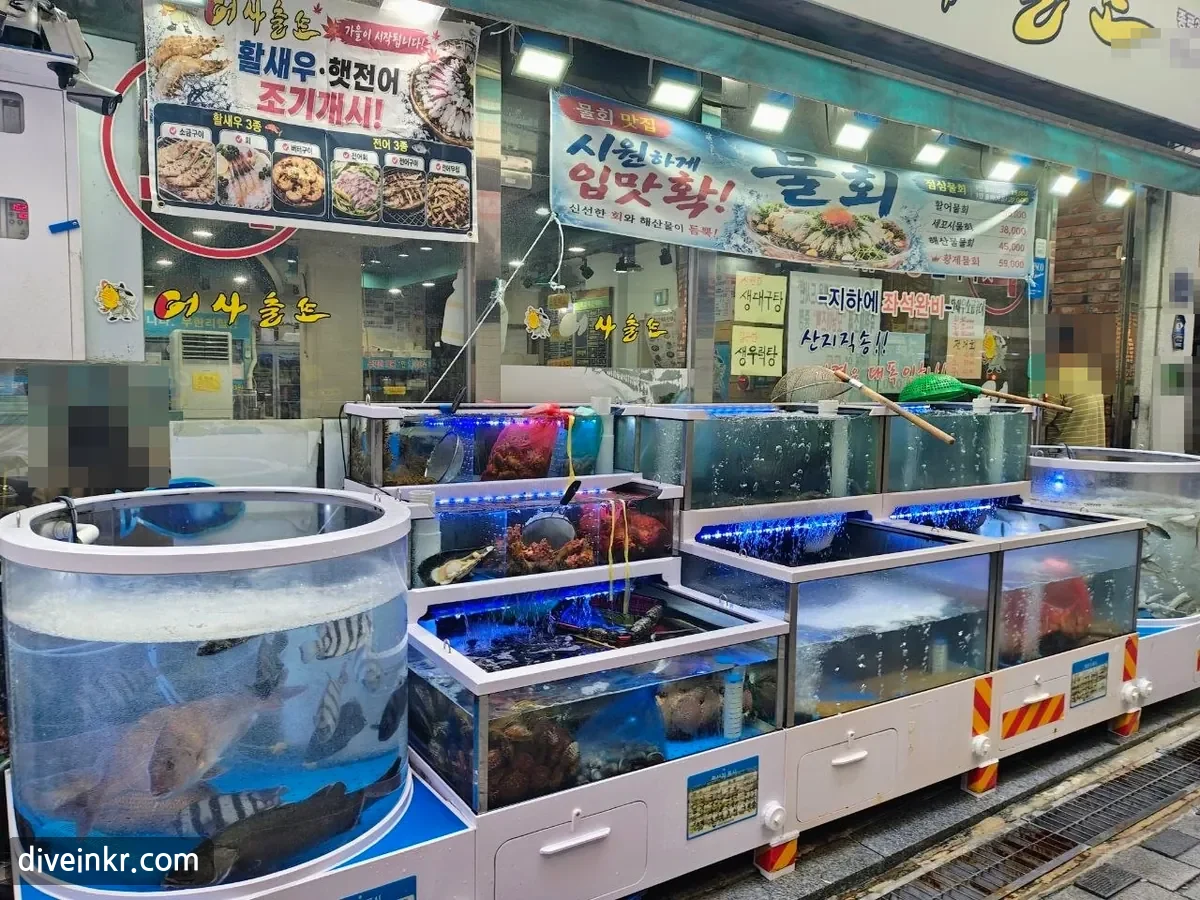
횟집 (hoetjip) comes from 회 (hoe), raw fish, plus 집. The dictionary definition is simply "a restaurant specializing in raw fish." What surprises many visitors is the row of tanks out front. In Korea, raw fish is mostly eaten as 활어회 (hwareohoe) — sashimi made from fish that were alive until they were prepared. That said, more and more places now serve 숙성회 (sukseonghoe), fish that has been aged for a while before slicing. So a 횟집 keeps its fish swimming in tanks in front of the restaurant, and the tanks double as a sign.
The 활 (hwal) in 활어회 means "live," and you'll spot it on banners too: the one in the photo advertises 활새우 (hwalsaeu, live shrimp). The other big word, 물회 (mulhoe), is raw fish served in a cold, tangy broth — 물 (mul) means water.
이 근처에 횟집 있어요?
i geuncheoe hoetjip isseoyo?
Is there a raw-fish restaurant near here?
이 집 뭐가 맛있어요?
i jip mwoga masisseoyo?
What's good here?
Drinking at these places
치킨집, 호프집 and 횟집 are all places where people often drink. If you're out with Korean friends, Korean drinking etiquette covers pouring and toasting, and soju (소주) has its own guide.
일식집 and 초밥집: When It Looks Japanese
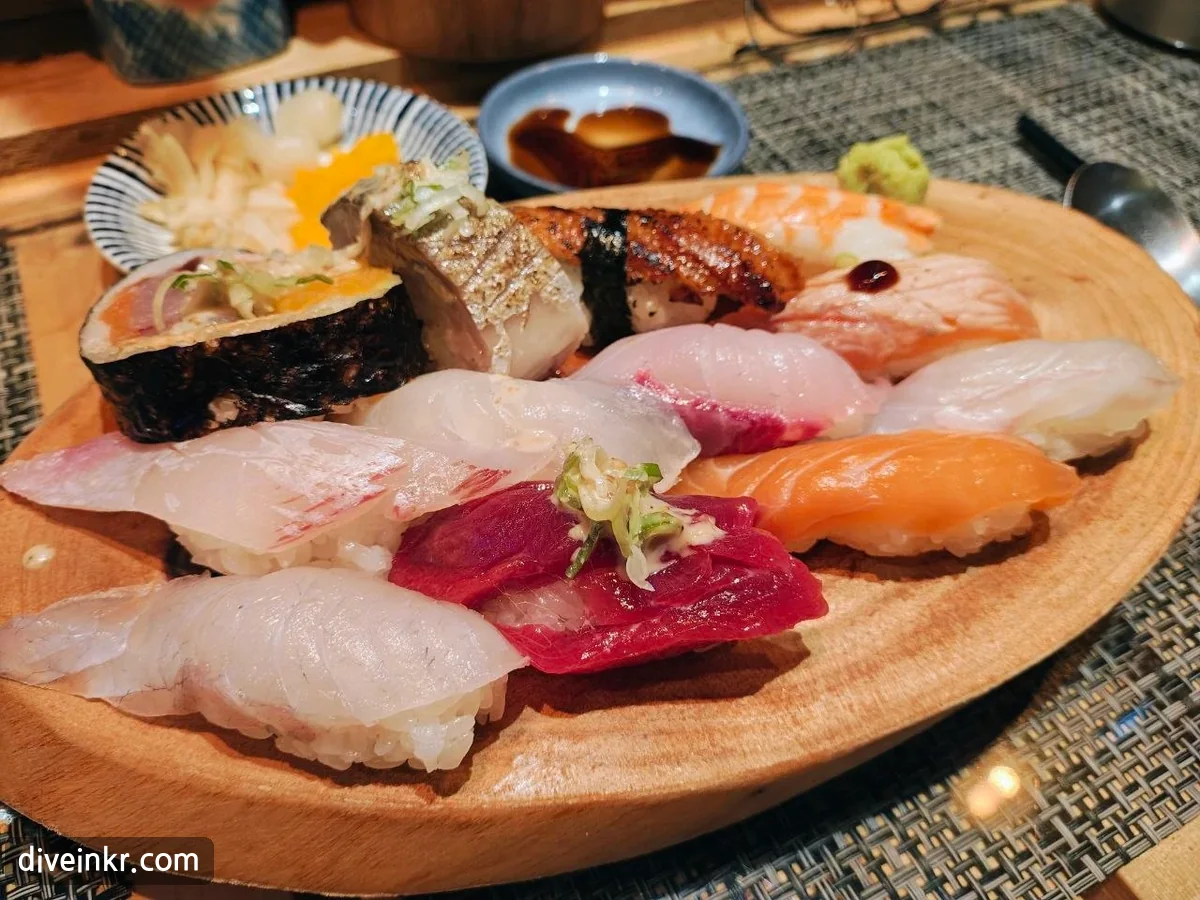
Not every raw-fish restaurant is a 횟집. When a place has a more Japanese atmosphere — and the cooks wear Japanese-style chef clothes — it is usually called a 일식집 (ilsikjip), and if sushi is the main thing, a 초밥집 (chobapjip). 일식 (ilsik) means Japanese food, and the Standard Korean Language Dictionary defines 일식집 as a casual restaurant that sells Japanese-style food. 초밥 (chobap) is sushi: salted, vinegared rice shaped into small portions and topped with wasabi and a slice of fish.
| Place | What it looks like | What you eat and how |
|---|---|---|
| 횟집 (hoetjip) | Korean-style table setting (상차림); fish tanks out front; from small shops to very large restaurants | Fresh 활어회 (live-fish sashimi) with many side dishes around it (often called 스끼다시), eaten with 초고추장 or 쌈장 and wrapped in lettuce or perilla leaves; the meal usually ends with 매운탕 and rice |
| 일식집 (ilsikjip) | Japanese-style atmosphere and chef clothes; often quiet, with private rooms | Sushi, sashimi and other Japanese dishes, sometimes as a course that arrives in order (grilled dishes, tempura, simmered dishes, soup, noodles); sashimi with soy sauce and wasabi |
| 초밥집 (chobapjip) | Japanese-style atmosphere; mostly small shops, often with a counter where the chef makes the sushi in front of you | Sushi is the main dish: a few pieces as a single order or a set, often with udon or soba, miso soup or a salad; a little soy sauce on the fish side, with wasabi |
One food writer who compared the two (Kim Yong-chul, OhmyNews, 2008) adds a difference in the fish and the order of the meal: a 횟집 usually serves live fish, with side dishes first and spicy fish stew (매운탕) at the end, so the sashimi needs those extras to make a complete meal, while at a 일식집 the sashimi stands as a dish on its own and the fish is more often aged (선어, seoneo). Aged fish is also served at some 횟집 now, so treat this as a tendency, not a rule.
이 근처에 초밥집 있어요?
i geuncheoe chobapjip isseoyo?
Is there a sushi place near here?
Mini Quiz
3 short questions — about 2 minute
2. You want a large bowl of 짜장면. Which word do you add?
3. What kind of place is a 호프집?
4. Why do many 횟집 have fish tanks out front?
Related Knowledge
- What does 치맥 (chimaek) mean?
- What does 안주 (anju) mean?
- Ordering food in Korean
- Native vs. Sino-Korean numbers
2 more related
Learn Next
Now that you know which 집 to go to, learn the phrases for ordering once you're inside.
Will you remember this tomorrow?
Save it — your daily review brings it back right before you'd forget. No account needed.