A Walk Through Jongno: Bosingak, Cheonggyecheon and the Korean Around Them
Written and reviewed by Jun and Jin, native Korean speakers
Published · How we write & review
After this page, you can find your way around Jongno in central Seoul — Bosingak, Cheonggyecheon, the Avenue of Youth — and read the Korean on the signs and memorials along the way.
10-second answer
The short answer
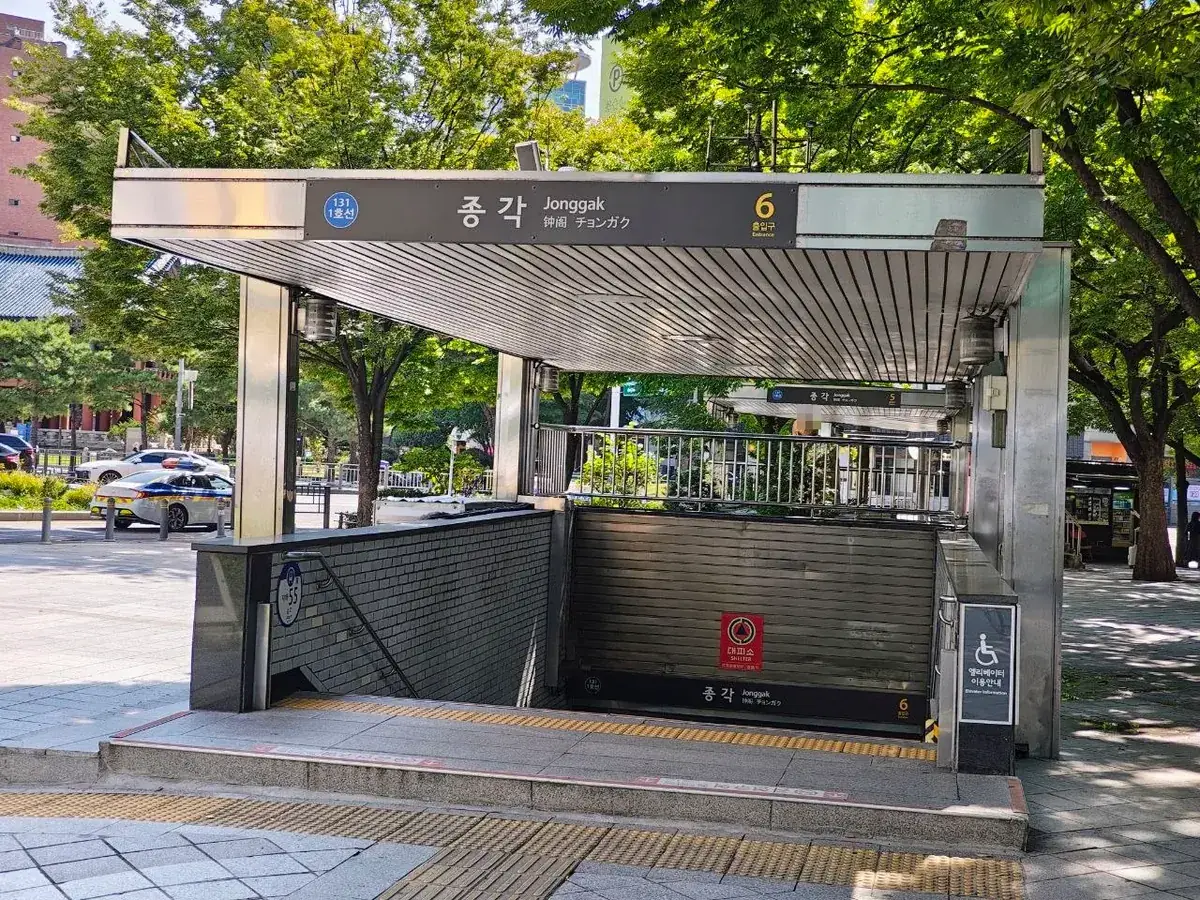
Jongno (종로, Jongno, "Bell Street") is Seoul's old downtown, named after the bell at 보신각 (Bosingak) — the pavilion where the bell is rung 33 times at midnight every New Year's Eve. From there it's a short walk to the Avenue of Youth (젊음의 거리, jeolmeumui geori) and the restored Cheonggyecheon stream (청계천, Cheonggyecheon). Take the subway to Jonggak Station (종각역, Jonggak-yeok), exit 4.
Quick check — did that land?
1. What does the name 종로 literally mean?
Jongno: Seoul's "Bell Street"
The name says it all: 종로 is written 鐘路, "bell road." For more than 600 years, this street has been the center of Seoul — the main road of the old walled capital, lined with shops, and home to the bell that told the city when to open and close its gates. Today it's a mix of office towers, old alleys, cheap restaurants and bars, and a few quiet historic sites in between.
It's also a good place to practice reading Korean, because almost everything is labeled. This page follows one walk — a bell pavilion, a memorial stone, a stream and the city's shared bikes — with the words you'll see at each stop. For the shop signs along the way, see reading Korean street signs.
See also: Gwanghwamun Square guide
보신각 (Bosingak): The Bell Pavilion
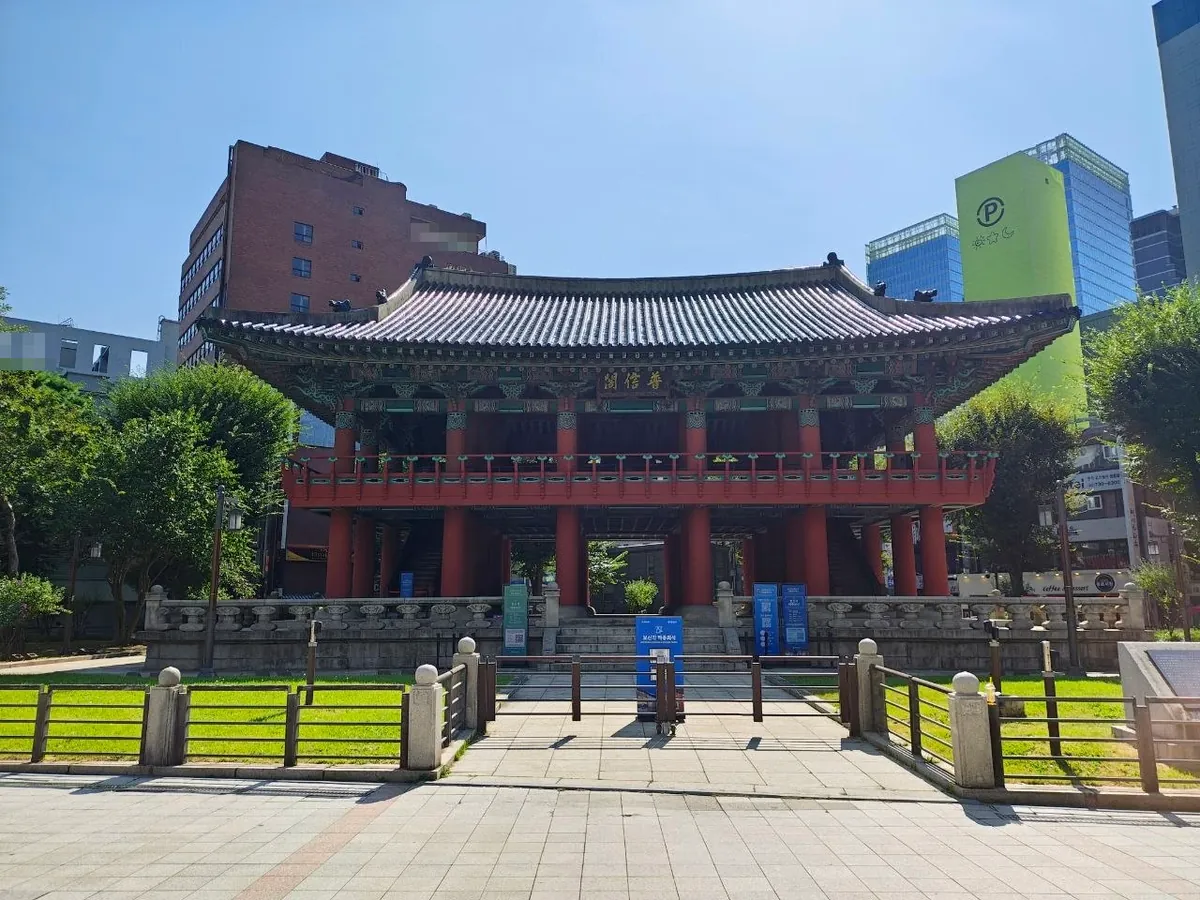
A bell pavilion has stood here since the early Joseon dynasty: first built in 1396 and moved to this crossroads in 1413. Its bell kept time for the capital. At dawn it rang 33 times (파루) to open the city gates, and at night 28 times (인정) to close them. King Gojong gave the pavilion its current name, 보신각, in 1895. The pavilion was wrecked in the Korean War and rebuilt in 1953, and the two-story building you see today dates from 1979.
The bell inside isn't the original. The old bell, cast in 1468 and now designated a Treasure (보물), was rung until 1985 and is kept at the National Museum of Korea. The current bell was cast in 1985 and first rung on Liberation Day, August 15 that year. You can hear it without waiting for New Year: Seoul holds a short bell-ringing ceremony at Bosingak every day at noon except Mondays, and on Tuesdays the program is open to foreign visitors, who can sign up to take part (first come, first served — the details are on Seoul's culture portal).
제야의 종: the New Year's Eve bell
Every December 31, the bell at Bosingak is rung 33 times at midnight — 제야의 종 (jeyaui jong), "the bell of New Year's Eve." The ceremony has been held since 1953, is broadcast live on TV, and draws big crowds to Jongno. When Koreans say 제야의 종 치는 거 봤어? (jeyaui jong chineun geo bwasseo?, casual), they mean "Did you watch the bell ringing?" — the Korean equivalent of watching the ball drop.
| Korean | Romanization | Meaning |
|---|---|---|
| 종 | jong | Bell |
| 각 | gak | Pavilion (the 閣 in 보신각) |
| 타종 | tajong | Ringing a bell ("striking the bell") |
| 제야 | jeya | New Year's Eve (formal) |
The March 1st Memorial Stone
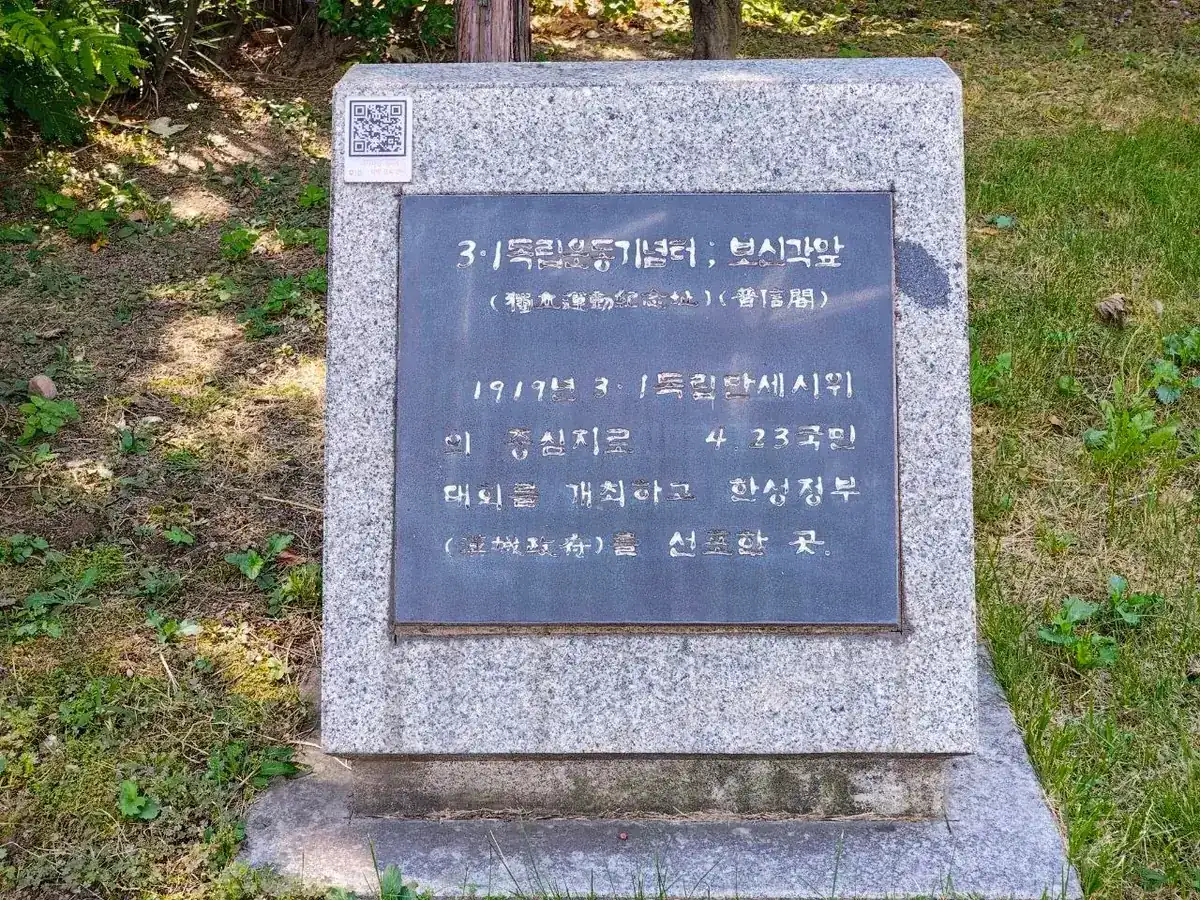
On the lawn in front of the pavilion is a small stone that's easy to walk past. It marks Bosingak's role in the March 1st Movement of 1919, when Koreans across the country demonstrated for independence from Japanese colonial rule. Crowds rang the bell here on March 1, and on April 23 a national assembly held here proclaimed the Hanseong Government (한성정부), one of the provisional governments of the time. The anniversary, 삼일절 (March 1st), is a national holiday in Korea.
The inscription is a good piece of reading practice — short, formal, and ending the way many Korean memorial texts do, with 곳 ("the place where…"):
1919년 3·1독립만세시위의 중심지로 4.23국민대회를 개최하고 한성정부를 선포한 곳.
cheon-gubaek-sipgu-nyeon samil dongnip manse siwiui jungsimjiro sa-isam gungmin daehoereul gaechoehago hanseong jeongbureul seonpohan got.
The place that was a center of the March 1st independence demonstrations of 1919, where the April 23 National Assembly was held and the Hanseong Government was proclaimed.
3·1 is read 삼일 (samil) and 4.23 사이삼 (sa-isam), digit by digit, the way Koreans name historic dates. 독립 = independence, 만세 = "hurray" (the cry of the demonstrators), 시위 = demonstration, 중심지 = center, 개최하다 = to hold (an event), 선포하다 = to proclaim. The whole text is one long description of 곳 — a common pattern on Korean plaques.
녹두장군 전봉준: The Statue Outside Jonggak Station
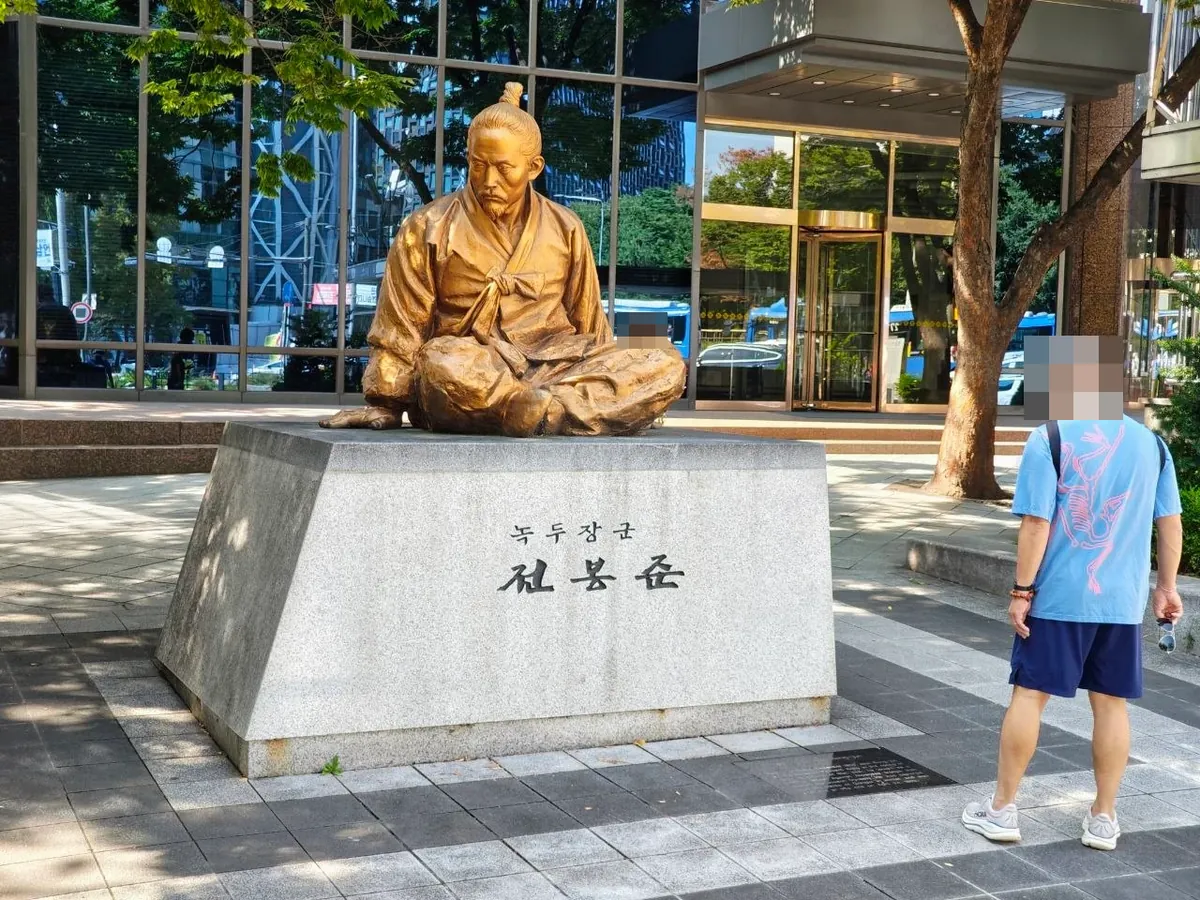
A short walk from Bosingak, a bronze man sits cross-legged on a stone base. This is 전봉준 (Jeon Bong-jun, 1855–1895), leader of the 동학농민운동 — the Donghak Peasant Revolution of 1894, when farmers rose up against corrupt officials and, later, against foreign intervention. He was captured, held at a prison called 전옥서 that stood on this spot, sentenced to death on April 23, 1895, and executed the next day.
The statue was unveiled on April 24, 2018 — 123 years after his death — and paid for with donations from the public. His pose is based on a well-known photograph taken after his capture, showing him seated in a palanquin as he was moved under guard. The name on the base, 녹두장군 (nokdu janggun), was his nickname: 녹두 is the mung bean, and he was called that because he was small. The nickname lives on in an old folk song, 새야 새야 파랑새야 ("Bird, bird, blue bird"), in which the mung bean is usually read as Jeon Bong-jun himself.
| Korean | Romanization | Meaning |
|---|---|---|
| 장군 | janggun | General |
| 녹두 | nokdu | Mung bean — also in 녹두전, the mung bean pancake |
| 농민 | nongmin | Farmer, peasant |
| 동상 | dongsang | Statue (bronze statue) |
청계천 (Cheonggyecheon): The Stream Under the Highway
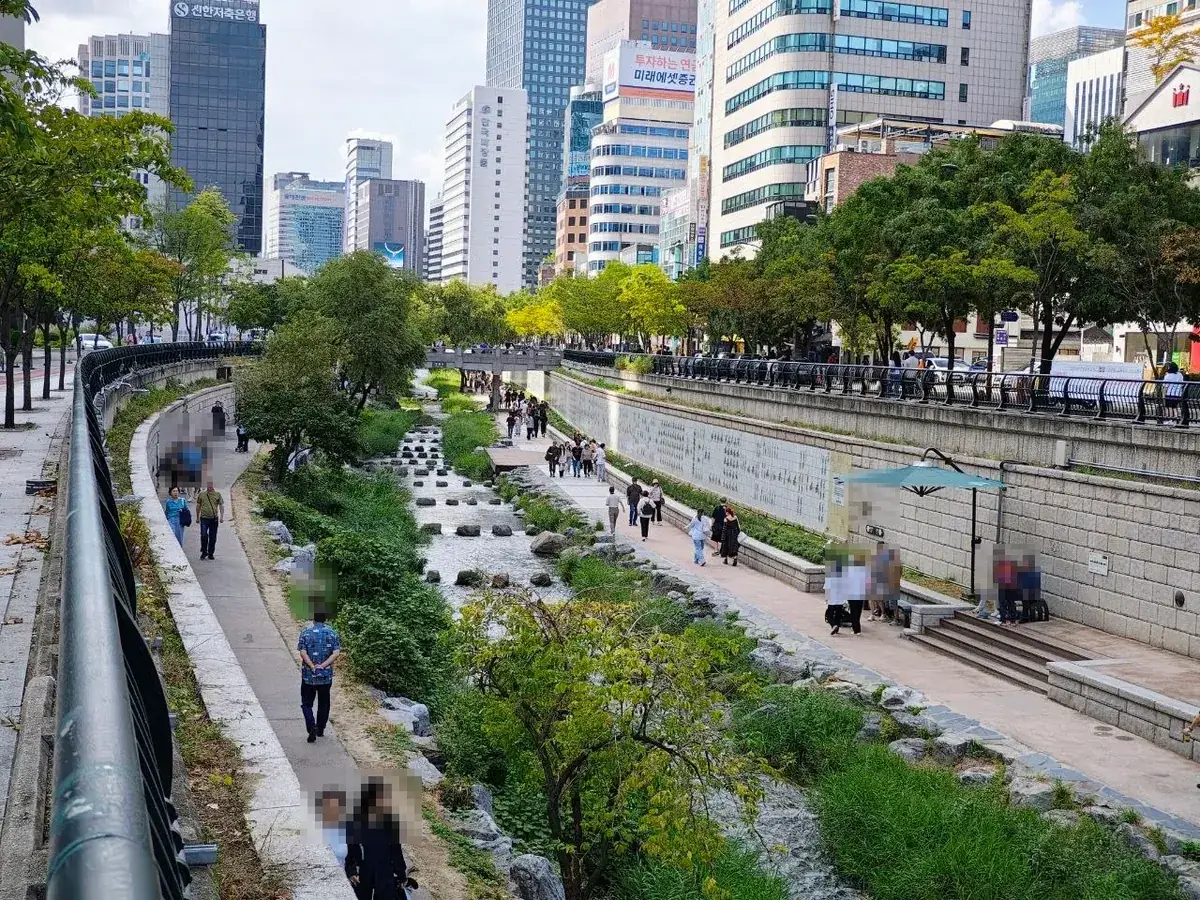
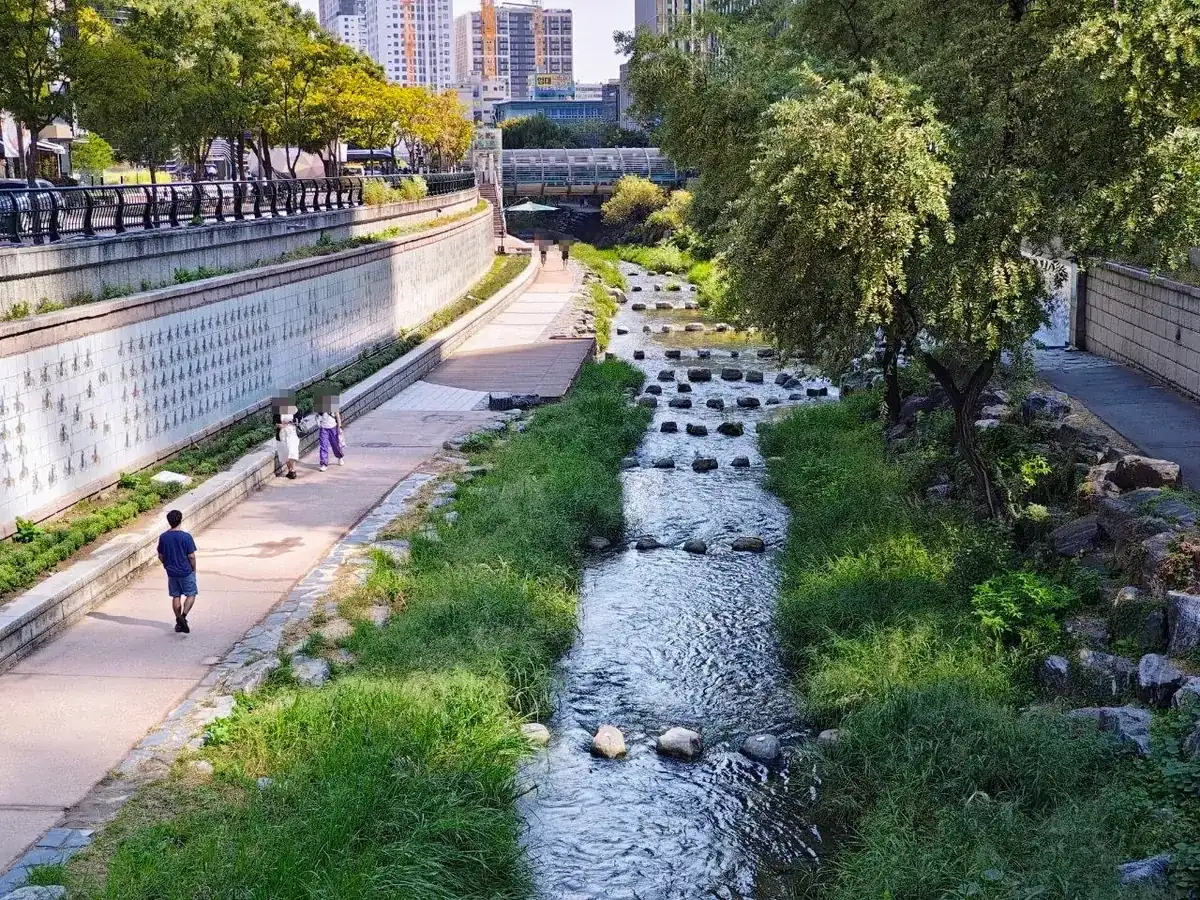
A few minutes south of Bosingak, the street drops down to a stream. 청계천 was covered over with concrete in stages between 1958 and 1978, and an elevated highway was built on top of it (1967–1971). In 2003 Seoul tore the highway down and restored the stream; it reopened on October 1, 2005, with an opening ceremony at Cheonggye Plaza (청계광장). The restored section runs about 5.8 km through the city, crossed by 22 bridges.
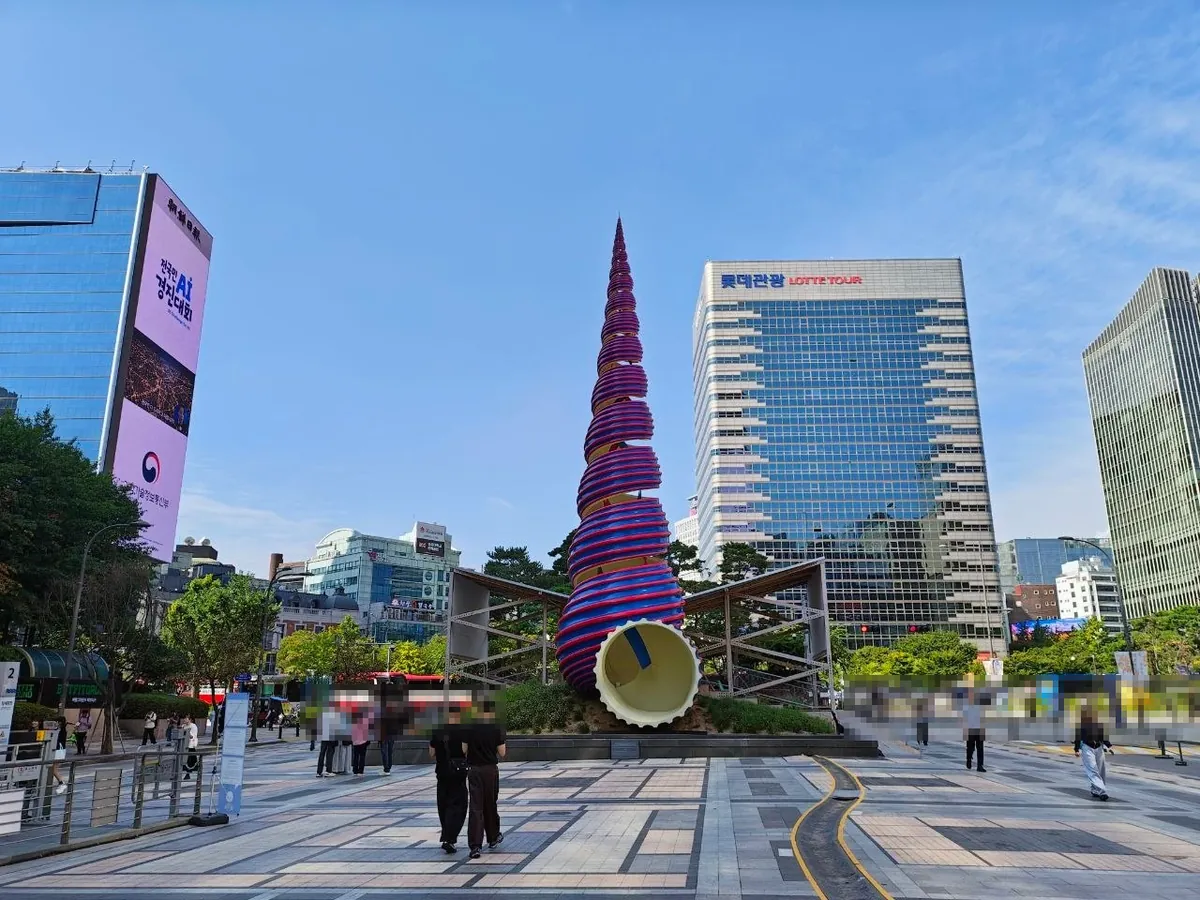
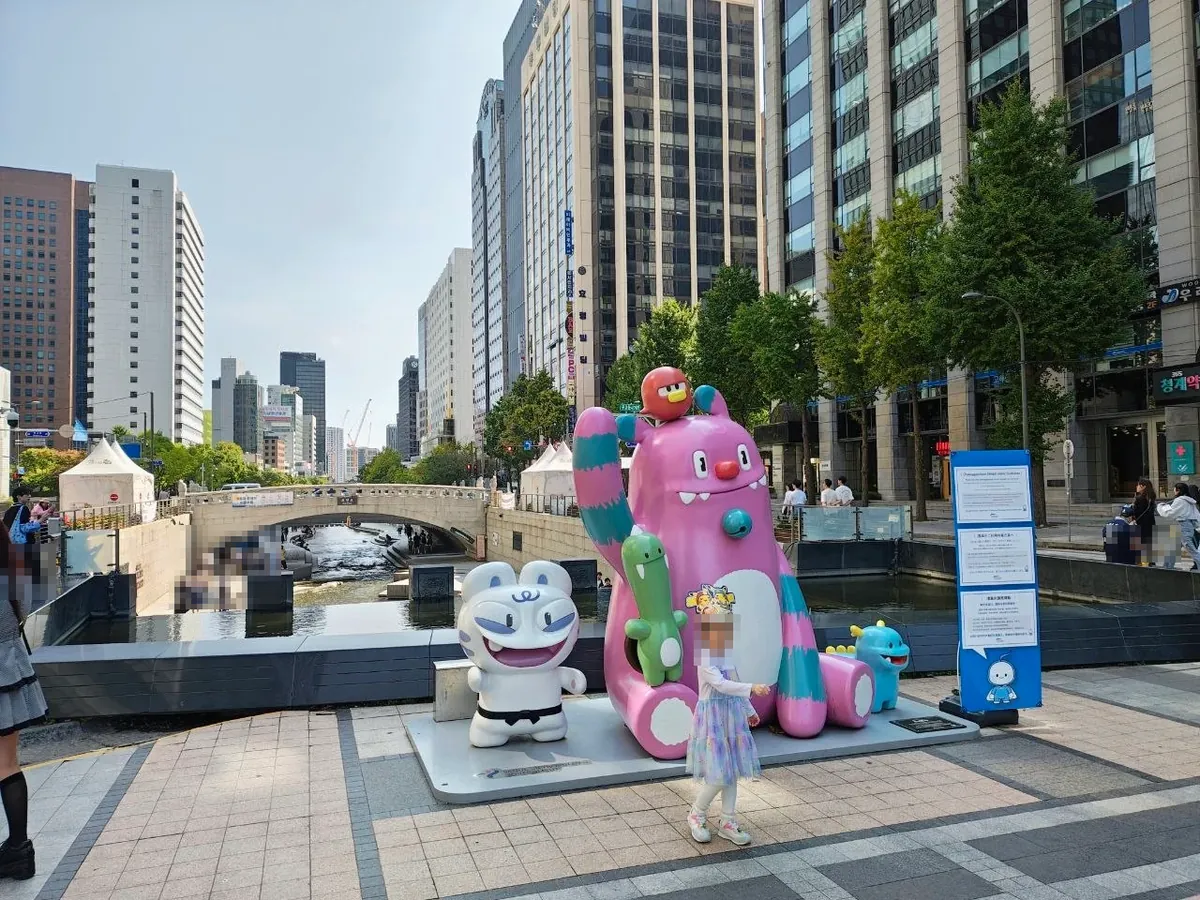
The stream starts at 청계광장 (Cheonggye Plaza), marked by a huge spiral sculpture called Spring, by the artists Claes Oldenburg and Coosje van Bruggen. It went up in September 2006 and was completed on September 29, the year after the restored stream opened: about 20 m tall and 6 m wide, shaped like a freshwater snail shell (다슬기), with red and blue ribbons outside. The title is often explained as a play on three meanings of the English word — the season, a coiled spring, and a water source.
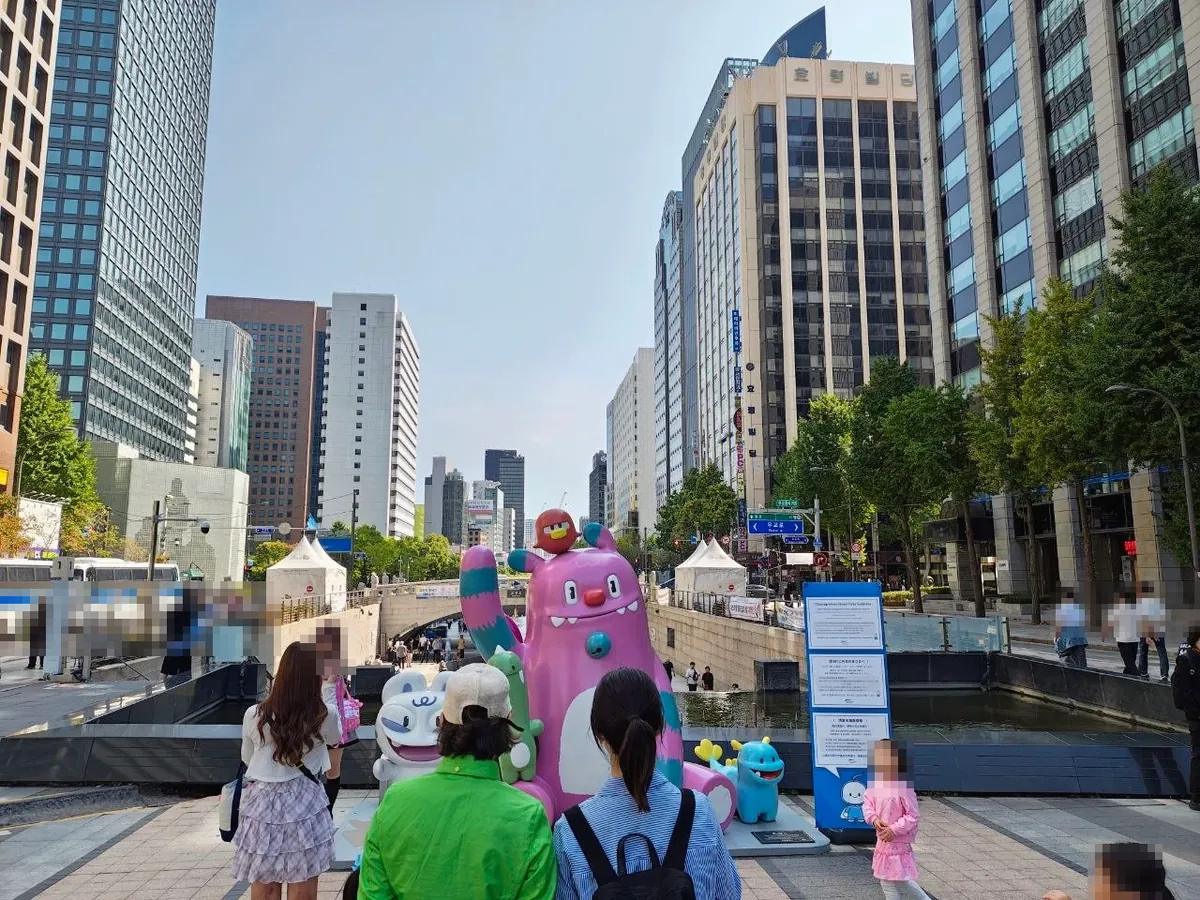
The pink, fluffy creature is 해치 (Haechi), Seoul's official character — the city's cartoon version of the stone guardian at Gwanghwamun. Seoul has used a Haechi character since 2009 and gave it a new pink look on February 1, 2024, along with four friends, the 소울프렌즈 (Soul Friends), based on the guardian animals of the four directions. Each has a personality: Haechi is the friend who helps when you're in trouble (the bell on its neck is said to eat worries and turn them into happiness), 청룡 the blue dragon is a playful five-year-old, 주작 the fire bird is the cynic of the group, 현무 the black tortoise of the north is the laid-back one who comforts you, and 백호 the white tiger is a job-seeker who takes taekwondo very seriously. You'll see them on city goods and signs, and in 2024 Seoul put them on pink and mint "Haechi buses" on the 01A and 01B routes around Namsan.
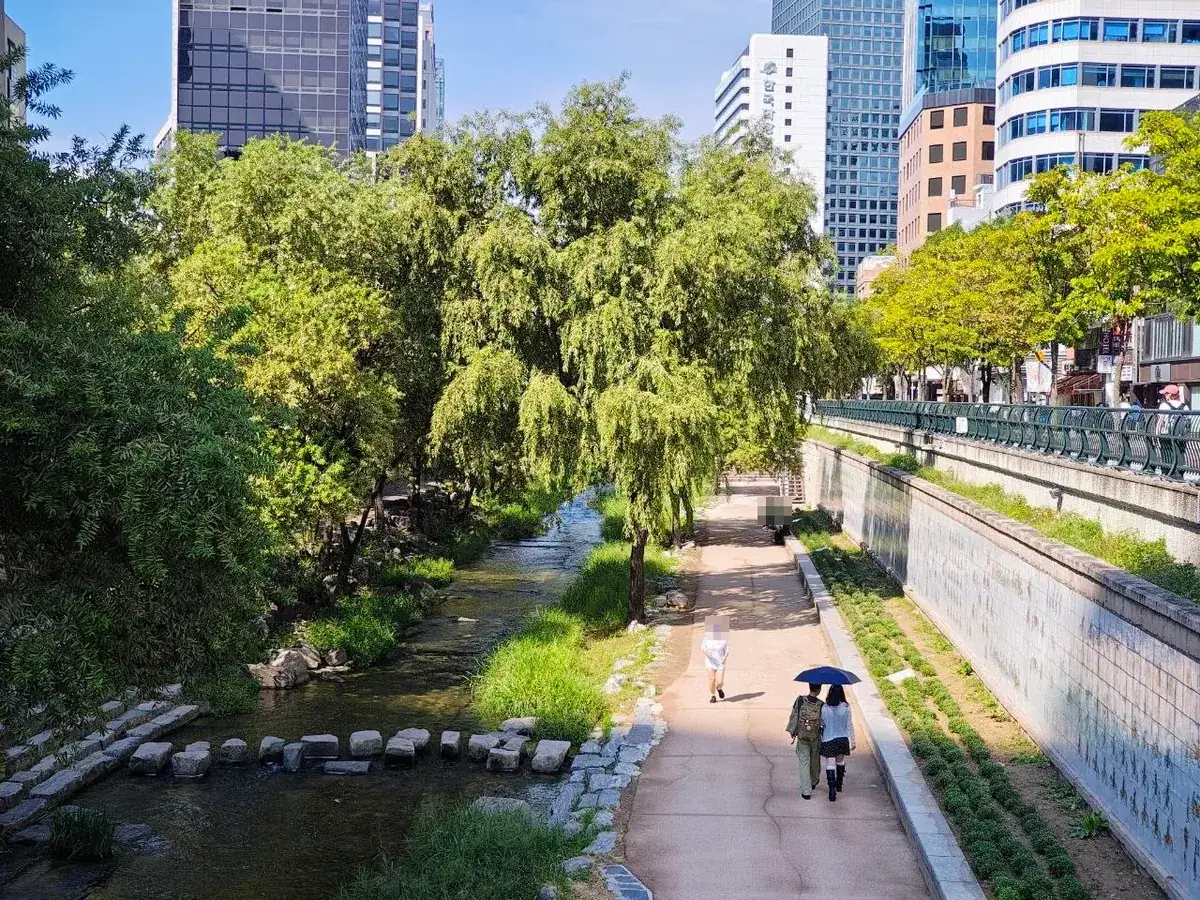
Two words from the name are worth knowing. 천 means "stream," smaller than 강 (river) — compare 청계천 with 한강, the Han River. And the walkways are made for 산책 (sanchaek), a relaxed walk: 청계천에서 산책할까요? (cheonggyecheoneseo sanchaekalkkayo?) — "Shall we take a walk at Cheonggyecheon?"
| Korean | Romanization | Meaning |
|---|---|---|
| 천 | cheon | Stream |
| 강 | gang | River |
| 광장 | gwangjang | Plaza, square |
| 다리 | dari | Bridge |
| 징검다리 | jinggeomdari | Stepping stones |
| 산책 | sanchaek | A walk, a stroll |
젊음의 거리: The Avenue of Youth
Between Bosingak and the stream is a grid of narrow streets officially called 관철동 젊음의 거리 — the Avenue of Youth in Gwancheol-dong, near exit 4 of Jonggak Station. 젊음 means "youth" and 거리 means "street," and the name fits: it's packed with cheap restaurants, bars, karaoke rooms, cafés and convenience stores, and it gets busy in the evening. It's also the best place in Jongno to practice reading signs — seven floors of them on some buildings. Our street signs guide walks through a photo of this street word by word, and the pub menus here are a good anju reading lesson.
Looking South: Namsan and N Seoul Tower
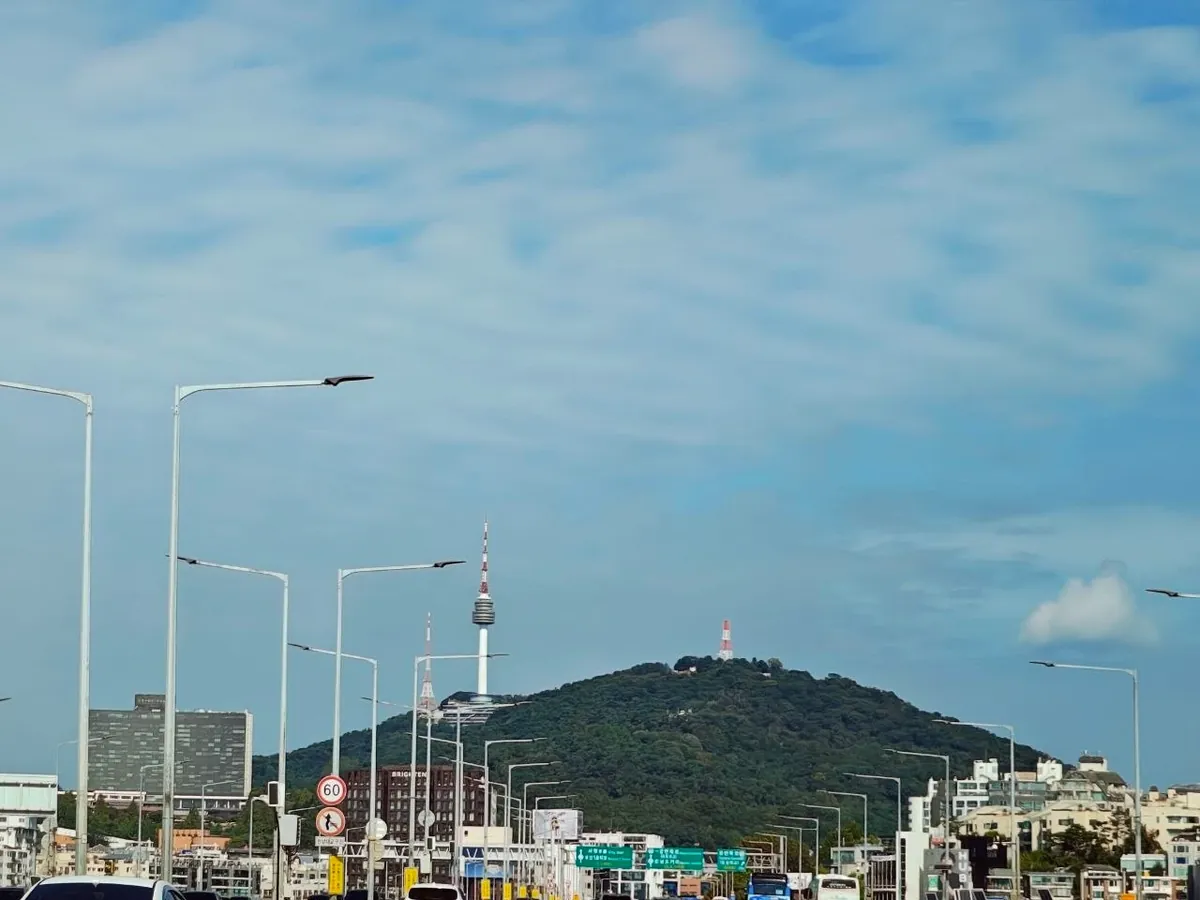
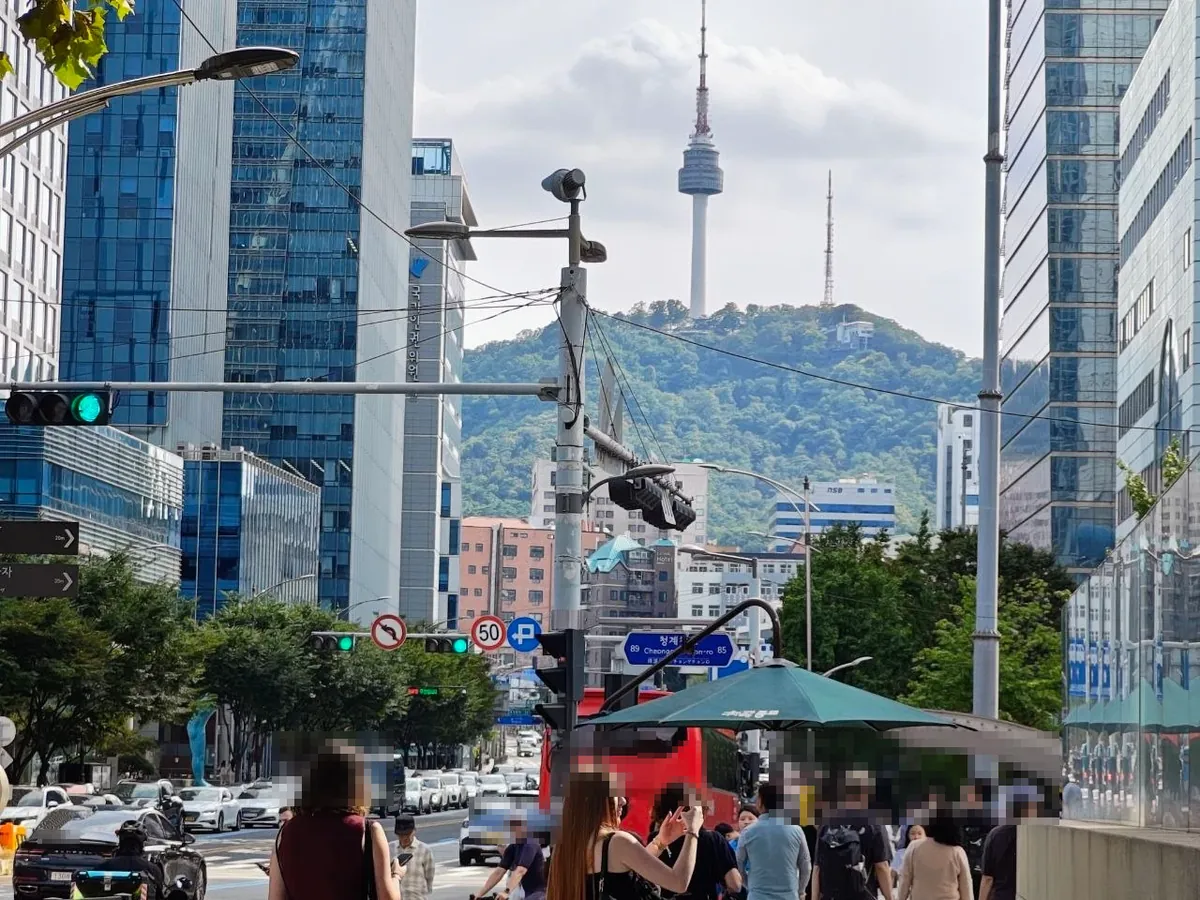
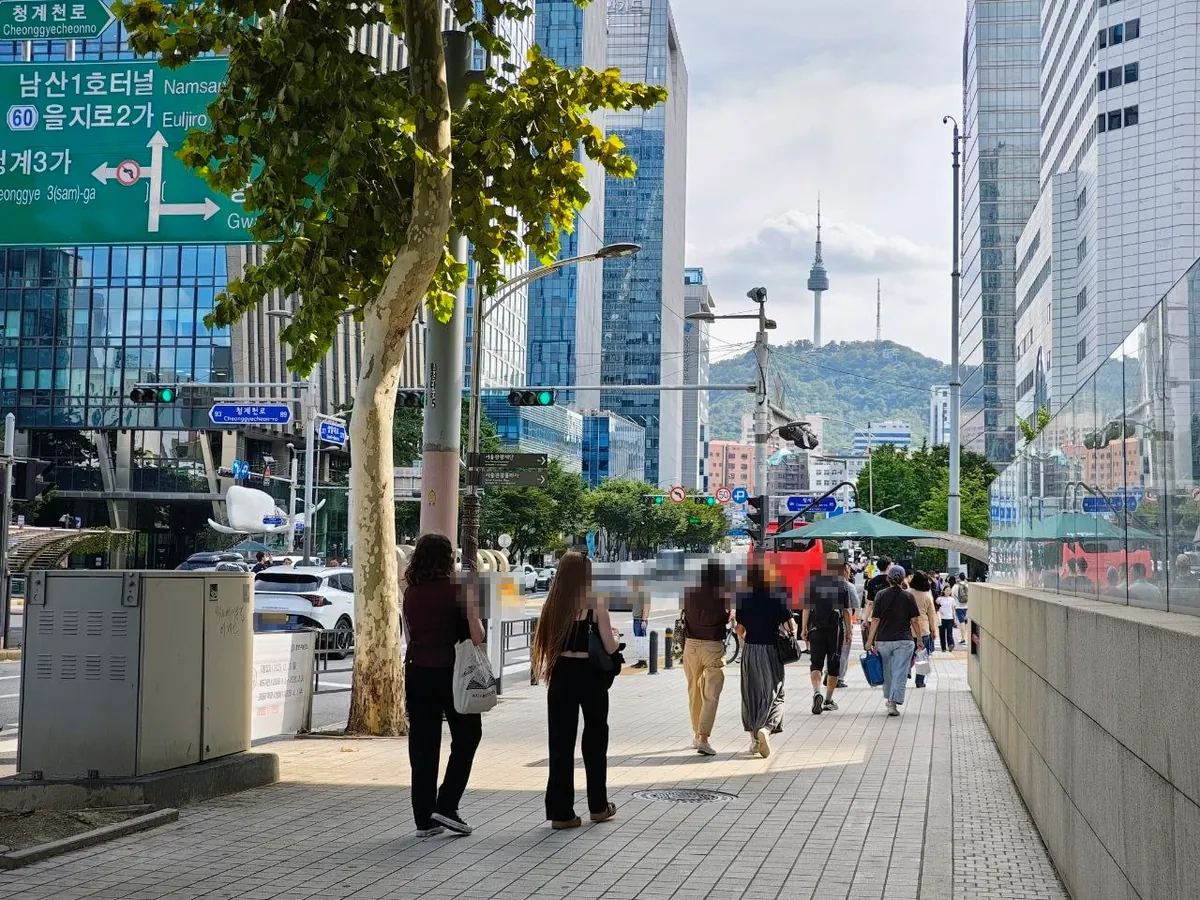
The tower you can see from many streets in central Seoul stands on 남산 (Namsan, "South Mountain"), a wooded hill about 270 m high. N Seoul Tower is 236.7 m tall, and its top is 479.7 m above sea level. It was completed in 1975, opened to the public in 1980, and got its current name after a renovation in 2005 — though most Koreans still just call it 남산타워 (Namsan Tower).
남산타워 가 봤어요?
namsantawo ga bwasseoyo?
Have you been to Namsan Tower?
-아/어 봤어요 = "have you tried / have you ever…" — the standard way to ask about experiences.
Getting Around: 따릉이, Seoul's 1,000-Won Bikes
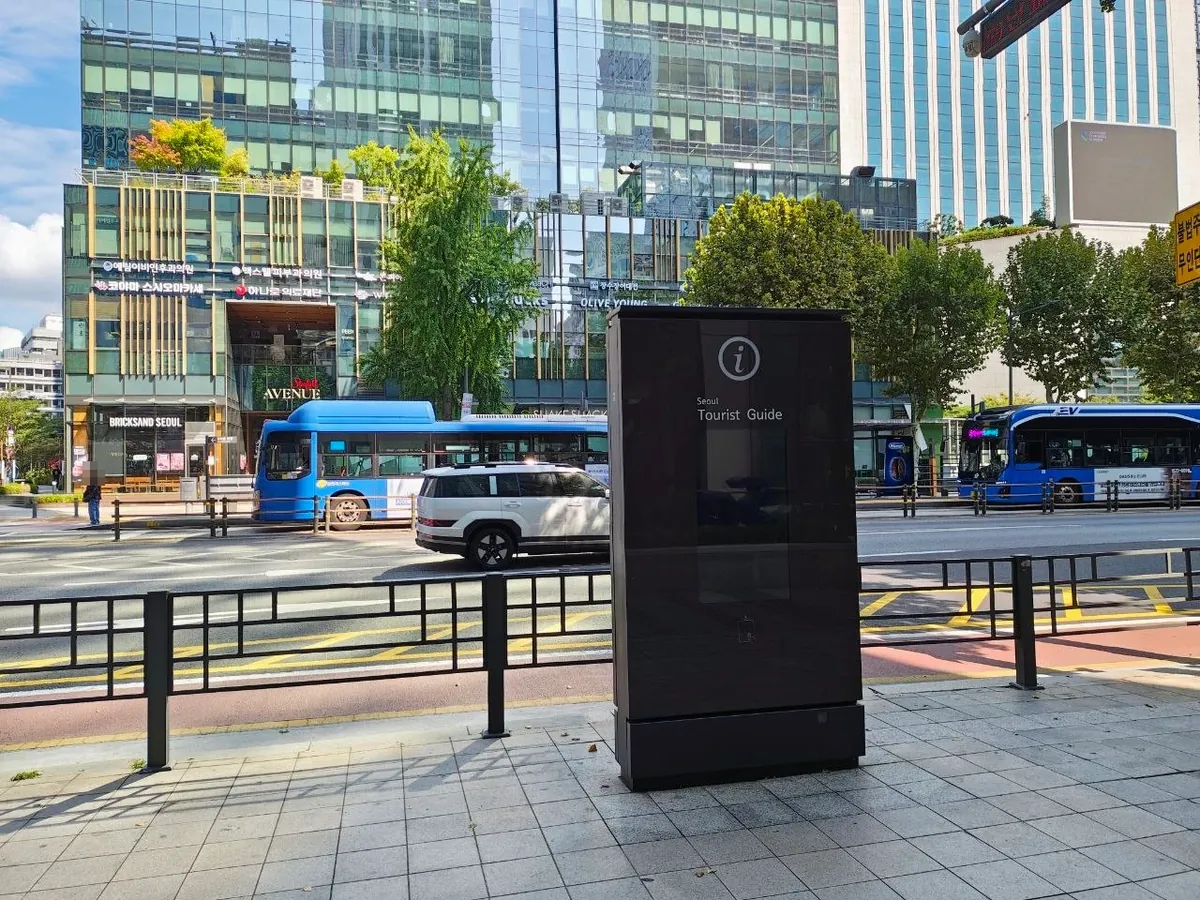
Jongno is easy by subway (Jonggak Station on Line 1 for Bosingak) and by bus. On the route board at a stop, the current stop is written large, the next stop is the one the arrow points to, and the previous stop is shown lighter; more in our Seoul bus guide. For short hops, the cheapest option is Seoul's public bike.
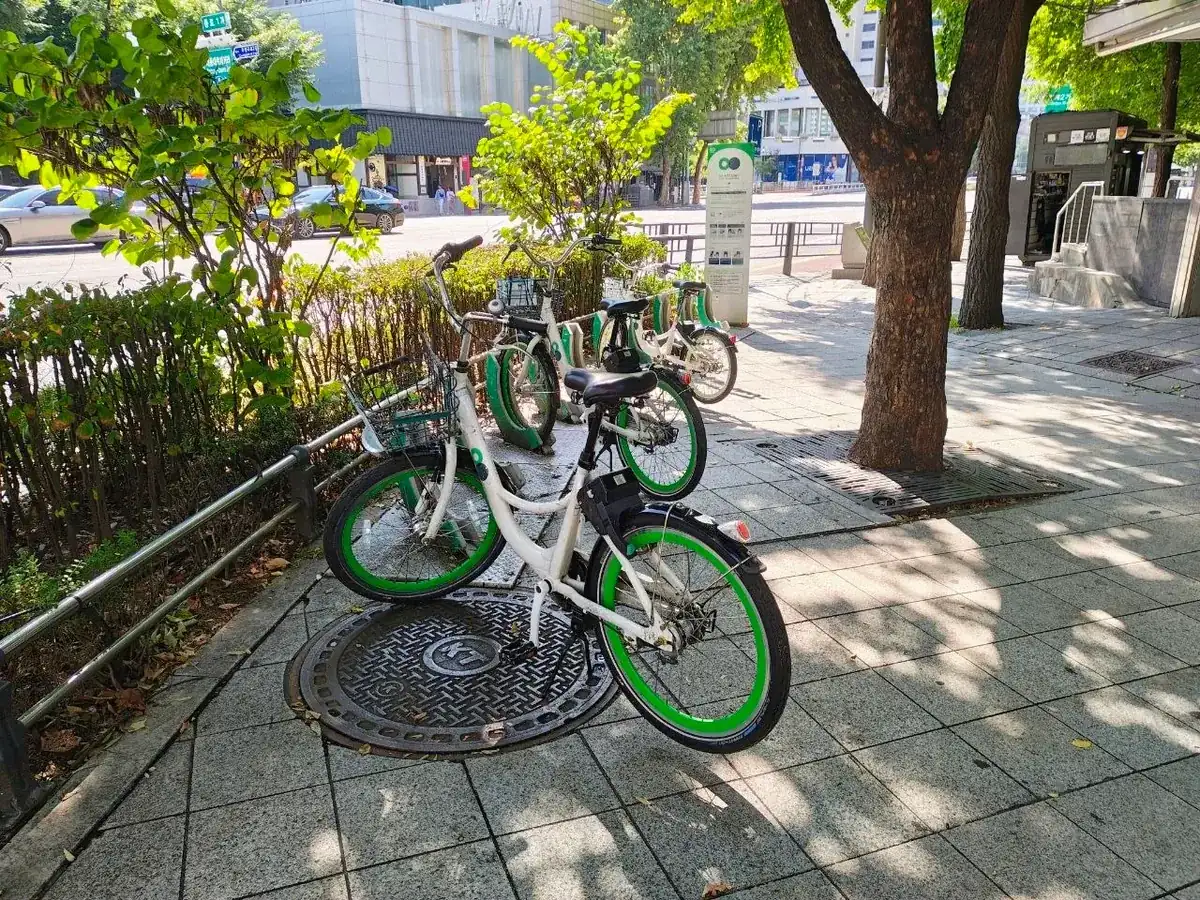
The bikes are called 따릉이 after 따르릉, the sound of a bicycle bell. They're run by the city, they're everywhere in central Seoul, and they're cheap: a one-hour pass costs 1,000 won. You rent and return them at fixed stations (대여소) marked by a green-and-blue post like the one below, and there are stations all over the city — including right outside Jonggak Station.
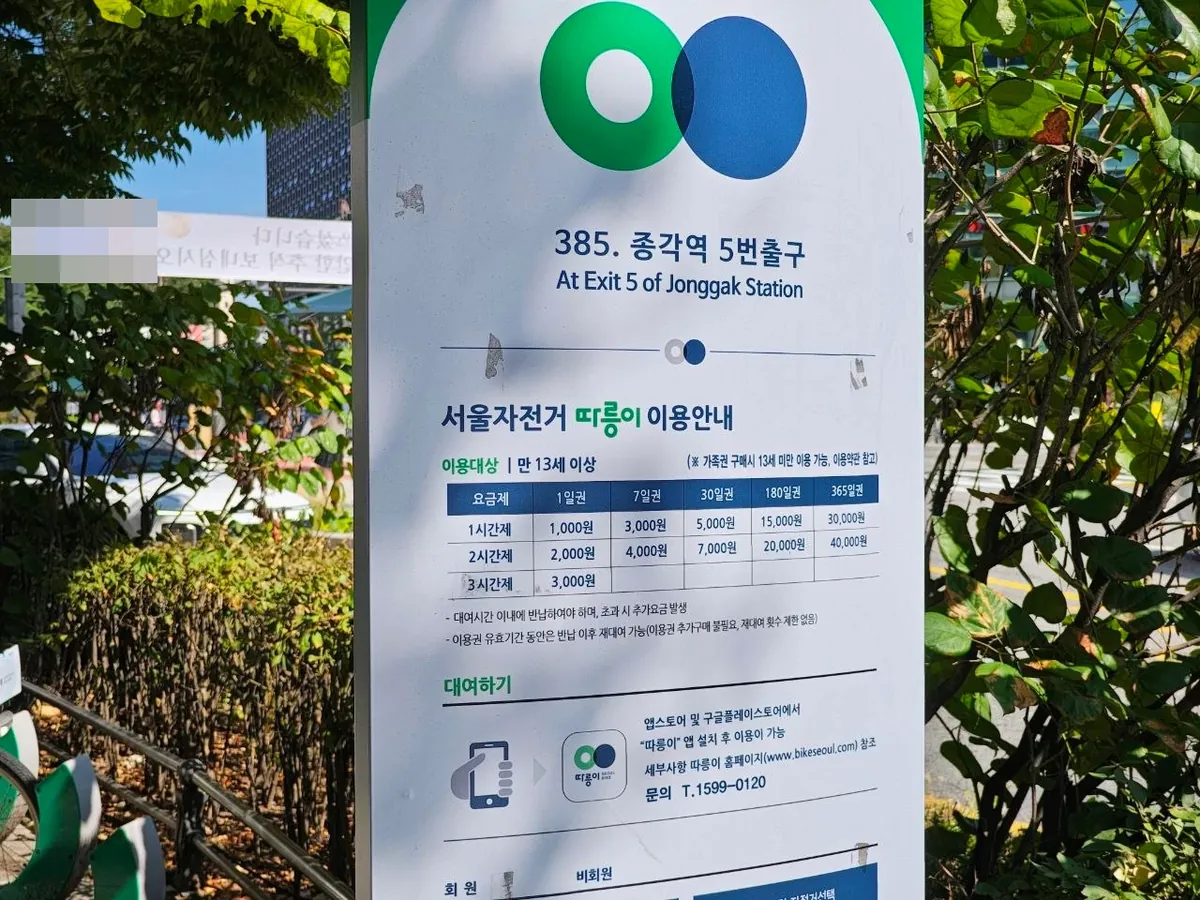
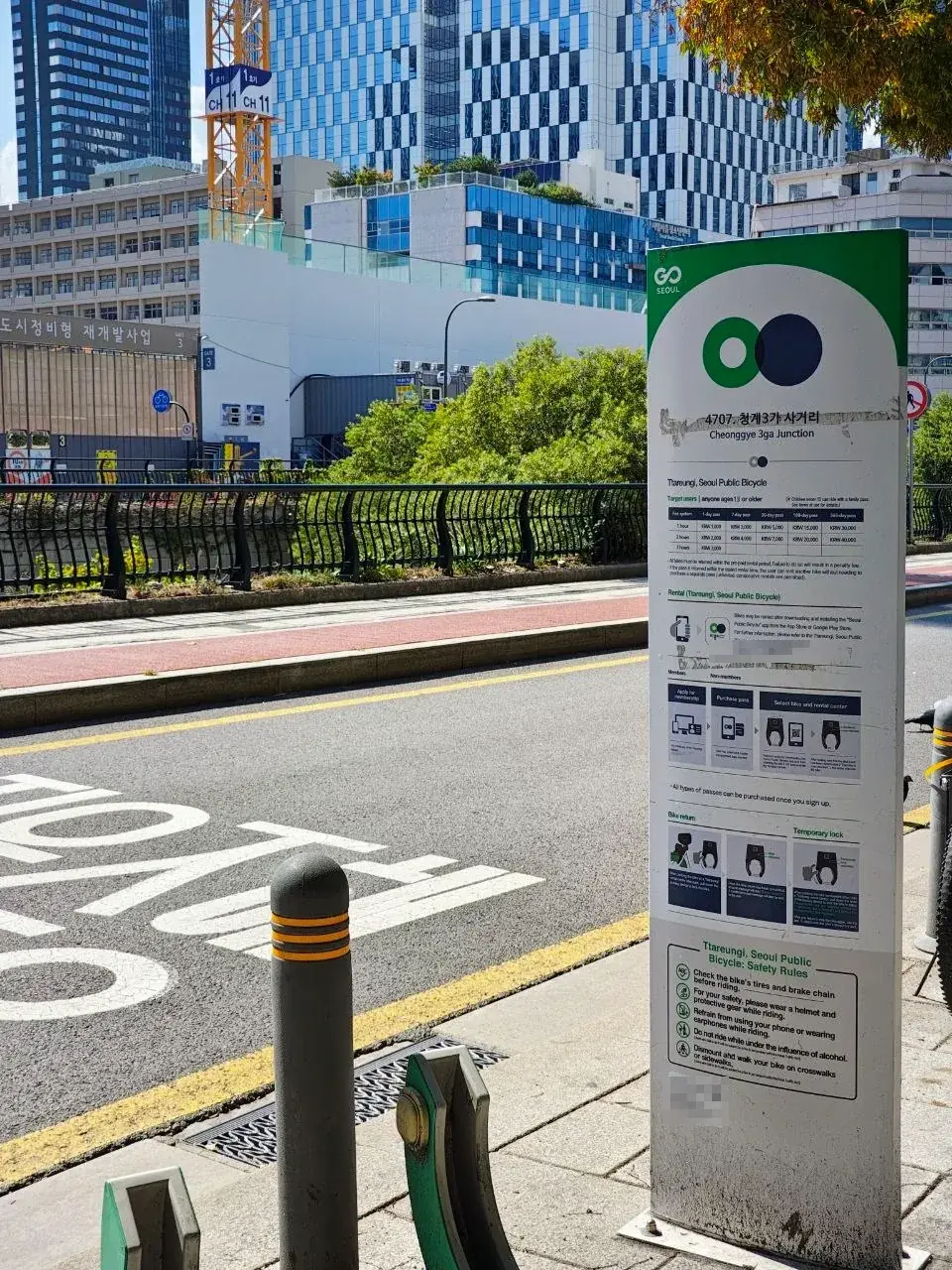
The trick is in the small print on that sign. A one-day pass (1일권) on the 1-hour plan (1시간제) is valid for 24 hours from your first rental and lets you ride for up to one hour at a time. As long as you return the bike within that hour, you can rent again as many times as you like while the pass is valid — no need to buy another. So for 1,000 won you can hop from Jongno to Cheonggyecheon, dock, walk around, and take another bike later. Go over the time limit and you pay 200 won for every extra 5 minutes.
- Install the 따릉이 app (search for Seoul Bike or Ttareungyi). Visitors can pick "Foreigner" for an English screen.
- Buy a pass. You don't need to sign up for a one-day pass (1-hour or 2-hour plan), but in the Foreigner menu only cards issued outside Korea are accepted.
- At a station, scan the QR code on the bike to unlock it.
- Return it at any 따릉이 station within your time limit and lock it in place.
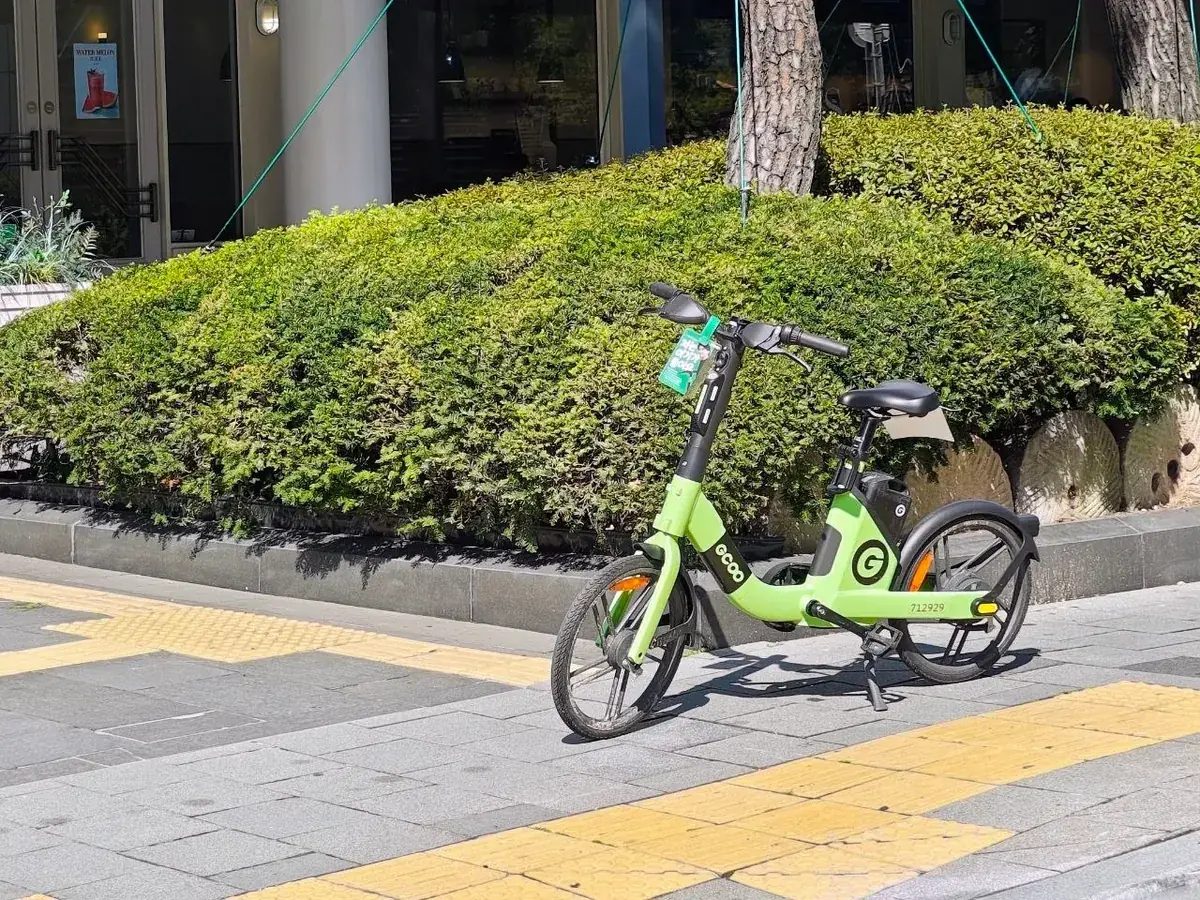
Riders must be at least 13 (만 13세 이상 on the sign), and Korean law requires all cyclists to wear a helmet, though there is no fine. You'll also see green electric bikes from private companies parked on the sidewalks around Jongno — those are rented and paid for through their own apps, not the 따릉이 one.
| Korean | Romanization | Meaning |
|---|---|---|
| 자전거 | jajeongeo | Bicycle |
| 전기자전거 | jeongi-jajeongeo | Electric bicycle |
| 대여 | daeyeo | Rental (renting out) |
| 반납 | bannap | Returning (something borrowed) |
| 자전거도로 | jajeongeo-doro | Bike lane |
A Short Route
- Start at Jonggak Station (종각역), exit 4 — Bosingak is right there at the crossroads.
- Look for the March 1st memorial stone on the lawn in front of the pavilion.
- Walk into the Avenue of Youth (젊음의 거리) behind it and try reading the signs.
- Keep heading south until you reach Cheonggyecheon, then walk along the stream — west toward Cheonggye Plaza, or east as far as you like.
- On a clear day, look south for N Seoul Tower on Namsan.
If you ask for directions on the way, these will get you there — more in asking for directions in Korean:
보신각 어디예요?
bosingak eodiyeyo?
Where is Bosingak?
청계천 어떻게 가요?
cheonggyecheon eotteoke gayo?
How do I get to Cheonggyecheon?
따릉이 대여소 어디 있어요?
ttareungi daeyeoso eodi isseoyo?
Where's a Ttareungyi bike station?
타종 행사 몇 시에 해요?
tajong haengsa myeot sie haeyo?
What time is the bell-ringing ceremony?
행사 means "event" — you'll see it on posters everywhere.
Mini Quiz
1. What does the name 종로 literally mean?
2. How many times is the Bosingak bell rung at midnight on New Year's Eve?
3. What does 천 in 청계천 mean?
4. A plaque ends with …선포한 곳. What does 곳 mean here?
Related Knowledge
Learn Next
The Avenue of Youth is covered in signs — this guide decodes them word by word.
Will you remember this tomorrow?
Save it — your daily review brings it back right before you'd forget. No account needed.