Korean Taste Words English Can't Quite Translate
Written and reviewed by Jun and Jin, native Korean speakers
Published · How we write & review
After this page, you can describe Korean food the way Koreans do — nutty, greasy, "refreshing" hot soup, three kinds of spicy — and tell a compliment from a complaint.
10-second answer
The short answer
Korean has a huge vocabulary for taste — one linguistic study counted more than 250 taste words — and many of them don't map onto English. 고소하다 (gosohada) is the rich, nutty taste of toasted sesame or pork fat; 느끼하다 (neukkihada) is the heavy, greasy feeling of too much oil; 담백하다 (dambaekada) is clean and light; and 시원하다 (siwonhada), literally "cool," is what Koreans say about a steaming bowl of soup, because it means relief, not temperature.
Quick check — did that land?
1. A Korean takes a sip of steaming hangover soup and says 아, 시원하다. What do they mean?
At the Samgyeopsal Grill: 고소하다 and 느끼하다

Grilled 삼겹살 is the easiest place to feel both words. 고소하다 (gosohada) is the savory, nutty richness you taste in the fat — English speakers usually settle for "nutty," the same word Koreans use for toasted sesame seeds, sesame oil and even the smell of freshly baked bread. The simplest way to taste the pork itself is a dip in plain salt. The classic 기름장 dip — sesame oil with salt — adds the sesame's own 고소한 flavor, which makes it richer, but it can also cover up the taste of the meat.
Eat enough fatty pork and 고소 tips over into 느끼하다 (neukkihada): the heavy, greasy feeling that makes you want something sharp. That's why a Korean grill table almost always has 장아찌 (pickled vegetables) or kimchi nearby — a bite of something tangy rinses your palate so you can keep going.
Why Koreans say 느끼하다 more about Western food
Oily Korean dishes rarely come alone: kimchi, 장아찌 and other banchan sit right beside them to cut the grease. A Western meal is often just one plate — a bowl of cream pasta and nothing sharp to balance it — so that's where many Koreans reach for the word. Korean food can be 느끼 too, though: a plate of jeon fried in plenty of oil is a classic example.
고소하다 or 구수하다?
They're related — the dictionary lists 구수하다 as the "bigger," deeper-sounding partner of 고소하다. 고소 is the light, toasty-nutty taste of sesame; 구수 is the deeper, earthy-toasty taste of barley tea, 숭늉 (scorched-rice water) and 된장 soup.
See also: 삼겹살 — where 고소 and 느끼 meet
Why Boiling Soup Is 시원하다
This one confuses almost every learner. 시원하다 (siwonhada) means "cool" when you talk about weather — but Koreans say it with a spoonful of steaming soup in their mouth. In food, it isn't about temperature at all. It's the feeling of something being released or cleared, as if a blockage has opened up — and it carries "this is good" with it. Korean dictionaries list this sense outright: the National Institute of Korean Language's learner dictionary describes food as 시원하다 when it's either pleasantly cold and fresh or hot enough to leave you feeling relieved inside — and its example is 해장국.
- The first sip of hot broth going down, with an "ahh, that's good" — 아, 시원하다.
- Hangover soup (해장국) the morning after: the relief is exactly what 시원하다 describes.
- Almost any soup can earn it: 콩나물국 (bean sprout soup), 해장국, 곰탕 (beef bone soup) and more. (Not sure which soup is which? See 찌개 vs 국 vs 탕.)
The same "release" logic explains its other uses. A scorching sauna is 시원하다. A massage that hurts is still 시원하다, because the knots are being worked loose. And yes, a fizzy soda or an ice cream is 시원하다 too — there it happens to be cold as well.
The Basic Tastes, and the Word English Is Missing
Every taste word above grows out of a short basic adjective — plus 싱겁다, which English has no single word for:
| Word | Meaning | Polite form | Grows into |
|---|---|---|---|
| 달다 (dalda) | sweet | 달아요 (darayo) | 달콤하다 — pleasantly sweet |
| 짜다 (jjada) | salty | 짜요 (jjayo) | 짭짤하다, 찝찔하다 |
| 시다 (sida) | sour | 셔요 (syeoyo) | 새콤하다, 시큼하다 |
| 쓰다 (sseuda) | bitter | 써요 (sseoyo) | — (bitter medicine, black coffee) |
| 맵다 (maepda) | spicy-hot | 매워요 (maewoyo) | 매콤하다 |
| 싱겁다 (singgeopda) | not salty enough, bland | 싱거워요 (singgeowoyo) | the opposite of 짜다 |
싱겁다 is the one learners need most at the table. It doesn't mean "tasteless" in general — it means the seasoning is too light, usually not enough salt or soy sauce. The fix for a 싱거운 soup is salt, not hot sauce.
Three Kinds of Spicy: 매콤, 얼큰, 칼칼
Korean doesn't stop at 맵다 (spicy). Three everyday words describe what kind of heat you're getting:
| Word | The feeling | Typical dishes |
|---|---|---|
| 매콤하다 (maekomhada) | A light, pleasant heat — spicy enough to enjoy and wake up your appetite | 떡볶이, 닭갈비, 제육볶음, 비빔냉면 — dishes with little or no broth |
| 얼큰하다 (eolkeunhada) | A hot, mouth-tingling spiciness, usually in a red broth — the kind that makes you say 시원하다 | 육개장, 매운탕, 짬뽕, 해장국 |
| 칼칼하다 (kalkalhada) | Lighter than 얼큰 — a sharp kick at the back of the throat, often from chili or black pepper, even in a clear broth | 김치찌개, 고춧가루 콩나물국, clear clam soup with green chili |
Notice that 얼큰 and 시원 go together: a spicy red soup can be both at once. The heat is 얼큰; the relief it brings is 시원. Two more meanings to know: 얼큰하게 취하다 means "pleasantly tipsy," and 목이 칼칼하다 means your throat feels dry and scratchy — nothing to do with chili.
The Smells: 비린내 and 누린내
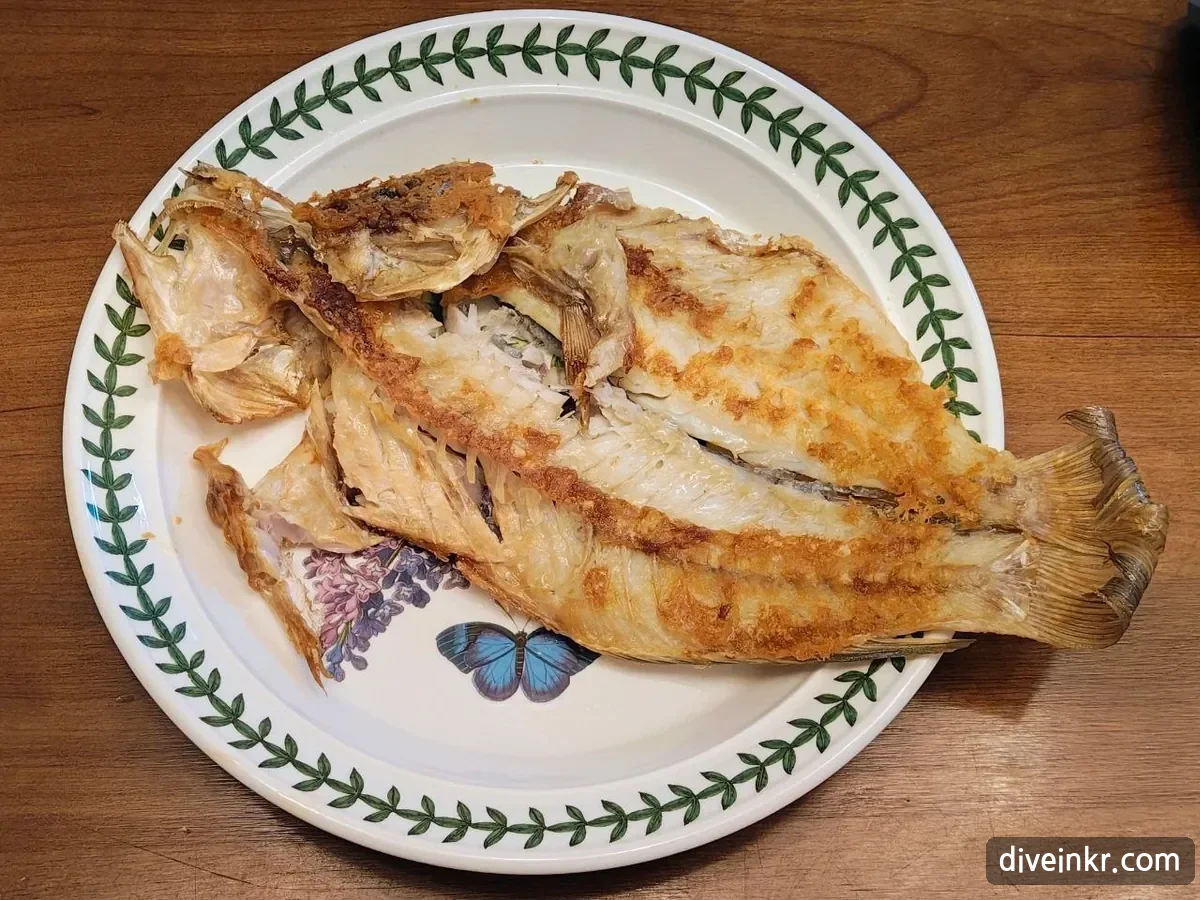
비린내 (birinnae) is a fishy smell, and 비리다 is the adjective. Koreans mostly notice it when fish hasn't been stored well: after a fish dies, its chemistry changes and the smell grows stronger with time. So the fixes are practical — rinse the fish in water, keep it cold, and use lemon or vinegar. Freshwater fish can also be described as smelling of mud or earth (흙냄새), on top of 비린내.
물고기, 생선 or 민물고기?
Two words, two jobs. 물고기 is fish as animals — the ones swimming in a river or an aquarium. 생선 is fish caught to eat, and when Koreans say 생선, they usually picture sea fish. Fish from rivers and lakes are usually called 민물고기 ("fresh-water fish"). Koreans don't say "바다 물고기" or "담수 생선" in everyday speech.
누린내 (nurinnae) is the gamey, off smell of meat that wasn't handled well. Better feed is known to reduce it, and because livestock farming and slaughter conditions in Korea have improved a great deal, it's become quite rare to run into it today.
담백하다: The Compliment for Clean, Light Food
담백하다 (dambaekada) is roughly the opposite of 느끼하다: not greasy, not heavy, not strongly seasoned, so the ingredient's own flavor comes through. It's praise — Koreans say it about food they find clean and easy to keep eating.
평양냉면은 국물이 담백해요.
pyeongyang-naengmyeoneun gungmuri dambaekaeyo.
Pyongyang-style cold noodles have a light, clean broth.
흰살생선구이는 담백해서 좋아요.
huinsal-saengseon-guineun dambaekaeseo joayo.
I like grilled white fish because it's light and clean.
Other dishes Koreans often call 담백: tofu, 콩국수 (cold soy-milk noodles), 수육 (boiled pork), and lightly seasoned 나물 (vegetable side dishes).
One Vowel, Compliment or Complaint
Korean builds taste words by tweaking a base word, and Korean linguists have described a tendency: versions with "bright" vowels (ㅏ, ㅗ) tend to sound pleasant, while versions built on other vowels (ㅓ, ㅜ, ㅡ, ㅣ) tend to sound less pleasant. It's a tendency, not a rule — but two pairs you'll actually use follow it neatly:
| Pleasant | Unpleasant | Difference |
|---|---|---|
| 짭짤하다 — salty in a good way, makes you want rice | 찝찔하다 — an unpleasant, flat saltiness, like sweat on your lips | 짭짤 is praise; it also means "nicely profitable": 수입이 짭짤하다 |
| 새콤하다 — lightly, pleasantly sour (strawberries, tangerines) | 시큼하다 — strongly sour (very old kimchi, vinegar, food about to spoil, unripe fruit) | 새콤 often pairs with sweet: 새콤달콤 |
이 고등어 짭짤해서 밥도둑이네.
i godeungeo jjapjjalhaeseo bapdodugine.
This mackerel is nicely salty — a real rice thief.
밥도둑 ("rice thief") = a side dish so good with rice that the rice disappears. The dictionary lists this meaning alongside an older one: a freeloader.
찌개에서 시큼한 냄새가 나.
jjigaeeseo sikeumhan naemsaega na.
The stew smells sour — something's off.
시큼 can be a warning sign.
Taste Words That Describe People, Too
Outside the kitchen, 고소하다 describes the satisfaction of seeing someone you dislike get what's coming to them — close to the German Schadenfreude. It's usually said quietly, to yourself or as a tease between close friends. The blunter word is 쌤통이다 ("serves you right"), a mocking tease you shouldn't use in formal settings or in front of elders.
맨날 잘난 척하더니 고소하다.
maennal jallan cheokadeoni gosohada.
Always showing off — well, serves him right.
Said about the person, not to them.
Two more taste words cross over to people. A 느끼한 person is smarmy — an over-the-top, greasy way of talking or flirting, the kind of line that makes you cringe. And 싱겁다, "bland," describes someone who makes pointless little jokes, or an ending that fizzles out: 싱겁게 끝났다 (it ended flatly).
그 사람 말투가 좀 느끼해.
geu saram maltuga jom neukkihae.
The way he talks is a bit smarmy.
About a person's manner, not food.
경기가 너무 싱겁게 끝났어.
gyeonggiga neomu singgeopge kkeunnasseo.
The game ended way too flatly — no drama at all.
텁텁하다 and Clearing Your Palate
텁텁하다 (teopteopada) is the coated, not-clean feeling left in your mouth — after soups thick with ground perilla seeds or chili powder, astringent foods like unripe persimmon, milky drinks, or very rich bone broth. Getting rid of that feeling has its own word: 입가심, "freshening the mouth." Water, a sour drink like 매실차 (plum tea) or 오미자차, sparkling water, barley tea, or a mint all do the job — and at the grill, that's the 장아찌's job too.
Saying It at the Table
좀 ("a little") softens a complaint, and 해 주세요 turns it into a polite request. For the full ordering routine, see ordering food in Korean; for the mealtime greetings, see 잘 먹어 vs 많이 먹어.
덜 맵게 해 주세요.
deol maepge hae juseyo.
Please make it less spicy.
Said when you order, before the food is cooked.
국이 좀 싱거워요. 소금 좀 주시겠어요?
gugi jom singgeowoyo. sogeum jom jusigesseoyo?
The soup is a little bland. Could I have some salt?
국물이 진짜 시원하네요.
gungmuri jinjja siwonhaneyo.
This broth really hits the spot.
A compliment, not a comment on temperature.
고소하고 맛있어요.
gosohago masisseoyo.
It's rich and nutty — delicious.
Quick Reference
| Word | Rough English | Compliment or complaint? |
|---|---|---|
| 고소하다 | Nutty, rich (toasted sesame, pork fat) | Compliment |
| 느끼하다 | Greasy, heavy | Complaint |
| 담백하다 | Clean, light, not greasy | Compliment |
| 구수하다 | Toasty, earthy (barley tea, 된장찌개, scorched rice) | Compliment |
| 시원하다 (soup) | Relieving, satisfying | Compliment |
| 매콤·얼큰·칼칼하다 | Pleasantly / deeply / sharply spicy | Usually compliments |
| 짭짤하다 vs 찝찔하다 | Nicely salty vs unpleasantly salty | Compliment vs complaint |
| 새콤하다 vs 시큼하다 | Pleasantly sour vs off-sour | Compliment vs complaint |
| 비리다 / 누린내 | Fishy / gamey smell | Complaint |
| 텁텁하다 | Coated, not clean in the mouth | Complaint |
| 싱겁다 | Under-seasoned, bland | Complaint (at a restaurant) |
Common Mistakes
Mistake #1 — Reading 시원하다 as "cold" at the table
With soup it means relief and satisfaction. A Korean saying 시원하다 over boiling soup isn't confused — they're complimenting it.
Mistake #2 — Telling a host their food is 느끼해요
It's a complaint. If a dish is rich and you like it, say 고소해요 or simply 맛있어요.
Mistake #3 — Using 싱겁다 to mean "it has no taste"
싱겁다 is specifically about light seasoning — the dictionary defines it as food that isn't salty enough. A dish that simply tastes bad is 맛이 없어요.
Mistake #4 — Using 쌤통이다 casually
It's a mocking word with a sharp edge. Keep it for close friends joking around, never for elders or formal situations.
Mini Quiz
2. You've eaten a lot of fatty pork and it's starting to feel heavy. Which word fits?
3. Which spicy word best fits a deep, hot, red soup like 육개장?
4. Which is a compliment?
5. The soup at a restaurant needs more salt. What's the polite way to say it?
Related Knowledge
Learn Next
Now that you know why soup is 시원하다, sort out which kind of soup you're actually eating.
Will you remember this tomorrow?
Save it — your daily review brings it back right before you'd forget. No account needed.