What to Call Your Friend's Mom and Dad in Korean (어머님, 아버님, 아주머니)
Written and reviewed by Jun and Jin, native Korean speakers
Published · How we write & review
After this page, you can choose the right title for a friend's mother or father at any age, from 철이 엄마 in childhood to 어머님 and 아버님 as an adult.
10-second answer
How do you say what to call a friend's mom or dad in Korean?
For a friend's parents, Koreans commonly say 아주머니 (ajumeoni) or 아줌마 (ajumma) and 아저씨 (ajeossi). Once you are a bit older, you switch to 어머님 (eomeonim) and 아버님 (abeonim), not 어머니 (eomeoni) or 아버지 (abeoji), which are for your own parents. For very old people, 어르신 (eoreusin) is also used.
Quick check — did that land?
1. You are 25 and meet your friend Min-su's mother at her home. What do you call her to her face?
친구 부모님은 어머님, 아버님이에요. 어머니, 아버지는 자기 부모에게 써요.
The Basic Rule: Your Parents vs. Someone Else's
English has an easy answer: "Mrs. Kim" or "Mr. Kim." Korean does not use a surname plus a title for this. The everyday choices are 아주머니 (ajumeoni) or 아줌마 (ajumma) for a woman and 아저씨 (ajeossi) for a man. As you get older, the usual step up is 어머님 (eomeonim) and 아버님 (abeonim).
One detail trips up many learners. When you talk about your own parents, you say 어머니 (eomeoni) and 아버지 (abeoji). When you address or refer to someone else's parents, you add the respectful 님 (nim): 어머님 and 아버님. So a friend's mother is 어머님, never 어머니. (For the relaxed family words 엄마 and 아빠, see 엄마/아빠 vs 어머니/아버지. The 님 ending is explained in 님 vs 씨.)
There is also 어르신 (eoreusin), which the Standard Korean Language Dictionary defines as a respectful word for someone else's father or mother. In everyday use it is applied mostly to people about as old as a grandmother or grandfather, or when the setting is formal, so for a friend's middle-aged parents 어머님 and 아버님 are the usual choice.
Why the choice changes with age
The right title depends on how old you are and how close you are to your friend. The older you get, the more formal and polite the title becomes.
See also: 아줌마 (ajumma) meaning
The Choice by Age Stage
The table sums up the stages. The sections after it explain each one.
| Your stage | To their face | When talking about them to your friend |
|---|---|---|
| Childhood (kindergarten to school years) | [friend's name] 어머니 / [friend's name] 아버님, or 아줌마 / 아저씨; for a very close friend's parents in elementary school, 철이 엄마 / 영희 아빠 | The same forms |
| Your 20s (university, first jobs) | 어머님 / 아버님, often without the friend's name | [friend's name] 어머니 / [friend's name] 아버님 |
| Your 30s and older | 어머님 / 아버님, or 어르신 if the age gap is large or the setting is formal; [grandchild's name] 할머니 / 할아버님 if your friend has a child | The same forms |
Childhood: A Friend's Name Plus a Title
From kindergarten through school, the usual pattern is the friend's name plus a title: [friend's name] 어머님 or [friend's name] 아버님. Plain 아줌마 (ajumma) and 아저씨 (ajeossi) are also fine at this age.
Through elementary school, kids with a very close friend often use a form built on the friend's name, like 철이 엄마 (cheori eomma, "Cheol-i's mom") or 영희 아빠 (yeonghui appa, "Yeong-hui's dad"). From middle and high school on, 철이 어머님 (cheori eomeonim) and 철이 아버님 (cheori abeonim) look more polite and well mannered.
민수 어머님, 안녕하세요! 저 민수 친구 영수예요.
minsu eomeonim, annyeonghaseyo! jeo minsu chingu yeongsuyeyo.
Hello, Min-su's mother! I'm Min-su's friend, Yeong-su.
A natural school-age greeting: the friend's name plus 어머니, then who you are.
Note on 어머니 here
At this stage the friend's name carries part of the politeness. Later, the 님 forms in the next section take over.
In Your 20s: 어머님 and 아버님, and Stop Saying 아줌마
At university and in a first job, the standard titles are 어머님 and 아버님. Adding 님 is what makes them polite. You also start dropping the friend's name when you speak to the parent directly.
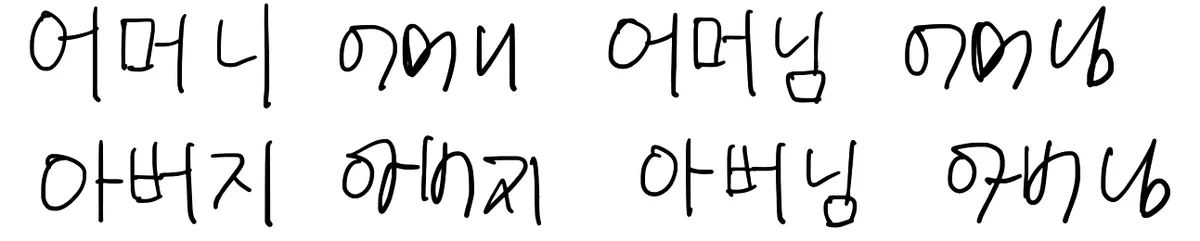
There are two settings, and the title differs between them. Face to face, you say 어머님 or 아버님. When you talk to your friend about their parents, you still use the name: [friend's name] 어머님 or [friend's name] 아버님.
From this age on, 아줌마 (ajumma) and 아저씨 (ajeossi) can sound rude, so people avoid them to someone's face. See 아줌마 (ajumma) for why the word carries that edge.
어머님, 과일 잘 먹겠습니다. 감사합니다.
eomeonim, gwail jal meokgetseumnida. gamsahamnida.
Thank you, ma'am. I'll enjoy the fruit.
Literally: mother-nim, I will eat the fruit well. Thank you.
To the mother directly. 잘 먹겠습니다 (jal meokgetseumnida, "I will eat well") is the polite thing to say before eating.
민수야, 너네 어머님은 요즘 건강하시지?
minsuya, neone eomeonimeun yojeum geonganghasiji?
Min-su, your mom has been in good health lately, right?
Said to the friend, not to the parent, in casual speech. 건강하시지 (geonganghasiji) uses the honorific -시- for the mother. See 반말 vs 존댓말.
In Your 30s and Beyond: Add 어르신 and the Grandchild's Name
After 30, the baseline is still 어머님 and 아버님. 어르신 (eoreusin) becomes an option when the age gap is large or the situation is formal.
If your friend has married and has a child, you can call the parents by the grandchild's name: 서우 할머니 (Seo-u grandmother) or 서우 할아버님 (Seo-u grandfather, with the respectful 님). It is a thoughtful, polite touch, and it shows you know the family.
아버님, 오랜만에 뵙는데 얼굴이 너무 좋으세요.
abeonim, oraenmane boemneunde eolguri neomu joeuseyo.
It's been a while since I've seen you, sir, and you look wonderful.
뵙다 (boepda) is the humble verb for "to see" someone you respect, and 좋으세요 (joeuseyo) is honorific.
서우 할머니, 서우가 누굴 닮았나 했더니 할머니 닮아서 예쁜 거였네요!
seou halmeoni, seouga nugul dalmanna haetdeoni halmeoni dalmaseo yeppeun geoyeonneyo!
Seo-u's grandmother, I wondered who Seo-u takes after, and it turns out she's pretty because she looks like you!
The grandchild-based form: Seo-u is the friend's child, so the speaker calls the friend's mother "Seo-u's grandmother."
Phone and Text Manners
On the phone or in a message to a friend's parent, say whose friend you are right at the start. The parent may not recognize your name or your number, and a first line that places you removes the confusion.
어머님 안녕하세요, 저 민수 친구 영수입니다! 다름이 아니라...
eomeonim annyeonghaseyo, jeo minsu chingu yeongsuimnida! dareumi anira...
Hello, ma'am, this is Yeong-su, Min-su's friend! The reason I'm calling is...
다름이 아니라 (dareumi anira, "it's nothing else, but...") is the standard way to lead into the reason you called. More phone phrases are in Korean phone call phrases.
Common Mistakes
Mistake #1: 어머니 and 아버지 for a friend's parents
These are for your own parents. For someone else's, use 어머님 and 아버님.
Mistake #2: 아줌마 or 아저씨 as an adult
These are fine for a child, but from your 20s on they can sound rude when you say them to a friend's parent. Switch to 어머님 and 아버님.
Mistake #3: 어르신 for a middle-aged parent
In everyday use 어르신 is for people about as old as a grandparent. For a friend's parents in middle age, 어머님 and 아버님 are the normal choice.
Mini Quiz
3 short questions — about 2 minute
2. Which is a natural way for an elementary school kid to call a close friend's mom?
3. When is 어르신 the right word?
4. Your friend has a child named Seo-u. How can you politely call your friend's mother?
Part of Korean Kinship & Address Terms — The Complete Beginner Map
Part of Korean Culture Explained — Etiquette, Concepts & Holidays
Related Knowledge
2 more related
Learn Next
Once you are calling a friend's parents 어머님 and 아버님, the next set of titles to learn is your own spouse's family.
Will you remember this tomorrow?
Save it — your daily review brings it back right before you'd forget. No account needed.