Bukchon, Jeongdok Library and the Art Museums: Reading the Signs
Written and reviewed by Jun and Jin, native Korean speakers
Published · How we write & review
After this page, you can read the Bukchon visiting-hours notice, name the library and museum signs, and tell apart the four MMCA branches.
10-second answer
The short answer
This walk covers Bukchon Hanok Village (북촌한옥마을, bukchon hanok maeul), 정독도서관 (jeongdok doseogwan, Jeongdok Library), the 서울교육박물관 (Seoul Education Museum) and 국립현대미술관 서울 (MMCA Seoul). The most useful sign is the Bukchon visiting-hours notice: tourists may visit the most crowded part only from 10 a.m. to 5 p.m. The MMCA section covers all four branches, including Cheongju, Korea's first storage-style museum.
Quick check — did that land?
1. When can tourists visit the most crowded part of Bukchon?
북촌: Bukchon Hanok Village
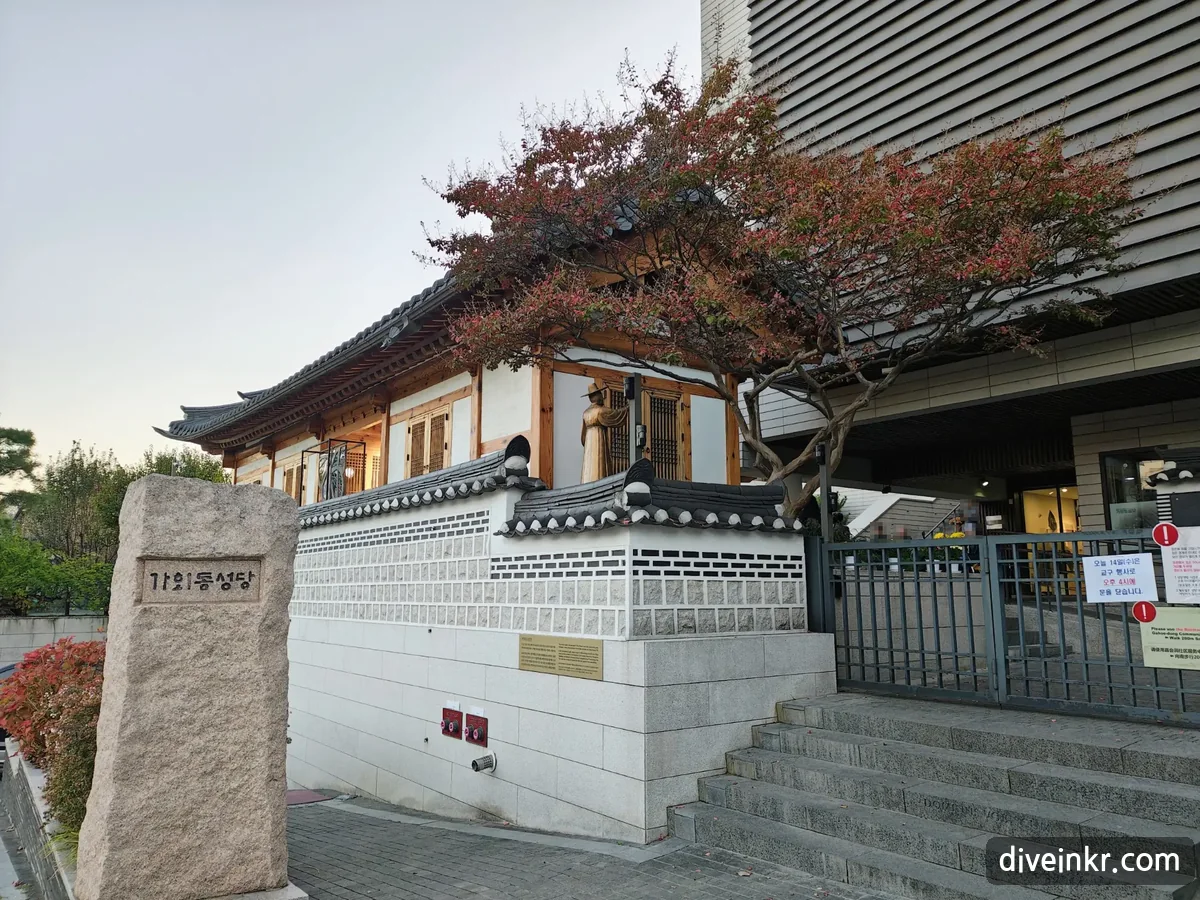
북촌 (Bukchon) means "north village" — the old neighborhood north of the city center. Many of its 한옥 (hanok), traditional Korean houses, are still homes. There is a hanok café at a corner on the way in, and a stone sign for the 가회동성당 (Gahoe-dong seongdang, Gahoe-dong Catholic Church).
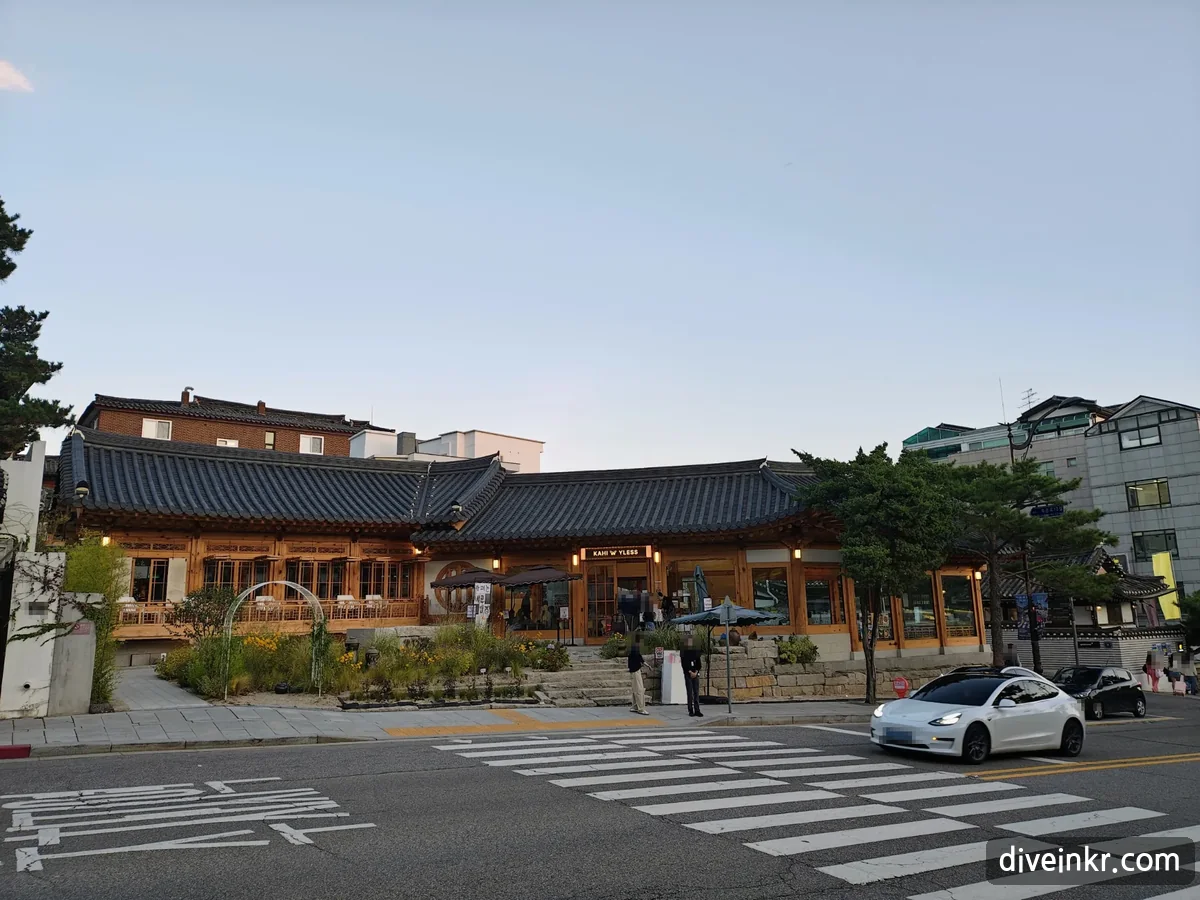
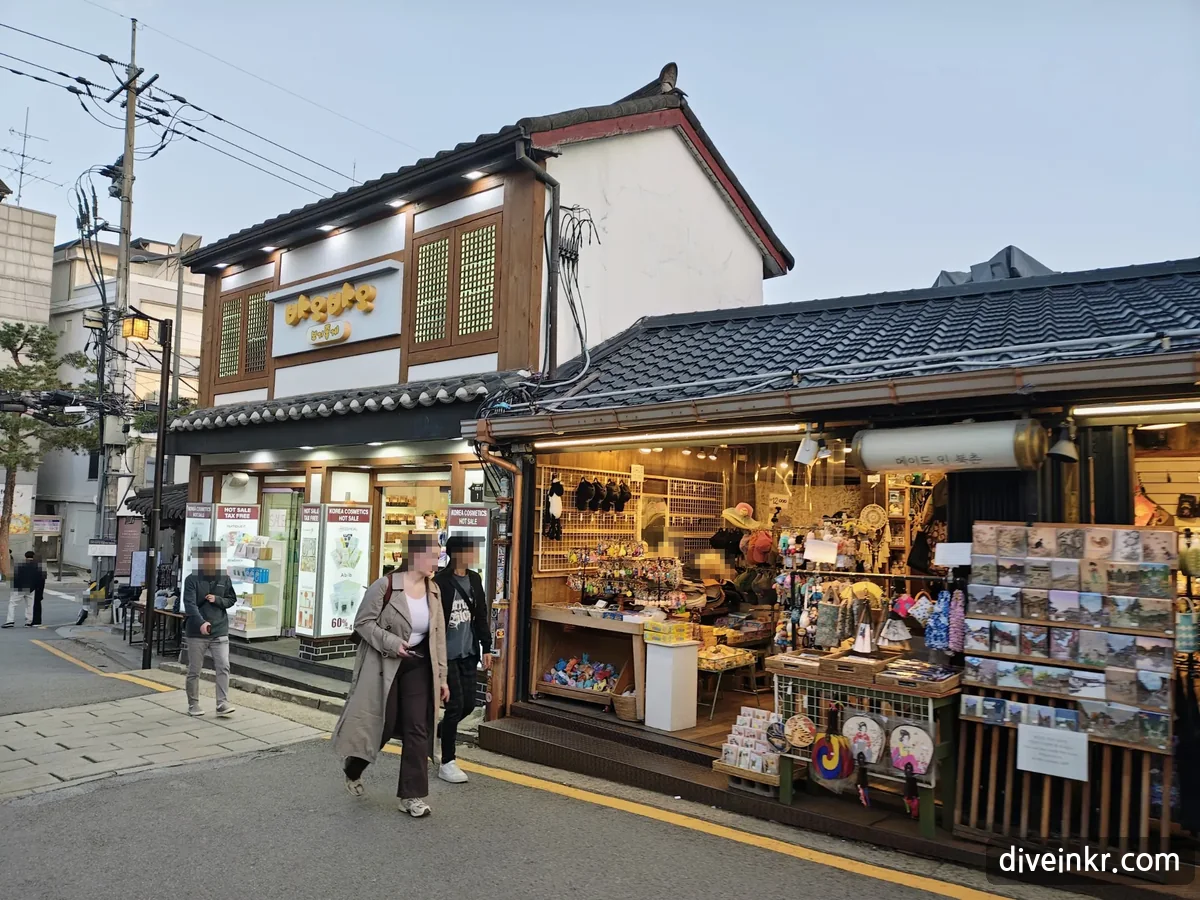
The most important notice in Bukchon is about visiting hours. In the most crowded, residential part of the village, tourists may visit only from 10:00 a.m. to 5:00 p.m. From 5 p.m. until 10 a.m. the next day the area is closed to tourist visits, and fines apply. Look for signs headed 방문 시간 제한구역 (bangmun sigan jehan guyeok, "visiting-hours restricted area") and for the banner that reads Bukchon Hanok Village Visiting Hours: Open 10:00 AM, Close 5:00 PM.
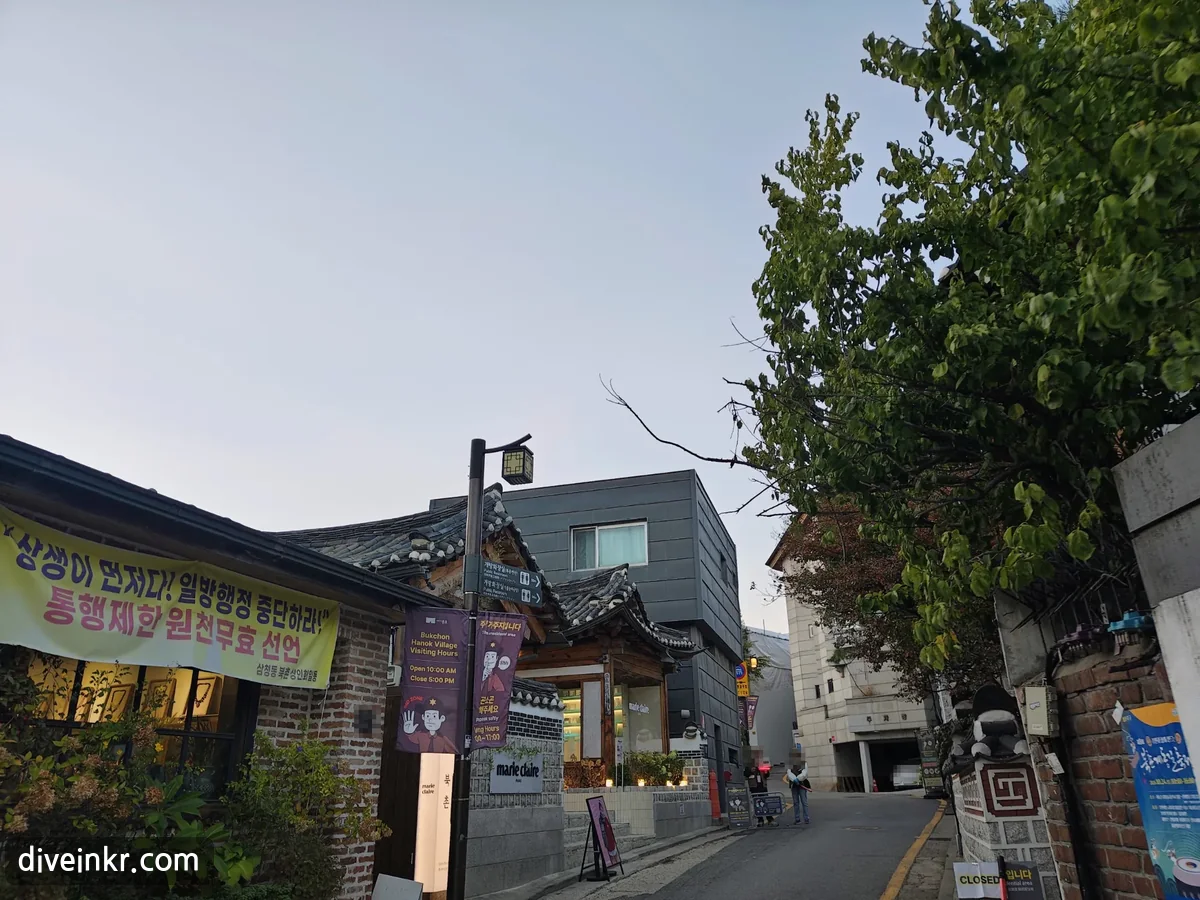
| Sign | Reading | Meaning |
|---|---|---|
| 방문 시간 제한 | bangmun sigan jehan | Visiting-hours limit |
| 주거지역 | jugeo jiyeok | Residential area |
| 조용히 해 주세요 | joyonghi hae juseyo | Please be quiet |
| 개방화장실 | gaebang hwajangsil | Public restroom |
Beside the gate of the church there is a small notice in Korean, English and Chinese. In Korean it reads 오늘 14일(수)은 교구 행사로 오후 4시에 문을 닫습니다 (oneul sibsail su-eun gyogu haengsaro ohu nesie muneul datseumnida) — "Today, Wednesday the 14th, we close at 4 p.m. because of a diocese event." 교구 (gyogu) is "diocese" and 문을 닫습니다 (muneul datseumnida) is "we close the door."
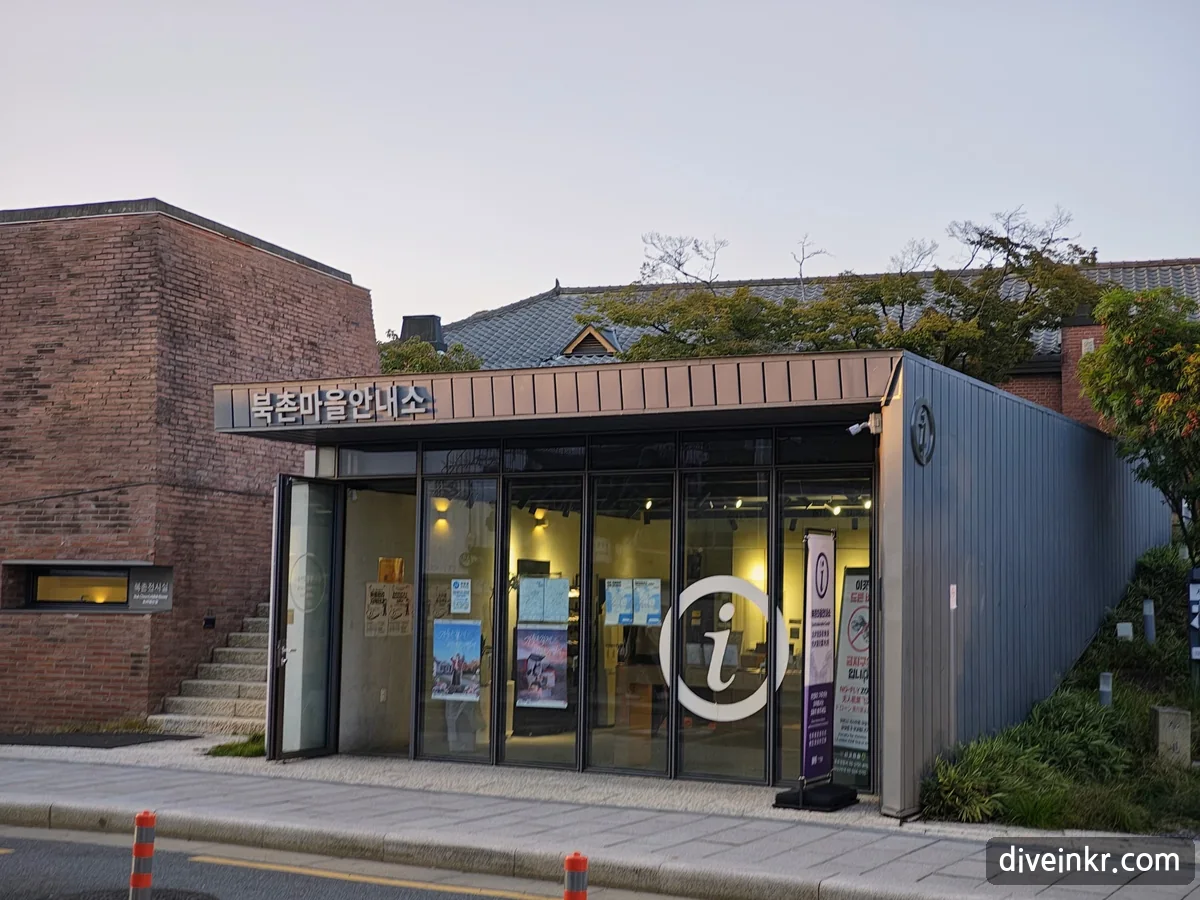
See also: Gwanghwamun Square guide
정독도서관과 서울교육박물관
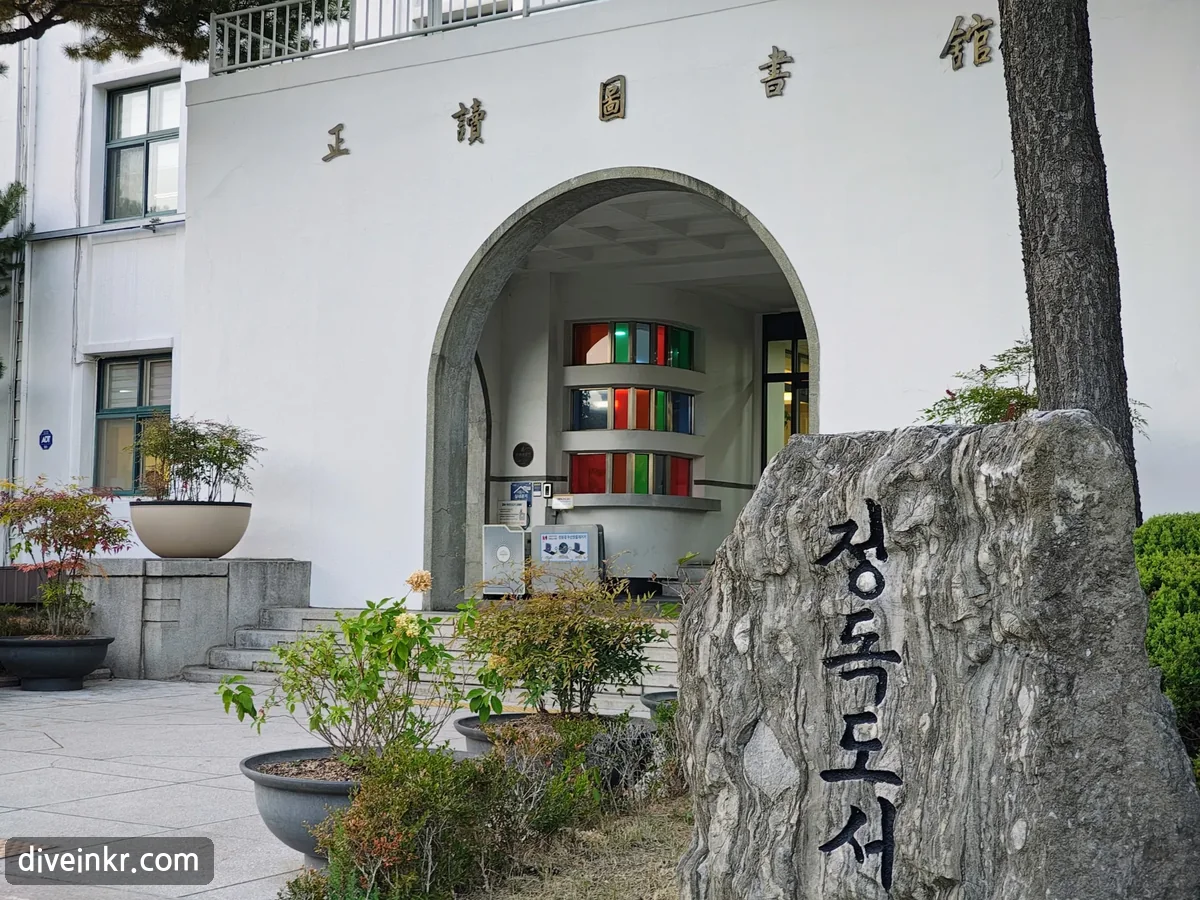
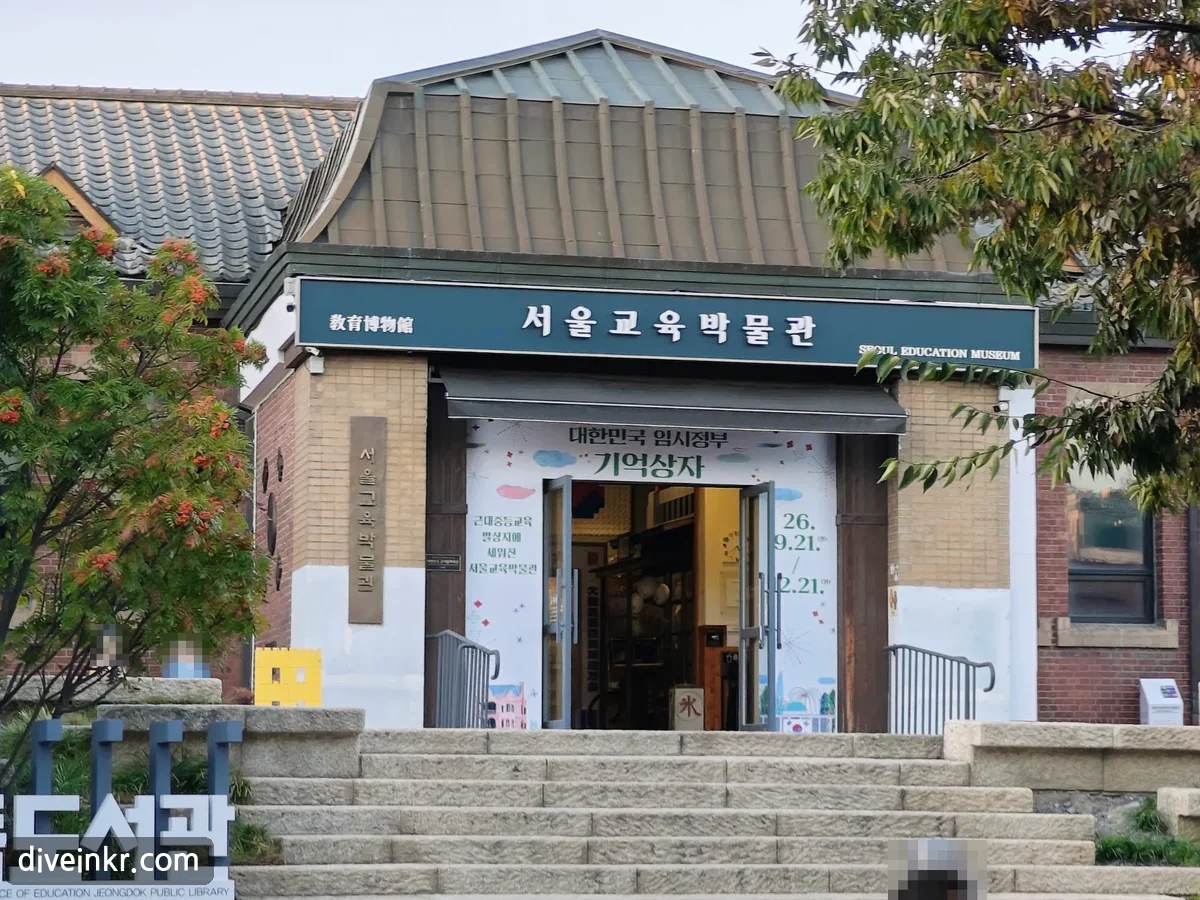
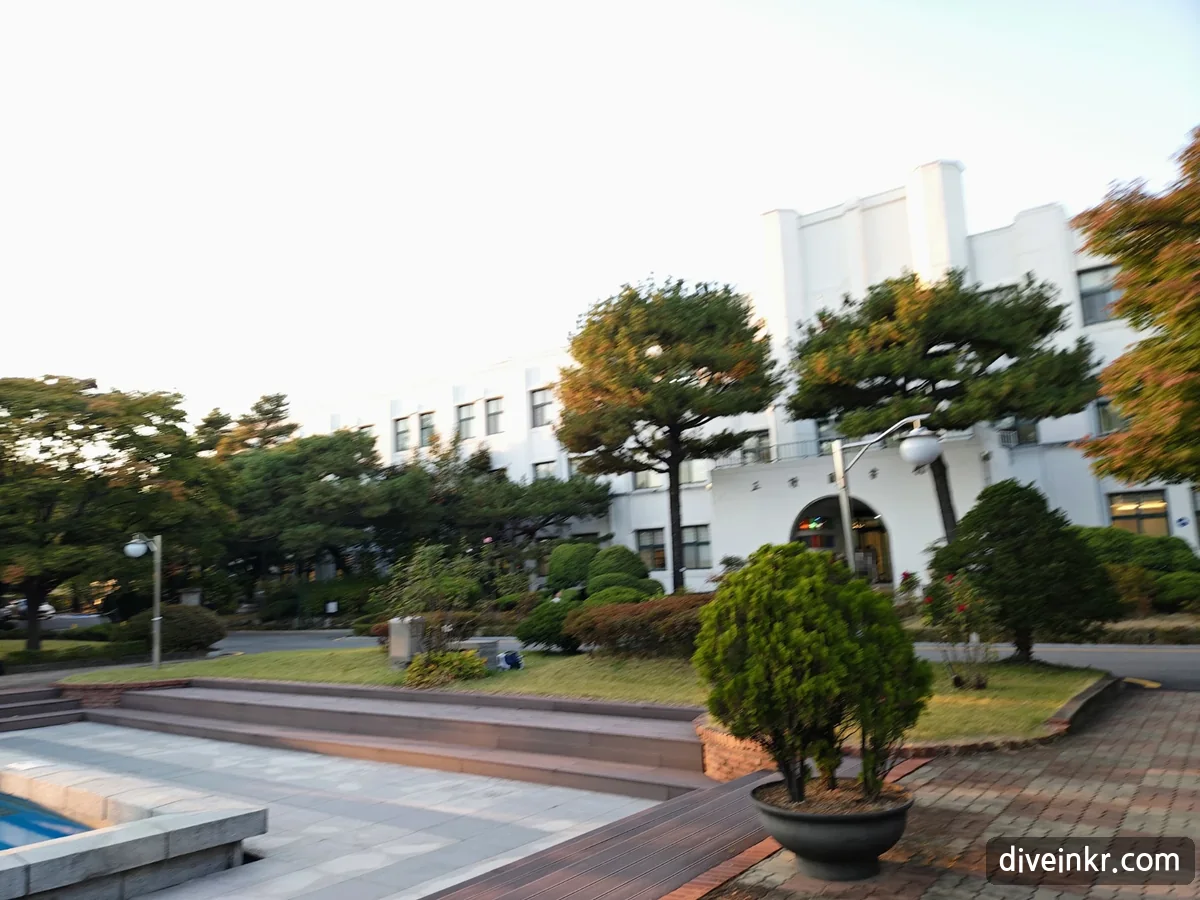
A short walk away, 정독도서관 (jeongdok doseogwan) is a public library in the grounds of the former Gyeonggi High School. 도서관 (doseogwan) means "library": 도서 (doseo) is "books" and 관 (gwan) is "hall." On its building the name is also written in hanja as 正讀圖書館, with the same four syllables. Beside it, the 서울교육박물관 (seoul gyoyuk bangmulgwan, Seoul Education Museum) shows the history of schooling.
국립현대미술관: MMCA's Four Sites
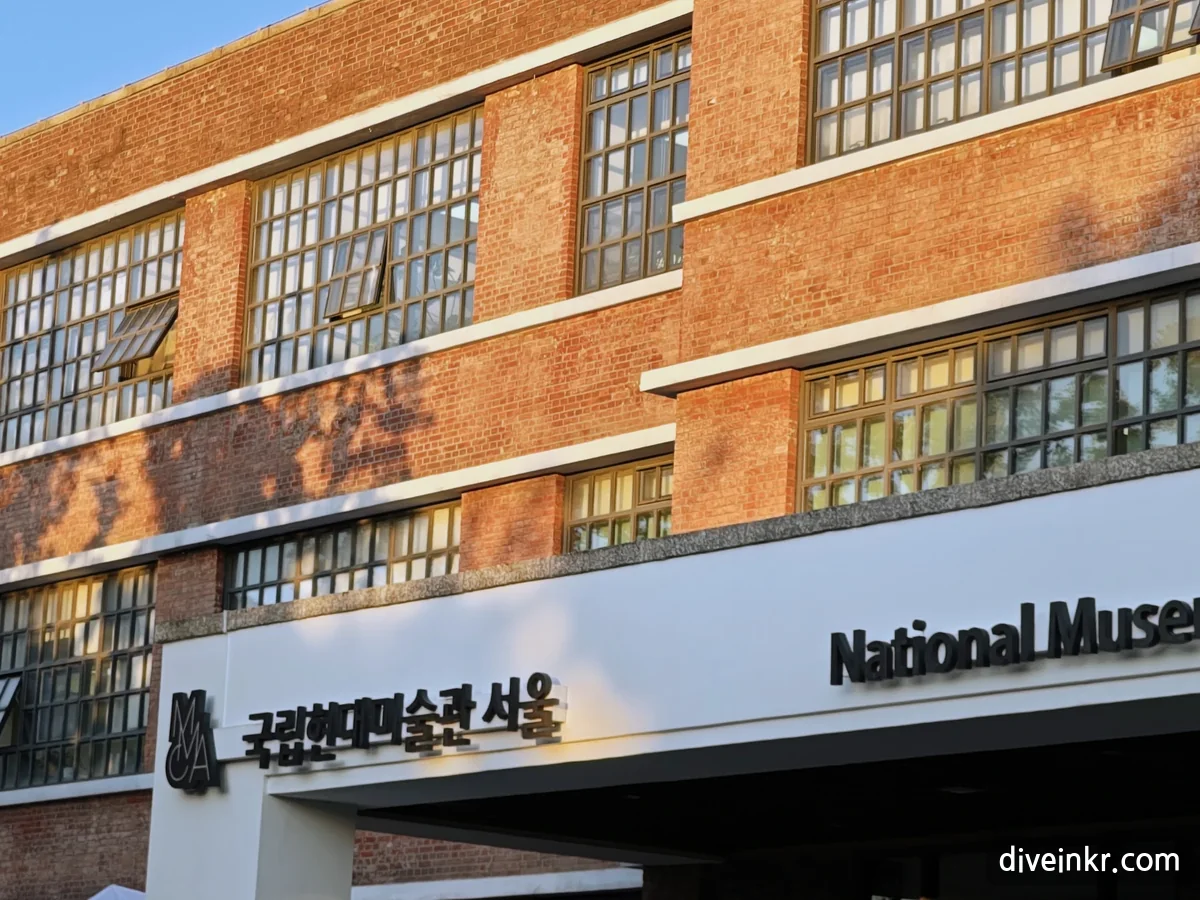
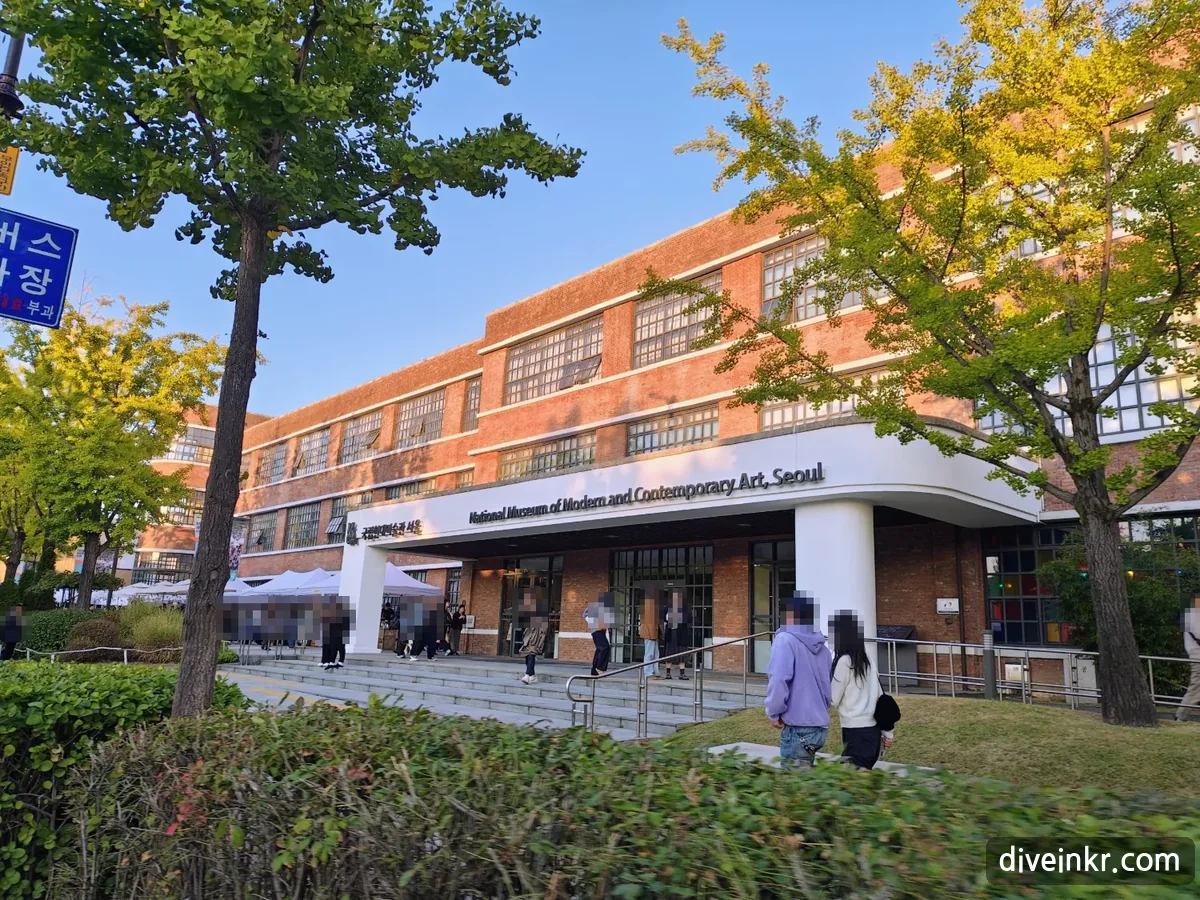
The 국립현대미술관 (gungnip hyeondae misulgwan, National Museum of Modern and Contemporary Art, MMCA) is not one building but four sites. 현대 (hyeondae) means "modern," 미술 (misul) "fine art" and 관 (gwan) "hall." The Seoul branch is in a red-brick building in the same neighborhood, opened in 2013 in Sogyeok-dong on the former site of the Defense Security Command.
| Branch | Korean | What to know |
|---|---|---|
| Seoul | 서울관 (seoulgwan) | The branch in the photos, near the palace; a comprehensive hall for contemporary Korean art. |
| Gwacheon | 과천관 (gwacheongwan) | The biggest site, at 313 Gwangmyeong-ro, Gwacheon, on the southern edge of Seoul. It moved there in 1986. The 어린이미술관 (eorini misulgwan, Children's Museum of Art) is on the same campus. Combine it with Seoul Grand Park, Seoul Land and the racecourse. |
| Deoksugung | 덕수궁관 (deoksugunggwan) | Inside the Deoksugung palace grounds in the Seokjojeon building's west wing; focused on modern art; opened as a branch in 1998. |
| Cheongju | 청주관 (cheongjugwan) | A storage-style museum in a former tobacco factory, opened on December 27, 2018. See below. |
Cheongju: a museum where you walk into the storage room
Most museums keep their storage rooms (수장고, sujanggo) closed. 국립현대미술관 청주관 (formally 국립미술품수장보존센터, the National Art Storage and Conservation Center) is Korea's first storage-style museum: on the first floor you can walk inside an 개방수장고 (gaebang sujanggo, "open storage") and look at works on steel shelves, and on the upper floors you look through glass windows (보이는 수장고, "visible storage") to see how works are stored and restored. The building was a tobacco factory, and the open storage on the first floor holds around 500 sculptures, crafts and design works. It is the most unusual of the four sites. The building has five floors: the 1st-floor lobby and open storage, visible storage on the 2nd to 4th floors, open storage and a visible conservation lab on the 3rd, special storage on the 4th and a special exhibition gallery on the 5th. Hours on the official site: Tuesday to Sunday, 10:00–18:00, closed Mondays and January 1; the open storage is listed as free, the 5th-floor special exhibition costs 2,000 won (check before you go).
어린이미술관: the Children's Museum of Art
The 어린이미술관 (eorini misulgwan) is a separate section of MMCA Gwacheon (the same Gwangmyeong-ro campus; you reach it via Seoul Grand Park Station and the elephant train). MMCA describes it as "현대예술과의 소통을 위한 창의적 교육문화공간" — a creative education and culture space for communicating with contemporary art. It has exhibition rooms, a picture-book rest area, a family lounge with an experience space and a nursing room. Hours on the museum's site: Tuesday to Sunday, 10:00–17:30 (last entry 17:20), closed on Mondays and January 1; check the exhibition page for fees, and note that free admission applies on the last Wednesday of each month (문화가 있는 날) and for visitors 24 and under or 65 and over.
수장 (sujang) means "to store," and 고 (go) means "storehouse," so 수장고 is a storage room. 개방 (gaebang) is "open" — the same word as in 개방화장실, the public restroom signs you saw in Bukchon.
Words From the Walk
Words you can now read on a Seoul street:
| Korean | Romanization | Meaning |
|---|---|---|
| 성당 | seongdang | Catholic church |
| 한옥 | hanok | Traditional Korean house |
| 주거지역 | jugeo jiyeok | Residential area |
| 도서관 | doseogwan | Library |
| 박물관 | bangmulgwan | Museum |
| 미술관 | misulgwan | Art museum |
| 안내소 | annaeso | Information office |
| 교구 | gyogu | Diocese |
| 수장고 | sujanggo | Storage room (for artworks) |
| 개방 | gaebang | Open (to the public) |
For more street words, see reading Korean street signs. The route north of Gwanghwamun is in our Cheong Wa Dae walk.
Common Mistakes
- Assuming you can stroll through Bukchon at any hour. The most crowded part is closed to tourist visits from 5 p.m. to 10 a.m., so plan your visit for the day.
- Thinking MMCA is one building. There are four sites — Seoul, Gwacheon, Deoksugung and Cheongju — and the Children's Museum of Art is on the Gwacheon campus.
Mini Quiz
2 short questions — about 1 minute
2. Which word on the library sign means "library"?
3. What does 수장고 mean, as in the Cheongju branch of MMCA?
Part of Korean Phrases for Travelers
Related Knowledge
Learn Next
Practice the same skill on everyday signs.
Will you remember this tomorrow?
Save it — your daily review brings it back right before you'd forget. No account needed.