From Seoul City Hall to Namdaemun Market: A Walk Through Old and New Seoul
Written and reviewed by Jun and Jin, native Korean speakers
Published · How we write & review
After this page, you can walk from Seoul City Hall to Namdaemun Market — Deoksugung's guard ceremony, Sungnyemun gate, the Money Museum and the market's sale signs — and read, ask about and bargain for things in simple Korean along the way.
10-second answer
The short answer
From 시청 (sicheong, Seoul City Hall) it's roughly a 15–20-minute walk south to 남대문시장 (Namdaemun Market). On the way: 대한문 (Daehanmun), the gate of Deoksugung Palace; 숭례문 (Sungnyemun), the old south gate better known as 남대문 (Namdaemun); and the free Bank of Korea Money Museum. Don't go on a Monday — the palace, the gate and the museum are all closed. At the market, 왕창 세일 (wangchang seil) means "huge sale" and 교환 X (gyohwan X) means no exchanges.
Quick check — did that land?
1. What do most Koreans call 숭례문 in everyday speech?
시청: When Koreans Say "City Hall"
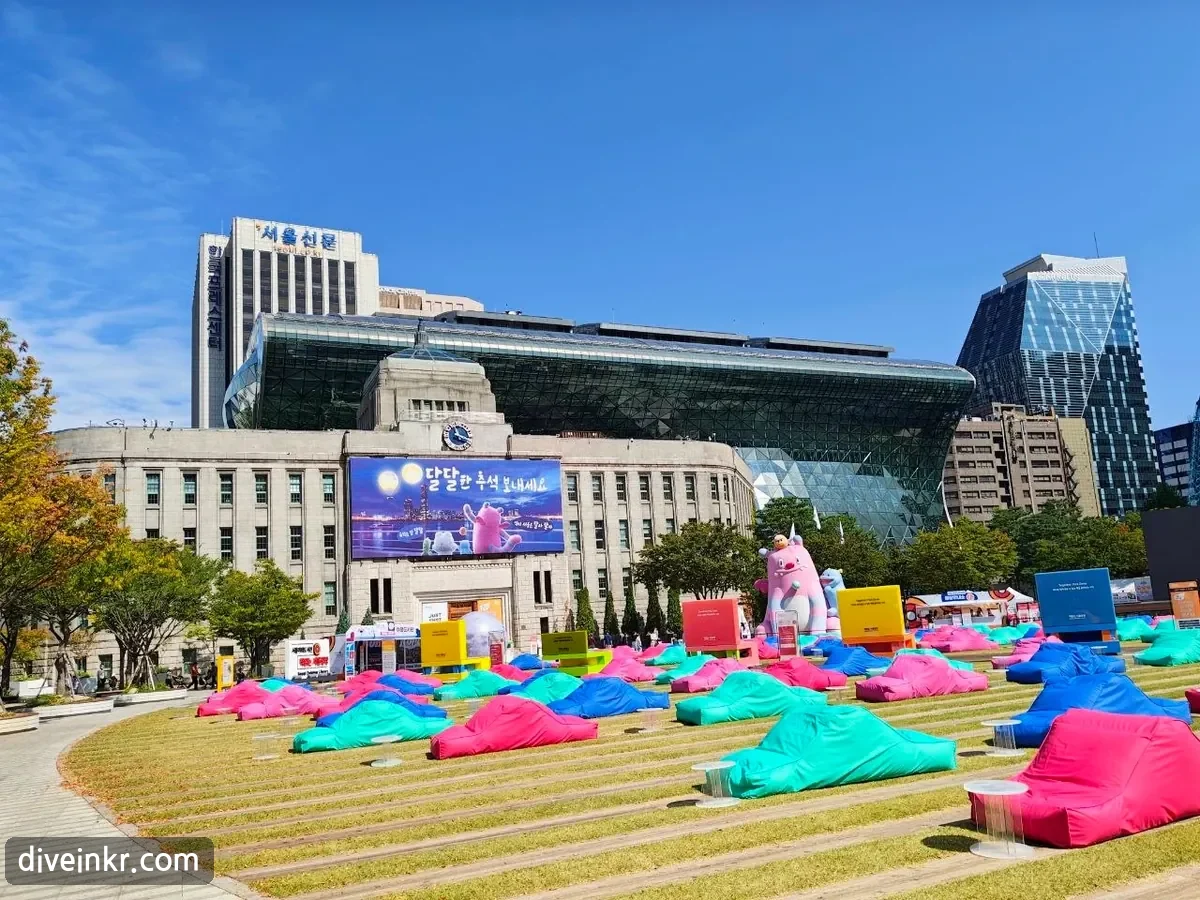
In and around Seoul, 시청 (sicheong, "city hall") means Seoul City Hall — say 시청에서 만나요 ("let's meet at City Hall") and nobody will ask which one. The subway station underneath, 시청역 (sicheong-yeok), is on Lines 1 and 2. There are actually two buildings. The stone one in front was built in 1926, during the Japanese colonial period, and served as City Hall for decades; it was preserved as a registered heritage building and reopened as 서울도서관 (Seoul Library) on October 26, 2012. The glass building behind it, completed in 2012, is the new City Hall.
The big board on the old building's facade is 서울꿈새김판, where the city puts up a new message from time to time. In September 2026 it showed Haechi and friends looking at the full moon, with the words 달달한 추석 보내세요 — "Have a sweet Chuseok." 달달하다 is a casual word for "sweet," and it also hints at 달, "moon" — fitting for a holiday built around the full moon. For the holiday itself, see what Chuseok is.
The oval lawn in front is 서울광장 (Seoul Plaza), opened on May 1, 2004. It's the city's front yard and hosts all kinds of events: holiday markets, outdoor reading days, and in winter an ice rink (1,000 won an hour including skate rental in the 2025–26 season). The pink figure in the photo is 해치 (Haechi), Seoul's official character, given a new pink look in 2024 along with four friends based on the guardian animals of the four directions — the 소울프렌즈 (Soul Friends). Each one has a personality; meet them in our Jongno walk.
| Korean | Romanization | Meaning |
|---|---|---|
| 시청 | sicheong | City hall |
| 시청역 | sicheong-yeok | City Hall Station (역 = station) |
| 광장 | gwangjang | Plaza, square |
| 도서관 | doseogwan | Library |
| 행사 | haengsa | Event |
See also: Gwanghwamun Square
대한문: Deoksugung's Gate and Its Guards
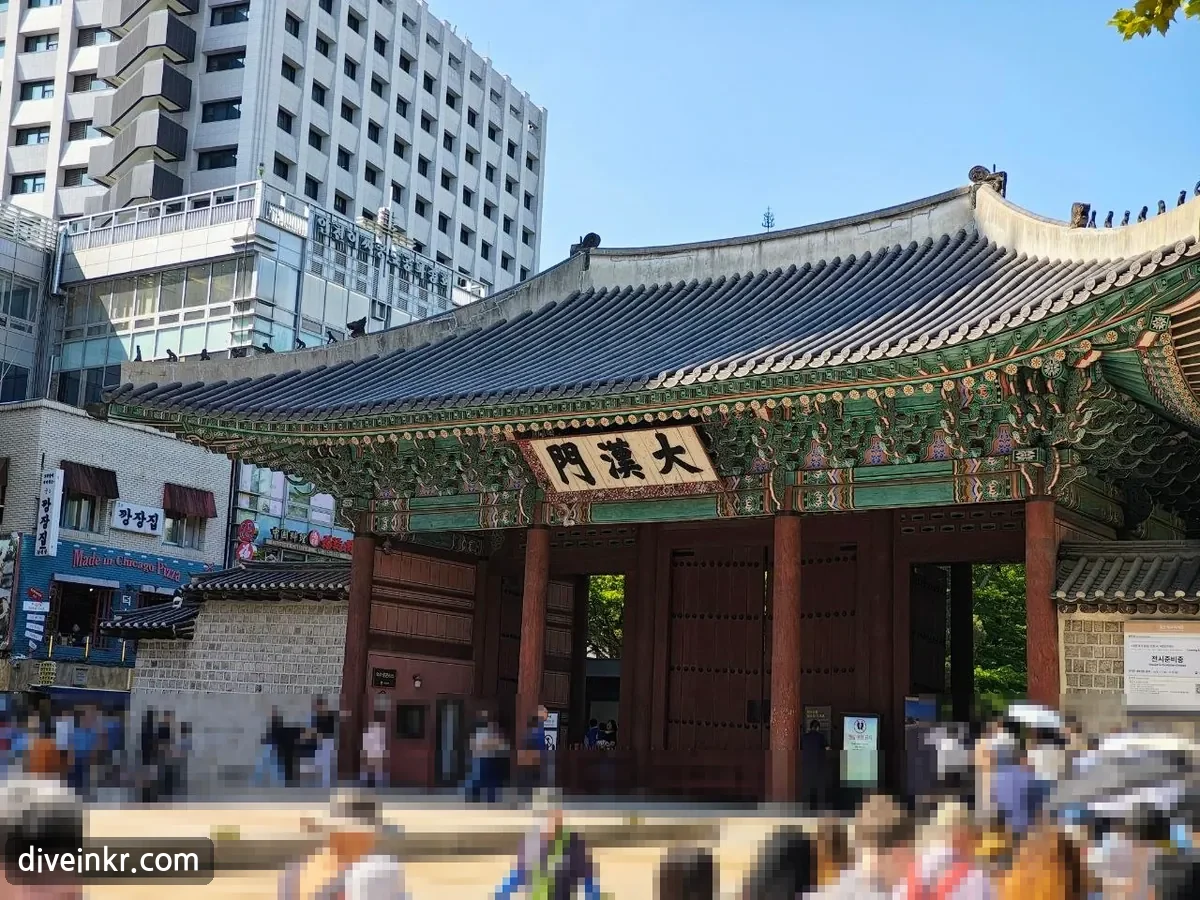
Across the road from City Hall is 덕수궁 (Deoksugung), a palace squeezed between office towers. It used to be called 경운궁 (Gyeongungung) and got its current name in 1907, when Emperor Gojong gave up the throne to his son; 덕수 combines 덕 (virtue) and 수 (long life). Its gate, 대한문, was originally called 대안문 and renamed in 1906. When the road was widened in 1968, the palace wall moved back 16.5 m and left the gate standing alone on the street — it was moved to its current position in 1970.
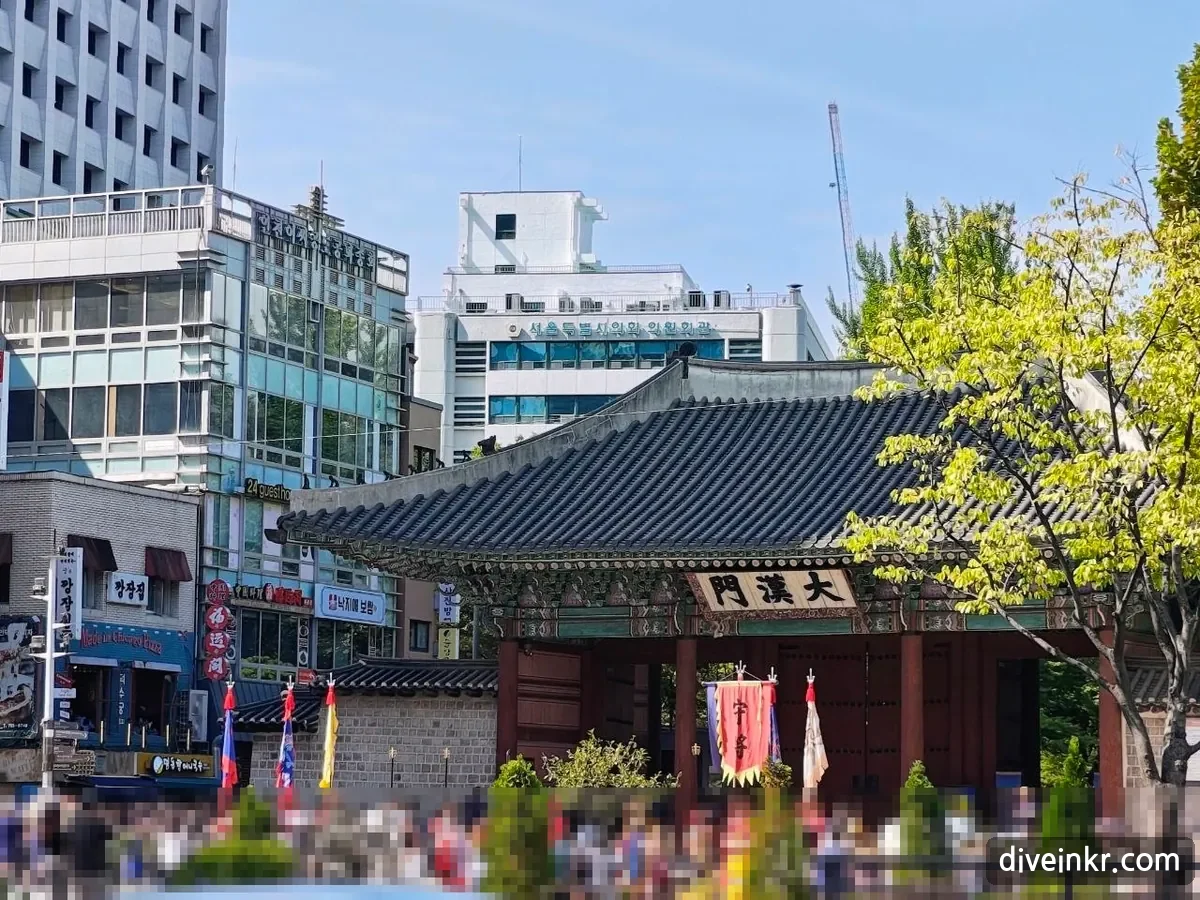
Like Gwanghwamun, Deoksugung has a guard changing ceremony, 수문장 교대의식, held here since 1996. It runs at 11:00 and 14:00 for about 30 minutes, every day except Monday, right in front of the gate, so anyone passing by can stop and watch. It can be cancelled for bad weather and other reasons, so if you're making a special trip, check the day before. You may also see the guards on the move along the palace wall with their tall flags.
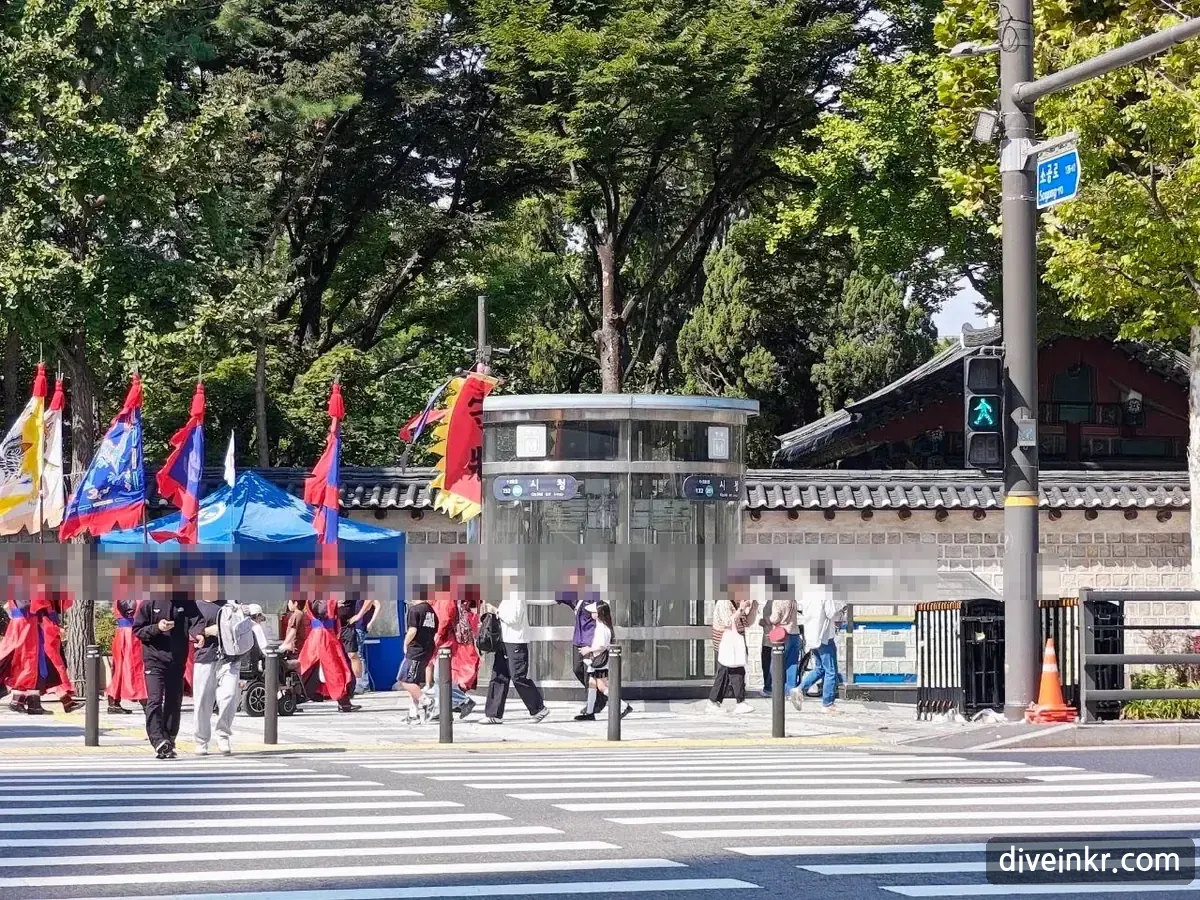
The palace itself is open 09:00–21:00 (last entry 20:00), closed on Mondays, and adult admission is just 1,000 won — free if you're wearing hanbok, and free for everyone on the last Wednesday of the month. For comparison, the ceremony at the main palace runs at 10:00 and 14:00 and takes Tuesdays off — see Gwanghwamun Square.
The lane that runs along the palace wall from Daehanmun is 덕수궁길, better known as 덕수궁 돌담길, the "stone-wall road." Its first 310 m, from Daehanmun to the round fountain, is closed to cars at set times: weekdays 11:00–14:00, Saturdays 10:00–18:00 and Sundays 12:00–18:00.
| Korean | Romanization | Meaning |
|---|---|---|
| 궁 | gung | Palace — 덕수궁 is Deoksu Palace |
| 수문장 | sumunjang | Gatekeeper, head of the gate guards |
| 교대 | gyodae | Changing shifts — 교대식 is a changing ceremony |
| 돌담길 | doldamgil | Stone-wall road (돌 stone + 담 wall + 길 road) |
| 월요일 휴무 | woryoil hyumu | Closed on Mondays |
숭례문 or 남대문? The Old South Gate
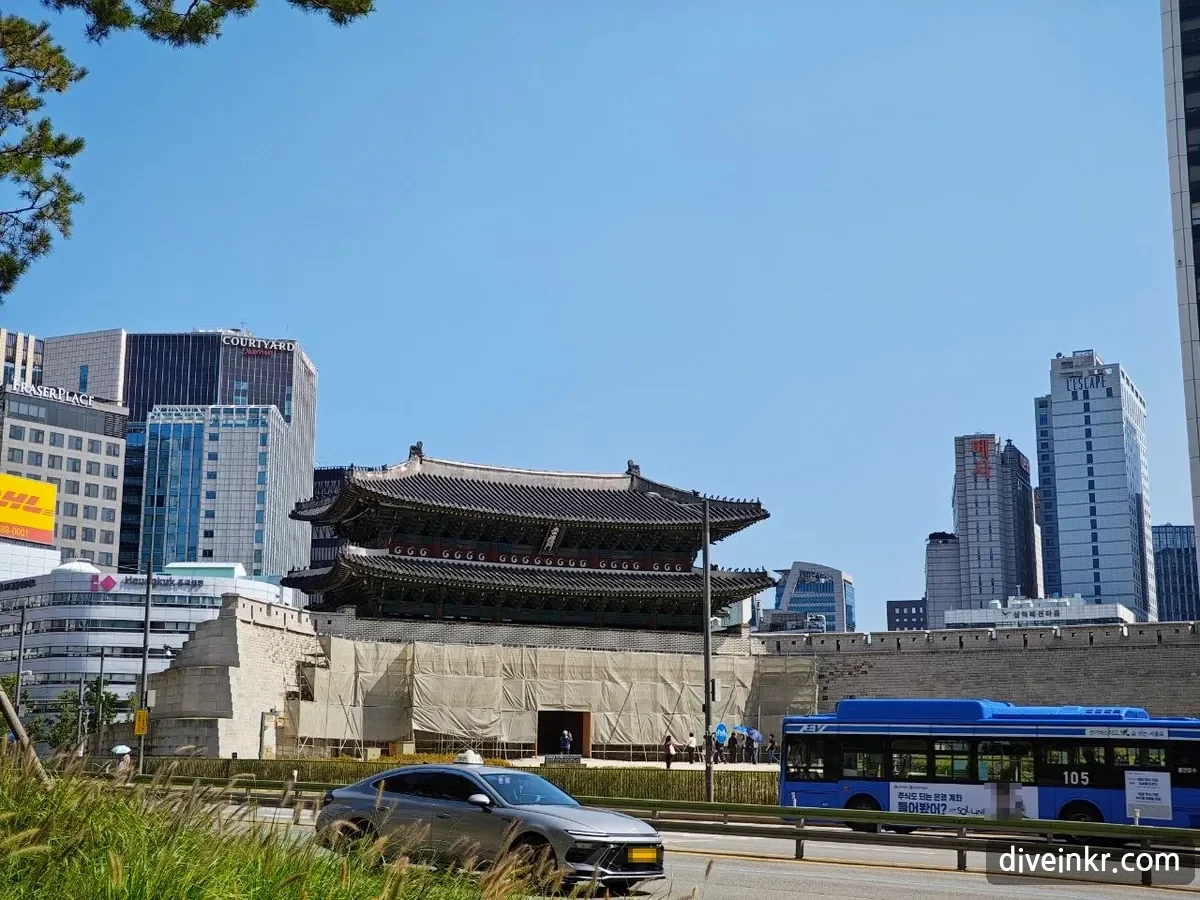
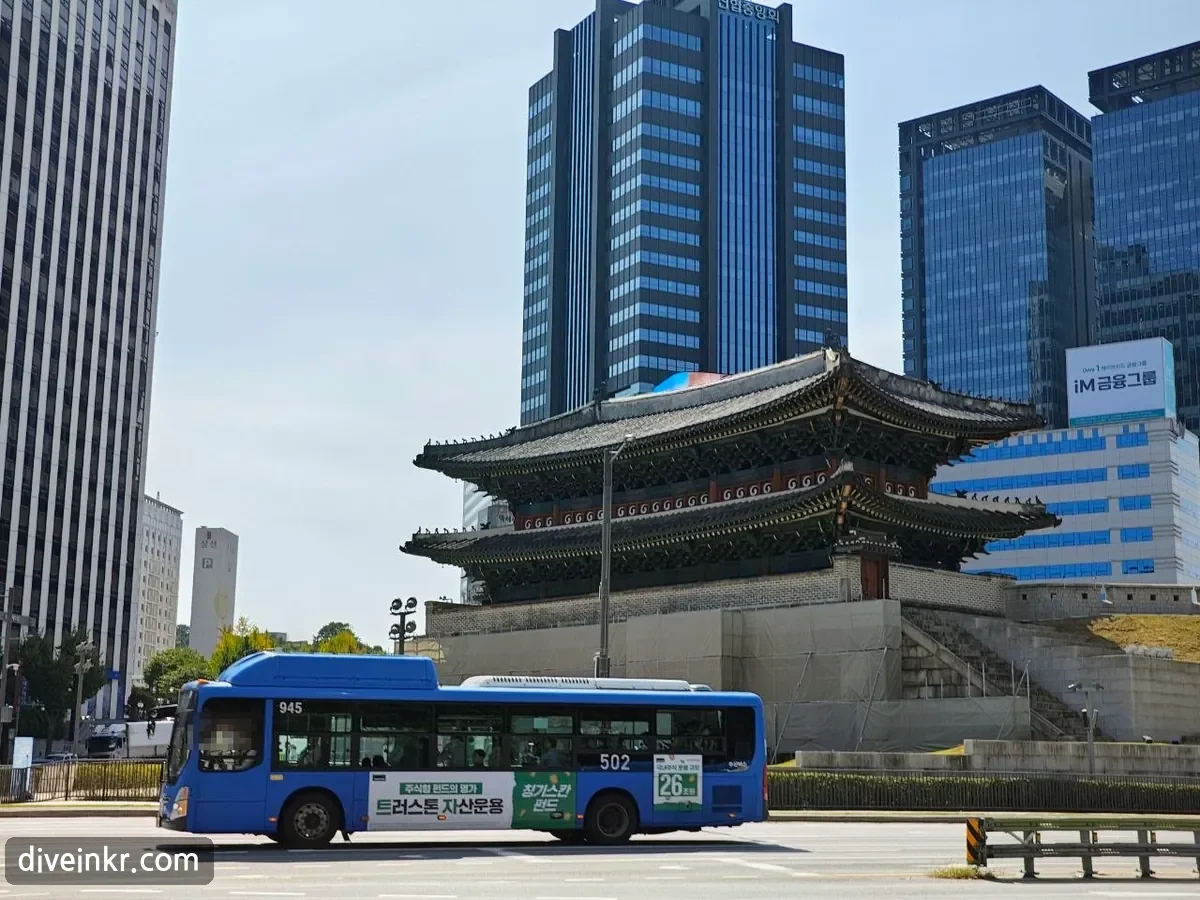
Walk south from City Hall along the main road, 세종대로 (Sejong-daero), and you reach a stone-and-wood gate surrounded by traffic. Its official name is 숭례문 (Sungnyemun), completed in 1398 as the south gate of the walled capital, but in everyday speech almost everyone calls it 남대문 (Namdaemun) — 남 (south) + 대문 (big gate). The name 숭례 means "exalting propriety": 예 (禮) is one of the four Confucian virtues 인의예지 — benevolence, righteousness, propriety and wisdom. The same set shows up elsewhere: the official name of the East Gate, Dongdaemun, is 흥인지문, with 인 (仁, benevolence) in the middle.
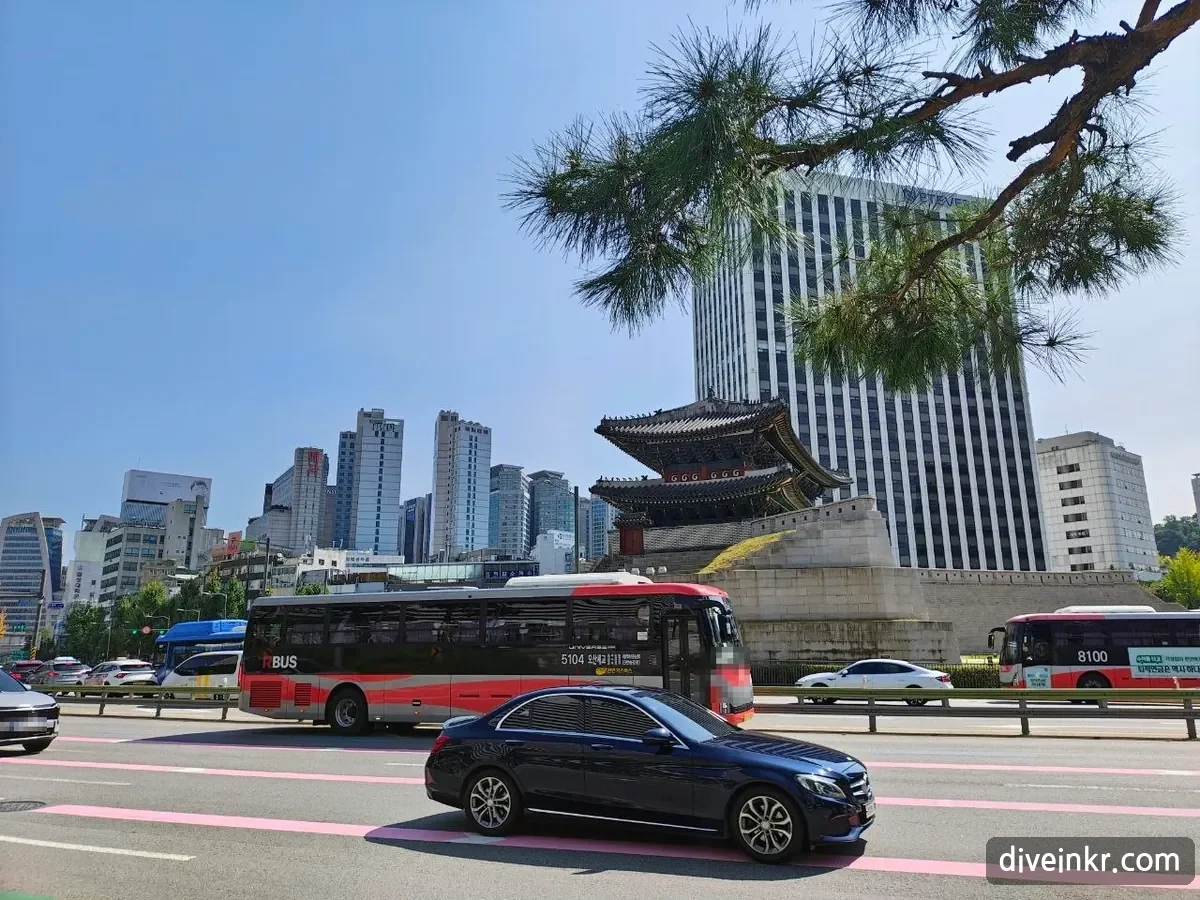
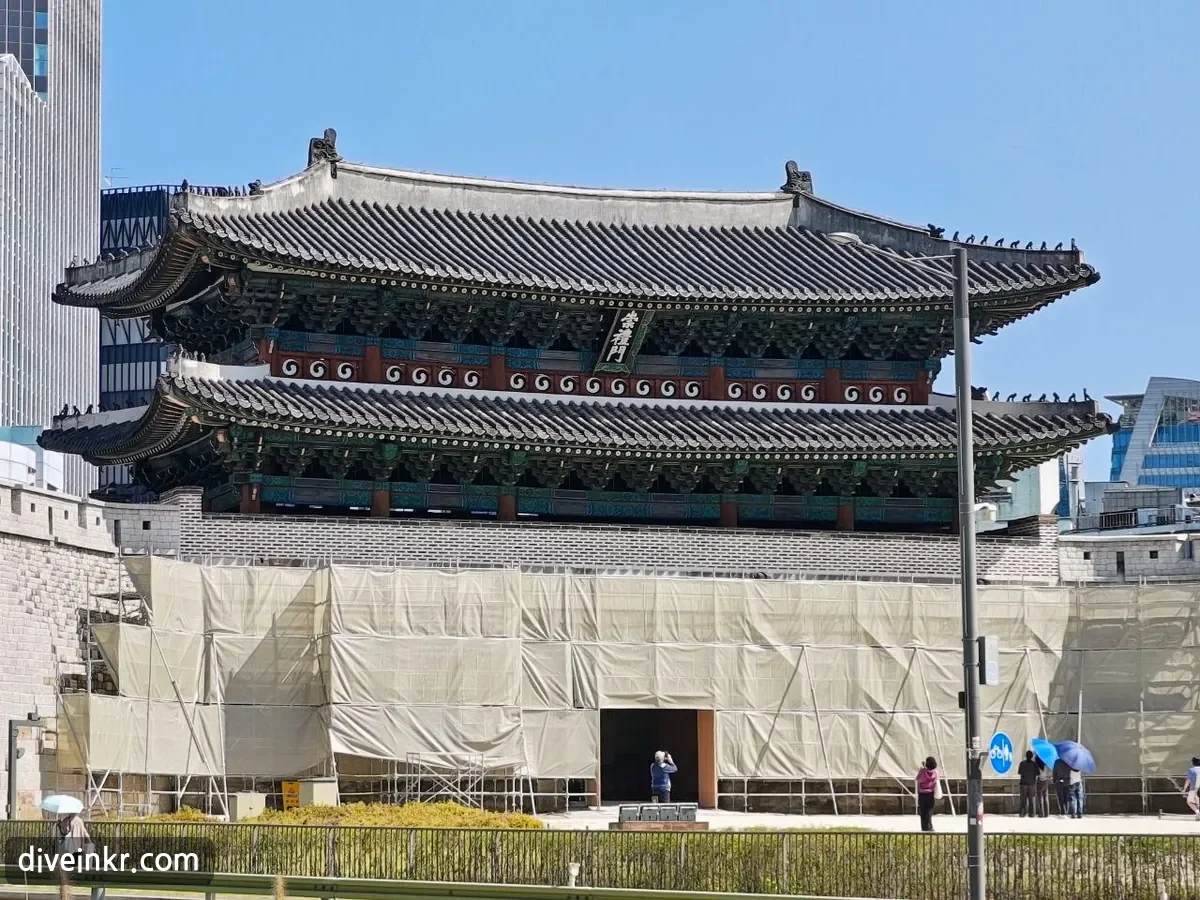
The gate has a painful recent history. On February 10, 2008, an arsonist set it on fire and much of the wooden structure was destroyed. It was restored over the next five years and reopened on May 4, 2013. Today you can walk right up to the gate and see it up close: it's open 09:00–18:00 (last entry 17:55), closed on Mondays, and free. Look up at the name board: unlike most gate boards, it hangs vertically. The writing is said to be by Prince Yangnyeong, and the vertical board is often explained with a feng-shui legend about blocking fire energy from Gwanaksan mountain — a story, not a documented fact.
| Korean | Romanization | Meaning |
|---|---|---|
| 대문 | daemun | Big gate, main gate |
| 남대문 | namdaemun | South Gate — everyday name of 숭례문 |
| 동대문 | dongdaemun | East Gate — everyday name of 흥인지문 |
| 현판 | hyeonpan | Name board hung on a gate or building |
| 복원 | bogwon | Restoration |
The Bank of Korea Money Museum
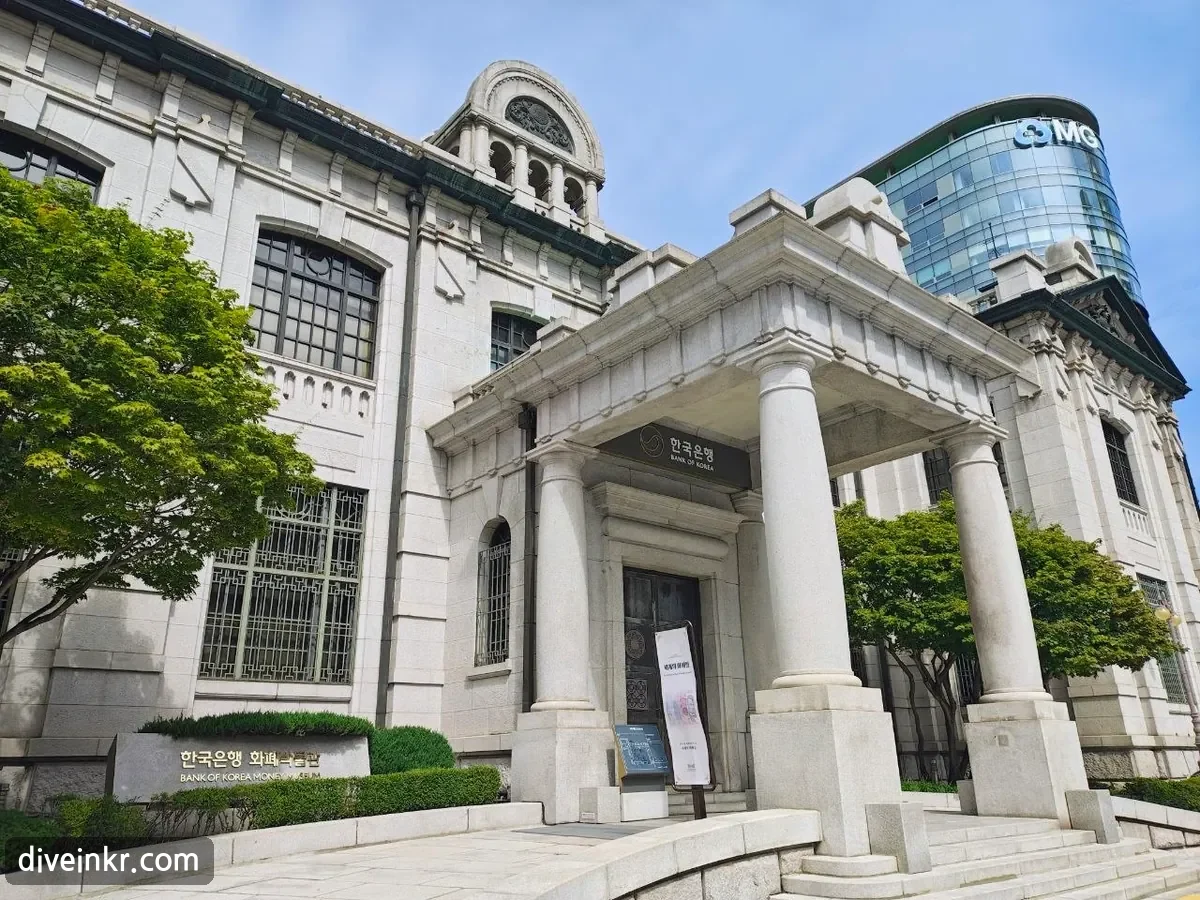
Right next to the market is a granite building that looks like it belongs in Europe. It was completed in 1912 as the head office of the colonial-era Bank of Chosen, served as the Bank of Korea's head office from 1950 to 2000, and opened as a money museum in 2001. It's a designated Historic Site, and it was the first building in Korea to have an elevator.
Admission is free and individual visitors don't need to book (groups of 10 or more do). It's open Tuesday to Sunday, 10:00–17:00, with last entry at 16:40. It's closed on Mondays, during the Seollal and Chuseok holidays, on Labor Day and election days, and from December 29 to January 2.
| Korean | Romanization | Meaning |
|---|---|---|
| 은행 | eunhaeng | Bank |
| 화폐 | hwapye | Currency, money |
| 박물관 | bangmulgwan | Museum |
| 무료 | muryo | Free (of charge) |
| 휴관 | hyugwan | Closed — used for museums and libraries (월요일 휴관 = closed on Mondays) |
남대문시장: Reading a Market Sale Sign
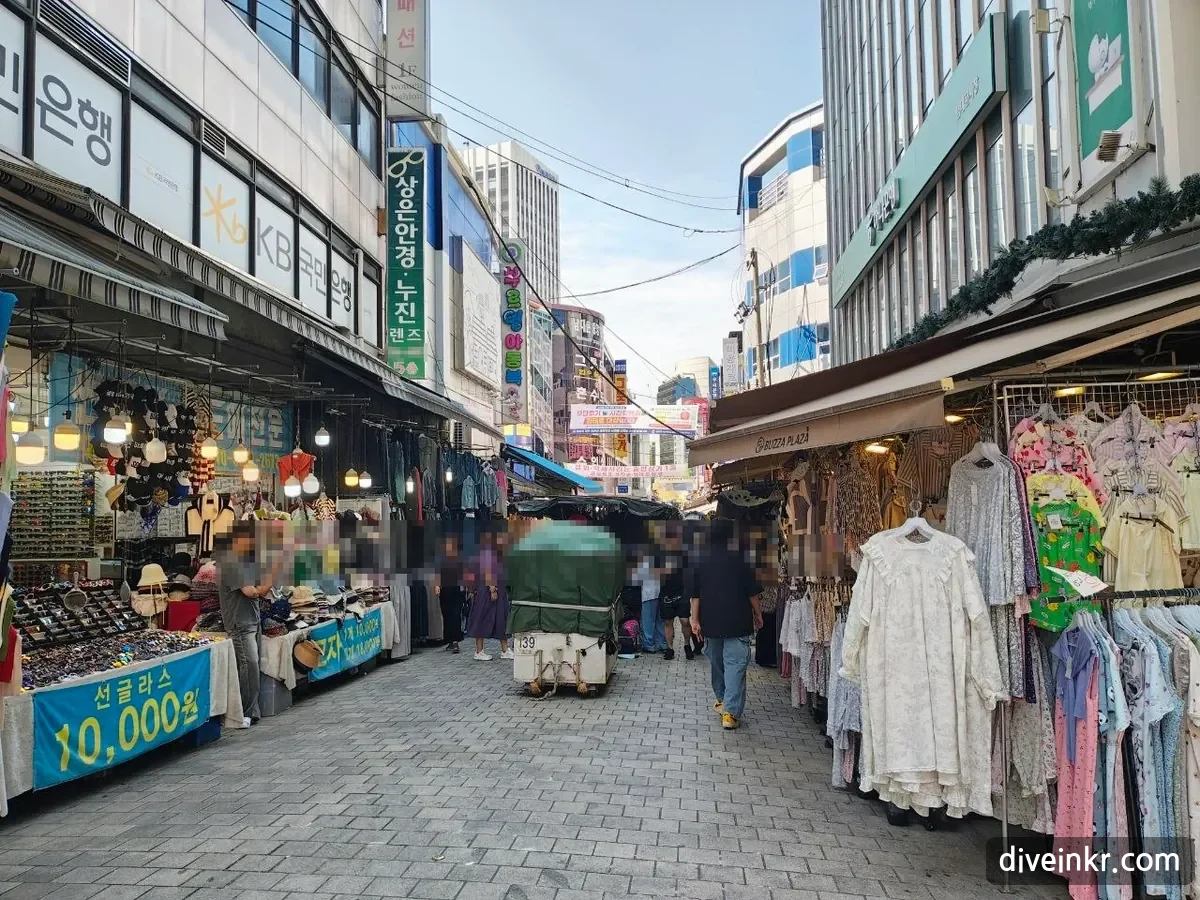
남대문시장 (Namdaemun Market) is Korea's largest and oldest traditional market. It goes back to 1414, when the government built shops near the gate and rented them out, and it became a permanent modern market in 1897. Today it has about 12,000 shops selling some 1,700 kinds of goods — clothes, children's wear, accessories, glasses, watches, kitchenware, imported goods, food, flowers and more. It's the kind of place where prices are written in big numbers on handmade signs.
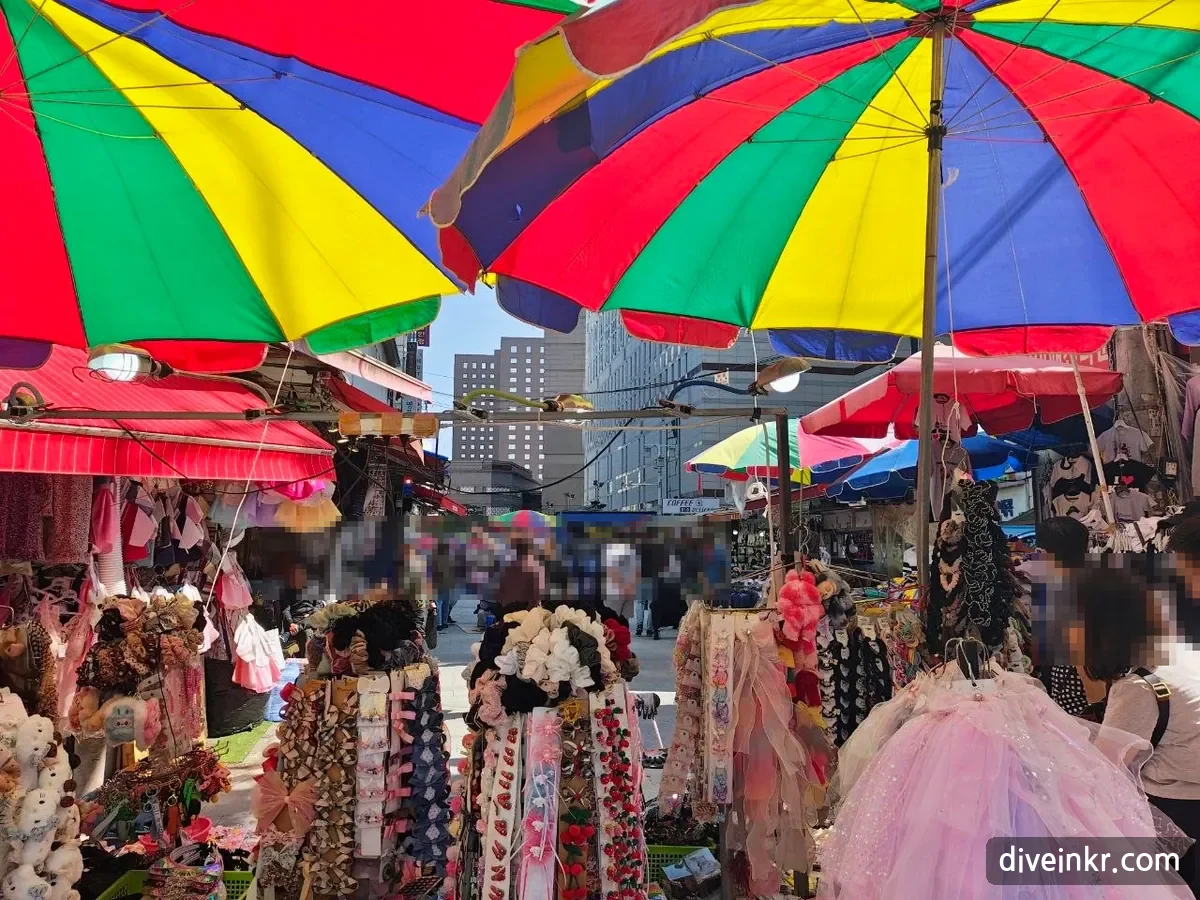
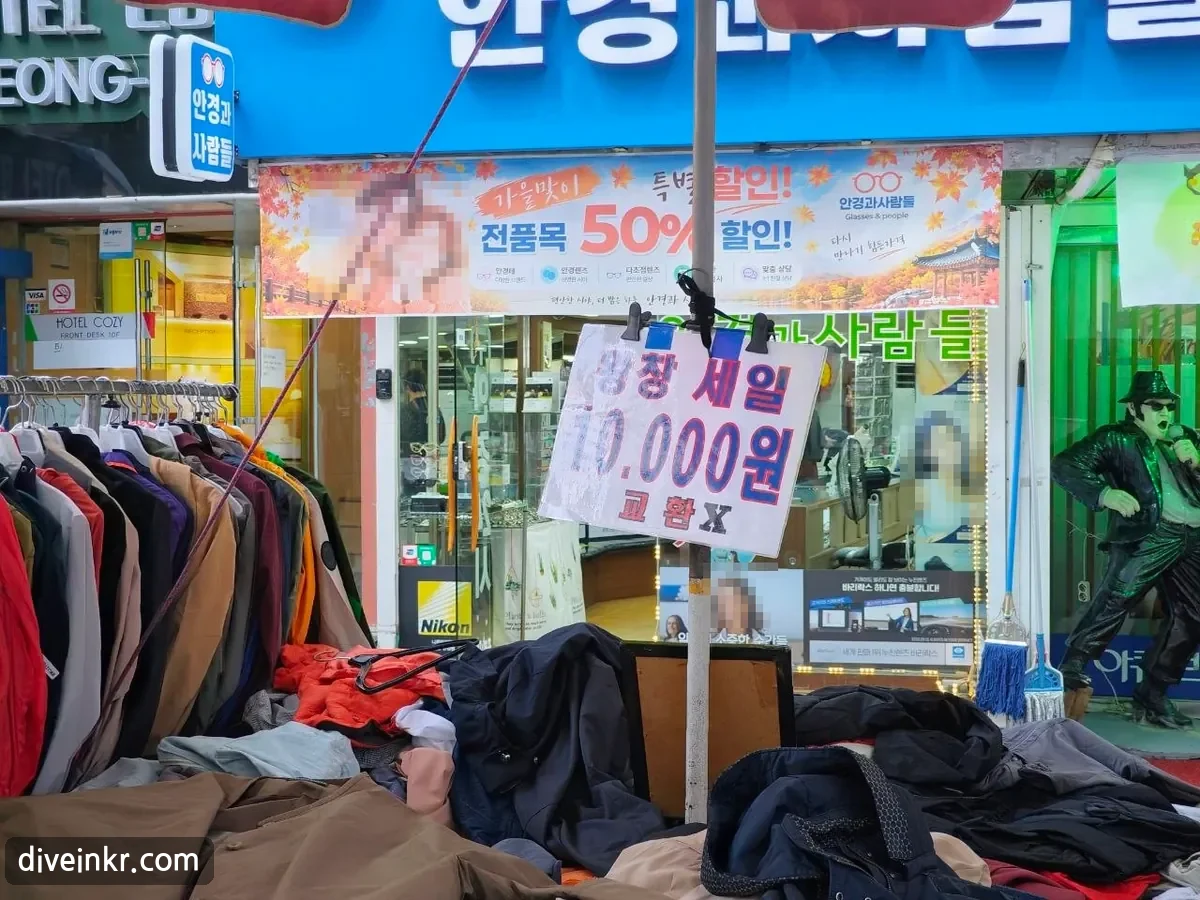
The signs over the clothing piles, and the banners in the shop windows behind them, use the same few words over and over:
| On the sign | Romanization | Meaning |
|---|---|---|
| 왕창 | wangchang | A whole lot, big time — casual and punchy |
| 세일 | seil | Sale (from English) |
| 할인 | harin | Discount — 50% 할인 is 50% off |
| 전품목 | jeonpummok | All items (전 all + 품목 item) |
| 가을맞이 | gaeulmaji | "Welcoming autumn" — a seasonal sale |
| 교환 X | gyohwan | No exchanges — the X means "not possible" |
| 원 | won | Won — 4.000원 is 4,000 won; both signs here use a dot where English uses a comma |
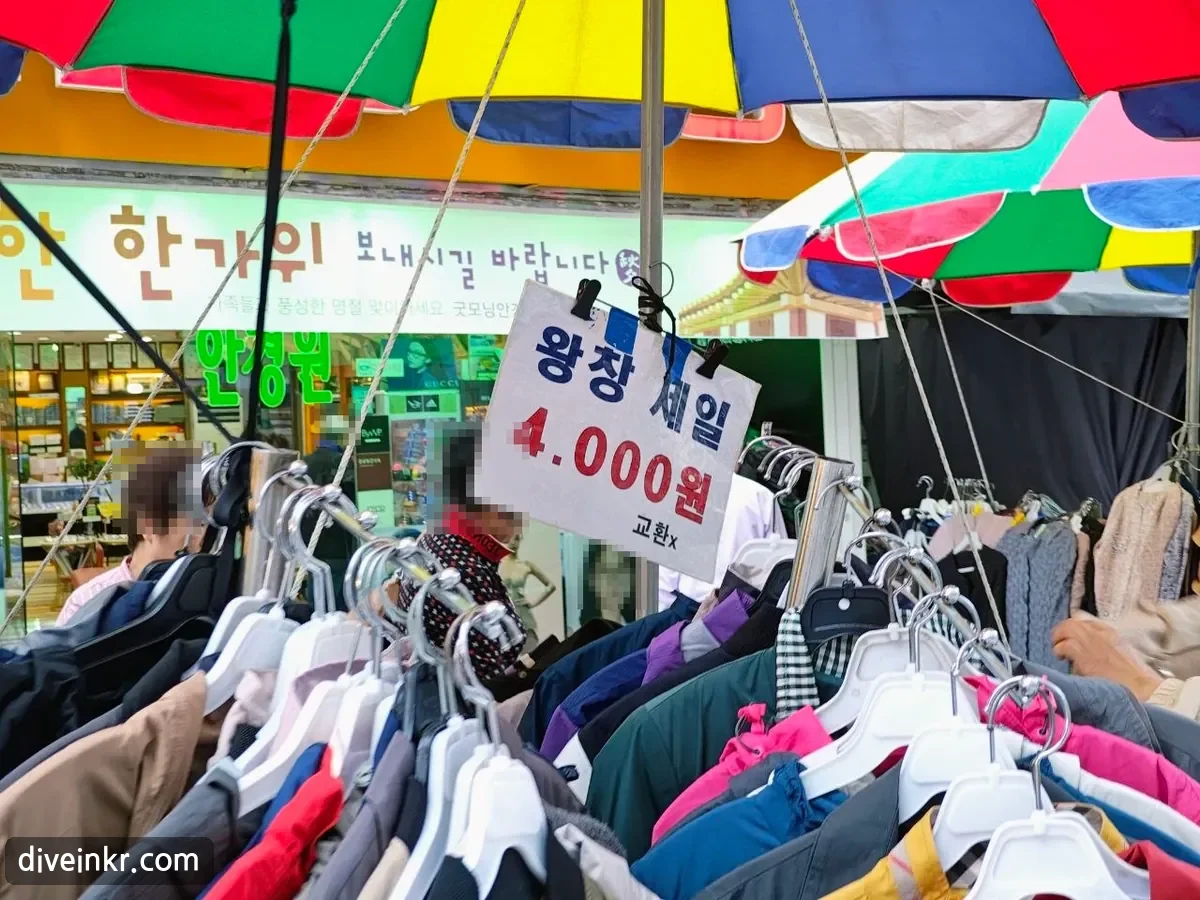
Prices are read with Sino-Korean numbers, and Korean counts big numbers in units of 만 (10,000) — so 10,000원 is 만 원, not "ten thousand." You don't say 일 (one) before 만 or 천: 4,000원 is 사천 원 and 10,000원 is just 만 원. More in how to ask the price and Sino-Korean numbers.
| Price | Said as | Romanization |
|---|---|---|
| 4,000원 | 사천 원 | sacheon won |
| 10,000원 | 만 원 | man won |
| 15,000원 | 만 오천 원 | man ocheon won |
| 50% | 오십 퍼센트 | osip peosenteu |
Shopping at the Market: Asking, Sizes and Bargaining
Most market stalls are small, and many don't have a fitting room, so it pays to ask before you buy — especially on a 교환 X pile. These are the lines you'll use most. For more, see our shopping phrases.
이거 얼마예요?
igeo eolmayeyo?
How much is this?
두 개에 얼마예요?
du gae-e eolmayeyo?
How much for two?
이거 다른 사이즈 있어요?
igeo dareun saijeu isseoyo?
Do you have this in another size?
입어 봐도 돼요?
ibeo bwado dwaeyo?
Can I try it on?
이거 교환돼요?
igeo gyohwandwaeyo?
Can I exchange this?
If the sign says 교환 X, the answer will be 안 돼요 — "no."
두 개 살게요. 좀 깎아 주세요.
du gae salgeyo. jom kkakka juseyo.
I'll take two. Could you give me a discount?
깎다 literally means "to cut" or "to trim" — here, trimming the price.
카드 돼요?
kadeu dwaeyo?
Do you take cards?
그냥 구경하는 거예요.
geunyang gugyeonghaneun geoyeyo.
I'm just looking.
The signs themselves are good reading practice before you go — more of them in reading Korean street signs.
Getting There and Planning the Walk
- Start at City Hall Station (시청역, Lines 1 and 2) and Seoul Plaza.
- Cross the road to Daehanmun — time it for the 11:00 or 14:00 guard ceremony.
- Walk south along 세종대로 (Sejong-daero) to Sungnyemun.
- Finish at Namdaemun Market and the Money Museum, next to Hoehyeon Station (회현역, Line 4) — or do the whole walk in reverse.
Skip Mondays
Deoksugung, its guard ceremony, Sungnyemun and the Money Museum are all closed on Mondays. Any other day, you can see all four on one walk.
Airport buses to Incheon also stop along this route, but they use their own stops, marked 공항버스 (airport bus) with an airplane icon — separate from the regular city bus stops. See our Seoul bus guide. If you get lost, asking for directions is easy with the place name plus 어떻게 가요?
남대문시장 어떻게 가요?
namdaemunsijang eotteoke gayo?
How do I get to Namdaemun Market?
교대식 몇 시에 해요?
gyodaesik myeot sie haeyo?
What time is the guard ceremony?
화폐박물관 오늘 열어요?
hwapyebangmulgwan oneul yeoreoyo?
Is the Money Museum open today?
회현역이 어디예요?
hoehyeonyeogi eodiyeyo?
Where is Hoehyeon Station?
Mini Quiz
1. What do most Koreans call 숭례문 in everyday speech?
2. A market sign says 교환 X. What does it mean?
3. What is the old stone building in front of Seoul City Hall today?
4. Which day is a bad day for this walk?
5. How do you say the price 10,000원?
Related Knowledge
Learn Next
The one question you'll need most at Namdaemun Market — and how to understand the price you hear back.
Will you remember this tomorrow?
Save it — your daily review brings it back right before you'd forget. No account needed.