What a Korean Home Meal Looks Like: 밥, 국 and 반찬 on the Table
Written and reviewed by Jun and Jin, native Korean speakers
Published · Updated · How we write & review
After this page, you can picture a typical Korean home meal, name the bowls and side dishes on the table, and say the right thing before you eat.
10-second answer
The short answer
An everyday Korean home meal (집밥, jipbap) has three parts: a bowl of rice (밥, bap), one soupy dish — either a clear soup (국, guk) or a stew (찌개, jjigae) — and three to five side dishes (반찬, banchan), with kimchi first among them. A main dish such as grilled fish or stir-fried meat can join the table. And on plenty of nights, today's families skip the pattern entirely for pasta, a one-bowl meal or delivery — though only what is cooked at home counts as 집밥.
Quick check — did that land?
1. What are the three basic parts of an everyday Korean home meal?
밥, 국, 반찬! 잘 먹겠습니다! A home meal usually has rice, soup or stew, and side dishes.
The Basic Formula: Rice, Soup, Side Dishes
집밥 literally means "home rice" — the dictionary defines it as food cooked and eaten at home at mealtimes. In everyday use it means a meal made at home — most often the one a mother or father cooks for the family — and 밥 stands for the whole meal as well as the rice itself. The table it's served on, or the meal laid out on it, is a 밥상 (bapsang). Most everyday 밥상 are built from the same three parts.
| Part | What it usually is | Examples |
|---|---|---|
| 밥 (bap) — rice | White rice, or rice cooked with brown rice or mixed grains | 흰쌀밥 (white rice) · 현미밥 (brown rice) · 잡곡밥 (mixed-grain rice) · 흑미밥 (black rice) |
| 국물 (gungmul) — something soupy | Either a clear soup or a stew — usually one or the other, not both | 국: 미역국 (seaweed soup), 콩나물국 (bean sprout soup) · 찌개: 김치찌개 (kimchi stew), 된장찌개 (soybean paste stew) |
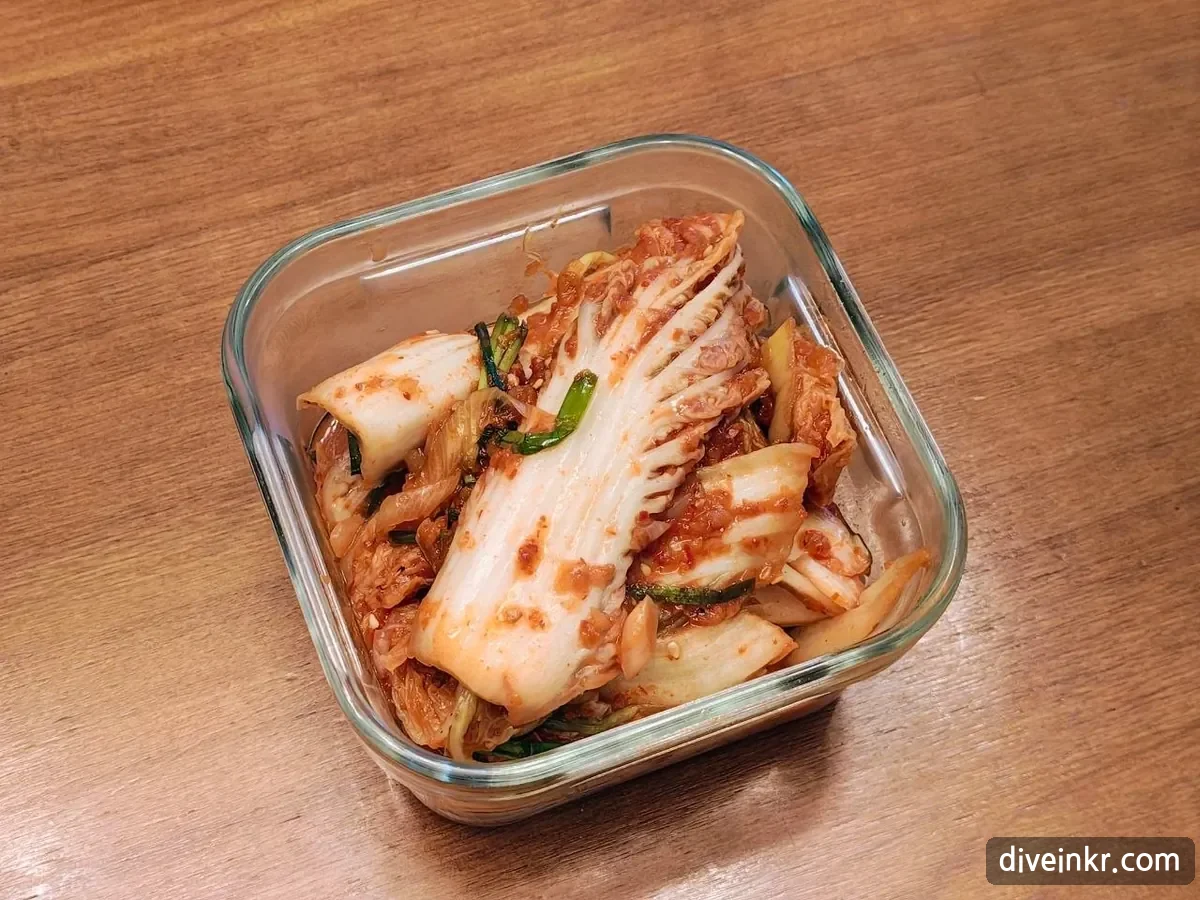
| 반찬 (banchan) — side dishes | Three to five, with kimchi at the head of the list | 김치 · 멸치볶음 · 장조림 · 나물무침 · 계란말이 |
If 국 and 찌개 still blur together, see 찌개 vs 국 vs 탕: a 찌개 is thicker and saltier, a 국 lighter. Either way, the rice and soup are what you eat the side dishes with — which is exactly what the word 반찬 means: food that goes with rice.
See also: 반찬 — the side dishes that go with rice
The Everyday Side Dishes
| Banchan | Romanization | What it is |
|---|---|---|
| 김치 | gimchi | Fermented, seasoned vegetables — most often napa cabbage |
| 멸치볶음 | myeolchi-bokkeum | Small dried anchovies stir-fried in oil with seasoning |
| 장조림 | jangjorim | Beef simmered down in soy sauce; today also made with pork or eggs |
| 나물무침 | namul-muchim | Greens or other vegetables tossed with seasoning |
| 계란말이 | gyeranmari | A rolled omelette, sliced into rounds |
| 김 | gim | Thin sheets of dried laver (seaweed), usually roasted, for wrapping bites of rice. It's a side dish, but people just call it 김 — you'll rarely hear anyone call it a 반찬 |
Some side dishes keep for days in the fridge and come out meal after meal; Korean has a word for exactly these, 밑반찬 (mitbanchan) — side dishes made ahead that keep and can be eaten straight away. Anchovies and 장조림 are typical. That's also why the fridge is where family notes about food end up. A classic one, straight from our page on phrases you hear at home:
냉장고 안에 반찬 있어. 꺼내서 밥이랑 데워 먹어.
naengjanggo ane banchan isseo. kkeonaeseo babirang dewo meogeo.
There are side dishes in the fridge. Take them out and heat them up with some rice.
A parent's note for someone eating alone later — casual speech (반말), as always between family.
How the side dishes reach the table depends on the meal. On an ordinary day, they often go on the table straight in their containers, like the kimchi in the photo above. For an important or meaningful meal, or when someone important is eating with you, people take out just what they'll eat and put it on small dishes — 덜어 먹다 (deoreo meokda), "to portion out and eat." And people who are careful about hygiene always do it that way.
That kimchi may come from a shop, or from the family's kimjang, the big batch made before winter.
Where Grilled Fish Fits
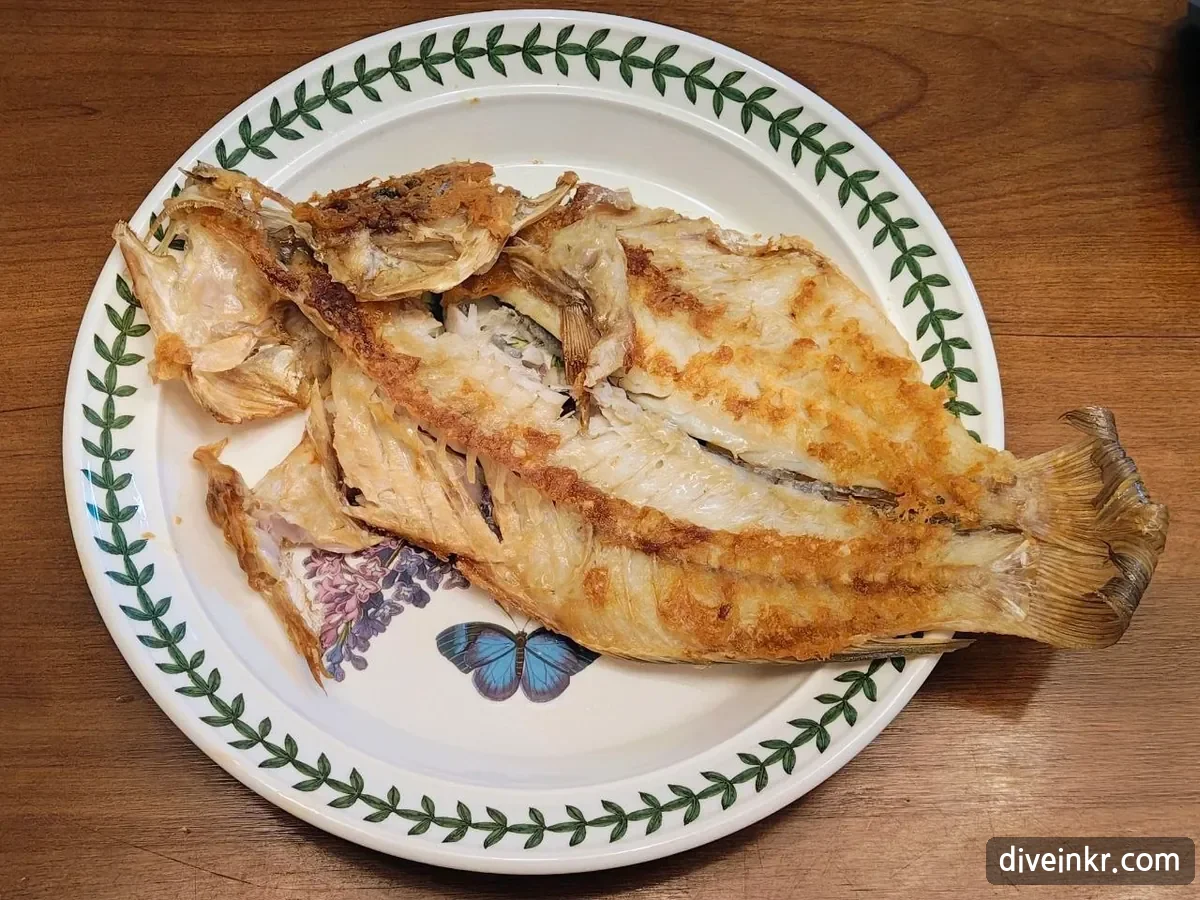
When a home meal has a main dish, it's the protein: a 찌개 with meat in it, stir-fried pork or beef, or 생선구이 (saengseon-gui), grilled fish. Fish turns up in a few typical moments:
- Weekend breakfast or lunch — mackerel (고등어), hairtail (갈치) or yellow croaker (조기).
- When meat feels too heavy — fish is the clean, light main, the taste Koreans call 담백하다 (see Korean taste words).
- Birthdays and holidays — 조기 and 굴비 (salted, dried whole yellow croaker) are regulars on the birthday table, the feast table and the table set for ancestral rites (차례상).
- In season — 전어 (gizzard shad) in autumn, 도다리 (a kind of flounder) in spring.
Birthday and Holiday Tables
A birthday meal has its own name: 생일상 (saengilsang), the birthday table. Whatever else is on it, it gets 미역국 (miyeokguk), seaweed soup — often with a grilled 조기 beside it. The soup is so tied to the day that asking about it is a way of asking whether someone celebrated; the story behind it is on our Happy Birthday in Korean page.
생일인데 미역국은 먹었어?
saengirinde miyeokgugeun meogeosseo?
It's your birthday — did you have your seaweed soup?
Casual speech, as between family or close friends.
Holidays stretch the formula further. For Chuseok and Seollal, the table grows to include plates of 전 (jeon), the egg-coated, pan-fried dishes that were once feast food because cooking oil was so hard to come by.
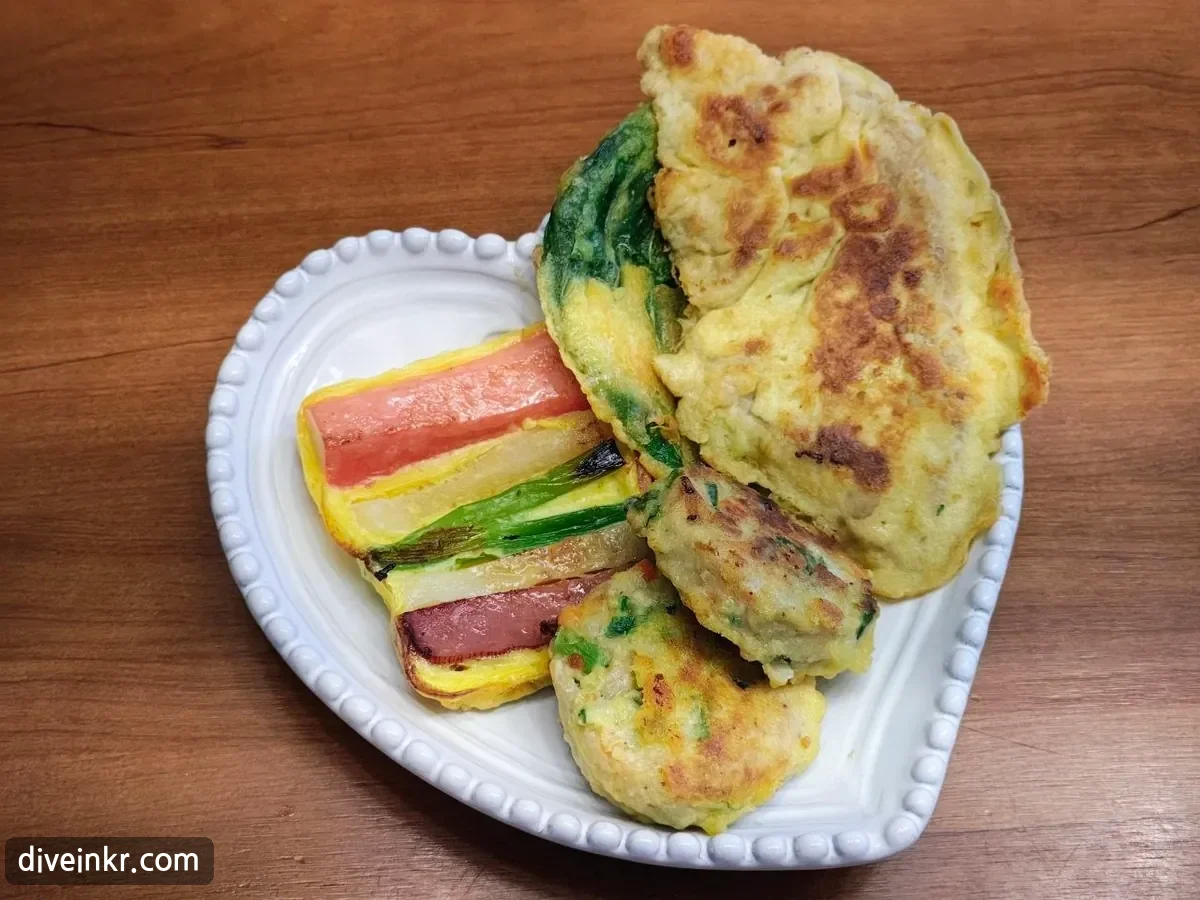
Holiday cooking makes far more 전 than anyone can finish, so the leftovers get a second life in the days after Chuseok or Seollal: mixed into a bowl of rice (비벼 먹다, bibyeo meokda, "to mix and eat"), or simmered into a stew, 전찌개 (jeon-jjigae).
남은 전으로 전찌개 해 먹자.
nameun jeoneuro jeonjjigae hae meokja.
Let's make jeon stew with the leftover jeon.
해 먹다 — "make and eat" — is the everyday way to talk about cooking something at home.
The Modern 집밥: Not Always Korean
The rice-soup-side-dishes table is the picture everyone shares, but real home meals in Korea today are far more mixed. On any given night a family might be eating:
| Kind of meal | Examples |
|---|---|
| Other cuisines cooked at home | Japanese, Chinese or Western food made at home: pasta, steak, curry, 짜장면 (jjajangmyeon, black bean noodles), rice noodle soup, tacos, sandwiches |
| 한 그릇 음식 — one-bowl meals | 볶음밥 (fried rice), 덮밥 (rice with a topping), 비빔밥 (mixed rice), salads |
| 밀키트 (milkiteu) — meal kits | 마라탕 (malatang), 감바스 (gambas), 밀푀유나베 (mille-feuille hot pot) |
| 배달 (baedal) — delivery (eaten at home, but not 집밥) | Anything from the delivery app — see ordering food delivery in Korea |
So if a Korean friend says they had 집밥 last night, it means a meal cooked at home — not necessarily that someone laid out five side dishes. Delivery eaten at home is not 집밥, because nobody cooked it there. The shift is visible in the numbers: Korea's yearly rice consumption per person fell to 53.9 kg in 2025, a record low (Statistics Korea, 양곡소비량조사).
Words for the Table
| Word | Romanization | Meaning |
|---|---|---|
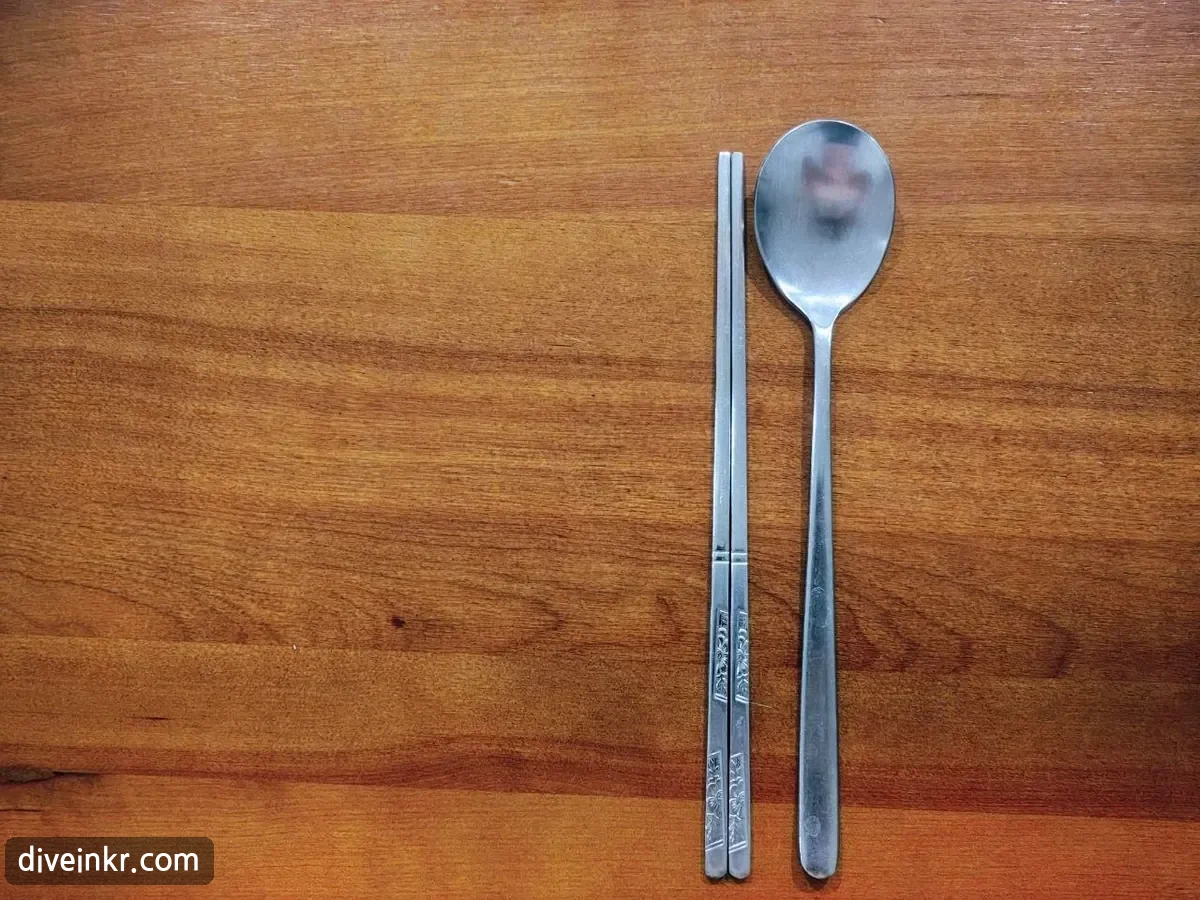
| 수저 | sujeo | Spoon and chopsticks together — the set at each place |
| 숟가락 · 젓가락 | sutgarak · jeotgarak | Spoon · chopsticks |
| 공기 | gonggi | A rice bowl, narrow at the bottom and wider at the top; also a counter — 밥 한 공기, one bowl of rice |
| 대접 | daejeop | A wide, fairly shallow bowl with no lid, for soup or water |
| 앞접시 | apjeopsi | A small personal plate for taking food from the shared dishes |
| 국자 · 주걱 | gukja · jugeok | Ladle · rice paddle |
| 밥상을 차리다 | bapsang-eul charida | To lay out a meal on the table |
The spoon handles rice and soup, the chopsticks everything else, and you don't hold both at once — more in Korean dining etiquette. Notice 공기 doing double duty: at a restaurant, 공깃밥 on the menu is simply an extra bowl of rice.
What to Say at the Table
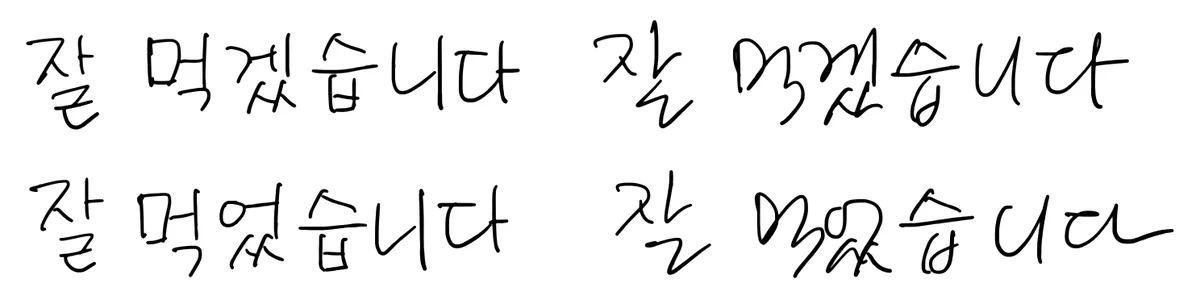
At someone's home, the meal has its own lines. Before you start, say 잘 먹겠습니다 or 맛있게 먹겠습니다 — and say it clearly, loud enough for the person who cooked to hear. It's a thank-you addressed to them. (At a restaurant, where no one you know cooked, people don't say it.) The cook, or an older relative, may answer with a wish of their own:
| Who | Korean | Meaning |
|---|---|---|
| You, before eating | 잘 먹겠습니다 · 맛있게 먹겠습니다 | Thank you for the meal (literally, "I'll eat well / deliciously") |
| The host, to someone younger | 잘 먹어 · 맛있게 먹어 · 많이 먹어 | Enjoy your meal — all three mean the same; 잘 먹어 is the most common, 많이 먹어 more typical of older people |
| You, after eating | 잘 먹었습니다 | Thank you, that was a good meal |
많이 먹어 isn't an order to eat a lot — 많이 먹어 vs 잘 먹어 explains why. And if someone asks 밥 먹었어? before you've even sat down, that's a greeting as much as a question.
Common Mistakes
Mistake #1 — Expecting a banquet
Restaurant spreads and holiday tables can be huge, but an everyday home meal is modest: rice, one 국 or 찌개, and three to five side dishes.
Mistake #2 — Expecting both a soup and a stew
A home table usually has one soupy dish — a 국 or a 찌개, not one of each.
Mistake #3 — Mumbling 잘 먹겠습니다
When someone you know made the meal, say it so they actually hear it. A quiet, private version misses the point.
Mistake #4 — Eating the side dishes like a first course
반찬 aren't starters. They stay on the table for the whole meal, and you eat them in turn with bites of rice.
Quick Answers
What does a typical Korean home meal include?
Rice (밥), one soupy dish — either a 국 or a 찌개 — and three to five side dishes (반찬), with kimchi first among them. A main dish such as grilled fish or stir-fried meat can join the table.
What does 집밥 mean?
집밥 (jipbap) means a meal cooked and eaten at home — most often the one a mother or father makes for the family. Delivery food eaten at home is not 집밥, because it wasn't cooked there.
Do Korean families eat rice, soup and side dishes every day?
No. Meals are much more varied now — Japanese or Chinese food, salads, sandwiches and delivery all sit beside the traditional table. Rice consumption per person has fallen for decades, to a record-low 53.9 kg in 2025 (Statistics Korea).
Mini Quiz
3 short questions — about 2 minute
2. Which word is the rice bowl?
3. Your Korean friend's mother has cooked dinner for you. What do you say before you start eating?
4. Which fish is a regular on birthday and holiday tables?
Related Knowledge
Learn Next
Korean Dining Etiquette, Explained
Now that you know what's on the table, learn the manners around it — who starts first, and how the spoon and chopsticks are used.
Will you remember this tomorrow?
Save it — your daily review brings it back right before you'd forget. No account needed.