How to Read Korean Prices: 만 원, 4천원, 3.0 and 2+1
Written and reviewed by Jun and Jin, native Korean speakers
Published · How we write & review
After this page, you can read a Korean price tag, café menu or market sign and say the price out loud in Korean.
10-second answer
The short answer
Korean prices are in 원 (won) and read with Sino-Korean numbers, grouped by 만 (man, 10,000) rather than by thousands: 15,000원 is 만 오천 원 (man ocheon won), and 100,000원 is 십만 원 (simman won). Signs add shortcuts — 4천원 (sacheon won) is 4,000 won, and 3.0 on a café menu is 3,000 won. Deal tags use 정상가 (jeongsangga, regular price), 개당 (gaedang, per item) and 1+1 and 2+1, read 원플러스원 (won-peulleoseu-won) and 투플러스원 (tu-peulleoseu-won).
Quick check — did that land?
1. How do you say 35,000원?
원 and the 만 Rule
The Korean currency is the 원 (won), written ₩ as a symbol but almost always as 원 after the number on tags. Prices are read with Sino-Korean numbers — 일, 이, 삼 — and you drop the 일 ("one") before 십, 백, 천 and 만: 1,000원 is 천 원, 10,000원 is just 만 원.
The part that trips English speakers up is grouping. English counts in blocks of three digits (thousand, million); Korean counts in blocks of four, and the unit for the first block is 만 (10,000). So 100,000 isn't "a hundred thousand" but ten 만 — 십만. The trick: count four digits from the right, and whatever sits to the left of them is the number of 만.
| Price | Split at 만 | Said as | Romanization |
|---|---|---|---|
| 2,500원 | 2500 | 이천오백 원 | icheon-obaek won |
| 10,000원 | 1 | 0000 | 만 원 | man won |
| 15,000원 | 1 | 5000 | 만 오천 원 | man ocheon won |
| 23,000원 | 2 | 3000 | 이만 삼천 원 | iman samcheon won |
| 35,000원 | 3 | 5000 | 삼만 오천 원 | samman ocheon won |
| 100,000원 | 10 | 0000 | 십만 원 | simman won |
| 250,000원 | 25 | 0000 | 이십오만 원 | isibomman won |
| 1,000,000원 | 100 | 0000 | 백만 원 | baengman won |
Korean spelling rules put the space exactly where you split: numbers written out in Hangul are spaced at every 만, which is why it's 삼만 오천 원, not 삼만오천원. The same rule lets you mix digits and Hangul, so you'll also see prices like 1만 5천원 on posters. For more practice, the printable Korean numbers chart lays out every unit up to 만.
One habit to know: when a price is written down, 원 is often left off — a menu or sign may just say 15,000. When people say a price out loud, though, they almost always finish with 원: 만 오천 원.
See also: 얼마예요? — how to ask the price
Café Menus: When 3.0 Means 3,000 Won
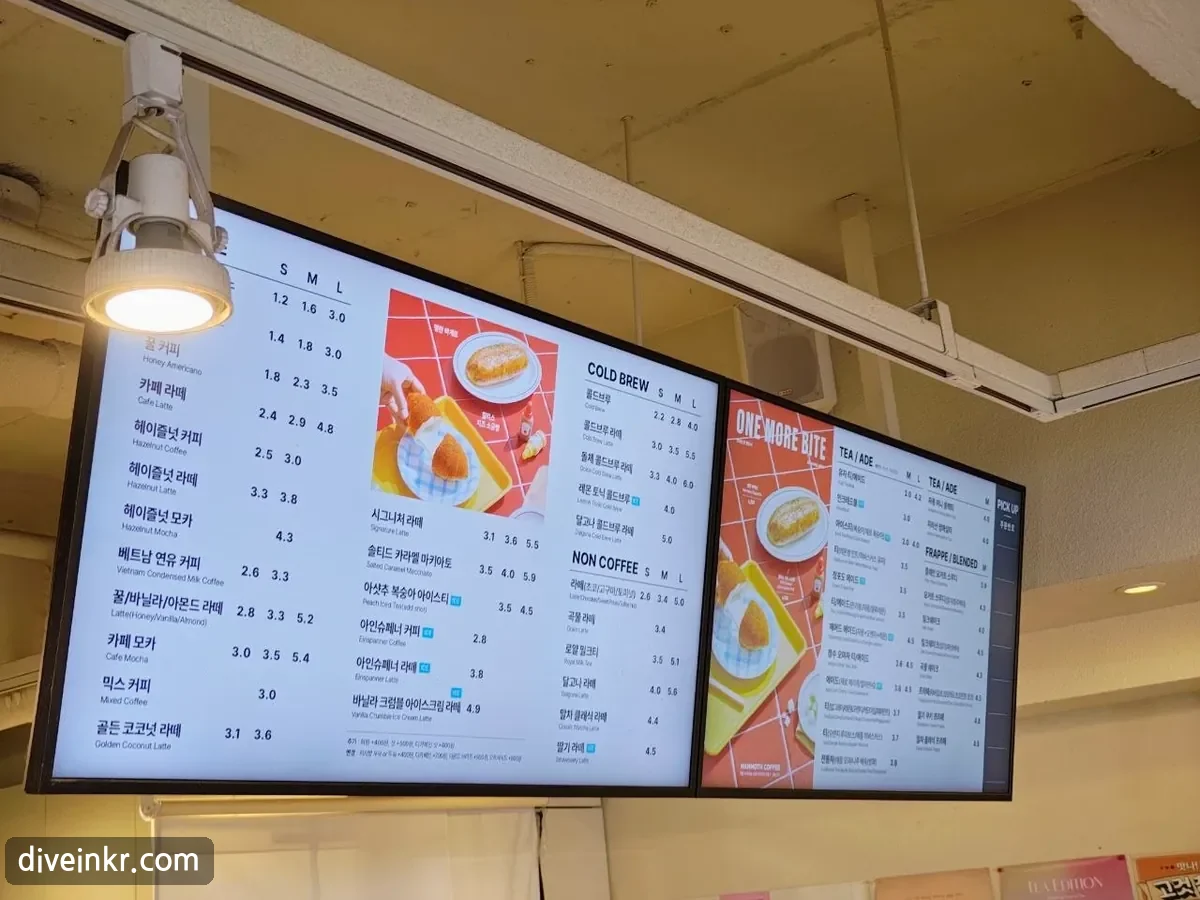
Cafés and restaurants often write prices in thousands, dropping the last three zeros and keeping a decimal point. Read it by moving the point: the number before it is thousands (천), the digit after it is hundreds (백). Past ten thousand, the 만 rule from above kicks in: 16.0 is 16,000원, 만 육천 원. A blank in a size column means that size isn't sold. For the ordering itself, see how to order coffee in Korean.
| On the board | Price | Said as |
|---|---|---|
| 1.2 | 1,200원 | 천이백 원 (cheon-ibaek won) |
| 3.0 | 3,000원 | 삼천 원 (samcheon won) |
| 4.5 | 4,500원 | 사천오백 원 (sacheon-obaek won) |
| 5.5 | 5,500원 | 오천오백 원 (ocheon-obaek won) |
| 16.0 | 16,000원 | 만 육천 원 (man yukcheon won) |
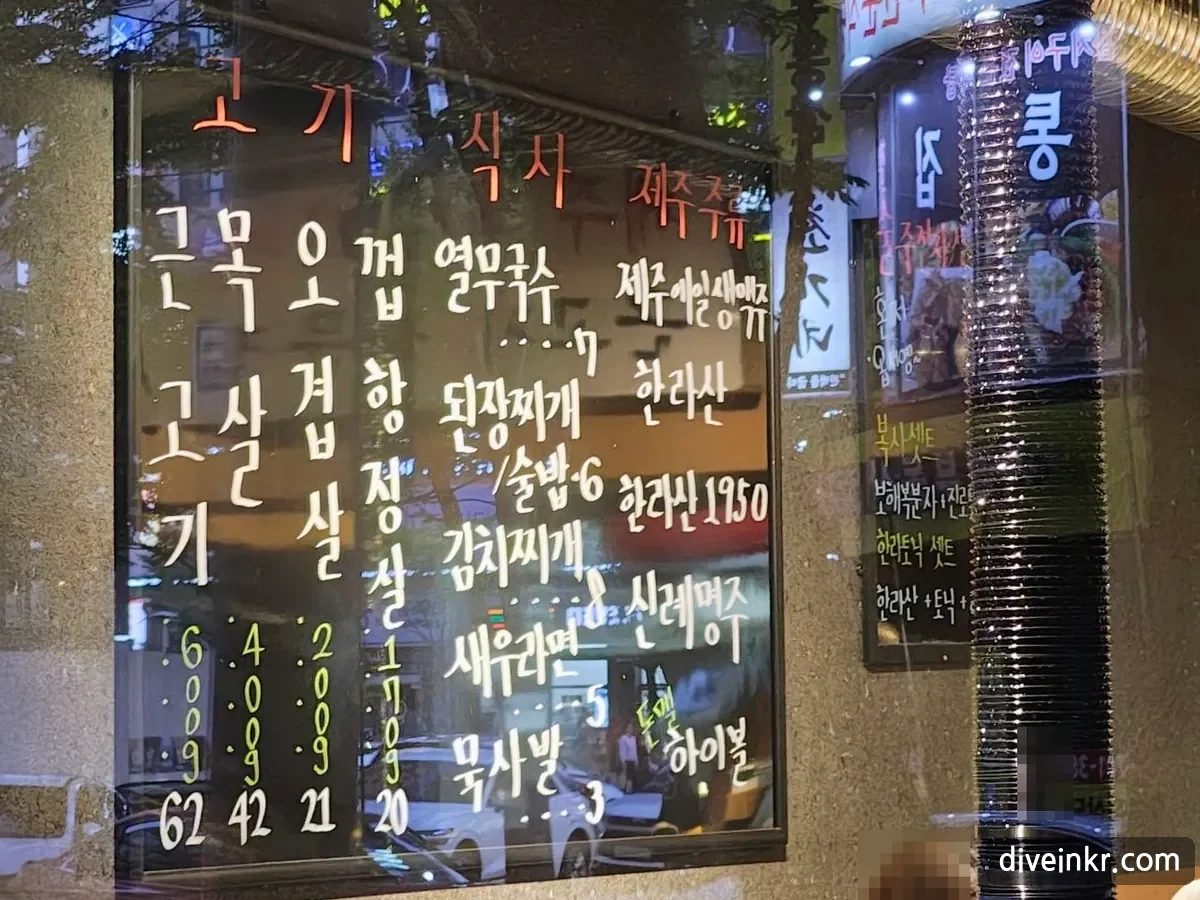
Market Signs: When a Comma Turns Into a Dot
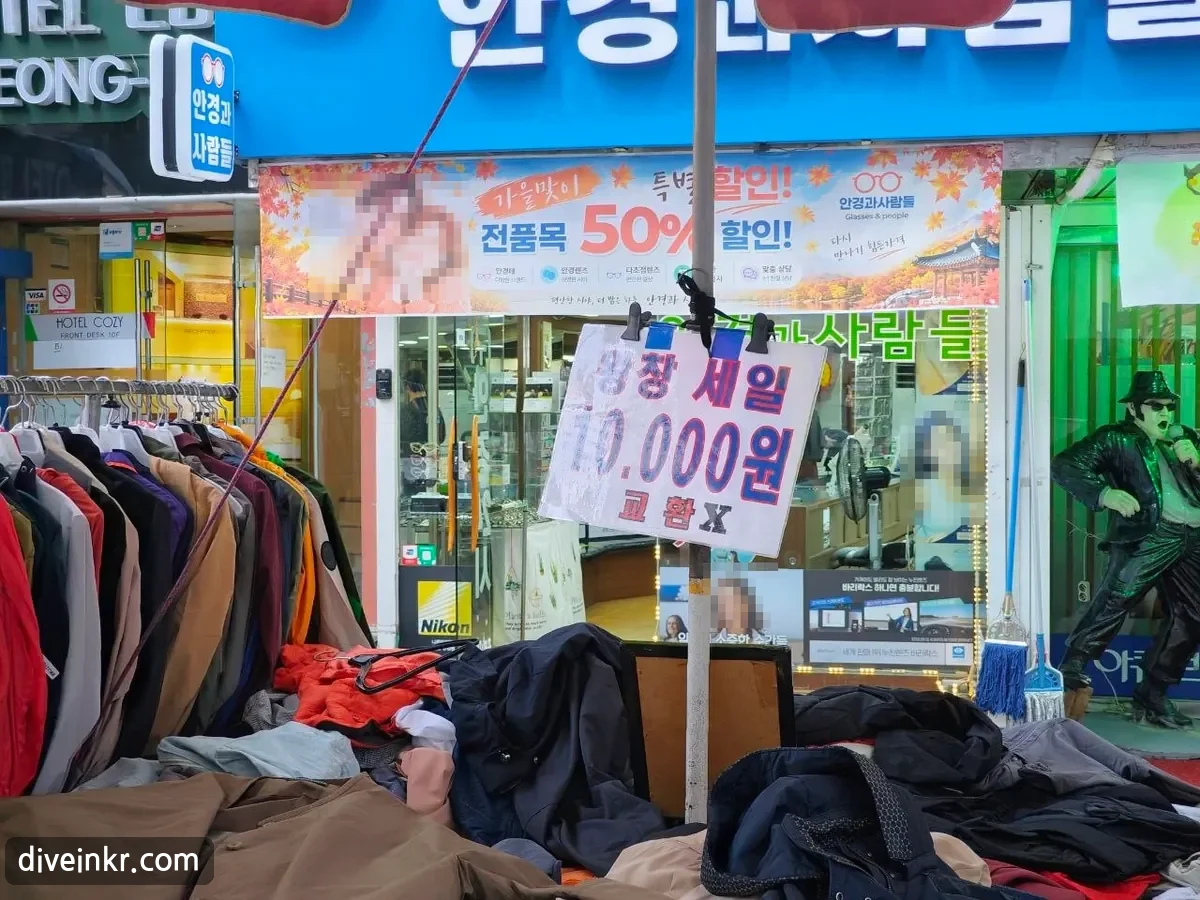

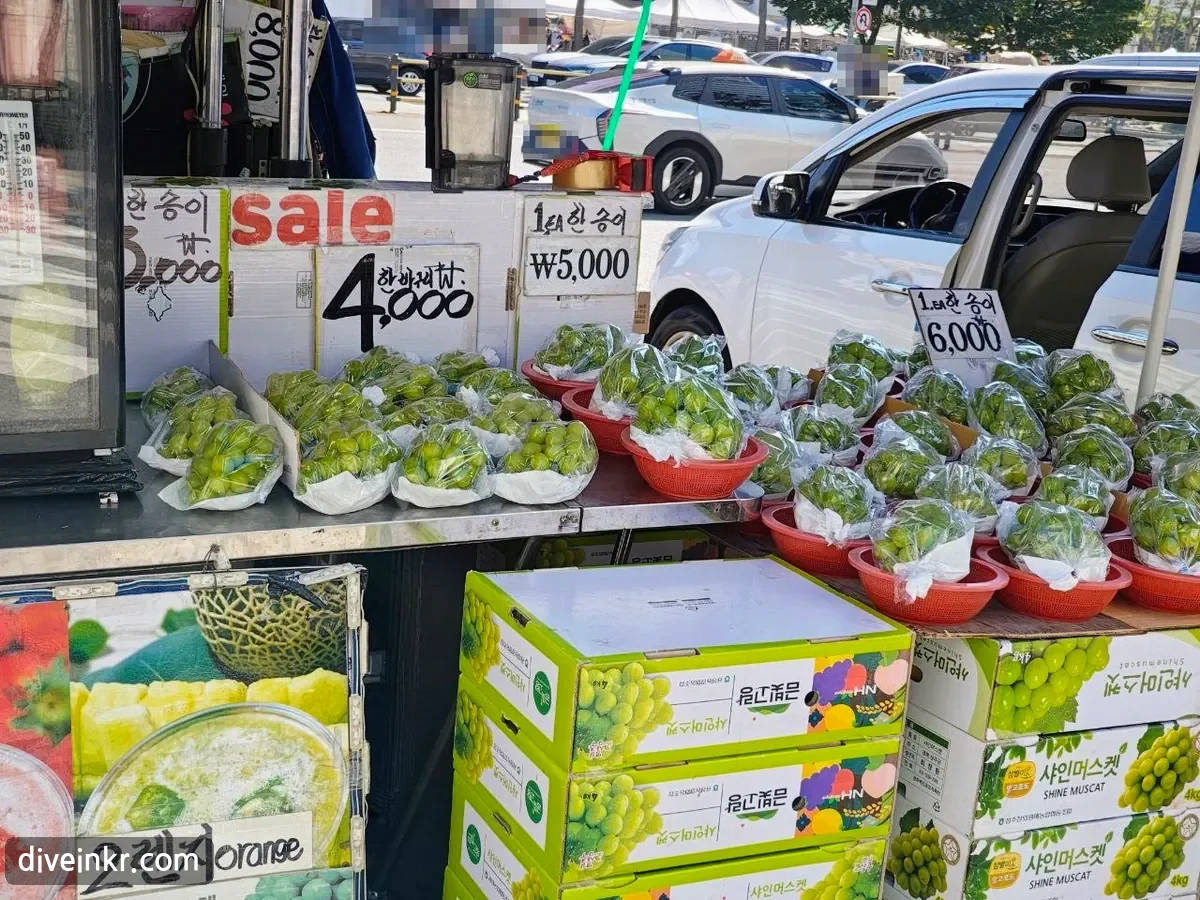
The correct way to write these prices is with a comma, exactly like a printed tag: 10,000원. But hand-lettered signs, like these two at Namdaemun Market, sometimes have a dot where the comma belongs. That's simply a slip of the pen, not a Korean convention — you'll run into it now and then, but don't copy it. And don't let it turn into a café-style decimal in your head. The way to tell them apart is what follows the dot: on a café board there's one digit and no 원 (3.0); on a market sign there are three zeros and then 원 (10.000원). Three digits after the separator always means thousands.

Convenience Store Tags: Two Number Systems at Once
Deal tags pack a lot of numbers into a small space, and they mix both Korean number systems. The count uses native Korean numbers with the counter 개 — 한 개, 두 개, 세 개 (see Korean counters) — while the price stays Sino-Korean.
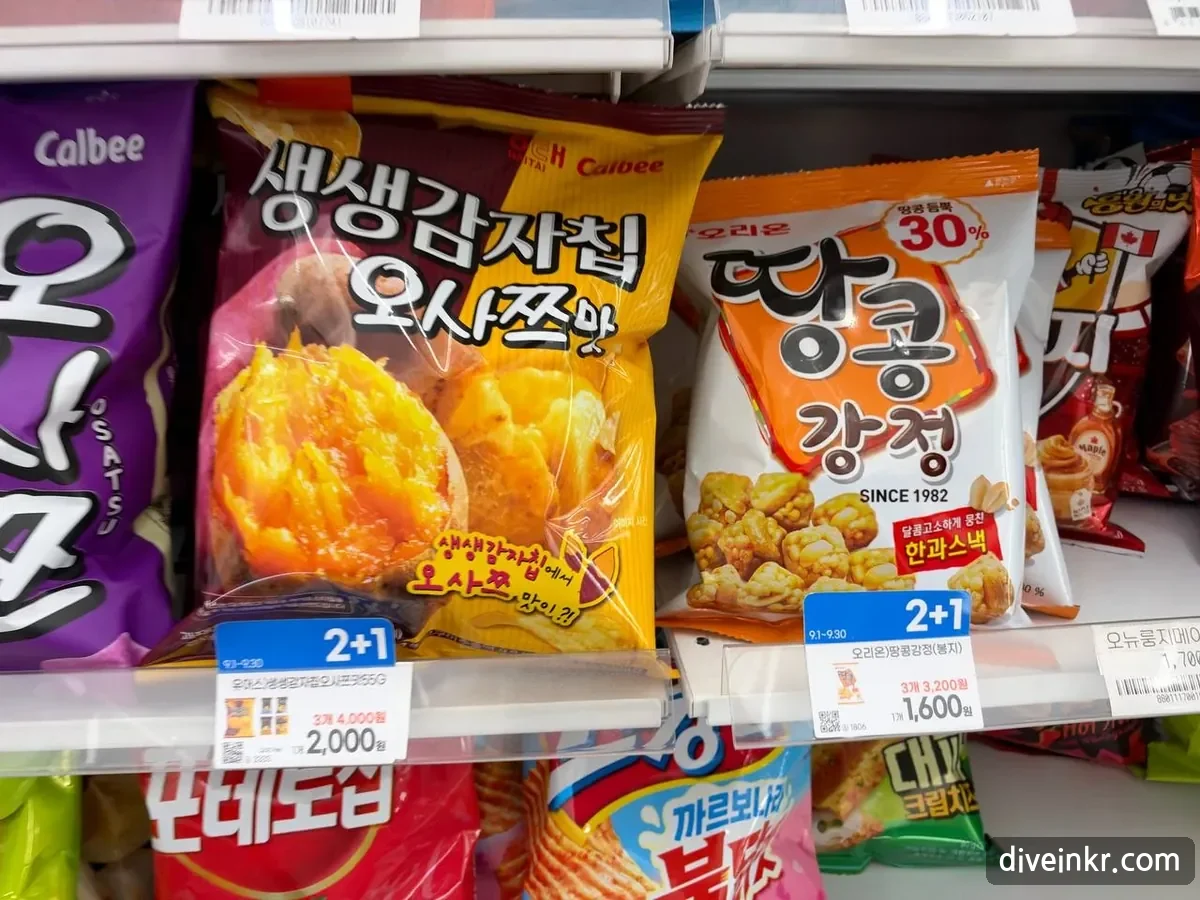
한 개에 이천 원, 세 개에 사천 원.
han gae-e icheon won, se gae-e sacheon won.
One for 2,000 won, three for 4,000 won.
How you'd read the left tag aloud: native numbers for the count (한, 세), Sino-Korean for the price (이천, 사천).
Koreans read the deal signs as English words: 1+1 is 원플러스원 (won-peulleoseu-won) and 2+1 is 투플러스원 (tu-peulleoseu-won) — "buy one get one free" and "buy two get one free." Not every tag is a plus deal, though:
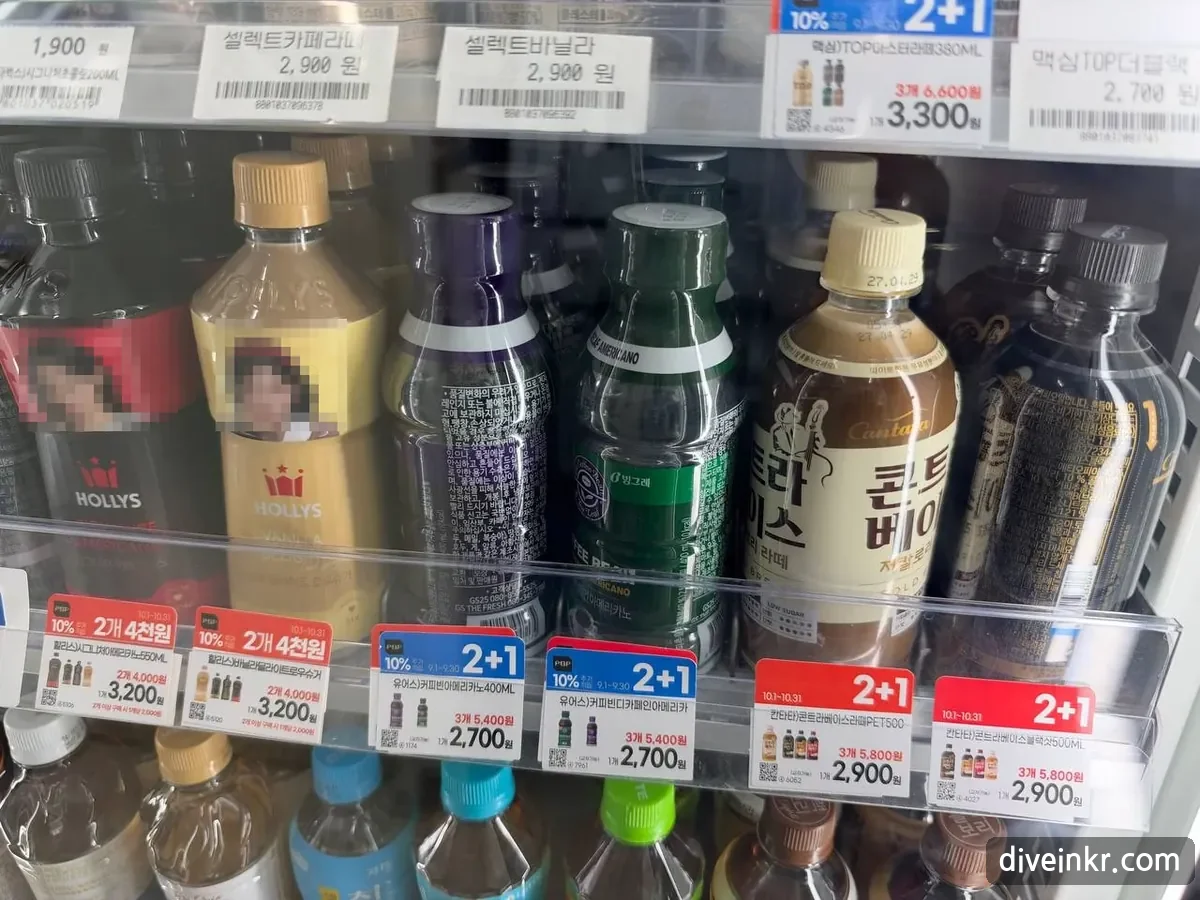
4천원 mixes a digit with the Hangul unit 천 — it's 사천 원, exactly like 4,000원. The small print under those red tags spells the deal out: 2개 이상 구매 시 1개당 2,000원, "when buying two or more, 2,000 won each." More on these tags, and on paying, in convenience store Korean.
Sale Words: 정상가, 개당, 할인
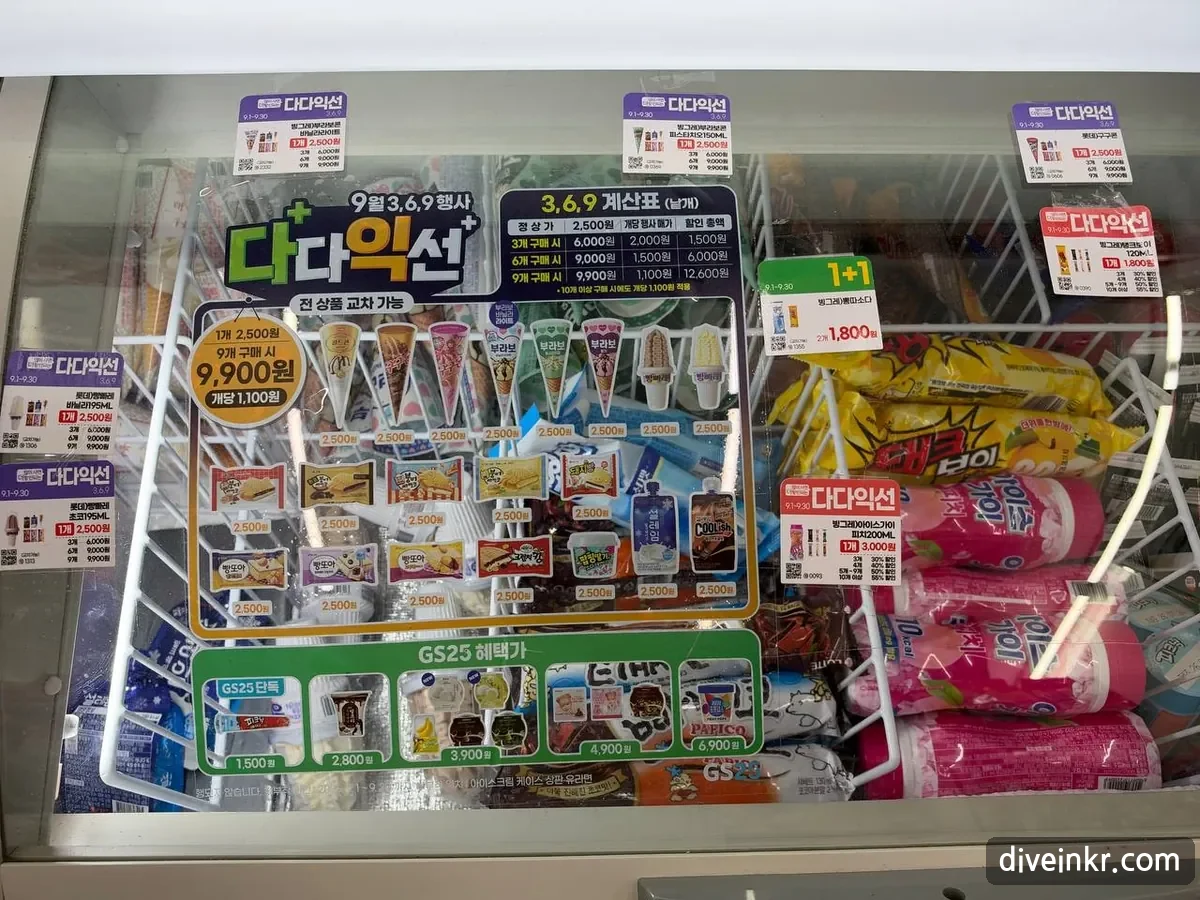
This table is good reading practice because it uses the words you'll meet on sale signs everywhere. Read the bottom row aloud: 9개 구매 시 9,900원 — 아홉 개 사면 구천구백 원 — so 1,100원 (천백 원) each, a total discount of 12,600원: 만 이천육백 원. A line under the table adds that buying ten or more is still 1,100 won each.
| Word | Romanization | Meaning |
|---|---|---|
| 정상가 · 정가 | jeongsangga · jeongga | Regular price — the two words are used interchangeably |
| 할인 · 세일 | harin · seil | Discount · sale — 50% 할인 is 50% off |
| 할인가 · 행사가 | harin-ga · haengsa-ga | Discounted price · promotion price |
| 개당 · 1개당 | gaedang · han gaedang | Per item — 개 (item) + 당 (per) |
| 구매 시 | gumae si | When you buy — 3개 구매 시, when you buy three |
| 교차 가능 | gyocha ganeung | Mix and match allowed |
The Price on the Menu Is the Price You Pay
In Korea, the price you see already includes VAT (부가세, bugase). Where it doesn't, the seller has to say so — hotels are the main place you'll see that, with a note such as 부가세 별도 (bugase byeoldo, "VAT not included"). Restaurants and cafés also have a specific rule: since 2013, menus must show the final price, with VAT and any service charge already included, and adding them separately isn't allowed. The same rules require restaurants to list meat by the price per 100g, which is why a menu can show a weight next to a dish like 삼겹살.
Asking and Hearing the Price
When there's no tag at all, ask with 얼마예요? — and now you can follow the answer, which comes in the same 만-based chunks.
이거 얼마예요?
igeo eolmayeyo?
How much is this?
두 개에 얼마예요?
du gae-e eolmayeyo?
How much for two?
만 오천 원이에요.
man ocheon wonieyo.
It's 15,000 won.
하나에 삼천이백 원이에요.
hanae samcheon-ibaek wonieyo.
It's 3,200 won each.
총 이만 삼천사백 원입니다.
chong iman samcheon-sabaek wonimnida.
That's 23,400 won in total.
What a convenience store cashier says after ringing up your five items. 총 (chong) means "in total."
Listen for 만 first: it tells you the size of the number before the rest arrives.
Haggling over the price is hard to pull off these days. What you can still ask for, especially for things sold by weight or by count, is 덤 (deom): a little extra, thrown in for free.
덤으로 조금 더 주세요.
deomeuro jogeum deo juseyo.
Could you throw in a little extra?
Literally: Please give me a little more as a freebie.
For sizes, discounts and paying, see shopping phrases in Korean.
Common Mistakes
Mistake #1 — Saying 10,000 as 십천
Korean has no "ten thousand" built from 천. 10,000 is 만, and 100,000 is 십만, not 백천.
Mistake #2 — Adding 일 in front of 만
10,000원 is 만 원. You drop 일 before 십, 백, 천 and 만, just as 1,000원 is 천 원.
Mistake #3 — Reading 10.000원 as ten won
A dot on a handwritten sign is just a miswritten comma. Three digits after it means thousands: 10.000원 is 만 원. When you write a price yourself, use the comma: 10,000원.
Mistake #4 — Using native numbers for the price
세 개 (three items) uses native Korean, but the price is always Sino-Korean: 사천 원, never 넷천 원.
Mini Quiz
4 short questions — about 2 minute
2. A café board shows 4.5 in the M column. What does a medium cost?
3. A handwritten market sign says 10.000원. How much is it?
4. How do Koreans read 2+1 on a convenience store tag?
5. What does 개당 1,100원 mean?
Part of Korean Phrases for Travelers
Related Knowledge
Learn Next
Shopping Phrases in Korean You'll Actually Need
Once you can read the price, the next step is the conversation around it — sizes, discounts and paying.
Will you remember this tomorrow?
Save it — your daily review brings it back right before you'd forget. No account needed.