Korean Phrases for Daily Life: Cafés, Taxis, Shops, Pharmacies and More
Written and reviewed by Jun and Jin, native Korean speakers
Published · How we write & review
After this page, you can handle cafés, taxis, shops, pharmacies, phone calls and counters in Korea with a core set of phrases, and know where to find the full guide for each.
10-second answer
The short answer
Two patterns do most of the work in daily Korean: a noun + 주세요 (juseyo, "please give me") and a place + 어디예요 (eodiyeyo, "where is?"). Add 얼마예요 (eolmayeyo, "how much?") and 저기요 (jeogiyo, "excuse me"), and you can handle cafés, taxis, shops and most counters. Below are the core phrases for each situation, with a link to the full guide.
Quick check — did that land?
1. You want the item you're pointing at. What do you say?
일상 한국어는 두 패턴으로 시작해요!
The Four Phrases That Work Almost Everywhere
| Phrase | Romanization | Meaning | Full guide |
|---|---|---|---|
| 저기요 / 여기요 | jeogiyo / yeogiyo | Excuse me / over here | 저기요 |
| 이거 주세요 | igeo juseyo | This one, please | Ordering food |
| 얼마예요? | eolmayeyo? | How much is it? | 얼마예요 |
| …어디예요? | …eodiyeyo? | Where is …? | Asking for directions |
주세요 turns almost any noun into a polite request: 물 주세요 (mul juseyo, "water, please"), 영수증 주세요 (yeongsujeung juseyo, "the receipt, please"). Point at something and say 이거 주세요, and you have ordered.
See also: Ordering food in Korean
At a Café or Restaurant
아메리카노 한 잔 주세요.
amerikano han jan juseyo.
One Americano, please.
아이스로 주세요.
aiseuro juseyo.
Iced, please.
두 명이요.
du myeongiyo.
Two people.
Your answer when staff ask 몇 분이세요? ("How many people?").
여기요!
yeogiyo!
Excuse me! (over here)
Calling staff to your table.
Full guides: ordering coffee and ordering food.
At the Convenience Store and in Shops

봉투 필요하세요?
bongtu piryohaseyo?
Do you need a bag?
What you'll hear at the counter.
이거 입어 봐도 돼요?
igeo ibeo bwado dwaeyo?
Can I try this on?
다른 색상 있어요?
dareun saeksang isseoyo?
Do you have it in another color?
전부 얼마예요?
jeonbu eolmayeyo?
How much is it all together?
Full guides: convenience store phrases and shopping phrases.
Getting Around: Taxis, Buses and Directions
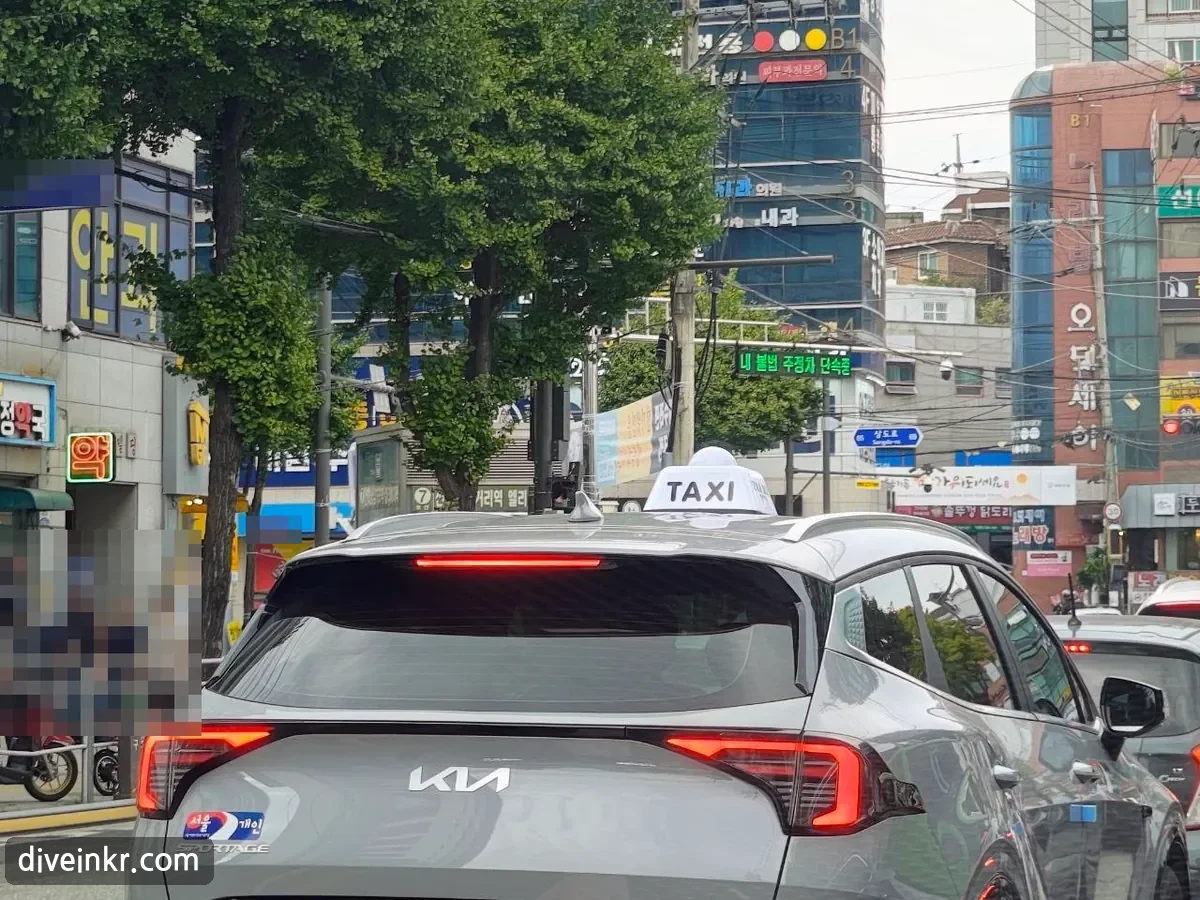
여기로 가 주세요.
yeogiro ga juseyo.
Please go here.
Show the address on your phone as you say it.
기사님, 여기서 세워 주세요.
gisanim, yeogiseo sewo juseyo.
Driver, please stop here.
지하철역이 어디예요?
jihacheollyeog-i eodiyeyo?
Where is the subway station?
다음 정류장은 ○○입니다.
daeum jeongnyujangeun ○○imnida.
The next stop is ○○.
The announcement you'll hear on the bus.
Two ways to skip the explaining
Many hotels hand out a business card with the hotel's address at the front desk — carry it and show it to the driver. And if you call a taxi with an app, you set the destination in the app, so you don't need to say it at all.
Full guides: taxi phrases, riding the bus, riding the subway and asking for directions.
At the Pharmacy or Hospital
머리가 아파요.
meoriga apayo.
My head hurts.
열이 나요.
yeori nayo.
I have a fever.
감기에 걸렸어요.
gamgie geollyeosseoyo.
I caught a cold.
Full guide: at the hospital or pharmacy — including how to say where it hurts.
Phone, SIM Card, Bank and Post Office
여보세요?
yeoboseyo?
Hello? (phone only)
유심 사고 싶어요.
yusim sago sipeoyo.
I'd like to buy a SIM card.
계좌 만들고 싶어요.
gyejwa mandeulgo sipeoyo.
I'd like to open an account.
소포 보내려고 하는데요.
sopo bonaeryeogo haneundeyo.
I'd like to send a package.
Full guides: phone calls, getting a SIM card, opening a bank account and the post office.
Polite by Default
Every phrase on this page ends in -요 or -세요, the polite level you use with staff, drivers and anyone you don't know. You will rarely go wrong with it; the casual forms are for friends. See 반말 vs 존댓말 for when to switch.
Mini Quiz
2 short questions — about 1 minute
2. How do you ask "How much is it?"
3. You're in a taxi and want to get out here. What do you say?
Part of Korean Phrases for Travelers
Part of Everyday Korean: Phone Calls, Plans, Weather & Health
- Korean Phone Call Phrases: 여보세요 and Beyond
- Making Plans in Korean: 약속 and How to Move It
- Korean Weather Small Talk: 날씨 Phrases That Break the Ice
- At the Korean Hospital or Pharmacy: Saying Where It Hurts
- How to Introduce Yourself in Korean
- Why Do Koreans Ask 밥 먹었어? (Did You Eat?)
- Opening a Bank Account in Korea: What to Bring and Say
- Getting a Korean SIM Card: 유심 vs 요금제
- Korean Phrases You'll Hear at Home: What Parents and Siblings Actually Say
- How to Say "I Didn't Catch That" in Korean: 네?, 뭐라고요?, and More
Related Knowledge
2 more related
Learn Next
The word that starts almost every conversation with a stranger in Korea — how to get someone's attention politely.
Will you remember this tomorrow?
Save it — your daily review brings it back right before you'd forget. No account needed.